1.标准数据类型之间会进行隐式的类型安全转换
转换规则如下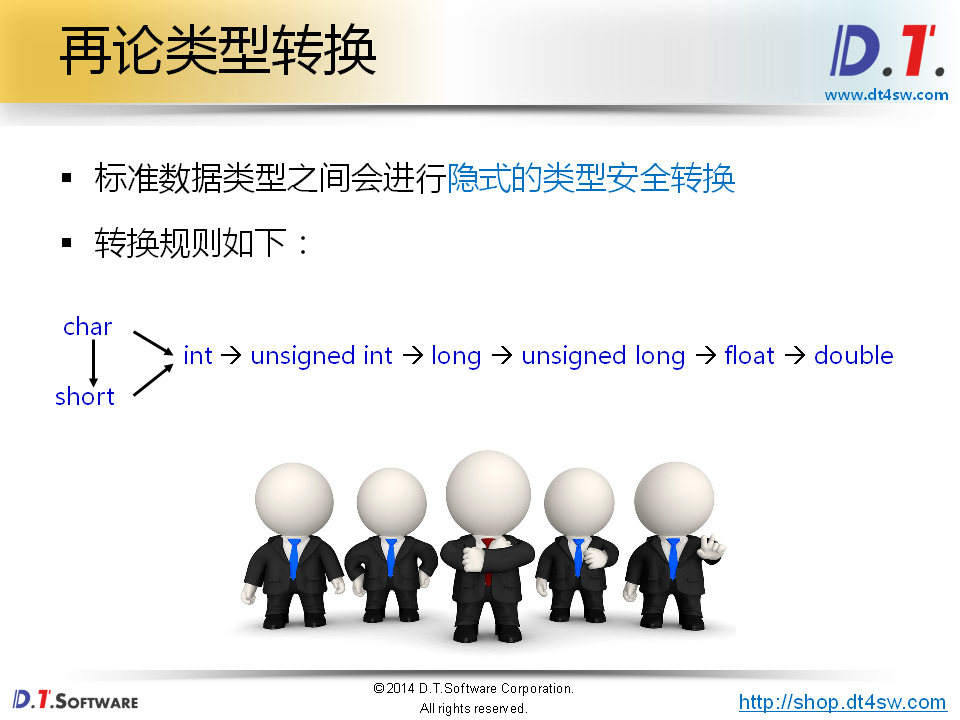
#include <iostream>#include <string>using namespace std;int main(){short s = 'a';unsigned int ui = 1000;int i = -2000;double d = i;cout << "d = " << d << endl;cout << "ui = " << ui << endl;cout << "ui + i = " << ui + i << endl; //i隐式转换为 uint 型if( (ui + i) > 0 ){cout << "Positive" << endl;}else{cout << "Negative" << endl;}cout << "sizeof(s + 'b') = " << sizeof(s + 'b') << endl; //short和char默认转换为int类型return 0;}delphi@delphi-vm:~$ ./a.outd = -2000ui = 1000ui + i = 4294966296Positivesizeof(s + 'b') = 4转为int型进行计算是最高效的,所以把short和char 都转为int型小类型初始化大类型是没问题的
2.普通类型与类类型之间能否进行类型转换?类类型之间能否进行类型转换?
3.再论构造函数
—-构造函数可以定义不同类型的参数
—-参数满足下列条件时称为转换构造函数
有且仅有一个参数
参数是基本类型
参数是其它类类型
另一个视角:
旧式的c方式强制类型转换
int i;
Test t;
i = int(1.5);
t = Test(100);
编译器的行为
编译器会尽力尝试让源码通过编译
隐式类型转换
—-会让程序以意想不到的方式进行工作
—-是工程中bug的重要来源
Test t;
t = 100;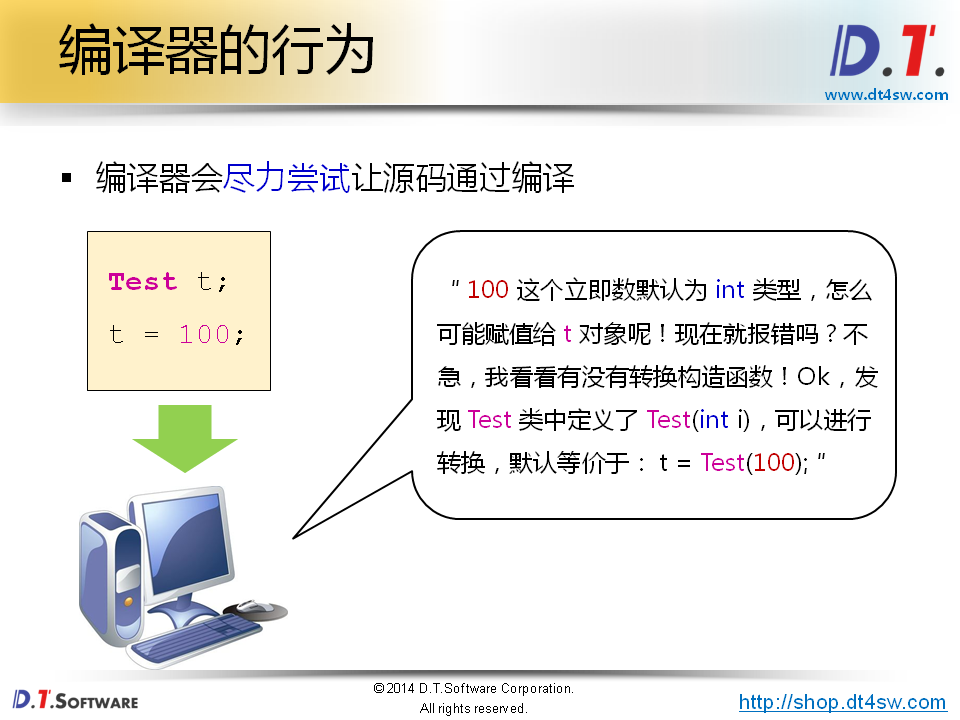
#include <iostream>#include <string>using namespace std;class Test{int mvalue;public:Test(){}Test(int i){cout << "Test(int i)" << endl;}Test operator + (const Test& p){Test ret(mvalue + p.mvalue);return ret;}int value(){return mvalue;}};int main(){Test t;//t = Test(5); //临时对象赋值给t对象t = 5; //调用了Test(int i) 是一种隐式类型转换Test r;r = t + 10; //这里是误会,但是编译通过了cout << r.value() << endl;return 0;}
4.工程中通过explicit关键字杜绝编译器的转换尝试
#include <iostream>#include <string>using namespace std;class Test{int mvalue;public:Test(){}explicit Test(int i){cout << "Test(int i)" << endl;}Test operator + (const Test& p){Test ret(mvalue + p.mvalue);return ret;}int value(){return mvalue;}};int main(){Test t;//t = Test(5); //临时对象赋值给t对象//t = 5; //errort = (Test)5; //okTest r;r = t + (Test)10; //okcout << r.value() << endl;return 0;}
转换构造函数被explicit修饰时只能进行显示转换
—-转换方式
static_cast
ClassName(Value); //c语言的
(ClassName)value;//c++不推荐
#include <iostream>#include <string>using namespace std;class Test{int mvalue;public:Test(){mvalue = 0;}explicit Test(int i){mvalue = i;cout << "Test(int i)" << endl;}Test operator + (const Test& p){Test ret(mvalue + p.mvalue);return ret;}int value(){return mvalue;}};int main(){Test t;//t = Test(5); //临时对象赋值给t对象//t = 5; //errort = static_cast<Test>(5); //okTest r;r = t + static_cast<Test>(10); //okcout << r.value() << endl;return 0;}
小结
1.转换构造函数只有一个参数
2.转换构造函数的参数类型时其它类型
3.转换构造函数在类型转换时被调用
4.隐式类型转换是工程中bug的重要来源
5.explicit关键字用于杜绝隐式类型转换
所以,杜绝隐式类型转换!!!

若有收获,就点个赞吧
0 人点赞


