5 类中的函数重载
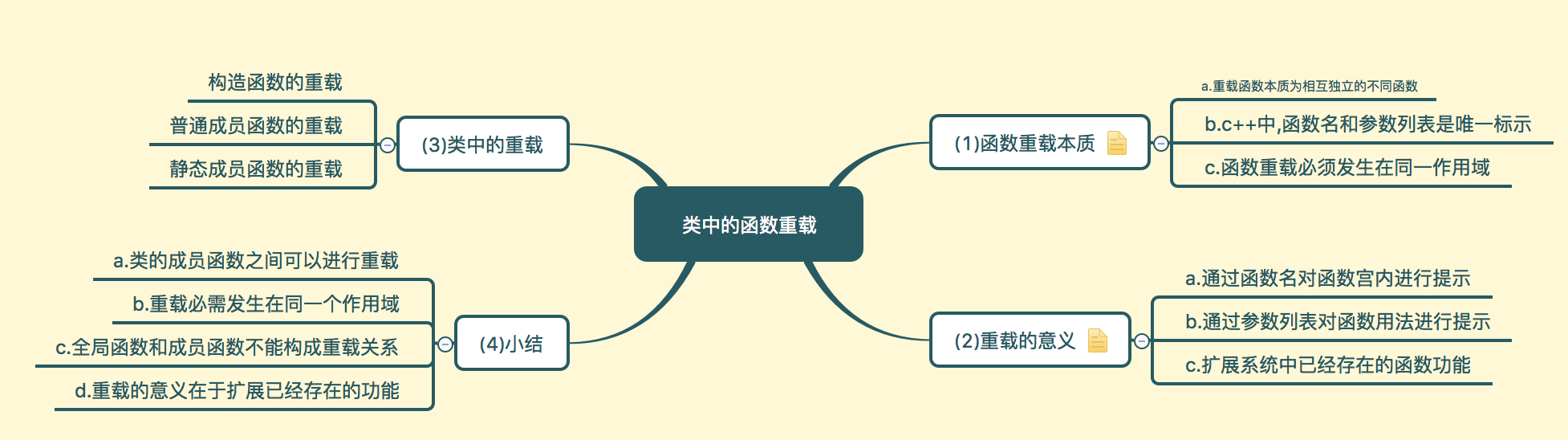
(1)函数重载本质
a.重载函数本质为相互独立的不同函数
b.c++中,函数名和参数列表是唯一标示
c.函数重载必须发生在同一作用域
(2)重载的意义
a.通过函数名对函数宫内进行提示
b.通过参数列表对函数用法进行提示
c.扩展系统中已经存在的函数功能
#include <stdio.h>#include <string.h>char* strcpy(char* buf, const char* str, unsigned int n){return strncpy(buf, str, n);}int main(){const char* s = "D.T.Software";char buf[8] = {0};//strcpy(buf, s);strcpy(buf, s, sizeof(buf)-1);printf("%s\n", buf);return 0;}
(3)类中的重载
构造函数的重载
普通成员函数的重载
静态成员函数的重载
全局函数,普通函数以及静态成员之间是否可以构成重载?
函数实现下:
#include <stdio.h>class Test{int i;public:Test(){printf("Test::Test()\n");this->i = 0;}Test(int i){printf("Test::Test(int i)\n");this->i = i;}Test(const Test& obj){printf("Test(const Test& obj)\n");this->i = obj.i;}static void func(){printf("void Test::func()\n");}void func(int i){printf("void Test::func(int i), i = %d\n", i);}int getI(){return i;}};void func(){printf("void func()\n");}void func(int i){printf("void func(int i), i = %d\n", i);}int main(){func();func(1);//通过这两个函数可知全局函数可以重载Test t; // Test::Test()Test t1(1); // Test::Test(int i)Test t2(t1); // Test(const Test& obj) 构造函数间可以重载func(); // void func()Test::func(); // void Test::func()类的静态成员函数与全局函数可重载func(2); // void func(int i), i = 2;t1.func(2); // void Test::func(int i), i = 2t1.func(); // void Test::func() 类的静态成员函数与普通函数也可以重载return 0;}
**
(4)小结
a.类的成员函数之间可以进行重载
b.重载必需发生在同一个作用域
c.全局函数和成员函数不能构成重载关系
d.重载的意义在于扩展已经存在的功能

若有收获,就点个赞吧
0 人点赞


