适配器 Adapter
- 现实类比:类似于笔记本电脑电源适配器,可以将 220V 电压转化为笔记本电脑可用的 12V 电压。
相关角色:
- 请求者 Client:使用 Target (笔记本电脑);
- 适配对象 Target:定义需要方法的接口或类(12V 电源);
- 被适配对象 Adaptee:持有已有可用方法的类(220V 电源);
适配器 Adapter:利用被适配对象持有的方法适配成适配对象需要的方法(电源适配器)。
继承适配器
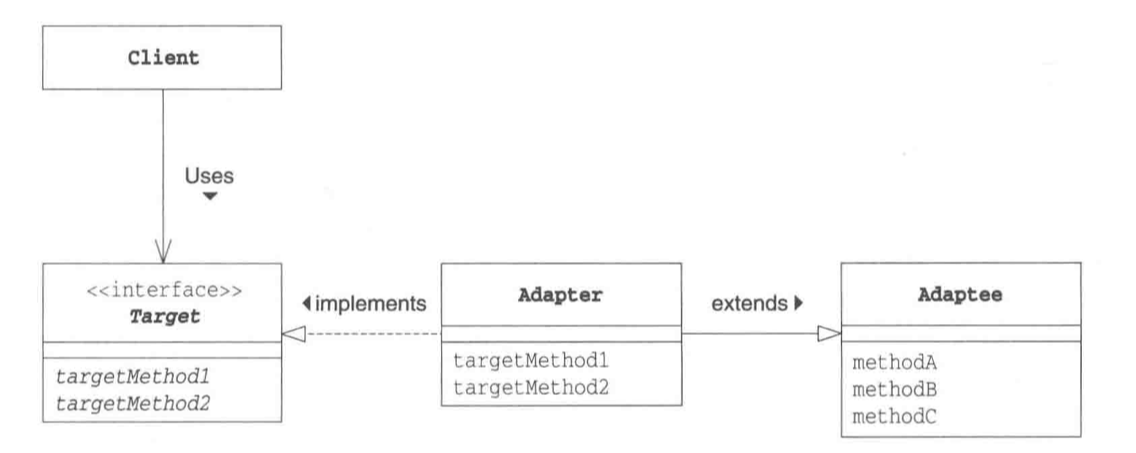
class Adapter extends Adaptee implements Target {public Adapter() {super();}public void targetMethod() {methodA();}}
适配器通过 Adaptee 中的方法来支持 Target 的需求,在 Client 中使用 Target 引用 Adapter 实例并使用其提供的方法。
委托适配器
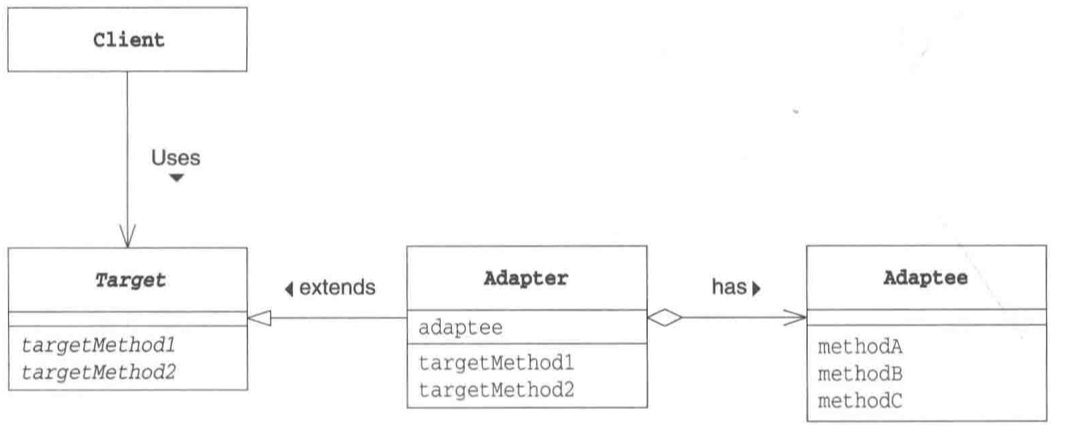
class Adapter extends Target {private Adaptee adaptee;public Adapter() {this.adaptee = new Adaptee();}public void targetMethod() {adaptee.methodA();}}
适配器通过使用 Adaptee 实例可用的方法来支持 Target 的需求,在 Client 中使用 Target 饮用 Adapter 实例并使用其提供的方法。
模板 Template
现实类比:使用不同的笔临摹同样的字帖模板。
- 相关角色:
- 抽象类 AbstractClass:实现模板负责的统一方法,声明统一待实现的抽象方法(字帖模板);
- 具体类 ConcreteClass:独立实现抽象方法,作为被 AbstractClass 引用的实例(用不同的笔临摹)。
- 其他要点:无论父类类型的变量中引用的是什么类的实例,都不影响代码工作(满足了李氏替换原则,可以用子类的地方一定可以使用父类)。

// 模板抽象类public abstract class AbstractClass {public abstract void independentMethod();public final void uniformMethod() {independentMethod();// do something else...}}// 具体实现类public class ConcreteClass extends AbstractClass{public ConcreteClass() {}public void independentMethod() {// do something this class should do}}
工厂 Factory
- 现实类比:使用模板生产实例
- 相关角色:
- 抽象产品 Product:宝贝(抽象类);
- 抽象工厂 Factory:(抽象类);
- 具体商品 ConcreteProduct:(具体类);
- 具体工厂 ConcreteFactory:(具体类)。

若有收获,就点个赞吧
0 人点赞


