1. Stack(栈)

堆栈遵循LIFO(后进先出)的原则。如果你把书堆叠起来,上面的书会比下面的书先拿。或者当你在网上浏览时,后退按钮会引导你到最近浏览的页面。
Stack具有以下常见方法:
push:输入一个新元素pop:删除顶部元素,返回删除的元素peek:返回顶部元素length:返回堆栈中元素的数量
Javascript中的数组具有Stack的属性,但是我们使用 function Stack() 从头开始构建Stack
function Stack() {this.count = 0;this.storage = {};this.push = function (value) {this.storage[this.count] = value;this.count++;}this.pop = function () {if (this.count === 0) {return undefined;}this.count--;var result = this.storage[this.count];delete this.storage[this.count];return result;}this.peek = function () {return this.storage[this.count - 1];}this.size = function () {return this.count;}}
2. Queue(队列)
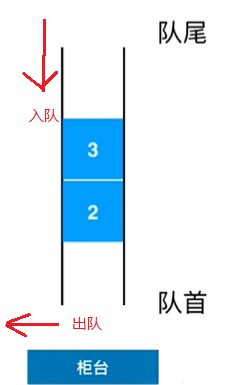
Queue与Stack类似。唯一不同的是,Queue使用的是FIFO原则(先进先出)。换句话说,当你排队等候公交车时,队列中的第一个总是先上车。
队列具有以下方法:
enqueue:输入队列,在最后添加一个元素dequeue:离开队列,删除前元素并返回front:得到第一个元素isEmpty:确定队列是否为空size:获取队列中元素的数量
JavaScript中的数组具有Queue的某些属性,因此我们可以使用数组来构造Queue的示例:
function Queue() {
  var collection = [];
  this.print = function () {
    console.log(collection);
  }
  this.enqueue = function (element) {
    collection.push(element);
  }
  this.dequeue = function () {
    return collection.shift();
  }
  this.front = function () {
    return collection[0];
  }

  this.isEmpty = function () {
    return collection.length === 0;
  }
  this.size = function () {
    return collection.length;
  }
}
优先队列
队列还有另一个高级版本。为每个元素分配优先级,并将根据优先级对它们进行排序:
function PriorityQueue() {

  ...

  this.enqueue = function (element) {
    if (this.isEmpty()) {
      collection.push(element);
    } else {
      var added = false;
      for (var i = 0; i < collection.length; i++) {
        if (element[1] < collection[i][1]) {
          collection.splice(i, 0, element);
          added = true;
          break;
        }
      }
      if (!added) {
        collection.push(element);
      }
    }
  }
}
测试一下:
var pQ = new PriorityQueue();
pQ.enqueue([ gannicus , 3]);
pQ.enqueue([ spartacus , 1]);
pQ.enqueue([ crixus , 2]);
pQ.enqueue([ oenomaus , 4]);
pQ.print();
返回
[
  [  spartacus , 1 ],
  [  crixus , 2 ],
  [  gannicus , 3 ],
  [  oenomaus , 4 ]
]
3. Linked List(链表)
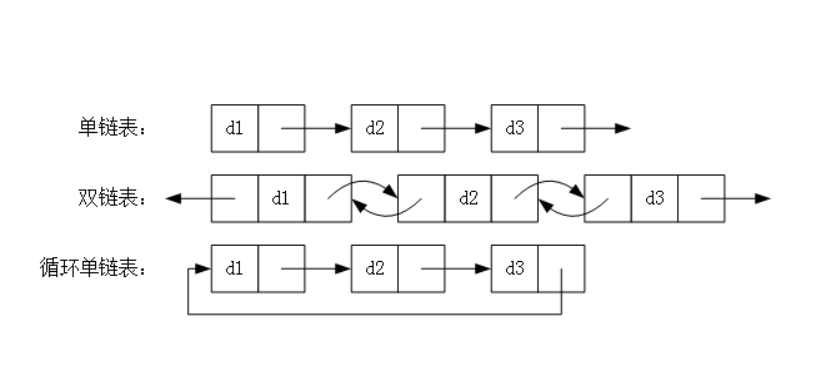
从字面上看,链表是一个链式数据结构,每个节点由两个信息组成:节点的数据和指向下一个节点的指针。链表和传统数组都是线性数据结构,具有序列化的存储方式。当然,它们也有差异:
| 比较 | Array | Linked List |
|---|---|---|
| 内存分配 | 静态内存分配,发生在编译和序列化过程中 | 动态内存分配,发生在运行过程中,非连续的。 |
| 获取元素 | 从索引中读取,速度更快 | 读取队列中的所有节点,直到得到特定的元素,速度较慢 |
| 添加/删除元素 | 由于是顺序记忆和静态记忆,速度较慢 | 由于是动态分配,只需要少量的内存开销,速度更快 |
| 空间结构 | 一维或多维 | 单边/双边,或循环链表 |
单边链表通常具有以下方法:
size:返回节点数head:返回头部的元素add:在尾部添加另一个节点remove:删除某些节点indexOf:返回节点的索引elementAt:返回索引的节点addAt:在特定索引处插入节点removeAt:删除特定索引处的节点
/** 链表中的节点 **/
function Node(element) {
    // 节点中的数据
    this.element = element;
    // 指向下一个节点的指针
    this.next = null;
}
function LinkedList() {
  var length = 0;
  var head = null;
  this.size = function () {
    return length;
  }
  this.head = function () {
    return head;
  }
  this.add = function (element) {
    var node = new Node(element);
    if (head == null) {
      head = node;
    } else {
      var currentNode = head;
      while (currentNode.next) {
        currentNode = currentNode.next;
      }
      currentNode.next = node;
    }
    length++;
  }
  this.remove = function (element) {
    var currentNode = head;
    var previousNode;
    if (currentNode.element === element) {
      head = currentNode.next;
    } else {
      while (currentNode.element !== element) {
        previousNode = currentNode;
        currentNode = currentNode.next;
      }
      previousNode.next = currentNode.next;
    }
    length--;
  }
  this.isEmpty = function () {
    return length === 0;
  }
  this.indexOf = function (element) {
    var currentNode = head;
    var index = -1;
    while (currentNode) {
      index++;
      if (currentNode.element === element) {
        return index;
      }
      currentNode = currentNode.next;
    }
    return -1;
  }
  this.elementAt = function (index) {
    var currentNode = head;
    var count = 0;
    while (count < index) {
      count++;
      currentNode = currentNode.next;
    }
    return currentNode.element;
  }
  this.addAt = function (index, element) {
    var node = new Node(element);
    var currentNode = head;
    var previousNode;
    var currentIndex = 0;
    if (index > length) {
      return false;
    }
    if (index === 0) {
      node.next = currentNode;
      head = node;
    } else {
      while (currentIndex < index) {
        currentIndex++;
        previousNode = currentNode;
        currentNode = currentNode.next;
      }
      node.next = currentNode;
      previousNode.next = node;
    }
    length++;
  }
  this.removeAt = function (index) {
    var currentNode = head;
    var previousNode;
    var currentIndex = 0;
    if (index < 0 || index >= length) {
      return null;
    }
    if (index === 0) {
      head = currentIndex.next;
    } else {
      while (currentIndex < index) {
        currentIndex++;
        previousNode = currentNode;
        currentNode = currentNode.next;
      }
      previousNode.next = currentNode.next;
    }
    length--;
    return currentNode.element;
  }
}
4. Set(集合)
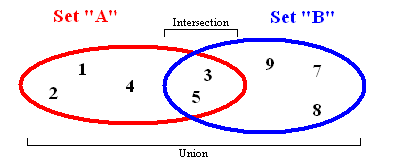
集合是数学的基本概念:定义明确且不同的对象的集合。ES6引入了集合的概念,它与数组有一定程度的相似性。但是,集合不允许重复元素,也不会被索引。
一个典型的集合具有以下方法:
values:返回集合中的所有元素size:返回元素个数has:确定元素是否存在add:将元素插入集合remove:从集合中删除元素union:返回两组交集difference:返回两组的差subset:确定某个集合是否是另一个集合的子集
为了区分ES6中的 set,我们在以下示例中声明为 MySet:
function MySet() {
  var collection = [];
  this.has = function (element) {
    return (collection.indexOf(element) !== -1);
  }
  this.values = function () {
    return collection;
  }
  this.size = function () {
    return collection.length;
  }
  this.add = function (element) {
    if (!this.has(element)) {
      collection.push(element);
      return true;
    }
    return false;
  }
  this.remove = function (element) {
    if (this.has(element)) {
      index = collection.indexOf(element);
      collection.splice(index, 1);
      return true;
    }
    return false;
  }
  this.union = function (otherSet) {
    var unionSet = new MySet();
    var firstSet = this.values();
    var secondSet = otherSet.values();
    firstSet.forEach(function (e) {
      unionSet.add(e);
    });
    secondSet.forEach(function (e) {
      unionSet.add(e);
    });
    return unionSet;  }
  this.intersection = function (otherSet) {
    var intersectionSet = new MySet();
    var firstSet = this.values();
    firstSet.forEach(function (e) {
      if (otherSet.has(e)) {
        intersectionSet.add(e);
      }
    });
    return intersectionSet;
  }
  this.difference = function (otherSet) {
    var differenceSet = new MySet();
    var firstSet = this.values();
    firstSet.forEach(function (e) {
      if (!otherSet.has(e)) {
        differenceSet.add(e);
      }
    });
    return differenceSet;
  }
  this.subset = function (otherSet) {
    var firstSet = this.values();
    return firstSet.every(function (value) {
      return otherSet.has(value);
    });
  }
}
5. Hast table(哈希表)

哈希表是一种键值数据结构。由于通过键值查询的速度快如闪电,所以常用于Map、Dictionary或Object数据结构中。如上图所示,哈希表使用哈希函数(hash function)将键转换为数字列表,这些数字作为对应键的值。要快速使用键获取价值,时间复杂度可以达到O(1)。相同的键必须返回相同的值——这是哈希函数的基础。
哈希表具有以下方法:
add:添加键值对remove:删除键值对lookup:使用键查找对应的值
一个Javascript中简化的哈希表的例子:
function hash(string, max) {
  var hash = 0;
  for (var i = 0; i < string.length; i++) {
    hash += string.charCodeAt(i);
  }
  return hash % max;
}

function HashTable() {
  let storage = [];
  const storageLimit = 4;

  this.add = function (key, value) {
    var index = hash(key, storageLimit);
    if (storage[index] === undefined) {
      storage[index] = [
        [key, value]
      ];
    } else {
      var inserted = false;
      for (var i = 0; i < storage[index].length; i++) {
        if (storage[index][i][0] === key) {
          storage[index][i][1] = value;
          inserted = true;
        }
      }
      if (inserted === false) {
        storage[index].push([key, value]);
      }
    }
  }

  this.remove = function (key) {
    var index = hash(key, storageLimit);
    if (storage[index].length === 1 && storage[index][0][0] === key) {
      delete storage[index];
    } else {
      for (var i = 0; i < storage[index]; i++) {
        if (storage[index][i][0] === key) {
          delete storage[index][i];
        }
      }
    }
  }

  this.lookup = function (key) {
    var index = hash(key, storageLimit);
    if (storage[index] === undefined) {
      return undefined;
    } else {
      for (var i = 0; i < storage[index].length; i++) {
        if (storage[index][i][0] === key) {
          return storage[index][i][1];
        }
      }
    }
  }
}
6. Tree(树)
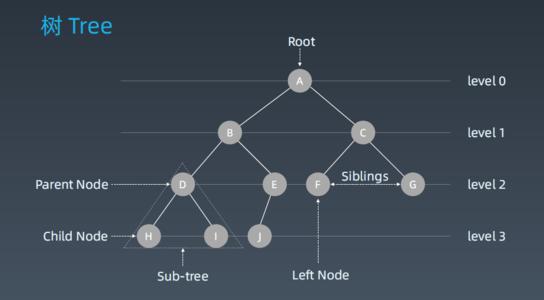
Tree(树)数据结构是多层结构。与Array,Stack和Queue相比,它也是一种非线性数据结构。这种结构在插入和搜索操作时效率很高。我们来看看树型数据结构的一些概念。
root:树的根节点,无父节点parent node:上层的直接节点,只有一个child node:下层的直接节点可以有多个siblings:共享同一个父节点leaf:没有孩子的节点Edge:节点之间的分支或链接path:从起始节点到目标节点的边Height of Nod:特定节点到叶节点的最长路径的边数Height of Tree:根节点到叶节点的最长路径的边数Depth of Node:从根节点到特定节点的边数Degree of Node:子节点数
这里以二叉树为例。每个节点最多有两个节点,左边节点比当前节点小,右边节点比当前节点大。

二叉树中的常用方法:
add:将节点插入树findMin:获取最小节点findMax:获取最大节点find:搜索特定节点isPresent:确定某个节点的存在remove:从树中删除节点
JavaScript中的示例:
class Node {
  constructor(data, left = null, right = null) {
    this.data = data;
    this.left = left;
    this.right = right;
  }
}

class BST {
  constructor() {
    this.root = null;
  }

  add(data) {
    const node = this.root;
    if (node === null) {
      this.root = new Node(data);
      return;
    } else {
      const searchTree = function (node) {
        if (data < node.data) {
          if (node.left === null) {
            node.left = new Node(data);
            return;
          } else if (node.left !== null) {
            return searchTree(node.left);
          }
        } else if (data > node.data) {
          if (node.right === null) {
            node.right = new Node(data);
            return;
          } else if (node.right !== null) {
            return searchTree(node.right);
          }
        } else {
          return null;
        }
      };
      return searchTree(node);
    }
  }

  findMin() {
    let current = this.root;
    while (current.left !== null) {
      current = current.left;
    }
    return current.data;
  }

  findMax() {
    let current = this.root;
    while (current.right !== null) {
      current = current.right;
    }
    return current.data;
  }

  find(data) {
    let current = this.root;
    while (current.data !== data) {
      if (data < current.data) {
        current = current.left
      } else {
        current = current.right;
      }
      if (current === null) {
        return null;
      }
    }
    return current;
  }

  isPresent(data) {
    let current = this.root;
    while (current) {
      if (data === current.data) {
        return true;
      }
      if (data < current.data) {
        current = current.left;
      } else {
        current = current.right;
      }
    }
    return false;
  }

  remove(data) {
    const removeNode = function (node, data) {
      if (node == null) {
        return null;
      }
      if (data == node.data) {
        // no child node
        if (node.left == null && node.right == null) {
          return null;
        }
        // no left node
        if (node.left == null) {
          return node.right;
        }
        // no right node
        if (node.right == null) {
          return node.left;
        }
        // has 2 child nodes
        var tempNode = node.right;
        while (tempNode.left !== null) {
          tempNode = tempNode.left;
        }
        node.data = tempNode.data;
        node.right = removeNode(node.right, tempNode.data);
        return node;
      } else if (data < node.data) {
        node.left = removeNode(node.left, data);
        return node;
      } else {
        node.right = removeNode(node.right, data);
        return node;
      }
    }
    this.root = removeNode(this.root, data);
  }
}
测试一下
const bst = new BST();
bst.add(4);
bst.add(2);
bst.add(6);
bst.add(1);
bst.add(3);
bst.add(5);
bst.add(7);
bst.remove(4);
console.log(bst.findMin());
console.log(bst.findMax());
bst.remove(7);
console.log(bst.findMax());
console.log(bst.isPresent(4));

1
7
6
false
7. Trie (发音为 “try”)

Trie或“前缀树”也是搜索树的一种。 Trie分步存储数据——树中的每个节点代表一个步骤。Trie是用来存储词汇的,所以它可以快速搜索,特别是自动完成功能。
Trie中的每个节点都有一个字母——分支之后可以组成一个完整的单词。它还包括一个布尔指示符,以显示这是否是最后一个字母。
Trie具有以下方法:
add:在字典树中插入一个单词isWord:确定树是否由某些单词组成print:返回树中的所有单词
/** Node in Trie **/
function Node() {
  this.keys = new Map();
  this.end = false;
  this.setEnd = function () {
    this.end = true;
  };
  this.isEnd = function () {
    return this.end;
  }
}

function Trie() {
  this.root = new Node();
  this.add = function (input, node = this.root) {
    if (input.length === 0) {
      node.setEnd();
      return;
    } else if (!node.keys.has(input[0])) {
      node.keys.set(input[0], new Node());
      return this.add(input.substr(1), node.keys.get(input[0]));
    } else {
      return this.add(input.substr(1), node.keys.get(input[0]));
    }
  }
  this.isWord = function (word) {
    let node = this.root;
    while (word.length > 1) {
      if (!node.keys.has(word[0])) {
        return false;
      } else {
        node = node.keys.get(word[0]);
        word = word.substr(1);
      }
    }
    return (node.keys.has(word) && node.keys.get(word).isEnd()) ? true : false;
  }
  this.print = function () {
    let words = new Array();
    let search = function (node = this.root, string) {
      if (node.keys.size != 0) {
        for (let letter of node.keys.keys()) {
          search(node.keys.get(letter), string.concat(letter));
        }
        if (node.isEnd()) {
          words.push(string);
        }
      } else {
        string.length > 0 ? words.push(string) : undefined;
        return;
      }
    };
    search(this.root, new String());
    return words.length > 0 ? words : null;
  }
}
8. Graph(图)
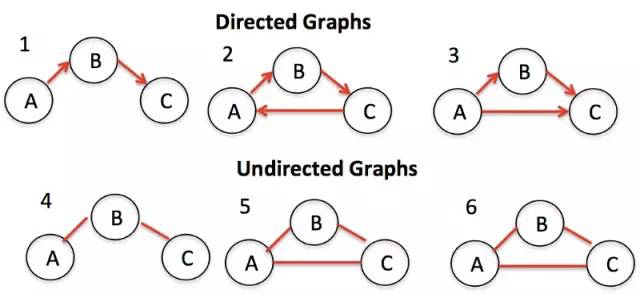
Graph(有时称为网络)是指具有链接(或边)的节点集。根据联系是否有方向性,可以进一步分为两组(即定向图和不定向图)。Graph在我们的生活中被广泛使用——在导航应用中计算最佳路线,或者在社交媒体中推荐朋友,举两个例子。
图有两种表示形式:
邻接清单
在此方法中,我们在左侧列出所有可能的节点,并在右侧显示已连接的节点。

邻接矩阵
相邻矩阵以行和列的形式显示节点,行和列的交点诠释了节点之间的关系,0表示没有联系,1表示有联系,>1表示权重不同。
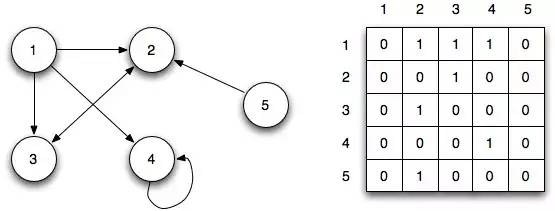
要查询图中的节点,必须用 “宽度优先搜索”(BFS)方法或 “深度优先搜索”(DFS)方法在整个树网中进行搜索。
让我们看一个例子的BFS在Javascript:
function bfs(graph, root) {
  var nodesLen = {};
  for (var i = 0; i < graph.length; i++) {
    nodesLen[i] = Infinity;
  }
  nodesLen[root] = 0;
  var queue = [root];
  var current;
  while (queue.length != 0) {
    current = queue.shift();

    var curConnected = graph[current];
    var neighborIdx = [];
    var idx = curConnected.indexOf(1);
    while (idx != -1) {
      neighborIdx.push(idx);
      idx = curConnected.indexOf(1, idx + 1);
    }
    for (var j = 0; j < neighborIdx.length; j++) {
      if (nodesLen[neighborIdx[j]] == Infinity) {
        nodesLen[neighborIdx[j]] = nodesLen[current] + 1;
        queue.push(neighborIdx[j]);
      }
    }
  }
  return nodesLen;
}
测试一下:
var graph = [
  [0, 1, 1, 1, 0],
  [0, 0, 1, 0, 0],
  [1, 1, 0, 0, 0],
  [0, 0, 0, 1, 0],
  [0, 1, 0, 0, 0]
];
console.log(bfs(graph, 1));

// 结果
{
  0: 2,
  1: 0,
  2: 1,
  3: 3,
  4: Infinity
}
就是这样——我们已经介绍了所有常见的数据结构,并给出了JavaScript中的例子。这应该能让你更好地了解数据结构在计算机中的工作原理。祝你编码愉快!

若有收获,就点个赞吧
0 人点赞


