树
树是一个类似于链表的二维结构,每个节点可以指向0个或多个其他节点
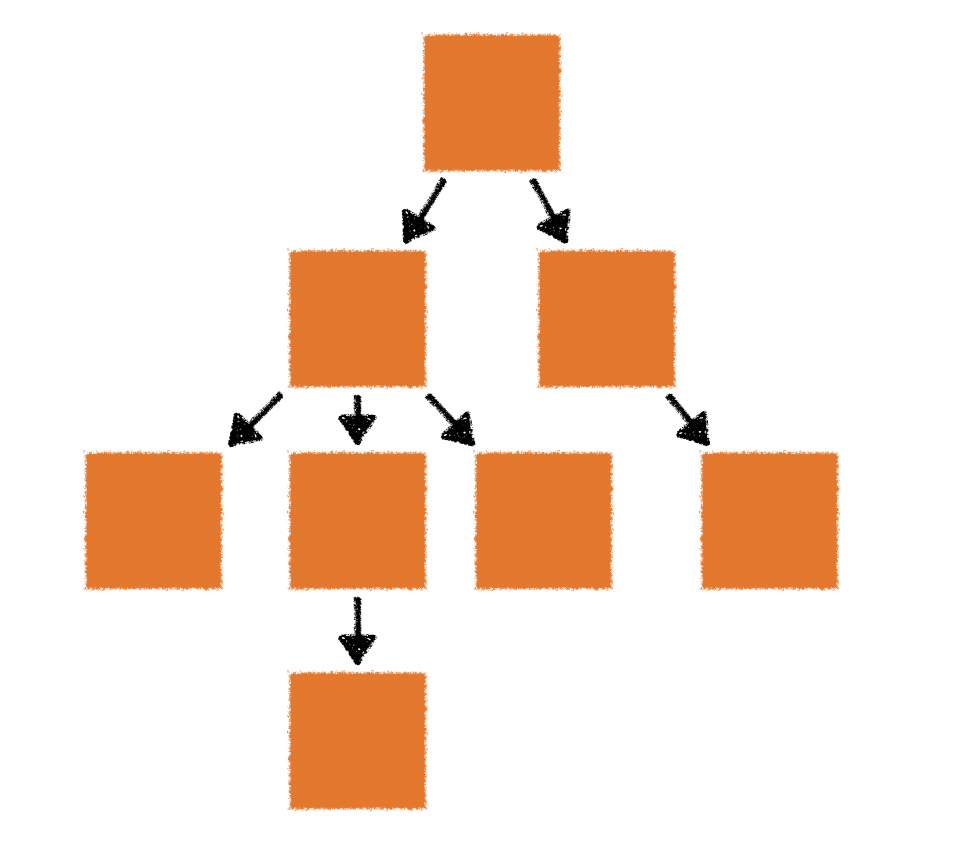
树具有以下特点:
- 单根:如果一个节点A指向了另一个节点B,仅能通过A直接找到B节点,不可能通过其他节点直接找到B节点
- 无环:节点的指向不能形成环
树的术语:
- 结点的度:某个节点的度 = 该节点子节点的数量
- 树的度:一棵树中,最大的节点的度为该树的度
- 结点的层:从根开始定义起,根为第1层,根的子结点为第2层,以此类推;
- 树的高度或深度:树中结点的最大层次
- 叶子节点:度为0的结点称为叶结点;
- 分支节点:非叶子节点
- 子节点、父节点:相对概念,如果A节点有一个子节点B,则A是B的父节点,B是A的子节点
- 兄弟节点:如果两个节点有同一个父节点,则它们互为兄弟节点
- 祖先节点:某个节点的祖先节点,是从树的根到该节点本身经过的所有节点
- 后代节点:如果A是B的祖先节点,B则是A的后代节点
树的代码表示法:
function Node(value) {this.value = value; // 节点中的数据this.children = []; // 指向其他节点的数组}var a = new Node("A");var b = new Node("B");var c = new Node("C");var d = new Node("D");var e = new Node("E");var f = new Node("F");a.children.push(b, c);b.children.push(d, e, f);
二叉树
如果一颗树的度为2,则该树是二叉树
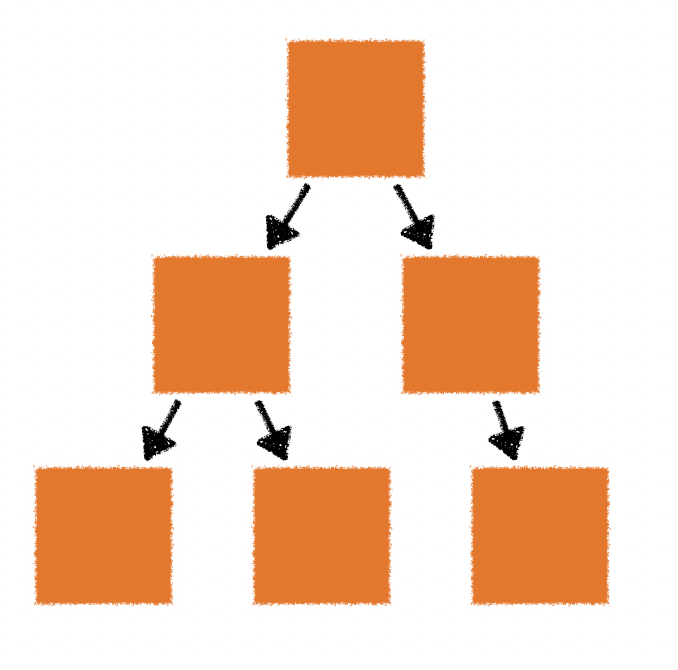
二叉树可以用下面的代码表示
function Node(value){
    this.value = value;
    this.left = null;
    this.right = null;
}
二叉树的相关算法
编写各种函数,实现下面的功能
- 对二叉树遍历打印
- 前(先)序遍历 DLR (degree left right)
- 中序遍历 LDR
- 后序遍历 LRD
- 根据前序遍历和中序遍历结果,得到一颗二叉树
- 计算树的深度
- 查询二叉树
- 深度优先 Depth First Search
- 广度优先 Breadth First Search
- 比较两棵二叉树,得到它们的差异 ```javascript function Node(value) { this.value = value; this.left = null; this.right = null; }
// 前序遍历 function DLR(node) { if (!node) { return; } console.log(node.value); // 先自己 DLR(node.left); DLR(node.right); }
// 中序遍历 function LDR(node) { if (!node) { return; } LDR(node.left); console.log(node.value); LDR(node.right); }
// 后序遍历 function LRD(node) { if (!node) { return; } LRD(node.left); LRD(node.right); console.log(node.value); }
// 根据前序和中序遍历结果,得到一颗二叉树 function getTree(dlr, ldr) { if (dlr.length !== ldr.length) throw new Error(“无效的遍历值”); if (dlr.length === 0) return null;
var rootValue = dlr[0]; // 通过前序遍历的第一个字符,得到根节点的value值 var root = new Node(rootValue); // 创建根节点 var rootIndex = ldr.indexOf(rootValue); // 根节点在中序遍历中的位置
var leftLDR = ldr.substring(0, rootIndex); // 左边的中序遍历 var leftDLR = dlr.substr(1, leftLDR.length); // 左边的前序
var rightLDR = ldr.substr(rootIndex + 1); // 右边的中序 var rightDLR = dlr.substr(leftDLR.length + 1); // 右边的前序 root.left = getTree(leftDLR, leftLDR); root.right = getTree(rightDLR, rightLDR);
return root; }
// 计算树的深度 function getDeep(node) { if (!node) { return 0; } return 1 + Math.max(getDeep(node.left), getDeep(node.right)); }
// 深度优先搜索 function deepSearch(node, target) { if (!node) { return false; } console.log(node.value); if (node.value === target) { //自己就是 return true; // 找到了 } return deepSearch(node.left, target) || deepSearch(node.right, target); }
// 广度优先搜索 function breadthSearch(node, target) { function _breadthSearch(nodes) { if (nodes.length === 0) { // 数组没东西 return false; } var nextLayer = []; // 下一层的节点 for (var i = 0; i < nodes.length; i++) { console.log(nodes[i].value); if (nodes[i].value === target) { return true; } if (nodes[i].left) { nextLayer.push(nodes[i].left); } if (nodes[i].right) { nextLayer.push(nodes[i].right); } } return _breadthSearch(nextLayer); }
return _breadthSearch([node]); }
// 对比两个树的差异,返回差异结果(数组) function diff(node1, node2) { var result = []; if (!node1 && !node2) { return result; // 两个节点都没有值,不可能有差异,返回空数组即可 } if (!node1 && node2) { result.push({ type: “新增”, from: null, to: node2 }); return result; // 这种情况不需要继续往后比较了 } if (node1 && !node2) { result.push({ type: “删除”, from: node1, to: null }); return result; // 这种情况不需要继续往后比较了 } if (node1.value !== node2.value) { result.push({ type: “修改”, from: node1, to: node2 }); // 加入「修改」的变化 // 不能停止 } var leftDiff = diff(node1.left, node2.left); // 左树的差异 var rightDiff = diff(node1.right, node2.right); // 右树的差异
return result.concat(leftDiff).concat(rightDiff); // 合并差异 }
var node1 = getTree(“ABDGECF”, “GDBEAFC”); var node2 = getTree(“AKDECFT”, “DKEAFCT”);
var result = diff(node1, node2); console.log(result); ```

若有收获,就点个赞吧
0 人点赞


