
class Product {name: stringconstructor(name) {this.name = name}fn1() {console.log('prod')}fn2() {console.log('prod-2')}}// 工厂class Creator {create(name: string): Product {return new Product(name)}}// testconst creator = new Creator();const p1 = creator.create('p1');const p2 = creator.create('p2');const p3 = creator.create('p3');const p4 = creator.create('p4');
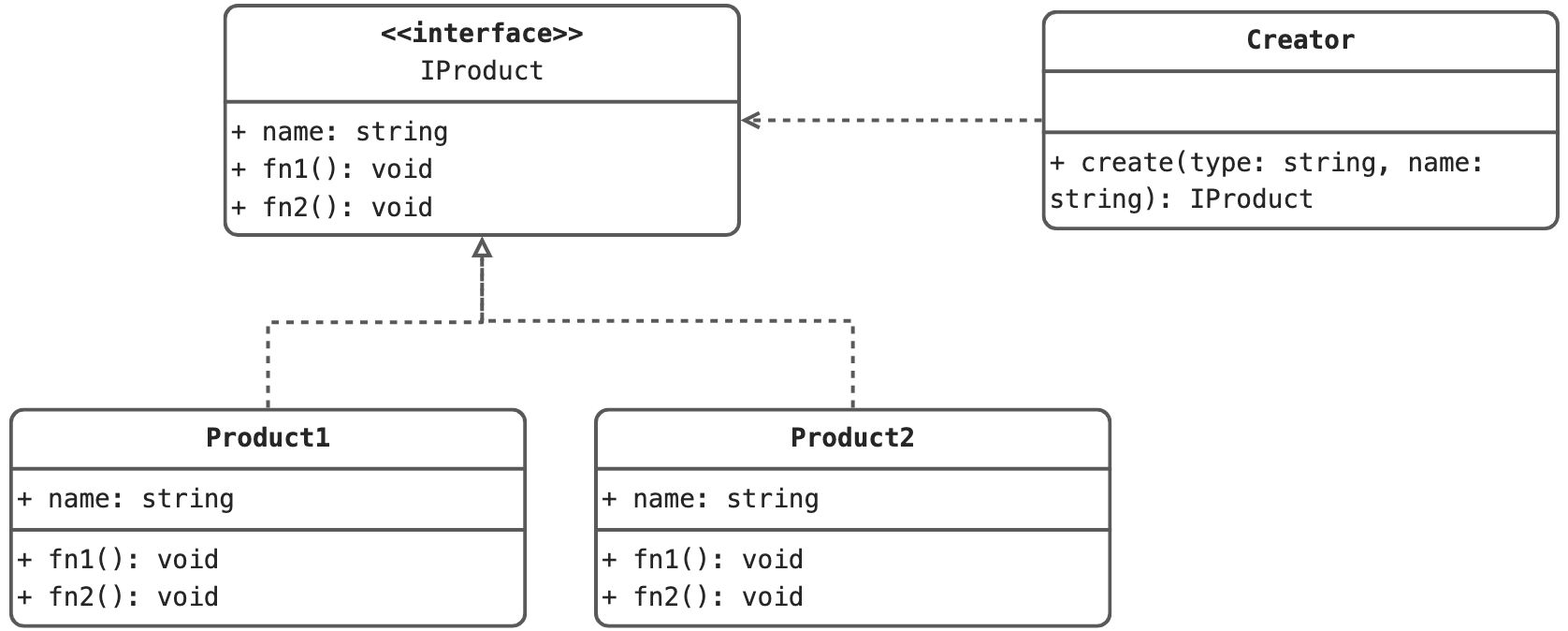
interface IProduct {name: stringfn1: () => voidfn2: () => void}class Product1 implements IProduct {name: stringconstructor(name: string) {this.name = name}fn1() {}fn2() {}}class Product2 implements IProduct {name: stringconstructor(name: string) {this.name = name}fn1() {}fn2() {}}class Creator {// 符合依赖倒置原则,我们返回的不是Product1或Product2,而是返回接口类型IProductcreate(type: string, name: string): IProduct {// new 时的一些逻辑if (type === 'p1') return new Product1(name)if (type === 'p2') return new Product2(name)throw new Error('Invalid type')}}// testconst creator = new Creator();const p1 = creator.create('p1', 'name1')const p11 = creator.create('p1', 'name11')const p2 = creator.create('p2', 'name2')
是否符合设计原则
- 工厂和类分离,解耦
- 可以扩展多个类(派生类,或平行的类)
- 工厂的创建逻辑也可以自由扩展

若有收获,就点个赞吧
0 人点赞


