参考: 回溯法详解
一、以计算集合元素全排列为例,标准的回溯法如下:
示例:输入:nums = [1,2,3] 输出:[[1,2,3],[1,3,2],[2,1,3],[2,3,1],[3,1,2],[3,2,1]]
class Solution {public List<List<Integer>> permute(int[] nums) {List<List<Integer>> result = new ArrayList<>();backTrack(result,new ArrayList<Integer>(),nums); //回溯return result;}private void backTrack(List<List<Integer>> result, List<Integer> path, int[] nums){if(path.size()==nums.length){result.add(new ArrayList<>(path));//一定要重新声明的个集合return;}for(int n : nums){if(path.contains(n)) continue;path.add(n);backTrack(result, path, nums); //继续path.remove(path.size()-1); //回溯}}}
二、以计算集合元素子集为例,标准回溯法如下:
示例:输入:nums = [1,2,3] 输出:[[],[1],[2],[1,2],[3],[1,3],[2,3],[1,2,3]]
class Solution {public List<List<Integer>> subsets(int[] nums) {List<List<Integer>> result = new ArrayList<>();backTrack(result, new ArrayList<>(), nums, 0);return result;}private void backTrack(List<List<Integer>> result, List<Integer> path, int[] nums, int idx){result.add(new ArrayList<>(path)); //因为是求子集,因此这里不需要判断一条路径是否走完,每个子路径都是一个子集for(int i=idx; i< nums.length; i++){path.add(nums[i]);backTrack(result, path, nums, i+1); //子集不能包含重重复元素,需要在依靠下标依次选取后续元素path.remove(path.size()-1);}}}
| 题目 | 思路 | 备注 |
|---|---|---|
| 电话号码的字母组合 | map存储每个数字的字符列表 回溯法为构建每条路径字符串 |
|
| 全排列 | 标准的回溯法 | |
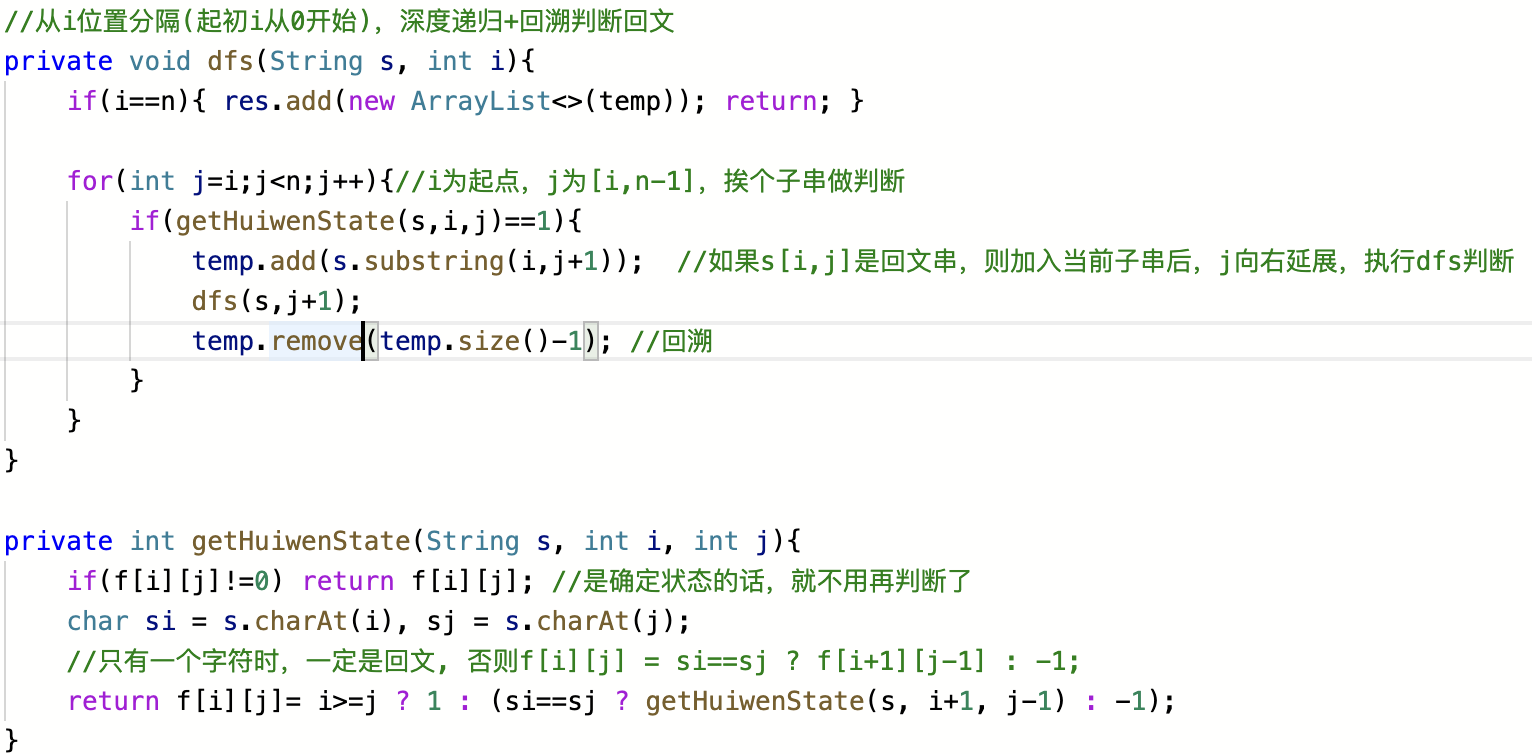
| 分隔回文串 | 回溯法,f[i][j]的值表示 子串是否是回文串,0:未知,1:是,-1:不是. 子串是否是回文串,0:未知,1:是,-1:不是.从第0个字符开始dfs,向右延展,逐步判断每一个分隔的子串是不是回文串  |
 |
| 删除无效的括号 | 思路:有效的括号遵循这样的规律: - 从左看起,在任意位置,左括号数量总大于等于右括号数量;从右看起时类似 - 最终左右括号数量必相同 |
——因此当过程中某个字符打破上述规则的话,就需删除该字符
回溯法的具体步骤:
1. 先算出一共要删除多少’(‘及’)’
1. 从第一个字符开始判断,每当遇到一个’(‘,如果可删,则尝试删之, 右括号类似
1. 终止条件:要删的左右括号均为0
优化点: a. 剩余字符少于欲删字符量; b. 连续的同向括号,只需处理第一个即可,其它的不需要重复去。 | 关键代码1——判断括号是否有效: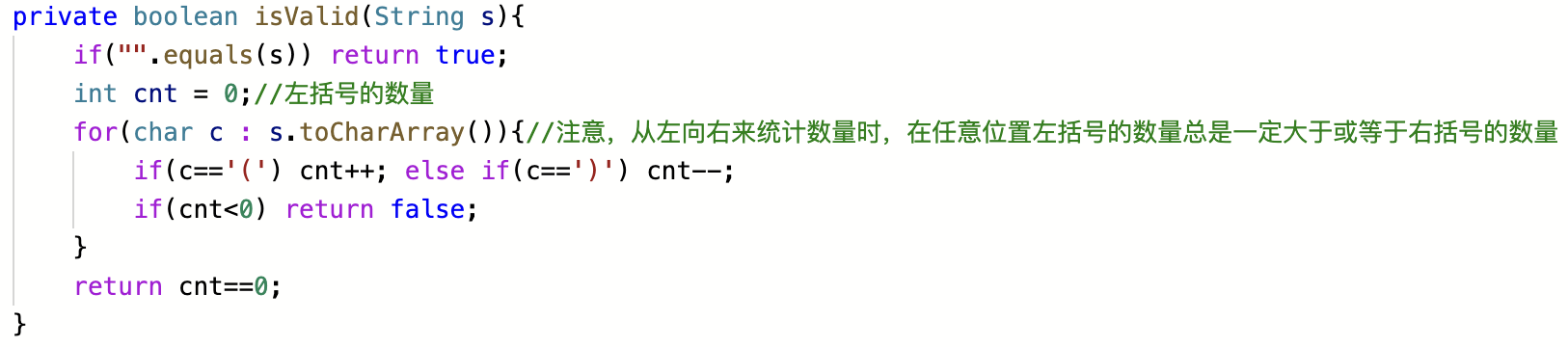
关键代码2——统计待删除的左右括号数: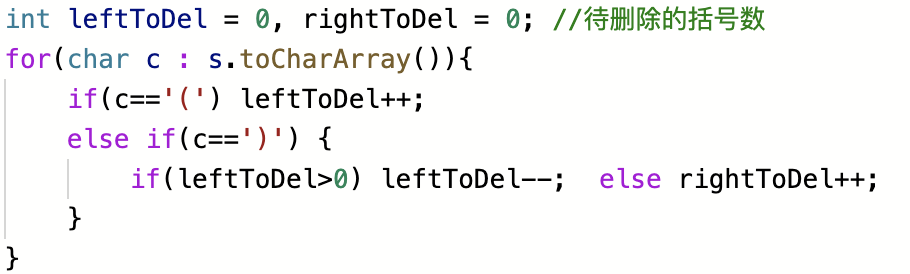
关键代码三——不断递归尝试删括号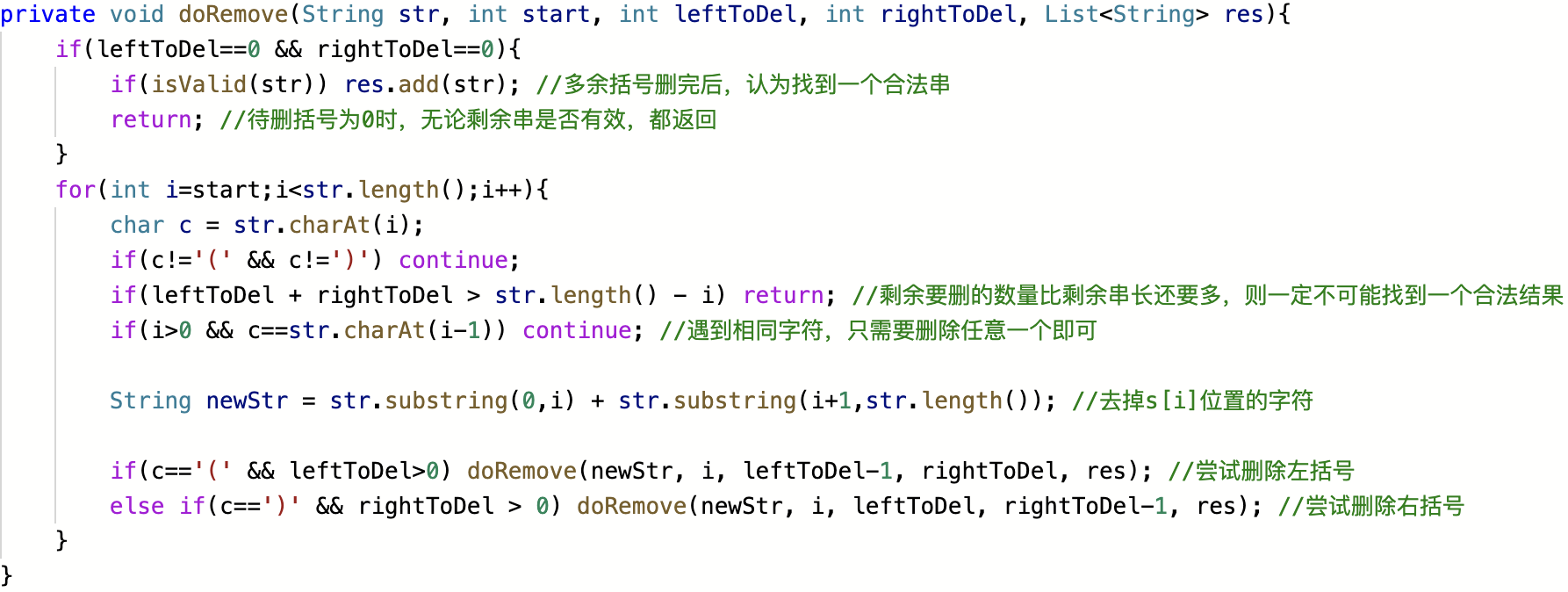 |
|
|
|
| | |
| | | |
| | | |
| | | |
| | | |
| | | |
| | | |

若有收获,就点个赞吧
0 人点赞


