1. Introduction
ArrayDeque s also known as Array Double Ended Queue. This is a special kind of array that grows and allows users to add or remove an element from both sides of the queue.
Few important features of ArrayDeque are as follows:
Null elements are prohibited in the ArrayDeque.
- List other collections, ArrayDeque is not thread-safe either.
- ArrayDeque class is likely to be faster than Stack when used as a stack.
- ArrayDeque class is likely to be faster than LinkedList when used as a queue.
首尾双端插入/删除时,LinkedList 指针额外消耗时间(allocation and GC),ArrayDeque长度没有调整时不会启动GC。
2. Interfaces implemented by ArrayDeque
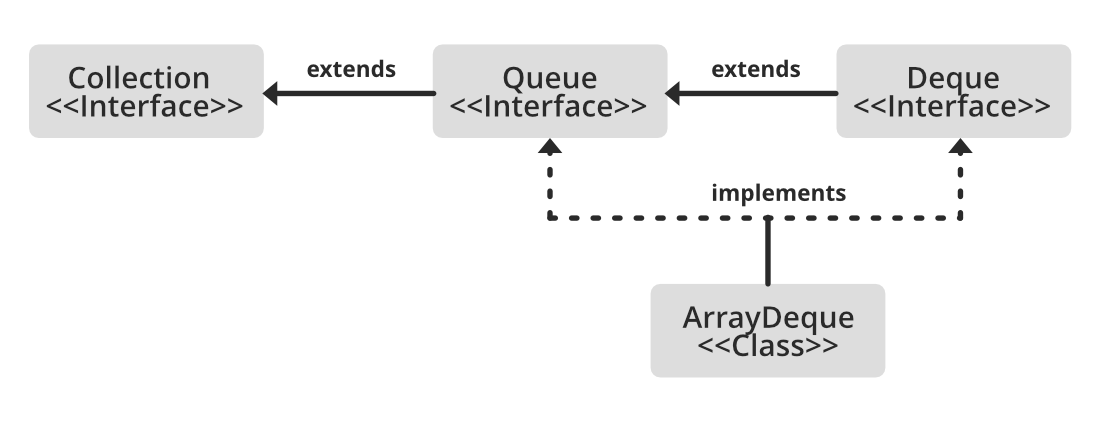 The ArrayDeque class implements these two interfaces:
- Queue Interface: It is an Interface which is a FIFO Data Structure where the elements are added from the back.
Deque Interface: It is a Doubly Ended Queue in which you can insert the elements from both the sides. It is an interface that implements the Queue.
栈操作:
E pop()
- E peak()
-
队列操作:
boolean offer(E e)
- boolean offerLast(E e)
- E poll()
- E pollLast()
- E peek()
-
3. 什么时候使用 LinkedList,什么时候使用 ArrayDeque?
https://venus.cs.qc.cuny.edu/~mfried/cs313/list_comparison.html
Sometimes it is difficult to predict which one is best without testing, but here are a few tips: Use an ArrayList if you need to access elements by index and you only need to insert/delete at the end.
- Use an ArrayDeque as a stack, queue or deque.
- Use a LinkedList when you need to add/remove elements from the middle of the list too often or if you need insertion at the ends to be worst-case O(1).
4. 实现原理
实现原理: https://www.cnblogs.com/loveLands/articles/9708717.html
从名字可以看出ArrayDeque底层通过数组实现,为了满足可以同时在数组两端插入或删除元素的需求,该数组还必须是循环的,即循环数组(circular array),也就是说数组的任何一点都可能被看作起点或者终点。ArrayDeque是非线程安全的(not thread-safe),当多个线程同时使用的时候,需要程序员手动同步;另外,该容器不允许放入null元素。
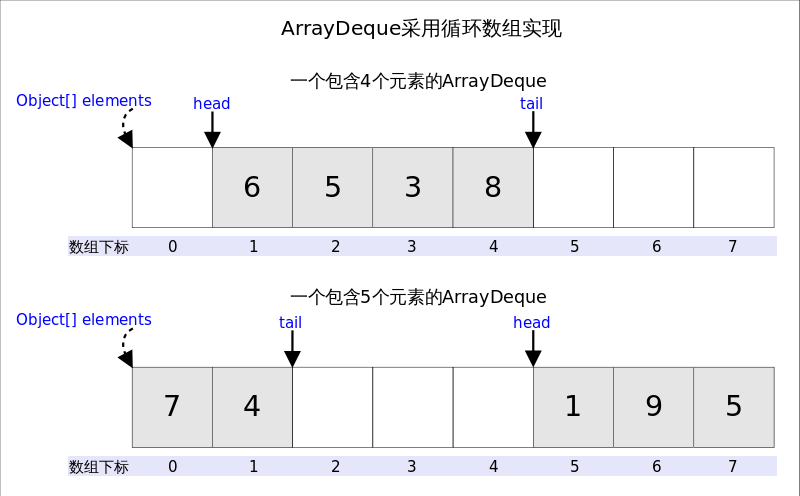
head指向首端第一个有效元素,tail指向尾端第一个可以插入元素的空位。因为是循环数组,所以head不一定总等于0,tail不一定总是比head大。
addFirst(E e)的作用是在Deque的首端插入元素,也就是在head的前面插入元素,在空间足够且下标没有越界的情况下,只需要将elements[—head] = e即可。
实际需要考虑:1.空间是否够用 2.下标是否越界的问题
空间问题是在插入之后解决的,因为tail总是指向下一个可插入的空位,也就意味着elements数组至少有一个空位,所以插入元素的时候不用考虑空间问题。
下标越界的处理解决起来非常简单,head = (head - 1) & (elements.length - 1)就可以了,这段代码相当于取余,同时解决了head为负值的情况。因为elements.length必需是2的指数倍,elements - 1就是二进制低位全1,跟head - 1相与之后就起到了取模的作用,如果head - 1为负数(其实只可能是-1),则相当于对其取相对于elements.length的补码。
扩容函数doubleCapacity(),其逻辑是申请一个更大的数组(原数组的两倍),然后将原数组复制过去。过程如下图所示: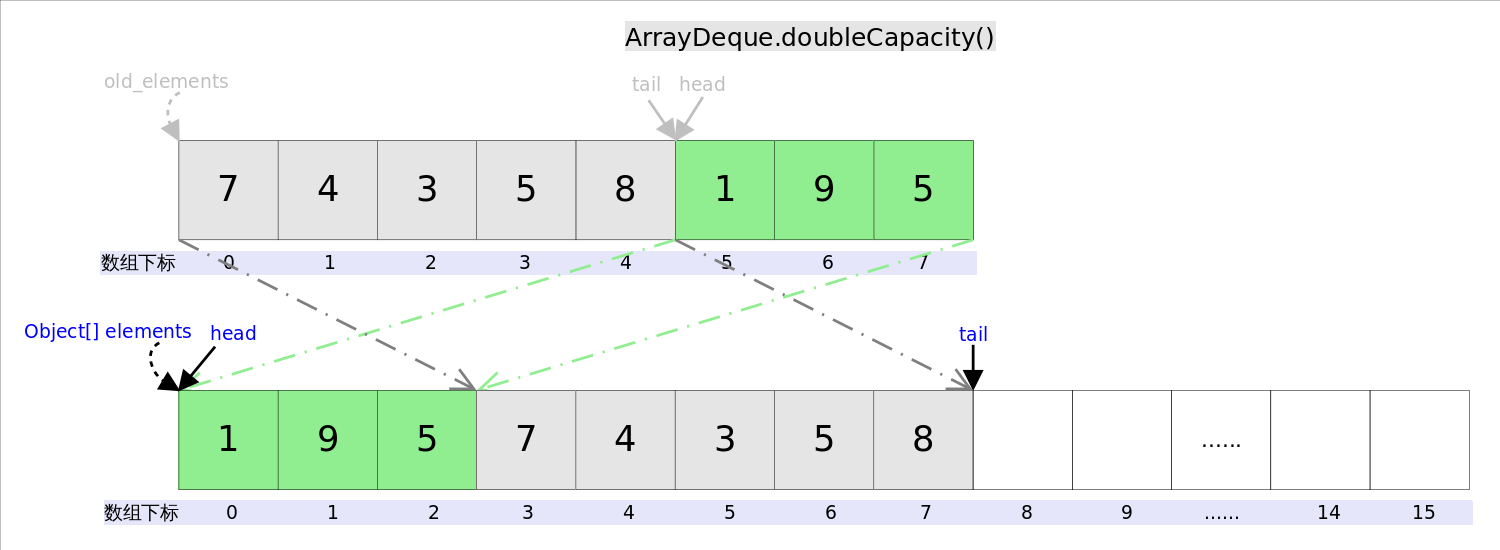
复制分两次进行,第一次复制head右边的元素,第二次复制head左边的元素。

若有收获,就点个赞吧
0 人点赞


