实验一 : 事务表 查看
- 建表语句
``sql CREATE TABLEt2(idINT ( 11 ) NOT NULL,cINT ( 11 ) DEFAULT NULL,dINT ( 11 ) DEFAULT NULL, PRIMARY KEY (id), KEYc(c` ) ) ENGINE = INNODB;
insert into t2 values(0,0,0),(5,5,5), (10,10,10),(15,15,15),(20,20,20),(25,25,25);
- 开启三个窗口。- 窗口一 执行:select * from t2 where d=5 lock in share mode; 共享读锁- 窗口二执行:select * from t2 where d =5 for update; 排他读锁- 窗口三执行:select * from information_schema.INNODB_TRX\G; 查看 INNODB_TRX 表碓事务信息, 发现 有事务 在等待 锁 请求 lock wait;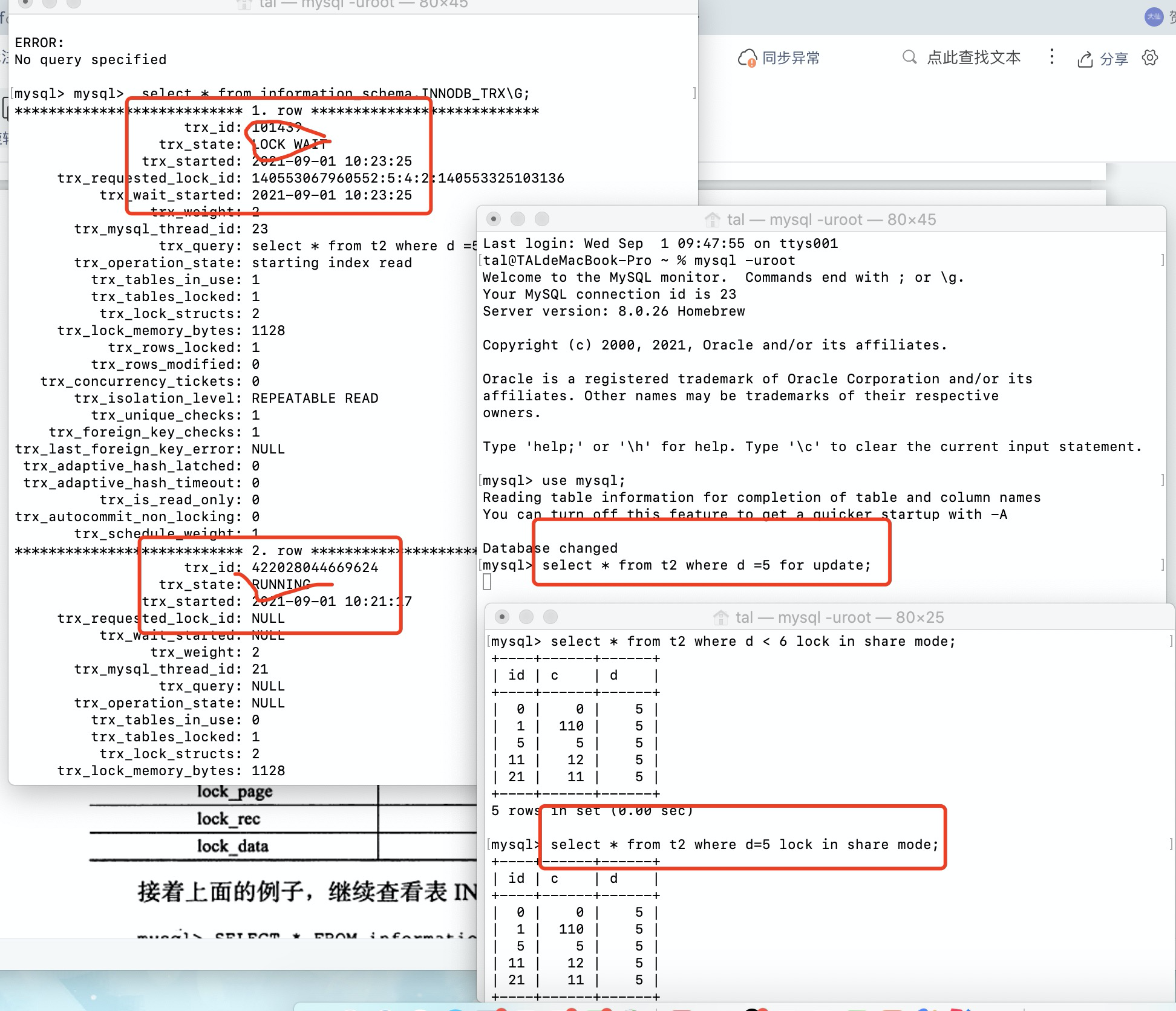- 可以 观察到 trx_id 为 10143 的 事务 A 正在等待 锁请求, 并且 请求的锁 id : trx_requeste_lock_id : 一大串id 如图。 也可以看到造成所等待的查询语句,锁住的行数等等, 在事务进行回滚时,会根据 这个行数 来选择 最小行数 进行回退。<a name="y5p1g"></a>### 实验二 : update的当前读- 关于 可重复读 的一些实验。MySQL 默认开启事务自动提交模式,即除非显式的开启事务(BEGIN 或 START TRANSACTION),否则每条 SOL 语句都会被当做一个单独的事务自动执行- 开启事务A , 查询语句 执行 select * from t2 where d=5;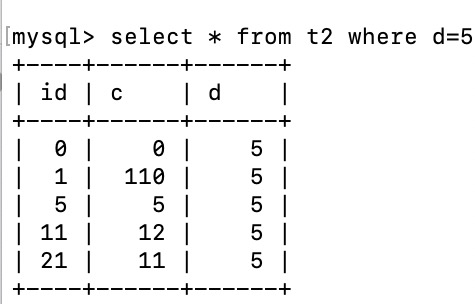- 开启 事务B ,执行 update t2 set c = 72 where id = 21; 并提交。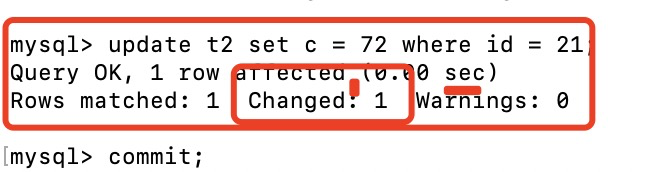- 事务 A 执行相同的语句 : update t2 set c = 72 where id = 21; 可以观察到 changed:0。 虽然执行成功 但是 并没有发生修改。 因为 update是当前读, 会读到最新 数据, 事务B 执行过一次 uodate, 事务再次执行相同的是update语句时,会读到最新的数据, 因此 不会发生修改。- 结论: update 是当前读, 读的是最新快照, 与 innoDB的可重读 并不冲突, 因为可重复读 是针对 普通的select 语句碓。<a name="jO0rC"></a>### 实验三 : 锁释放时机- 开启事务A, 执行查询语句 :select * from t2 where d = 5;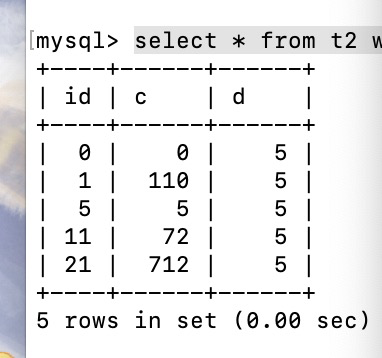- 开启事务 B **不提交** , 执行更新语句: update t2 set c = 8000 where id = 21; 执行成功。```sqlupdate t2 set c = 8000 where id = 21;Query OK, 1 row affected (0.01 sec)Rows matched: 1 Changed: 1 Warnings: 0
- 事务A 执行相同的 更新语句: update t2 set c = 8000 where id = 21; 执行失败, 事务会被阻塞,直到超时。 ```sql update t2 set c = 8000 where id = 21; ERROR 1205 (HY000): Lock wait timeout exceeded; try restarting transaction
加锁读 也是 当前读, 去读最新的快照。 但是由于事务B没有释放锁, 导致 阻塞等待超时。
mysql> select * from t2 where id = 21 lock in share mode; ERROR 1205 (HY000): Lock wait timeout exceeded; try restarting transaction
当前读, 读的是 id = 11 的行, 没有被锁住, 因此可以读
mysql> select * from t2 where id = 11 lock in share mode; +——+———+———+ | id | c | d | +——+———+———+ | 11 | 72 | 5 | +——+———+———+ 1 row in set (0.00 sec)
当前读 id = 21 的行 被锁住 因此 等待超时。
mysql> select * from t2 where c= 712 lock in share mode; ERROR 1205 (HY000): Lock wait timeout exceeded; try restarting transaction
快照读 读的是 事务自己的历史版本。MVCC
mysql> select * from t2 where c=712; +——+———+———+ | id | c | d | +——+———+———+ | 21 | 712 | 5 | +——+———+———+ 1 row in set (0.00 sec)
这里为什么被锁住 不是清楚, 估计是 间隙锁的原因。
mysql> select * from t2 where d = 4 lock in share mode; ERROR 1205 (HY000): Lock wait timeout exceeded; try restarting transaction mysql>
- 原因: 由于事务B 执行了 update 操作, 并且没有提交事务, 而执行 update操作 实际上 是使用了排他锁, 锁需要等到事务提交时才会被释放, 事务A执行相同的 更新语句 会被阻塞。<a name="rbEN7"></a>### 实验四 锁算法验证- 行锁: Record Lock: 锁记录- 间隙锁:Gap Lock: 锁范围- Next-Key Lock: 锁记录与锁范围- 锁的验证实验。<a name="sBN0K"></a>#### 对于 锁 唯一索引- 建表语句: 创建 一个 主键索引, 主键索引的性质 : 键唯一, 这里就会涉及到 锁 降级的一些问题。- 事务A:```sqlcreate table t(a int primary key);# 插入 1 2 5 三条语句。# 开启事务Amysql> begin;Query OK, 0 rows affected (0.00 sec)# 一致性锁定读 加锁读。mysql> select * from t where a =5 for update;+---+| a |+---+| 5 |+---+1 row in set (0.00 sec)
- 事务B: ```sql mysql> begin; Query OK, 0 rows affected (0.00 sec)
mysql> select * from t; +—-+ | a | +—-+ | 1 | | 2 | | 5 | +—-+ 3 rows in set (0.00 sec)
插入数据 插入成功。
mysql> insert into t select 4; Query OK, 1 row affected (0.00 sec) Records: 1 Duplicates: 0 Warnings: 0 mysql> commit; Query OK, 0 rows affected (0.00 sec) mysql>
- 结论: 事务A虽然使用了 加锁读,会触发 Next-Key Lock。 即锁定范围和本身, 但是 由于 a 是主键, 因此 Next-Key Lock 会降级为 Record Lock。 只会锁定 主键本身, 提高了并发度。对于这样的 锁降级 只会对 唯一索引有效。<a name="STDnw"></a>#### 对于锁辅助索引- 建表语句```sqlcreate table z (a int, b int, primary key(a),key(b));Query OK, 0 rows affected (0.03 sec)mysql> insert into z select 1,1;Query OK, 1 row affected (0.00 sec)Records: 1 Duplicates: 0 Warnings: 0mysql> insert into z select 3,1;Query OK, 1 row affected (0.00 sec)Records: 1 Duplicates: 0 Warnings: 0mysql> insert into z select 5,3;Query OK, 1 row affected (0.00 sec)Records: 1 Duplicates: 0 Warnings: 0mysql> insert into z select 7,6;Query OK, 1 row affected (0.00 sec)Records: 1 Duplicates: 0 Warnings: 0mysql> insert into z select 10,8;Query OK, 1 row affected (0.01 sec)Records: 1 Duplicates: 0 Warnings: 0
- 事务A 执行 加锁读 ```sql begin; Query OK, 0 rows affected (0.00 sec)
mysql> select * from z where b = 3 for update; +—-+———+ | a | b | +—-+———+ | 5 | 3 | +—-+———+ 1 row in set (0.00 sec)
- 由于有两个索引, 因此 mysql 会对 a,b分别加锁。 由于 a是唯一索引, 因此 只会 锁住 a=5 这个记录, 而由于 b是辅助索引, 会触发相应的Next-Key Lock 和Gap LOCK。- 对于 b索引, next-key Lock 会锁住 范围(1,3), Gap Lock 会锁住(3,6);- 因此 对于 事务B 执行如下操作:```sqlmysql> begin;Query OK, 0 rows affected (0.00 sec)# a 被事务A 锁住 因此 该条语句会被阻塞mysql> select * from z where a = 5 lock in share mode;ERROR 1205 (HY000): Lock wait timeout exceeded; try restarting transaction# 插入 (6,5) 对于主键 a=6 没有问题, 但是 b = 5 被在范围(3,6)中 会被锁住mysql> insert into z select 6,5;ERROR 1205 (HY000): Lock wait timeout exceeded; try restarting transaction# 不在 事务A的加锁范围内 因此 直接插入成功。mysql> insert into z select 2,0;Query OK, 1 row affected (0.01 sec)Records: 1 Duplicates: 0 Warnings: 0mysql> insert into z select 8,6;Query OK, 1 row affected (0.00 sec)Records: 1 Duplicates: 0 Warnings: 0# 事务 B 执行 更新操作, 虽然 a =3 没有被锁住, 但是 b =2 在范围(1,3) 却被next-key lock 锁住了。 因此 更新失败。mysql> update z set b = 2 where a=3;ERROR 1205 (HY000): Lock wait timeout exceeded; try restarting transaction# 执行成功 b = 8 不在被 锁住的范围内。mysql> update z set b = 8 where a=3;Query OK, 1 row affected (0.00 sec)Rows matched: 1 Changed: 1 Warnings: 0# a=5 , 被锁住了, 更新失败。mysql> update z set b = 8 where a=5;
注意: 唯一索引的锁降级 ,只会针对 单列的 索引降级, 如果是多列构成的唯一索引,但是只操作一行, 那么依旧会是next - key lock。
实验五 : 幻读问题
幻读: 在同一事务下,连续执行两次同样的SQL,可能导致不用的结果, 第二次的SQL语句 可能会返回不同的行。
提交读
设置 事务的隔离级别为 提交读 进行实验。 表中只有 1 2 5 这三条数据
- 对于事务A :select * from t where a>2 for update;
```sql
将隔离级别设置 为 提交读
mysql> set session transaction isolation level read committed; Query OK, 0 rows affected (0.00 sec)
mysql> begin; Query OK, 0 rows affected (0.00 sec)
mysql> select * from t where a>2 for update; +—-+ | a | +—-+ | 5 | +—-+ 1 row in set (0.00 sec)
- 对于 事务B , 插入 数据 4 并提交```sqlmysql> begin;Query OK, 0 rows affected (0.00 sec)mysql> insert into t select 4;Query OK, 1 row affected (0.01 sec)Records: 1 Duplicates: 0 Warnings: 0mysql> commit;Query OK, 0 rows affected (0.00 sec)
事务A 再次 读取。 这里 不管是 提交读 还是 可重复读 由于使用的是 for update 加锁读,都会读到最新的数据。
mysql> select * from t where a>2 for update;+---+| a |+---+| 5 |+---+1 row in set (0.00 sec)# 在 事务B 提交 事务之后, A 读取到了 新插入的数据。mysql> select * from t where a>2 for update;+---+| a |+---+| 4 || 5 |+---+2 rows in set (0.00 sec)
问题的关键在于: 事务B 在事务A 使用 for update 读的情况下 , 依然能够 插入数据。 是因为 对于 提交读, 使用的锁不是next-key Lock 而是 record Lock。 并没有锁住 (2,5)这个范围, 而是 只是 锁住了 记录 a =5.

若有收获,就点个赞吧
0 人点赞


