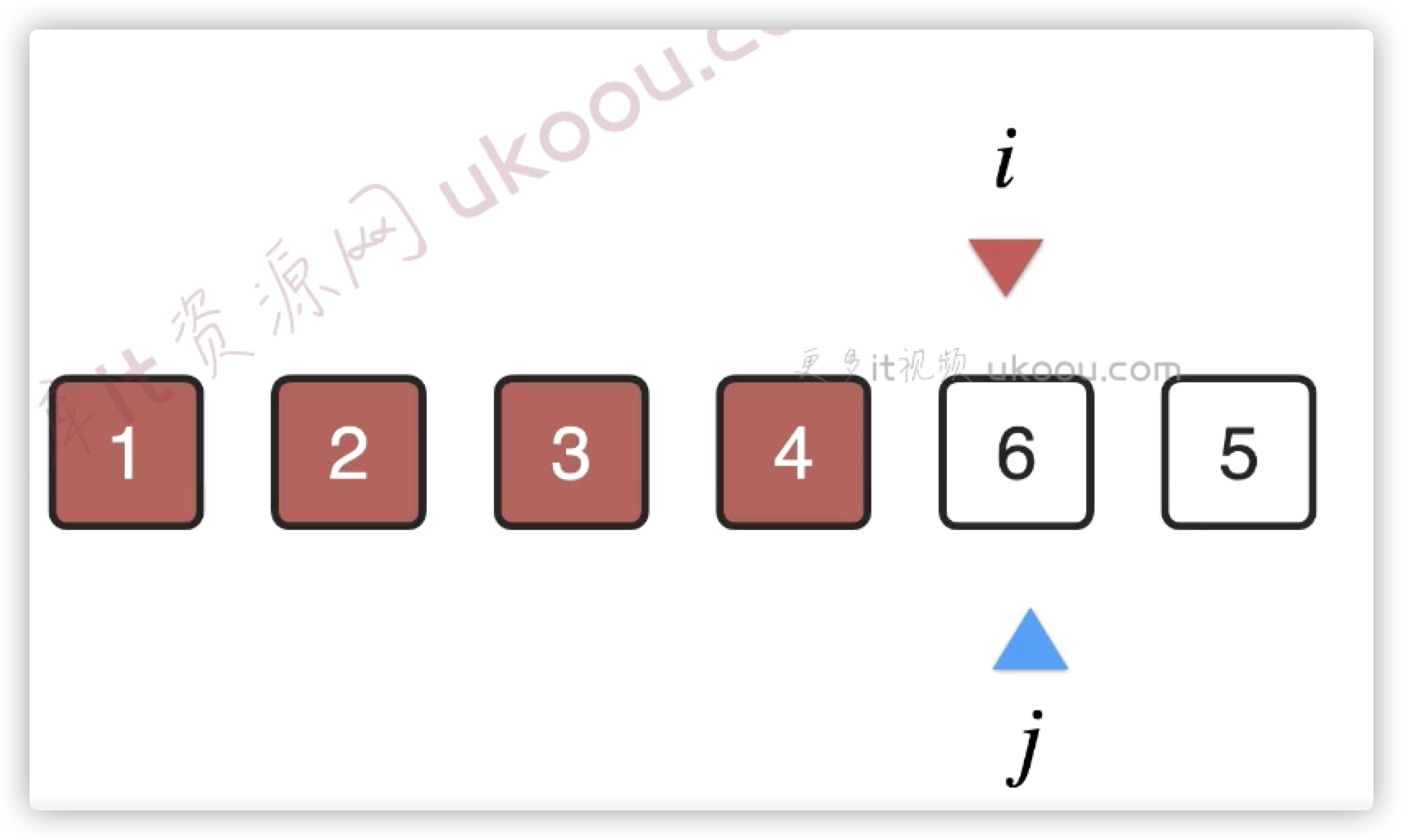
- 先把最小的拿出来
- 剩下的,再把最小的拿出来
- 剩下的,再把最小的拿出来
- 每次选择还没处理的元素里最小的元素
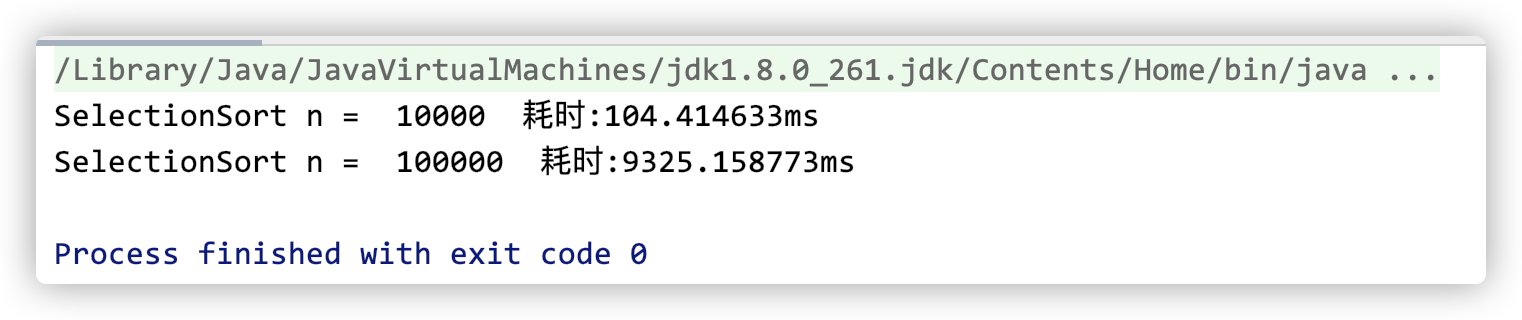
数据规模扩大10倍,耗时增加了100倍,可以看出是n^2级别的时间复杂度
public class SelectionSort {private SelectionSort() {}public static <E extends Comparable<E>> void sort(E[] arr) {for (int i = 0; i < arr.length; i++) {//选择arr[i...n)中最小值的索引int minIndex = i;for (int j = i; j < arr.length; j++) {if (arr[j].compareTo(arr[minIndex]) < 0) {minIndex = j;}}swap(arr, i, minIndex);}}private static <E> void swap(E[] arr, int i, int j) {E temp = arr[i];arr[i] = arr[j];arr[j] = temp;}public static void main(String[] args) {Integer[] arr = {1, 5, 7, 4, 6, 9};SelectionSort.sort(arr);for (int i : arr) {System.out.print(i + "\t");}System.out.println();Student[] students = {new Student("Alice", 22), new Student("Bobo", 18), new Student("Jack", 33)};SelectionSort.sort(students);for (Student student : students) {System.out.println(student);}}}public class Student implements Comparable<Student> {private String name;private int score;public Student(String name) {this.name = name;}public Student(String name, int score) {this.name = name;this.score = score;}@Overridepublic boolean equals(Object o) {if (this == o) {return true;}if (o == null) {return false;}if (this.getClass() != o.getClass()) {return false;}Student another = (Student) o;return this.name.equals(another.name);}@Overridepublic int compareTo(Student o) {return this.score - o.score;}@Overridepublic String toString() {return "Student(" +"name='" + name + '\'' +", score=" + score +')';}}

若有收获,就点个赞吧
0 人点赞


