题目
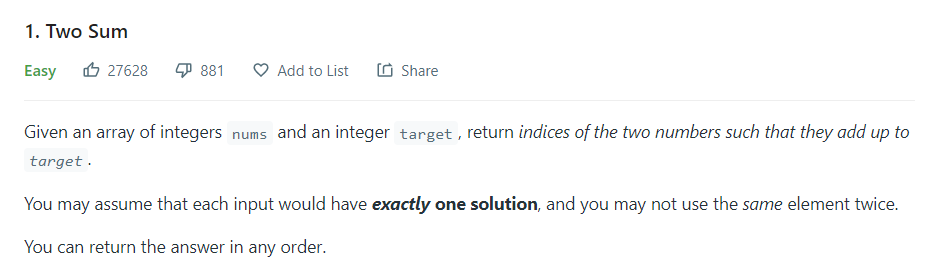
题目要点
I/O 数据结构
- Given: nums -> array, target -> int
- Return type: list
其他
- array中同一元素只能用一次
解题思路
初级解法
- 首先最初级的是θ(n^2)解法,数组中每一元素(i)都与其他元素(j)相加,伪代码如下
n=len(nums)for i from 0 to n-1:for j from (i+1) to n:if nums[i]+nums[j] == target:return [i,j]
进阶解法
- 进阶解法,利用hashmap中查找是O(1)的特性,把array存入hashmap中,只循环一遍就可以找到解。
这里我也是查资料才知道的,python中的dictionary利用了hashmap的存储特性,而dictionary作为python中应该都接触过的重要数据结构之一,我们可以认为在python中dictionary相当于hashmap的一种表现形式。
那么我们的重点就在于,如何创建和使用这个dictionary。
进阶一,代码如下
hashmap = {}for i in range(len(nums)):hashmap[nums[i]] = ifor i in range(len(nums)):complement = target - nums[i]if complement in hashmap and hashmap[complement] != i:return [i, hashmap[complement]]
先存再比较,注意要避免查找到的index是循环中的i(自己加自己等于target)
进阶二,代码如下
hashmap = {}for i in range (0,len(nums)):complement = target - nums[i]if complement in hashmap:return [i,hashmap[complement]]hashmap[nums[i]]=i
边存边比较。原理同上
一个小问题
以上进阶方法有一个小bug,我们的hashmap是不完整的。
举例说明 nums=[1,2,2,5], target=6
如果我们尝试print整个hashmap则会发现
{1: 0, 2: 2, 5: 3}
可以看到,第二个元素没有被存入hashmap中!!
原因是hashmap[nums[i]]=i在执行第三个元素的时候,因为它的key也是2,导致原来的2:1被改写成了2:2
虽然对这道题的答案不影响,但是如果我们想什么时候调用hashmap,很明显
hashmap = {number:index} 的这种写法会带来很多困扰
那么如果我们用hashmap = {index:number}的这种写法呢?例如 {0:1,1:2,2:2,3:5}
hashmap={}for i in range(len(nums)):hashmap[i] = nums[i]for i in range(len(nums)):complement = target - nums[i]if complement in hashmap.values():complement_index = list(hashmap.values()).index(complement)if(complement_index != i):return ([i, complement_index])
这里我们在find index时用了一个小小的转换在line7(find the key by given a value in a dict), 因为dict只能通过dict[key]得到或查找value,没有办法通过value反向得到key。所以我们需要用dict.values()得到所有的value,并将它转换成list,通过list中的index() method来得到index。
hashmap = {}for i in range (0,len(nums)):complement = target - nums[i]if complement in hashmap.values():complement_index = list(hashmap.values()).index(complement)return [i,complement_index]hashmap[i]=nums[i]
转换方法同上。
总结
可以明显看出进阶方法是更快速的,并且在题目范围内,我们不用在意hashmap的完整性。因为我们之后的改良代码其实要比进阶方法用更慢一点,且memory也用的更多一点,原因就是我们需要多用一个list的转换来得到index。
但是通过以上的练习,我们学到了。
- 创建和使用python中的dictionary (hashmap)
- 使用dict中的values(), keys()等函数
- 通过value找到key

若有收获,就点个赞吧
0 人点赞


