优先队列,PriorityQueue。
首先我们明白队列是一种先进先出的数据结构,其在队列尾追加,在队列头删除,然后在队列尾部添加;
在优先队列中,当访问元素的时候,具有高优先级元素最先被删除,优先队列具有高级先楚的行为特征。通常用堆数据结构来实现。
过程
入队操作:
- 插入节点5

- 新节点5上浮到合适位置。

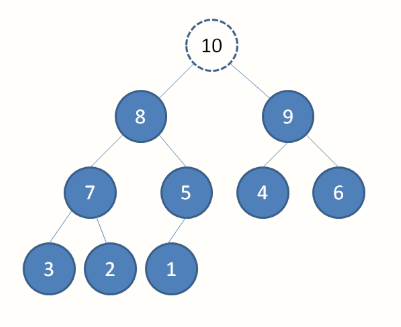
出队操作
- 原堆节点10出队
- 最后一个节点1替换到堆顶位置
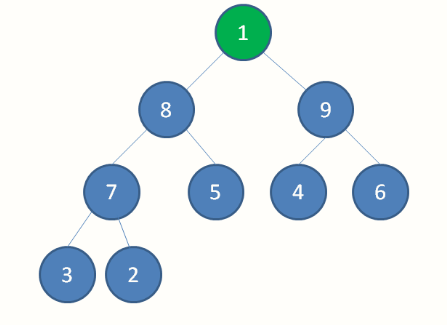
- 最后一个节点1替换到堆顶位置

Java中优先队列的使用
Java中优先队列是 Java.util包下的一个类PriorityQueue,其继承了Collection、Queue接口。
//构造方法PriorityQueue(); //创建一个优先队列,默认初始容量为11.根据自然排序进行排序PriorityQueue(Comparator<? super E> comparator); //创建并根据指定的比较器对其元素进行排序//常用方法boolean add(E e); //插入boolean contains(Object o); //是否含有某个元素boolean offer(E e); //插入元素E peek(E e); //检索但是不删除此队列的头,如果为空,返回nullE poll(E e); //检索并且删除此队列的头,如果为空,返回nullint size(); //返回大小
C++中优先队列的使用
此类包含在 头文件 <queue>中.
定义 :
priority_queue<Type, Container, Functional>//1. Type : 数据类型//2. Container: 容器类型,必须是用数组实现的容器。默认是vector//3. Functional:比较的方式,默认是大顶堆Example://升序队列:小顶堆,比较小的元素先弹出priority_queue <int,vector<int>,greater<int> > q;//降序队列:大顶堆,比较大的元素先弹出6priority_queue <int,vector<int>,less<int> >q;
方法:
top(); //访问对头元素empty(); //队列是否为空size(); //返回队列大小push(); //插入元素并且排序emplace(); //原地构造一个元素并且插入排队列pop(); //弹队头元素swqp(); //交换内容
Demo:
#include<iostream>#include <queue>using namespace std;int main(){//对于基础类型 默认是大顶堆priority_queue<int> a;//等同于 priority_queue<int, vector<int>, less<int> > a;priority_queue<int, vector<int>, greater<int> > c; //这样就是小顶堆priority_queue<string> b;for (int i = 0; i < 5; i++){a.push(i);c.push(i);}while (!a.empty()){cout << a.top() << ' ';a.pop();}cout << endl;while (!c.empty()){cout << c.top() << ' ';c.pop();}cout << endl;b.push("abc");b.push("abcd");b.push("cbd");while (!b.empty()){cout << b.top() << ' ';b.pop();}cout << endl;return 0;}//Output4 3 2 1 00 1 2 3 4cbd abcd abc

若有收获,就点个赞吧
0 人点赞


