1.什么是链表(ListNode)
- 非连续空间的存储结构
- 每个元素由一个存储元素本身的节点和一个指向下一个元素的引用(有些语言称为指针或者连接)组成
2.链表的优点
- 内存空间不是必须连续的,可以充分利用计算机的内存,实现灵活的内存动态管理
- 链表不必在创建时就确定大小,并且大小可以无限的延伸下去
- 链表在插入和删除数据时,时间复杂度可以达到O(1),相对数组效率高很多
3.链表的方法
链表常见操作:通用isEmpty()size()toString()增:append(element)insert(position, element)删:removeAt(position)remove(element)查:get(position)indexOf(element)改:update(po)
1.创建链表,添加节点
function LinkedList() {// 内部的类:节点类function Node(data) {this.data = datathis.next = null}// 链表的第一个this.head = null// 链表长度this.length = 0// 1.append// 添加操作其实是将最后一个 node 的 next 指向新节点LinkedList.prototype.append = function(data) {// 1.1 创建新节点let newNode = new Node(data)// 1.2 判断是否添加的是第一个节点if (this.length === 0) { // 是第一个节点this.head = newNode} else {let current = this.head// 1.3 找到最后的一个节点,并将 next 指向新节点while(current.next) {current = current.next}current.next = newNode}this.length += 1}}
2.toString 方法
拿到 node 节点的每一项的值,拼接起来返回字符串
// 2.toString 方法LinkedList.prototype.toString = function() {// 2.1 定义变量let current = this.headlet listString = ""// 2.2 循环获取一个个节点while(current) {listString += current.data + ' 'current = current.next}return listString.slice(1)}
3.insert(position, element) 方法
找到链表中 position 的位置,将前一项的 next 指向new Node,将newNode的next指向下一项
// 3.insert方法LinkedList.prototype.insert = function(position, data) {// 3.1 对 position 进行越界判断if (position < 0 || position > this.length) return false// 3.2 根据 data 创建 newNodelet newNode = new Node(data)// 3.3 判断插入的位置是否是第一个if (position === 0) {newNode.next = this.headthis.head = newNode} else {let current = this.headlet previous = null// 如果当前项小于插入的 positionfor(let i=0; i<position; i++) {previous = currentcurrent = current.next}newNode.next = currentprevious.next = newNode}this.length += 1return true}
4.get(position)方法
获取某个positon上的node data
LinkedList.prototype.get = function(position) {// 1.越界判断if (position < 0 || position >= this.length) return null// 2.获取对应的 datalet current = this.headlet index = 0while(index < position) {current = current.nextindex++}return current.data}
5.indexOf(element)
获取元素值的 index
LinkedList.prototype.indexOf = function (element) {let index = 0let current = this.headwhile(index < this.length) {if (current.data === element) {return index}index++current = current.next}// 找不到 return -1return -1};
6.update(position, data)
找到position位置的节点,更新 data
LinkedList.prototype.update = function(position, newData) {// 越界判断if (position < 0 || position >= this.length) {return false}// 查找正确的节点let current = this.headlet index = 0while(index++ < position) {current = current.next}// 将 position 位置的 node 的 data 修改成 newDatacurrent.data = newData}
7.removeAt(position)
删除index上的元素,其实是将上一项的next直接指向后一项
LinkedList.prototype.removeAt = function(position) {
  // 1.越界判断
  if (position < 0 || position >= this.length) return false

  // 2.判断是否删除的是第一个节点
  let current = this.head
  if (position === 0) {
    this.head = this.head.next
  } else {
    let index = 0
    let prev = null
    while(index < position) {
      prev = current
      current = current.next
      index++
    }
    // 跳过当前current,将前一项的next指向current.next
    prev.next = current.next
  }
  this.length -= 1
  return current.data
}
8.remove(data)
删除链表上的某个元素,其实就是将上一项的next指向后一项, length-1
LinkedList.prototype.remove = function (data) {
  // // 1.获取 data 在链表中的位置信息
  // let position = this.indexOf(data)
  // // 2.根据 position 调用 removeAt
  // return this.removeAt(position)

  // 找到 data 在链表的位置
  // 如果存在,就将前一个node next指向后一位
  let index = 0;
  let current = this.head;
  let previous = null;
  while (index < this.length) {
    // 找到该元素
    if (current.data === data) {
      if (index === 0) {
        this.head = current.next;
        return current
      } else {
        previous.next = current.next;
        return current
      }
      this.length -= 1
    } else {
      previous = current;
      current = current.next;
      index++;
    }
  }
};
例题
1.反转链表
方法1:反向遍历
- 遍历链表,放到一个队列中
反向遍历队列,修改每一个node的next为前一项,第length-1项的next为null
var reverseList = function (head) {
if (!head) return null
let queue = [];
while (head) {
 queue.push(head);
 head = head.next;
}
for (let i = queue.length - 1; i >= 0; i--) {
 if (i !== 0) {
   queue[i].next = queue[i - 1];
 } else {
   queue[0].next = null;
 }
}
return queue[queue.length - 1]
};
方法2:摘除法,每次摘掉老链表head的头部,将头部作为新链表的头部
var reverseList = function (head) {
let newNode = null
while(head) {
 let temp = head.next // head 的next后部分
 head.next = newNode // 摘除,将head的next指向新链表
 newNode = head // newNode 这时候从 head 开始了
 head = temp // 将 temp,也就是原本的head.next 变成新的 node head,直到没有
}
return newNode
};
2.两数相加
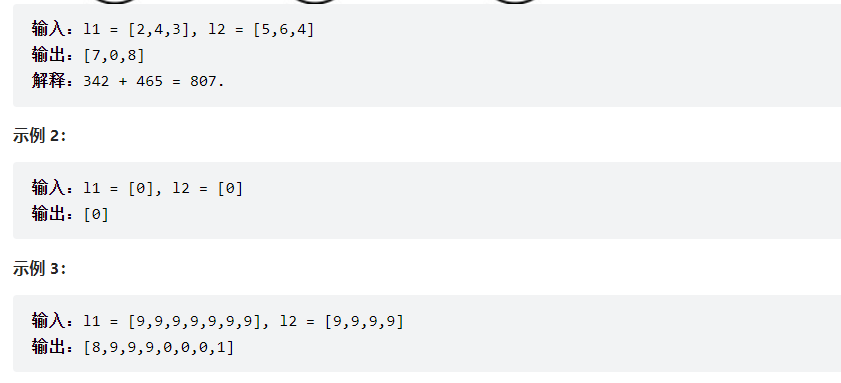
思路:遍历两个链表,用两个指针记录链表当前位置,l3记录新链表位置
- 用加法运算迭代生成新的链表节点
/**
* Definition for singly-linked list.
* function ListNode(val, next) {
*     this.val = (val===undefined ? 0 : val)
*     this.next = (next===undefined ? null : next)
* }
*/
/**
* @param {ListNode} l1
* @param {ListNode} l2
* @return {ListNode}
*/
var addTwoNumbers = function (l1, l2) {
const l3 = new ListNode(0);
let p1 = l1; // l1 指针
let p2 = l2; // l2 指针
let p3 = l3;
let carry = 0;
while (p1 || p2) {
 let v1 = p1 ? p1.val : 0;
 let v2 = p2 ? p2.val : 0;
 let val = v1 + v2 + carry;
 p3.next = new ListNode(val % 10);
 carry = Math.floor(val / 10);
 // 移动指针到后一位
 if (p1) p1 = p1.next;
 if (p2) p2 = p2.next;
 p3 = p3.next;
}
if (carry) {
 p3.next = new ListNode(carry)
}
return l3.next;
};
3.链表去重
- 遍历链表,通过 map 记录链表值
生成一个新的链表
function (head) {
let newNode = new ListNode(); // 创建一个新链表
let p1 = newNode // 新链表的指针
let p2 = head // 旧链表的指针
let map = new Map();
// 遍历旧链表
while (p2) {
if (!map.get(p2.val)) {
  map.set(p2.val, true);
  // 如果说新链表没有包含该 node,则生成
  p1.next = new ListNode(p2.val)
  p1 = p1.next // 指针向后移动
  p2 = p2.next
} else {
  // 如果包含,则直接移动p2指针
  p2 = p2.next
}
}
return newNode.next
};
有序链表:
如果当前项的value和next项的value相等,则将当前项的next指向current.next.nextvar deleteDuplicates = function (head) { let p1 = head // 指针 while(p1 && p1.next) { // 最后一项无序进入 if (p1.val === p1.next.val) { p1.next = p1.next.next } else { // 防止 [1, 1, 1] 三次重复 p1 = p1.next } } return head };4.判断环形链表
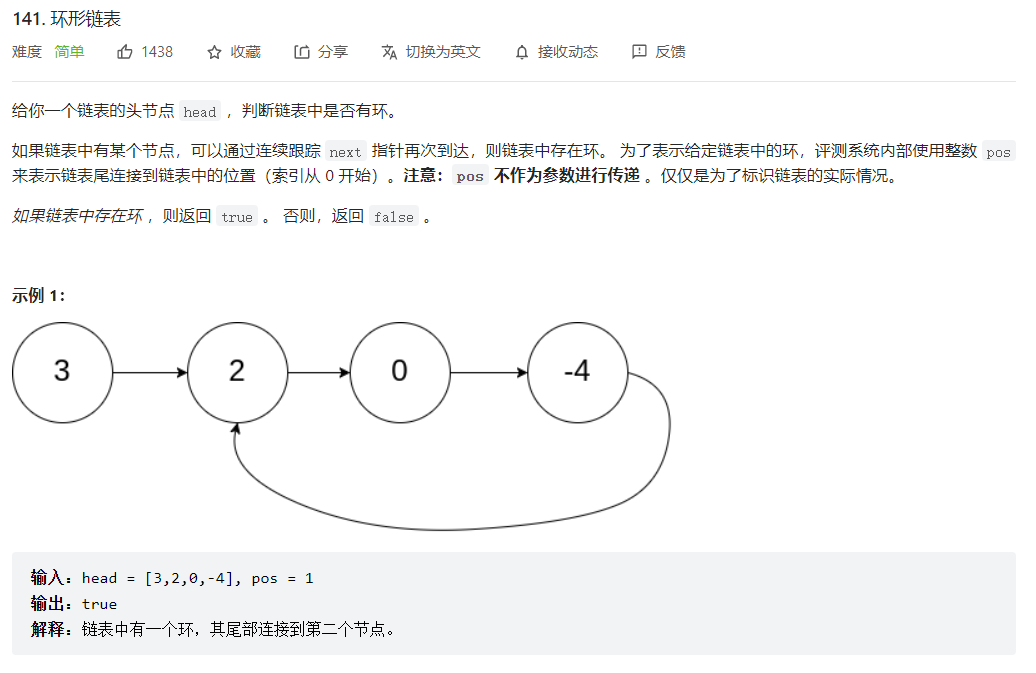
方法:快慢指针,如果存在有环,快的指针一定会追上慢的指针var hasCycle = function (head) { let p1 = head let p2 = head while(p1 && p2 && p2.next) { p1 = p1.next p2 = p2.next.next if (p1 === p2) { return true } } return false };5.删除链表的倒数第N个节点
地址
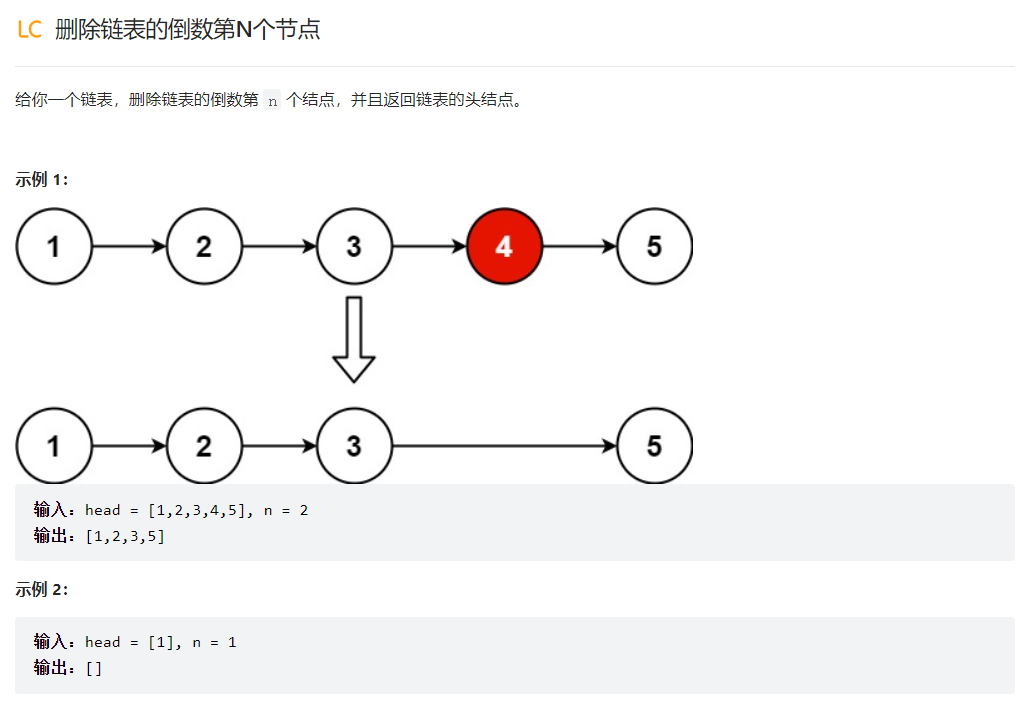
方法1:先遍历链表,记录链表的长度,再次遍历链表,当node为n的前一项时,指向当前node.next
注意删除首部和末尾需要额外处理
var removeNthFromEnd = function (head, n) {
if (n < 0) return false;
// 先获取链表的长度
let p = head;
let length = 0;
while (p) {
 length++;
 p = p.next;
}

// 删除倒数第 n 项,其实就是删除正数index 为 length - n 项
// 删除正数 length -n 就是将 length - n -1 的 next 指向 length - n 的next
let index = 0;
// 如果是第一位
if (n === length) {
 head = head.next;
 return head;
}
p = head
while (p) {
 if (index === length - n - 1) {
   // 如果是最后一位
   if (p.next) {
     p.next = p.next.next;
   } else {
     p.next = null;
   }
   return head;
 }
 index++;
 p = p.next;
}
// console.log(length);
};
方法2:快慢指针法
设置 fast指针前进 n 位
- fast 和 slow同时前进,直到 fast到末尾,这个时候 slow 正好指向倒数 n+1位,因为差n位就到末尾了
function (head, n) {
let slow = head;
let fast = head;
for (let i = 0; i < n; i++) {
 fast = fast.next;
}
if (!fast) {
 // 说明删除的是第一位元素
 return head.next;
}
while (fast.next) {
 fast = fast.next;
 slow = slow.next;
}
// 此时 slow 为倒数 n + 1项
slow.next = slow.next.next;
return head;
};
6.合并两个升序链表
合并两个有序链表
思路:双指针对比两个链表,如果p1更小,则以v1为值创建新node,兵器p1=p1.next,进入下一个循环var mergeTwoLists = function (list1, list2) { // 合并两个升序链表 let p1 = list1 let p2 = list2 let l3 = new ListNode() let p3 = l3 // 双指针比对val,生成新链表node while(p1 && p2) { if (p1.val < p2.val) { p3.next = new ListNode(p1.val) p1 = p1.next // 比对后向后移动 } else { p3.next = new ListNode(p2.val) p2 = p2.next } p3 = p3.next } // 如果有一个到尽头了,则直接将p3的next 指向没遍历完的 p1 ? p3.next = p1 : p3.next = p2 return l3.next };

若有收获,就点个赞吧
0 人点赞


