组合
给定两个整数 n 和 k,返回范围 [1, n] 中所有可能的 k 个数的组合。
你可以按 任何顺序 返回答案。
很像子集的思路
// 注意输入输出输入:n = 4, k = 2输出:[[2,4],[3,4],[2,3],[1,2],[1,3],[1,4],]
因此,组合类题目的特点与排列的不太一样:
- 数不是位置不重复,而是数本身不能重复——即不存在顺序不同
- 结果相同只取决于所有的元素相同,不再考虑需要顺序一模一样
思路就是index
/// 组合pub fn combine(n: i32, k: i32) -> Vec<Vec<i32>> {fn dfs(index: i32, n: i32, k: i32, depth: i32,temp: &mut Vec<i32>, res: &mut Vec<Vec<i32>>) {// 与集合不同之处1:index不再能够体现深度if depth == k {// 与集合不同之处2:只在固定长度取res.push(temp.clone());return;}for x in index..=n {temp.push(x);dfs(x + 1, n, k, depth+1, temp, res);temp.pop();}}let mut temp = Vec::new();let mut res = Vec::new();dfs(1, n, k, 0, &mut temp, &mut res);res}
39. 组合总和
给你一个 无重复元素 的整数数组 candidates 和一个目标整数 target ,找出 candidates 中可以使数字和为目标数 target 的 所有 不同组合 ,并以列表形式返回。你可以按 任意顺序 返回这些组合。
candidates 中的 同一个 数字可以 无限制重复被 选取 。如果至少一个数字的被选数量不同,则两种组合是不同的。
对于给定的输入,保证和为 target 的不同组合数少于 150 个。
这一题其实就是组合的基础上加上了和这个条件
特点在于:
- 数可以重复选,是无限的
- 和顺序无关,和数的数量有关
这一类题的思路是:index不是+1了,而是每次下去的时候可以遍历到自身
数很有特点:
我们index放置的位置就一目了然了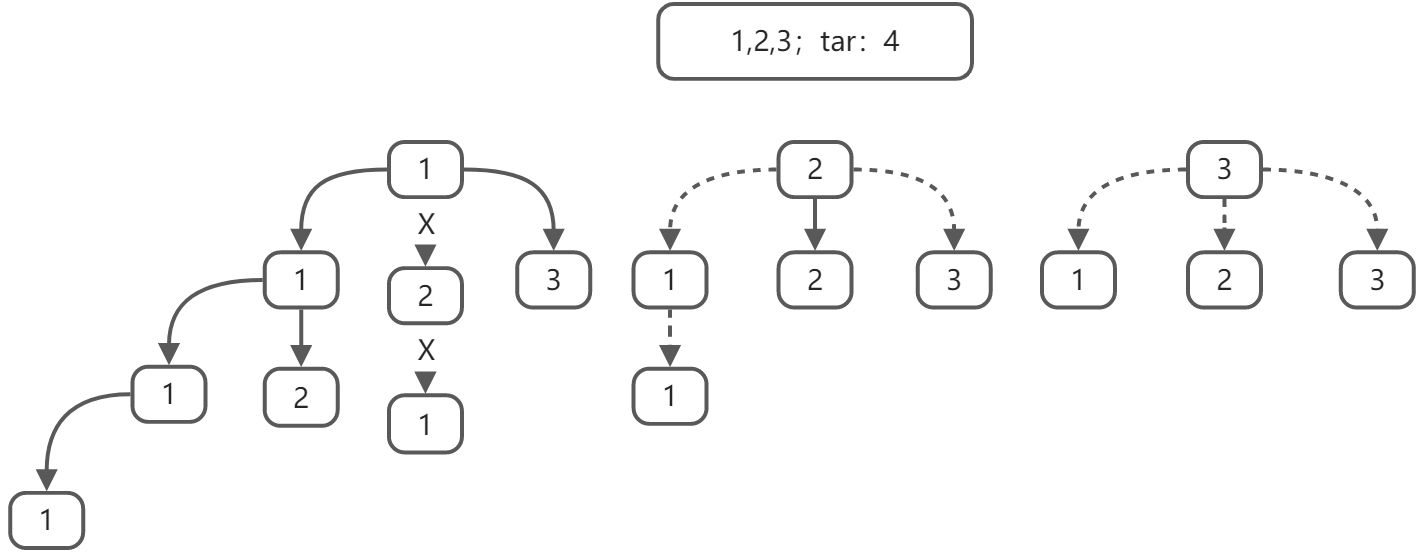
代码:
/// 39. 组合总和pub fn combination_sum(mut candidates: Vec<i32>, target: i32) -> Vec<Vec<i32>> {fn dfs(can: &mut Vec<i32>, mut tar: i32, index: usize,ans: &mut Vec<Vec<i32>>, temp: &mut Vec<i32>) {if tar<=0 {if tar == 0 { ans.push(temp.clone()); }return;}for x in index..can.len() {tar -= can[x];temp.push(can[x]);// 核心区别在这里,不再是x+1dfs(can, tar, x, ans, temp);temp.pop();tar += can[x];}}let mut ans = Vec::new();let mut temp = Vec::new();dfs(&mut candidates, target, 0, &mut ans, &mut temp);ans}
40. 组合总和 II
这一题就变成了子集II了
/// 40. 组合总和 II
pub fn combination_sum2(mut candidates: Vec<i32>, target: i32) -> Vec<Vec<i32>> {
    candidates.sort();
    fn dfs(can: &mut Vec<i32>, mut tar: i32, index: usize,
           ans: &mut Vec<Vec<i32>>, temp: &mut Vec<i32>, used: &mut Vec<bool>) {
        if tar<=0 {
            if tar == 0 { ans.push(temp.clone()); }
            return;
        }
        for x in index..can.len() {
            // 这个剪枝一定要有,大剪枝
            if tar - can[x] < 0 {
                break;
            }
            if x > 0 && !used[x - 1] && can[x] == can[x-1] {
                continue;
            }
            used[x] = true;
            tar -= can[x];
            temp.push(can[x]);
            dfs(can, tar, x+1, ans, temp, used);
            temp.pop();
            tar += can[x];
            used[x] = false;
        }
    }
    let mut ans = Vec::new();
    let mut temp = Vec::new();
    let mut used = vec![false; candidates.len()];
    dfs(&mut candidates, target, 0, &mut ans, &mut temp, &mut used);
    ans
}
四数之和
这一题很像子集II,但是DFS时间会很长,凭借Rust的特性能够过去,但是最好的做法还是多指针
/// 18. 四数之和:高为4的组合问题
pub fn four_sum(mut nums: Vec<i32>, target: i32) -> Vec<Vec<i32>> {
    nums.sort();
    fn dfs(nums: &mut Vec<i32>, mut tar: i32, index: usize,
           temp: &mut Vec<i32>, res: &mut Vec<Vec<i32>>) {
        if temp.len() >= 4 {
            if tar == 0 {
                res.push(temp.clone());
            }
            return;
        }

        for x in index..nums.len() {
            // 第一个大剪枝
            if nums.len() - x < 4 - temp.len() {
                return;
            }

            if x > index && nums[x] == nums[x - 1] {
                continue;
            }
            temp.push(nums[x]);
            tar -= nums[x];
            dfs(nums, tar, x +1, temp, res);
            temp.pop();
            tar += nums[x];
        }
    }
    let mut res = Vec::new();
    let mut temp = Vec::new();
    dfs(&mut nums, target, 0, &mut temp, &mut res);
    res
}
组合总和III
数字不可重复,使用过的数字不能再用,即位置不同也相同
因此就是index:
/// 216. 组合总和 III
pub fn combination_sum3(k: i32, n: i32) -> Vec<Vec<i32>> {
    fn dfs(k: i32, mut tar: i32, index: usize,
           res: &mut Vec<Vec<i32>>, temp: &mut Vec<i32>) {
        if temp.len() >= k as usize {
            if tar == 0 { res.push(temp.clone()); }
            return;
        }

        for x in index..=9 {
            if tar - (x as i32) < 0 {
                break;
            }
            temp.push(x as i32);
            tar -= x as i32;
            dfs(k, tar, x + 1, res, temp);
            tar += x as i32;
            temp.pop();
        }
    }
    let mut res = Vec::new();
    let mut temp = Vec::new();
    dfs(k, n, 1, &mut res, &mut temp);
    res
}

若有收获,就点个赞吧
0 人点赞


