简介
okhttp是Android中应用最广的http网络请求框架。结构优雅,性能强大。我们通过阅读它,对网络库的架构进行学习。本篇主要阅读okhttp任务队列的结构,了解okhttp的任务调度。
基本结构
网络请求是一个典型的生产/消费模型。我们的每一个请求都会加入一个缓冲队列,然后在合适的时候进行消费。
我们以异步请求为例:
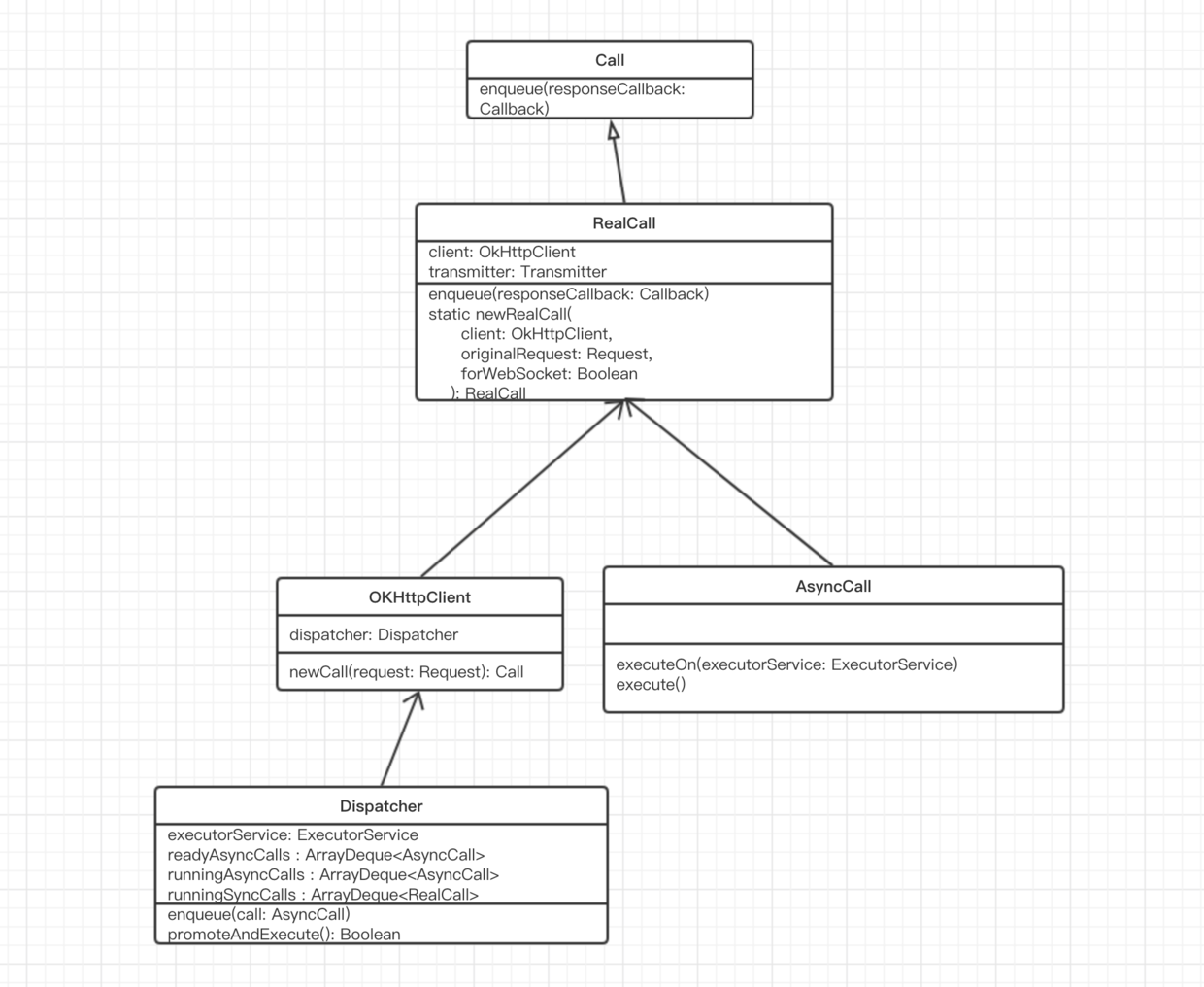
OKHttpClient提供方法生产Call,Dispatcher负责管理、分发和执行AsyncCall。
下面,我们来细致地看一下代码。
详细代码
基本调用
还是以异步任务为例,一次典型的okhttp的调用:
String url = "http://wwww.baidu.com";OkHttpClient okHttpClient = new OkHttpClient();final Request request = new Request.Builder().url(url).get()//默认就是GET请求,可以不写.build();Call call = okHttpClient.newCall(request);call.enqueue(new Callback() {@Overridepublic void onFailure(Call call, IOException e) {Log.d(TAG, "onFailure: ");}@Overridepublic void onResponse(Call call, Response response) throws IOException {Log.d(TAG, "onResponse: " + response.body().string());}});
我们可以看到,这个过程大致分为两部,生成一个新的call,将call加入队列。
Request
Request是okhttp中的http请求封装类,它管理了http协议中的参数,如Header,RequestBody等
class Request internal constructor(internal val url: HttpUrl,builder: Builder) {internal val method: String = builder.methodinternal val headers: Headers = builder.headers.build()internal val body: RequestBody? = builder.bodyinternal val tags: Map<Class<*>, Any> = Util.immutableMap(builder.tags)......}
OKHttpClient
OKHttpClient是okhttp中总管类,管理了okhttp几乎所有抽象模块和各种配置。
open class OkHttpClient internal constructor(builder: Builder) : Cloneable, Call.Factory, WebSocket.Factory {private val dispatcher: Dispatcher = builder.dispatcherprivate val proxy: Proxy? = builder.proxyprivate val protocols: List<Protocol> = builder.protocolsprivate val connectionSpecs: List<ConnectionSpec> = builder.connectionSpecsprivate val interceptors: List<Interceptor> =Util.immutableList(builder.interceptors)private val networkInterceptors: List<Interceptor> =Util.immutableList(builder.networkInterceptors)private val eventListenerFactory: EventListener.Factory = builder.eventListenerFactoryprivate val proxySelector: ProxySelector = builder.proxySelectorprivate val cookieJar: CookieJar = builder.cookieJarprivate val cache: Cache? = builder.cacheprivate val socketFactory: SocketFactory = builder.socketFactoryprivate val sslSocketFactory: SSLSocketFactory?private val hostnameVerifier: HostnameVerifier = builder.hostnameVerifierprivate val certificatePinner: CertificatePinnerprivate val proxyAuthenticator: Authenticator = builder.proxyAuthenticatorprivate val authenticator: Authenticator = builder.authenticatorprivate val connectionPool: ConnectionPool = builder.connectionPoolprivate val dns: Dns = builder.dnsprivate val followSslRedirects: Boolean = builder.followSslRedirectsprivate val followRedirects: Boolean = builder.followRedirectsprivate val retryOnConnectionFailure: Boolean = builder.retryOnConnectionFailureprivate val callTimeout: Int = builder.callTimeoutprivate val connectTimeout: Int = builder.connectTimeoutprivate val readTimeout: Int = builder.readTimeoutprivate val writeTimeout: Int = builder.writeTimeoutprivate val pingInterval: Int = builder.pingIntervalprivate val internalCache: InternalCache? = builder.internalCacheprivate val certificateChainCleaner: CertificateChainCleaner?....../** Prepares the [request] to be executed at some point in the future. */override fun newCall(request: Request): Call {return RealCall.newRealCall(this, request, false /* for web socket */)}}
RealCall
RealCall是okhttp中任务的封装类
companion object {fun newRealCall(client: OkHttpClient,originalRequest: Request,forWebSocket: Boolean): RealCall {// Safely publish the Call instance to the EventListener.return RealCall(client, originalRequest, forWebSocket).apply {transmitter = Transmitter(client, this)}}}internal class RealCall private constructor(val client: OkHttpClient,/** The application's original request unadulterated by redirects or auth headers. */val originalRequest: Request,val forWebSocket: Boolean) : Call {/*** There is a cycle between the [Call] and [Transmitter] that makes this awkward.* This is set after immediately after creating the call instance.*/private lateinit var transmitter: Transmitter// Guarded by this.var executed: Boolean = false@Synchronized override fun isExecuted(): Boolean = executedoverride fun isCanceled(): Boolean = transmitter.isCanceledoverride fun request(): Request = originalRequestoverride fun execute(): Response {synchronized(this) {check(!executed) { "Already Executed" }executed = true}transmitter.timeoutEnter()transmitter.callStart()try {client.dispatcher().executed(this)return getResponseWithInterceptorChain()} finally {client.dispatcher().finished(this)}}override fun enqueue(responseCallback: Callback) {synchronized(this) {check(!executed) { "Already Executed" }executed = true}transmitter.callStart()client.dispatcher().enqueue(AsyncCall(responseCallback))}override fun cancel() {transmitter.cancel()}...}
在异步任务的例子中,我们通常使用enqueue将我们的请求加入请求队列。client.dispatcher().enqueue(AsyncCall(responseCallback))
这句话中,我们可以看到,我们新建了AsyncCall加入到OKHttpClient的dispatcher的队列中。
我们先看AsyncCall封装了什么
internal inner class AsyncCall(private val responseCallback: Callback) : NamedRunnable("OkHttp %s", redactedUrl()) {@Volatile private var callsPerHost = AtomicInteger(0)fun callsPerHost(): AtomicInteger = callsPerHostfun reuseCallsPerHostFrom(other: AsyncCall) {this.callsPerHost = other.callsPerHost}fun host(): String = originalRequest.url().host()fun request(): Request = originalRequestfun get(): RealCall = this@RealCall/*** Attempt to enqueue this async call on `executorService`. This will attempt to clean up* if the executor has been shut down by reporting the call as failed.*/fun executeOn(executorService: ExecutorService) {assert(!Thread.holdsLock(client.dispatcher()))var success = falsetry {executorService.execute(this)success = true} catch (e: RejectedExecutionException) {val ioException = InterruptedIOException("executor rejected")ioException.initCause(e)transmitter.noMoreExchanges(ioException)responseCallback.onFailure(this@RealCall, ioException)} finally {if (!success) {client.dispatcher().finished(this) // This call is no longer running!}}}override fun execute() {var signalledCallback = falsetransmitter.timeoutEnter()try {val response = getResponseWithInterceptorChain()signalledCallback = trueresponseCallback.onResponse(this@RealCall, response)} catch (e: IOException) {if (signalledCallback) {// Do not signal the callback twice!Platform.get().log(INFO, "Callback failure for ${toLoggableString()}", e)} else {responseCallback.onFailure(this@RealCall, e)}} finally {client.dispatcher().finished(this)}}}
我们可以看到,AsyncCall主要提供了executeOn和execute两个方法。
executeOn
executeOn是AsyncCall自身的方法。它的主要内容是对异常的处理。如果一切正常,就用传入的ExecutorService执行当前AsyncCall。
execute
而execute是实现的Runnable的run方法。
public abstract class NamedRunnable implements Runnable {protected final String name;public NamedRunnable(String format, Object... args) {this.name = Util.format(format, args);}@Override public final void run() {String oldName = Thread.currentThread().getName();Thread.currentThread().setName(name);try {execute();} finally {Thread.currentThread().setName(oldName);}}protected abstract void execute();}
我们可以看到,这个方法,只是为了给线程起名。
当AsyncCall在线程池中执行时,execute方法就会被调用。execute方法的主要逻辑是:getResponseWithInterceptorChain,它的实现,我们再不展开,属于okhttp网络能力了。
铺垫了上面这么多,我们终于可以看看okhttp的任务队列如何设计的了。
Dispatcher
private var idleCallback: Runnable? = null/** Executes calls. Created lazily. */private var executorService: ExecutorService? = null/** Ready async calls in the order they'll be run. */private val readyAsyncCalls = ArrayDeque<AsyncCall>()/** Running asynchronous calls. Includes canceled calls that haven't finished yet. */private val runningAsyncCalls = ArrayDeque<AsyncCall>()/** Running synchronous calls. Includes canceled calls that haven't finished yet. */private val runningSyncCalls = ArrayDeque<RealCall>()internal fun enqueue(call: AsyncCall) {synchronized(this) {readyAsyncCalls.add(call)// Mutate the AsyncCall so that it shares the AtomicInteger of an existing running call to// the same host.if (!call.get().forWebSocket) {val existingCall = findExistingCallWithHost(call.host())if (existingCall != null) call.reuseCallsPerHostFrom(existingCall)}}promoteAndExecute()}
这一段主要是AsyncCall的callsPerHost复用逻辑,注释说明比较清晰。如果有相同的AsyncCall存在于runningAsyncCalls中,则会增加callsPerHost。接下来,看一下promoteAndExecute的实现:
private fun promoteAndExecute(): Boolean {assert(!Thread.holdsLock(this))val executableCalls = ArrayList<AsyncCall>()val isRunning: Booleansynchronized(this) {val i = readyAsyncCalls.iterator()while (i.hasNext()) {val asyncCall = i.next()if (runningAsyncCalls.size >= this.maxRequests) break // Max capacity.if (asyncCall.callsPerHost().get() >= this.maxRequestsPerHost) continue // Host max capacity.i.remove()asyncCall.callsPerHost().incrementAndGet()executableCalls.add(asyncCall)runningAsyncCalls.add(asyncCall)}isRunning = runningCallsCount() > 0}for (i in 0 until executableCalls.size) {val asyncCall = executableCalls[i]asyncCall.executeOn(executorService())}return isRunning}
promoteAndExecute方法,是将readyAsyncCalls队列中的任务,在最大任务数没有超标的情况下,移入runningAsyncCalls队列中。并对涉及转移的方法,调用executeOn方法。executeOn被调用后,就会执行到,RealCall中AsyncCall中的execute方法了。
小结
以上就是okhttp在请求和任务上的基本结构,还没有涉及到具体的网络请求。核心类是RealCall和Dispatcher,通过ArrayDeque和AsyncCall完成任务的调度。
如有问题,欢迎指正。

若有收获,就点个赞吧
0 人点赞


