字符串变量
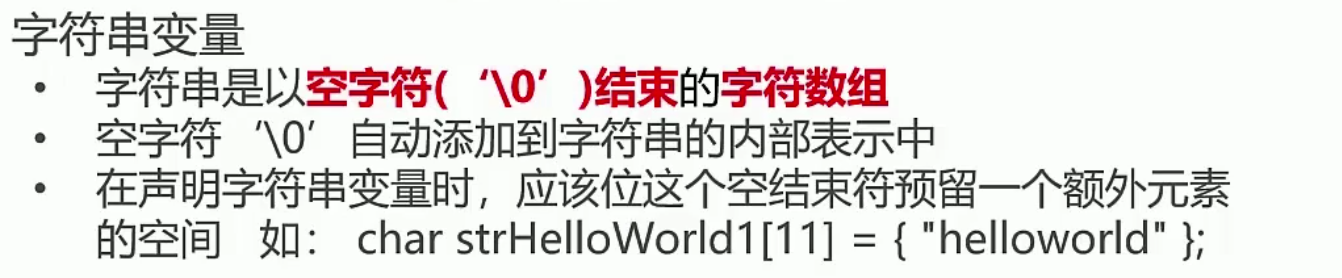
字符串常量
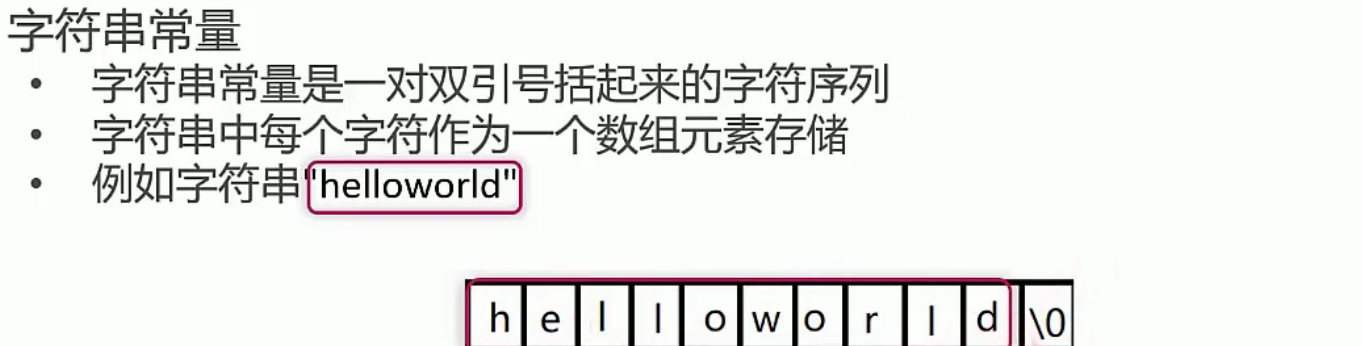
字符表示说明
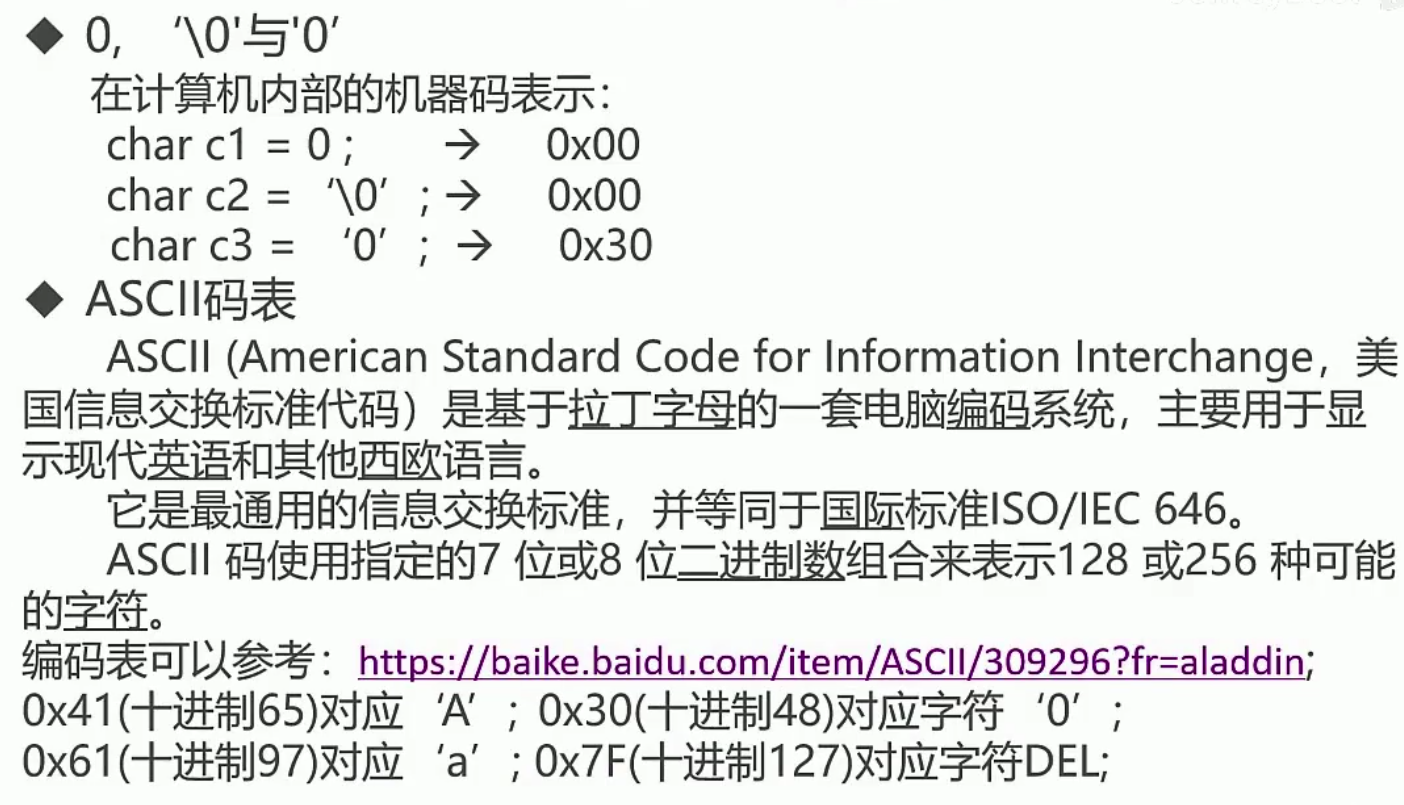
Unicode编码
字符串的指针表示

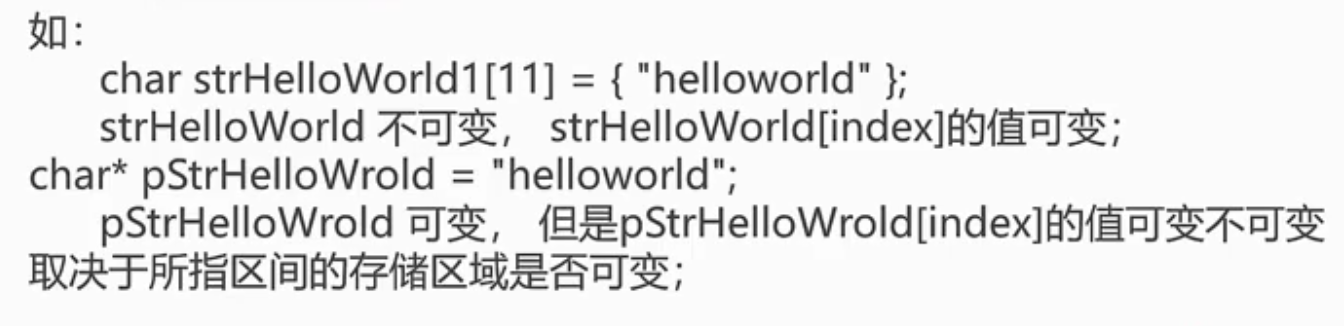
# include <string.h>#include <iostream>using namespace std;int main(){// 定义一个数组char strHelloWorld[11] = { "helloworld" }; // 这个定义可以char* pStrHelloWrold = "helloworld";pStrHelloWrold = strHelloWorld;//strHelloWorld = pStrHelloWrold; // 数组变量的值不允许改变// 字符0, '\0', '0'的区别//char c1 = 0;//char c2 = '\0';//char c3 = '0';// 通过数组变量遍历修改数组中的元素值for (int index = 0; index < strlen(strHelloWorld); ++index){strHelloWorld[index] += 1;std::cout << strHelloWorld[index] << std::endl;}// 通过指针变量遍历修改数组中的元素值for (int index = 0; index < strlen(strHelloWorld); ++index){pStrHelloWrold[index] += 1;std::cout << pStrHelloWrold[index] << std::endl;}cout << endl; // 换行// 计算字符串长度cout << "字符串长度为: " << strlen(strHelloWorld) << endl;cout << "字符串占用空间为: " << sizeof(strHelloWorld) << endl;return 0;}
字符串的常见操作
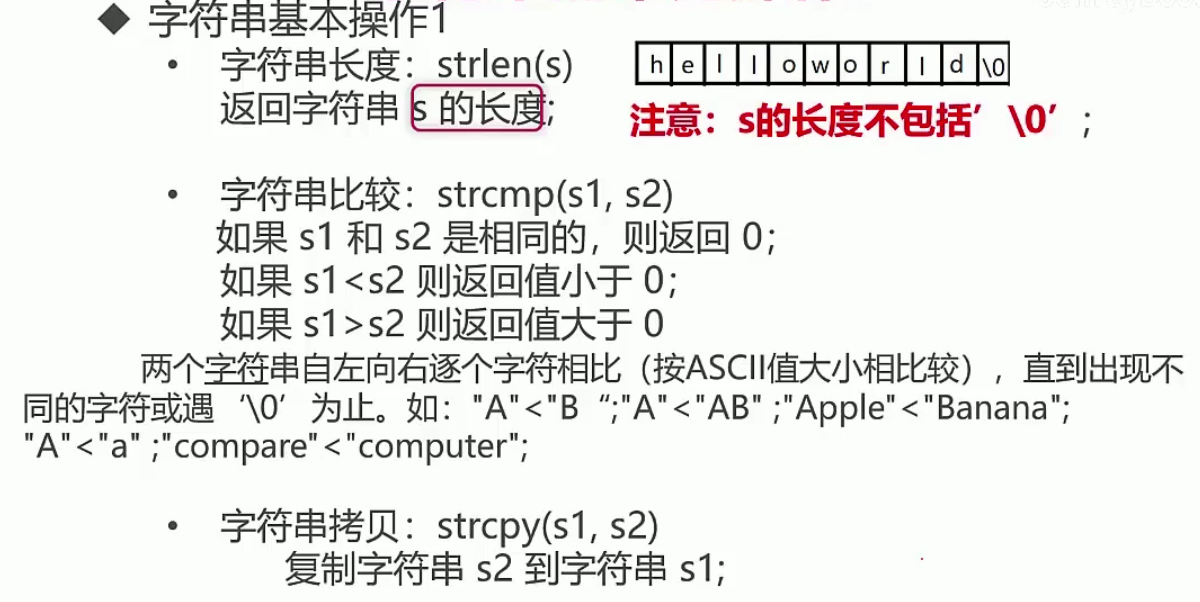


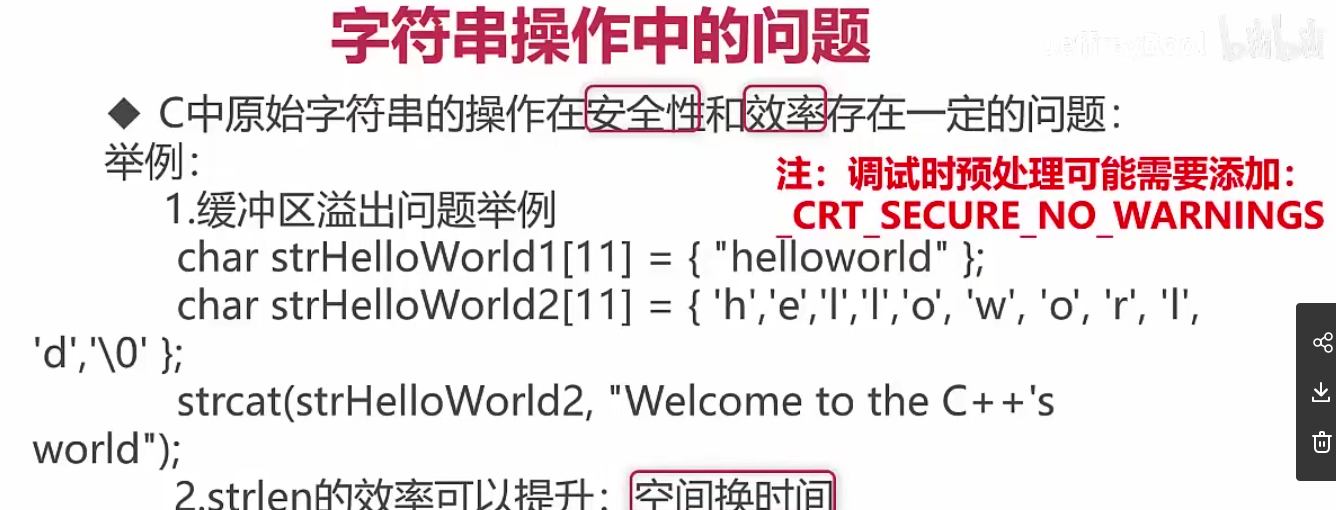
#include <string.h> //使用C库的头文件#include <iostream>using namespace std;const unsigned int MAX_LEN_NUM = 16;const unsigned int STR_LEN_NUM = 7;const unsigned int NUM_TO_COPY = 2;int main(){char strHelloWorld1[ ] = { "hello" };char strHelloWorld2[STR_LEN_NUM] = { "world1" };char strHelloWorld3[MAX_LEN_NUM] = {0};//strcpy(strHelloWorld3, strHelloWorld1); // hellostrcpy_s(strHelloWorld3, MAX_LEN_NUM, strHelloWorld1);//strncpy(strHelloWorld3, strHelloWorld2, NUM_TO_COPY); // wollostrncpy_s(strHelloWorld3, MAX_LEN_NUM, strHelloWorld2, NUM_TO_COPY);//strcat(strHelloWorld3, strHelloWorld2); // wolloworld1strcat_s(strHelloWorld3, MAX_LEN_NUM, strHelloWorld2);//unsigned int len = strlen(strHelloWorld3);unsigned int len = strnlen_s(strHelloWorld3, MAX_LEN_NUM);for (unsigned int index = 0; index < len; ++index){cout << strHelloWorld3[index] << " ";}cout << endl;// 小心缓冲区溢出//strcat(strHelloWorld2, "Welcome to C++");strcat_s(strHelloWorld2, STR_LEN_NUM, "Welcome to C++");return 0;}
字符串操作中存在的问题
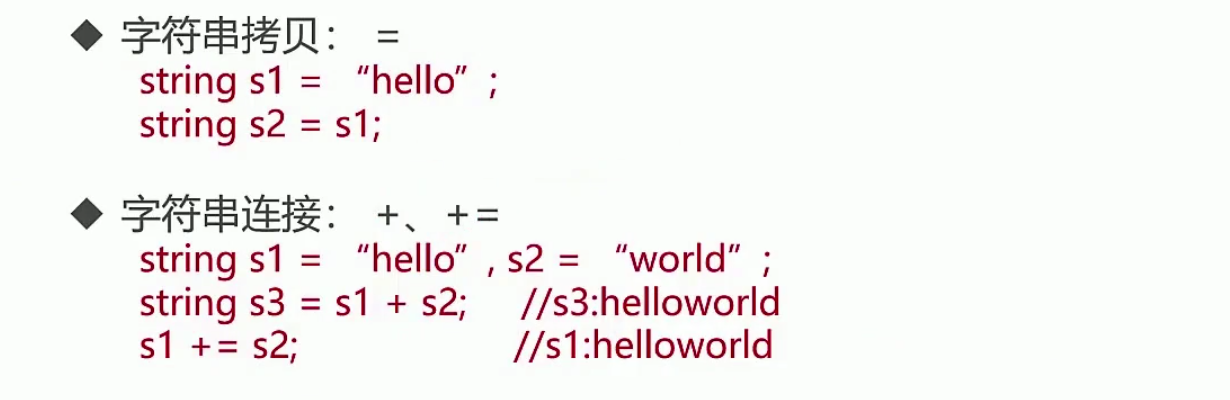
string简介






若有收获,就点个赞吧
0 人点赞


