十、线程池
回顾以前的连接池概念
连接池是创建和管理一个连接的缓冲池的技术,这些连接准备好被任何需要它们的线程使用
线程池(英语:thread pool):一种线程使用模式。线程过多会带来调度开销,进而影响缓存局部性和整体性能。而线程池维护着多个线程,等待着监督管理者分配可并发执行的任务。这避免了在处理短时间任务时创建与销毁线程的代价。线程池不仅能够保证内核的充分利用,还能防止过分调度
特点:
- 降低资源消耗: 通过重复利用已创建的线程降低线程创建和销毁造成的销耗。
- 提高响应速度: 当任务到达时,任务可以不需要等待线程创建就能立即执行。
- 提高线程的可管理性: 线程是稀缺资源,如果无限制的创建,不仅会销耗系统资源,还会降低系统的稳定性,使用线程池可以进行统一的分配,调优和监控。
[
](https://blog.csdn.net/weixin_47872288/article/details/119453092)
具体架构:
Java 中的线程池是通过 Executor 框架实现的,该框架中用到了 Executor,Executors,ExecutorService,ThreadPoolExecutor 这几个类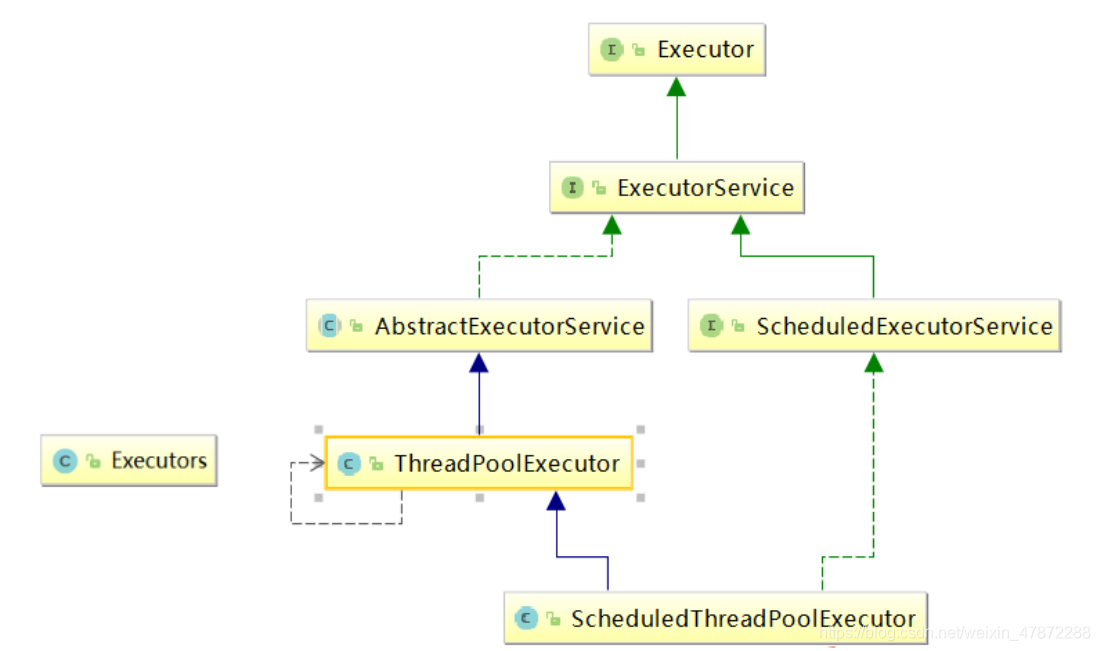
说明:Executors为工具类,I为接口类,C为实现类
10.1 种类与创建
Executors.newFixedThreadPool(int)一池N线程
ExecutorService threadPool1 = Executors.newFixedThreadPool(5); //5个窗口
Executors.newSingleThreadExecutor()一池一线程
ExecutorService threadPool2 = Executors.newSingleThreadExecutor(); //一个窗口
Executors.newCachedThreadPool()一池可扩容根据需求创建线程
ExecutorService threadPool3 = Executors.newCachedThreadPool();
执行线程execute()
关闭线程shutdown()
线程池中的执行方法execute源代码为 ```java public interface Executor {/**
- Executes the given command at some time in the future. The command
- may execute in a new thread, in a pooled thread, or in the calling
- thread, at the discretion of the {@code Executor} implementation. *
- @param command the runnable task
- @throws RejectedExecutionException if this task cannot be
- accepted for execution
- @throws NullPointerException if command is null */ void execute(Runnable command); }
void execute(Runnable command);参数为Runnable接口类,可以通过设置lambda**具体案例代码案例**```java//演示线程池三种常用分类public class ThreadPoolDemo1 {public static void main(String[] args) {//一池五线程ExecutorService threadPool1 = Executors.newFixedThreadPool(5); //5个窗口//一池一线程ExecutorService threadPool2 = Executors.newSingleThreadExecutor(); //一个窗口//一池可扩容线程ExecutorService threadPool3 = Executors.newCachedThreadPool();//10个顾客请求try {for (int i = 1; i <=10; i++) {//执行threadPool3.execute(()->{System.out.println(Thread.currentThread().getName()+" 办理业务");});}}catch (Exception e) {e.printStackTrace();}finally {//关闭threadPool3.shutdown();}}}
10.2 底层原理
通过查看上面三种方式创建对象的类源代码
都有new ThreadPoolExecutor
具体查看该类的源代码,涉及七个参数
public ThreadPoolExecutor(int corePoolSize,int maximumPoolSize,long keepAliveTime,TimeUnit unit,BlockingQueue<Runnable> workQueue,ThreadFactory threadFactory,RejectedExecutionHandler handler) {if (corePoolSize < 0 ||maximumPoolSize <= 0 ||maximumPoolSize < corePoolSize ||keepAliveTime < 0)throw new IllegalArgumentException();if (workQueue == null || threadFactory == null || handler == null)throw new NullPointerException();this.corePoolSize = corePoolSize;this.maximumPoolSize = maximumPoolSize;this.workQueue = workQueue;this.keepAliveTime = unit.toNanos(keepAliveTime);this.threadFactory = threadFactory;this.handler = handler;}
具体代码中的七个参数讲解:
int corePoolSize, 常驻线程数量(核心)
int maximumPoolSize,最大线程数量
long keepAliveTime,TimeUnit unit,线程存活时间
BlockingQueue
ThreadFactory threadFactory,线程工厂,用于创建线程
RejectedExecutionHandler handler拒绝测试(线程满了)
具体工作流程是:
- 在执行创建对象的时候不会创建线程
- 创建线程的时候execute()才会创建
- 先到常驻线程,满了之后再到阻塞队列进行等待,阻塞队列满了之后,在往外扩容线程,扩容线程不能大于最大线程数。大于最大线程数和阻塞队列之和后,会执行拒绝策略。
阻塞队列为3,常驻线程数2,最大线程数5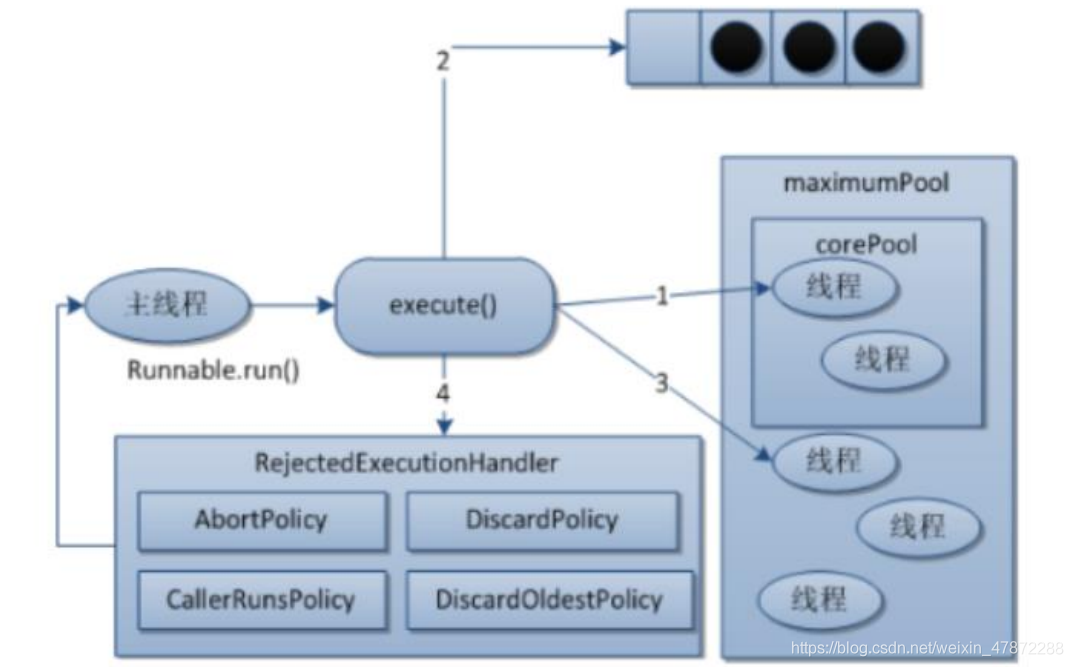
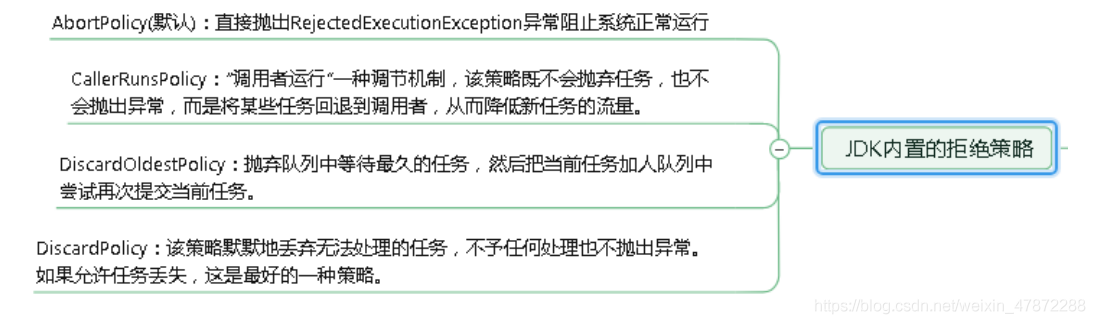
具体的拒绝策略有:
- 抛异常
- 谁调用找谁
- 抛弃最久执行当前
- 不理不问
10.3 自定义线程池
实际在开发中不允许使用Executors创建,而是通过ThreadPoolExecutor的方式,规避资源耗尽风险
ExecutorService threadPool = new ThreadPoolExecutor(2,5,2L,TimeUnit.SECONDS,new ArrayBlockingQueue<>(3),Executors.defaultThreadFactory(),new ThreadPoolExecutor.AbortPolicy());
其他都同理,只是调用ThreadPoolExecutor类,自定义参数
完整代码演示
//自定义线程池创建public class ThreadPoolDemo2 {public static void main(String[] args) {ExecutorService threadPool = new ThreadPoolExecutor(2,5,2L,TimeUnit.SECONDS,new ArrayBlockingQueue<>(3),Executors.defaultThreadFactory(),new ThreadPoolExecutor.AbortPolicy());//10个顾客请求try {for (int i = 1; i <=10; i++) {//执行threadPool.execute(()->{System.out.println(Thread.currentThread().getName()+" 办理业务");});}}catch (Exception e) {e.printStackTrace();}finally {//关闭threadPool.shutdown();}}}

若有收获,就点个赞吧
0 人点赞


