1) RDD 血缘关系
RDD 只支持粗粒度转换,即在大量记录上执行的单个操作。将创建 RDD 的一系列 Lineage(血统)记录下来,以便恢复丢失的分区。RDD 的 Lineage 会记录 RDD 的元数据信息和转换行为,当该 RDD 的部分分区数据丢失时,它可以根据这些信息来重新运算和恢复丢失的数据分区。
2) RDD 依赖关系
3) RDD 窄依赖
窄依赖表示每一个父(上游)RDD 的 Partition 最多被子(下游)RDD 的一个 Partition 使用,窄依赖我们形象的比喻为独生子女。
class OneToOneDependencyT extends NarrowDependencyT
4) RDD 宽依赖
宽依赖表示同一个父(上游)RDD 的 Partition 被多个子(下游)RDD 的 Partition 依赖,会 引起 Shuffle,总结:宽依赖我们形象的比喻为多生。
class ShuffleDependencyK: ClassTag, V: ClassTag, C: ClassTag
extends Dependency[Product2[K, V]]
5) RDD 阶段划分
DAG(Directed Acyclic Graph)有向无环图是由点和线组成的拓扑图形,该图形具有方向,不会闭环。例如,DAG 记录了 RDD 的转换过程和任务的阶段。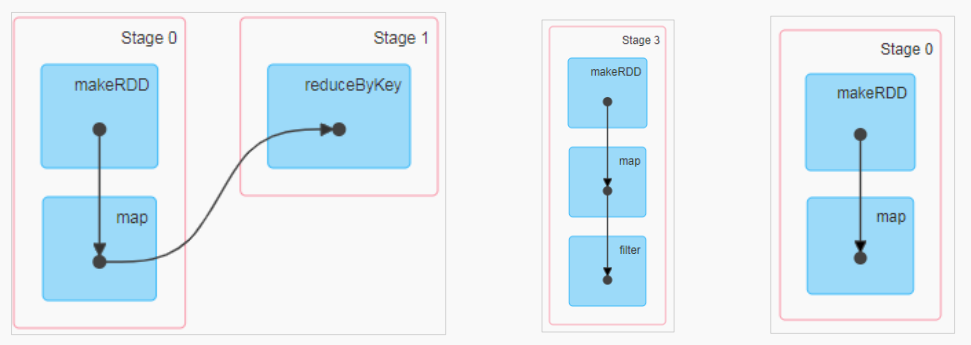
6) RDD 阶段划分源码
try {// New stage creation may throw an exception if, for example, jobs are run ona// HadoopRDD whose underlying HDFS files have been deleted.finalStage = createResultStage(finalRDD, func, partitions, jobId, callSite)} catch {case e: Exception =>logWarning("Creating new stage failed due to exception - job: " + jobId, e)listener.jobFailed(e)return}……private def createResultStage(rdd: RDD[_],func: (TaskContext, Iterator[_]) => _,partitions: Array[Int],jobId: Int,callSite: CallSite): ResultStage = {val parents = getOrCreateParentStages(rdd, jobId)val id = nextStageId.getAndIncrement()val stage = new ResultStage(id, rdd, func, partitions, parents, jobId, callSite)stageIdToStage(id) = stageupdateJobIdStageIdMaps(jobId, stage)stage}……private def getOrCreateParentStages(rdd: RDD[_], firstJobId: Int): List[Stage]= {getShuffleDependencies(rdd).map { shuffleDep =>getOrCreateShuffleMapStage(shuffleDep, firstJobId)}.toList}……private[scheduler] def getShuffleDependencies(rdd: RDD[_]): HashSet[ShuffleDependency[_, _, _]] = {val parents = new HashSet[ShuffleDependency[_, _, _]]val visited = new HashSet[RDD[_]]val waitingForVisit = new Stack[RDD[_]]waitingForVisit.push(rdd)while (waitingForVisit.nonEmpty) {val toVisit = waitingForVisit.pop()if (!visited(toVisit)) {visited += toVisittoVisit.dependencies.foreach {case shuffleDep: ShuffleDependency[_, _, _] =>parents += shuffleDepcase dependency =>waitingForVisit.push(dependency.rdd)}} }parents}
7) RDD 任务划分
RDD 任务切分中间分为:Application、Job、Stage 和 Task
- Application:初始化一个 SparkContext 即生成一个 Application;
- Job:一个 Action 算子就会生成一个 Job;
- Stage:Stage 等于宽依赖(ShuffleDependency)的个数加 1;
- Task:一个 Stage 阶段中,最后一个 RDD 的分区个数就是 Task 的个数。
注意:Application->Job->Stage->Task 每一层都是 1 对 n 的关系。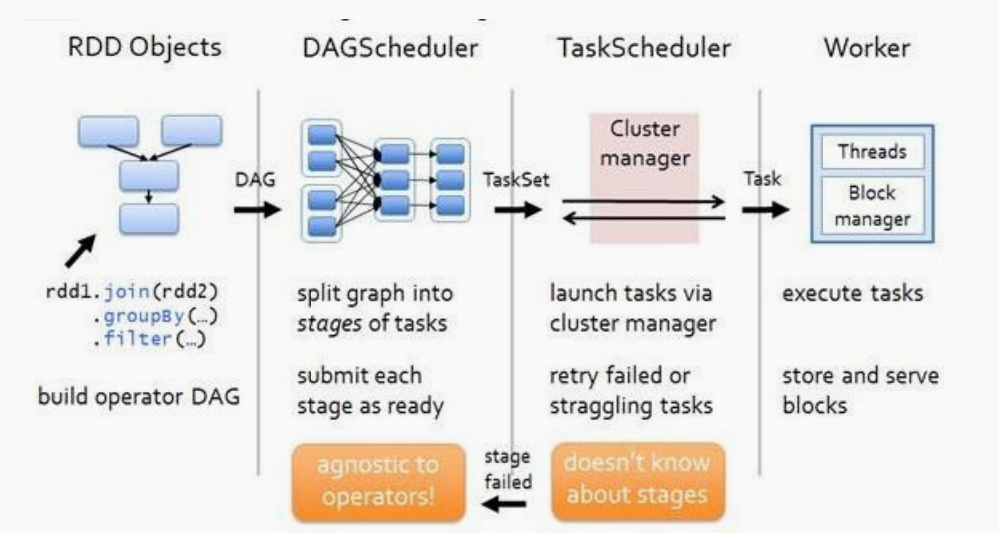
8) RDD 任务划分源码
val tasks: Seq[Task[_]] = try {stage match {case stage: ShuffleMapStage =>partitionsToCompute.map { id =>val locs = taskIdToLocations(id)val part = stage.rdd.partitions(id)new ShuffleMapTask(stage.id, stage.latestInfo.attemptId,taskBinary, part, locs, stage.latestInfo.taskMetrics, properties,Option(jobId),Option(sc.applicationId), sc.applicationAttemptId)}case stage: ResultStage =>partitionsToCompute.map { id =>val p: Int = stage.partitions(id)val part = stage.rdd.partitions(p)val locs = taskIdToLocations(id)new ResultTask(stage.id, stage.latestInfo.attemptId,taskBinary, part, locs, id, properties, stage.latestInfo.taskMetrics,Option(jobId), Option(sc.applicationId), sc.applicationAttemptId)}}……val partitionsToCompute: Seq[Int] = stage.findMissingPartitions()……override def findMissingPartitions(): Seq[Int] = {mapOutputTrackerMaster.findMissingPartitions(shuffleDep.shuffleId).getOrElse(0 until numPartitions)}

若有收获,就点个赞吧
0 人点赞


