计算机最小单位
在计算机中最小的数据单位是bit(比特),bit是二进制数的一位,包含的信息只有两种状态:0和1
常见数据类型长度转换
1 byte = 8 bit
1 char = 2 byte = 16 bit
1 short = 2 byte = 16 bit
1 int = 4 byte = 32 bit
1 long = 8 byte = 64 bit
1 float = 4 byte = 32 bit
1 double = 8 byte = 64 bit
问题思考
思考一个问题,如何在4亿个整数(整数值范围在0~3亿之间)中判断某个整数是否存在?而目前只有一台计算机,内存大小为500M。
最简单的方案就是开一个大小为3亿的数组(int[] data = new int[300000000]),如果100存在,则data[100] = 1,判断某个数是否存在只需要判断该数组中该下标位置上的值是否为1,该数组占用的大小为:
300000000*4 /1024 / 1024 = 1144.4 MB
这显然超出了机器的内存,而且该方案中,int占32bit,而我们记录只需要1个bit,白白浪费了31bit空间,那么能不能只用bit的类型来存储呢?当然是可以
什么是BitMap
BitMap一种数据结构,代表了有限域中的稠集,每一个元素至少出现一次……学术上的定义个人也很难理解,其实Bitmap的基本思想就是用一个bit位来标记某个元素对应的信息(其信息量大小为1bit)由于采用了Bit为单位来存储数据,因此在存储空间方面,可以大大节省空间。
/** @Author 松岛安* */public class BitMap {byte[] bits;int max;public BitMap(int max){this.bits = new byte[(max >> 3)+1];this.max = max;}public void add(int n){//落在哪个数组上int index = n >> 3;//落在byte的哪一位上int loc = n & 7;//在loc位上置1,做或运算,有1则为1bits[index] |= (1<<loc);}public void delect(int n){int index = n>>3;int loc = n & 7;if(isExit(n)){int delete = (1<<loc);//做异或运算,相同则为0,不同则为1bits[index] ^= delete;}}//查询某个数是否存在public boolean isExit(int n){int index = n >> 3;int loc = n & 7;int exit = 1 << loc;int flag = bits[index] & exit;return !(flag == 0);}}
上面代码中,我们用一个byte[]数组实现BitMap,数组的长度取决于所有要查找整数中最大值max,1 byte = 8 bit,数组的长度 length = max/8 + 1,整数落在byte中的哪一个bit上,可以通过取余(%)运算获得,由于byte = 8 bit(2的整数倍),可以通过与通过与运算计算
插入
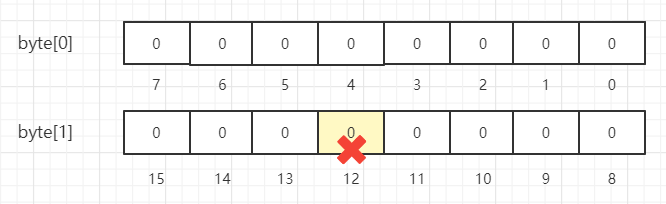
当插入整数12时,首先需要计算12落在数组下标为多少的位置,通过位运算计算(1100 >> 3 = 1)落在byte[1] 的位置,在计算落在byte中哪一个bit上(1100 & 111 = 100 = 4),计算得到落在向左偏移量为4的bit上
最后只需或运算即可插入
00000000 | (1<<4) =00000000 | 00010000 = 00010000
查找
查找12是否存在,同样找到12落在哪个bit上,接着进行与运算
00010000 & (1 << 4) = 00010000 & 00010000 = 00010000
若结果为0则不存在,结果不为0则存在
删除
删除12,同样找到12对应落在哪个bit上,接着进行异或运算(相同为0,不同为1)
00010000 ^ (1<<4) = 00010000 ^ 00010000 = 00000000
此时回到一开始的问题,在4亿个整数(整数值范围在0~3亿之间)中判断某个整数是否存在,我们只需要创建长度为 300000000>>3 的byte[ ]数组,即可覆盖0~3亿范围的整数范围,判断其是否存在只需要检查其对应的bit上是否为1即可,空间开销为:
300000000 / 8 /1024 /1024 = 35.8 MB
我们只需要35.8MB的空间就可以表示3亿的数据量,是不是很妙!
如何判断某个数是否重复?
BitMap通过一个bit来判断元素是否存在,如果要判断某个元素是否重复,则需要在此基础上做一点变化。我们用 2个bit 的大小来表示某个元素的三种状态
00:元素不存在
01:元素置存在一个
11:元素重复出现
我们还是以 byte[] 数组作为存储,由于每个元素的状态需要2bit表示,所以空间消耗为原来BitMap的两倍,原来一个byte能表示8个元素,现在只能表示4个
/** @Author 松岛安* */public class BitMapRepeat {byte[] bits;int max;public BitMapRepeat(int max){this.bits = new byte[(max >> 2)+1];this.max = max;}/** 检查元素是否重复* */public boolean isRepeat(int n){int index = n >> 2;//在原来基础上左移原来的长度int loc = (n & 3) << (n & 3);int repeat = 1 << (loc+1);int flag = bits[index] & repeat;return !(flag == 0);}/** 检查元素是否存在* */public boolean isExit(int n){int index = n >> 2;int loc = (n & 3) << (n & 3);int exit = 1 << loc;int flag = bits[index] & exit;return !(flag == 0);}/** 添加某个元素* */public void add(int n){int index = n >> 2;int loc = (n & 3) << (n & 3);//如果元素存在if(isExit(n)){//将元素所在的bit位置上左移1位的bit置为1int repeat = 1 << (loc+1);bits[index] |= repeat;}else {int add = 1 << loc;bits[index] |= add;}}/** 删除某个元素* */public void delete(int n){int index = n >> 2;int loc = (n & 3) << (n & 3);//如果元素存在if(isExit(n)){//如果元素有重复,将11置为00,即全部都删除if(isRepeat(n)){int delete = (1 << loc) | (1 << (loc + 1));bits[index] ^= delete;}else {int delete = 1 << loc;bits[index] ^= delete;}}}}

若有收获,就点个赞吧
0 人点赞


