递归
前序遍历
func preorder(root *TreeNode)[]int{res := make([]int, 0)var order func(*TreeNode)order = func (node *TreeNode){if node ==nil{return}// 递归方法 先写入值 再递归左节点 再递归右节点res = append(res,node.Val)order(node.Left)order(node.Right)}order(root)return res}
中序遍历
func inorderTraversal(root *TreeNode) []int {res := make([]int, 0)stack := []*TreeNode{}node := rootfor node != nil || len(stack) > 0{res = append(res, node.Val)stack = append(stack, node)node = node.Left}}
后序遍历
func postorderTraversal(root *TreeNode) []int {res := make([]int, 0)var postorder func(*TreeNode)postorder = func(node *TreeNode){if node == nil{return}postorder(node.Left)postorder(node.Right)res = append(res, node.Val)}postorder(root)return res}
迭代
前序遍历
func preorderTraversal(root *TreeNode) []int {res := make([]int, 0)stack := []*TreeNode{}if root == nil{return res}node := rootstack = append(stack, node)for len(stack) > 0{tmp := stack[len(stack) - 1]stack = stack[:len(stack) - 1]res = append(res, tmp.Val)if tmp.Right != nil{stack = append(stack, tmp.Right)}if tmp.Left != nil{stack = append(stack, tmp.Left)}}return res}
中序遍历
思路:每到一个节点 A,因为根的访问在中间,将 A 入栈。然后遍历左子树,接着访问 A,最后遍历右子树。
在访问完 A 后,A 就可以出栈了。因为 A 和其左子树都已经访问完成。
func inorderTraversal(root *TreeNode) []int {res := make([]int, 0)stack := []*TreeNode{}if root == nil{return res}node := rootfor node != nil || len(stack) > 0{for node != nil{stack = append(stack, node)node = node.Left}node = stack[len(stack) - 1]stack = stack[:len(stack) - 1]res = append(res, node.Val)node = node.Right}return res}
后序遍历
再来看后序遍历,先序遍历是中左右,后续遍历是左右中,那么我们只需要调整一下先序遍历的代码顺序,就变成中右左的遍历顺序,然后在反转result数组,输出的结果顺序就是左右中了,如下图: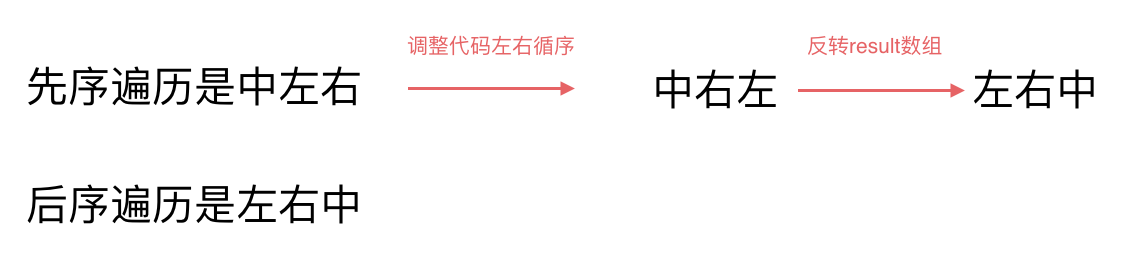
func postorderTraversal(root *TreeNode) []int {res := make([]int, 0)stack := []*TreeNode{}if root == nil{return res}node := rootstack = append(stack, node)for len(stack) > 0{tmp := stack[len(stack) - 1]stack = stack[:len(stack) - 1]res = append(res, tmp.Val)if tmp.Left != nil{stack = append(stack, tmp.Left) // 相对于前序遍历,这更改一下入栈顺序 (空节点不入栈)}if tmp.Right != nil{stack = append(stack, tmp.Right) // 空节点不入栈}}for i := 0; i < len(res) / 2; i++{res[i], res[len(res) - i - 1] = res[len(res) - i - 1], res[i]}return res}
使用slice模拟栈
普通版的模拟写入和读取的栈
package mainimport "fmt"//栈的特点是先进后出//使用一个切片的全局变量来模拟栈var stack []int//向栈中添加数据func push(value int) {stack = append(stack, value)}//从栈中获取数据func pop() (int, bool) {ok := falsevalue := 0if len(stack) > 0 {value = stack[len(stack)-1]stack = stack[:len(stack)-1]ok = truereturn value, ok} else {return value, ok}}func main() {//向栈中添加数据for i := 0; i < 10; i++ {push(i)fmt.Println(stack)}//从栈中获取数据for {v, ok := pop()if ok {fmt.Println(v)} else {break}}}
使用goroutine来异步读取栈中数据或往栈中写入数据
package mainimport ("fmt")//栈的特点是先进后出//使用一个切片的全局变量来模拟栈var stack1 []int//此通道用于通知主协程已经完成操作了//但是此操作有可能不会输出全部数据//因为添加数据和获取数据是异步的//当获取数据的速度快于写入数据//便不会输出全部数据var e chan int = make(chan int)//向栈中添加数据func push1(value int) {stack1 = append(stack1, value)fmt.Println(stack1)}//从栈中获取数据func pop1() {for {if len(stack1) > 0 {value := stack1[len(stack1)-1]stack1 = stack1[:len(stack1)-1]fmt.Println(value)} else {e <- 0}}}func main() {for i := 0; i < 10; i++ {go push1(i)}go pop1()<-e}
参考:

若有收获,就点个赞吧
0 人点赞


