STL概述
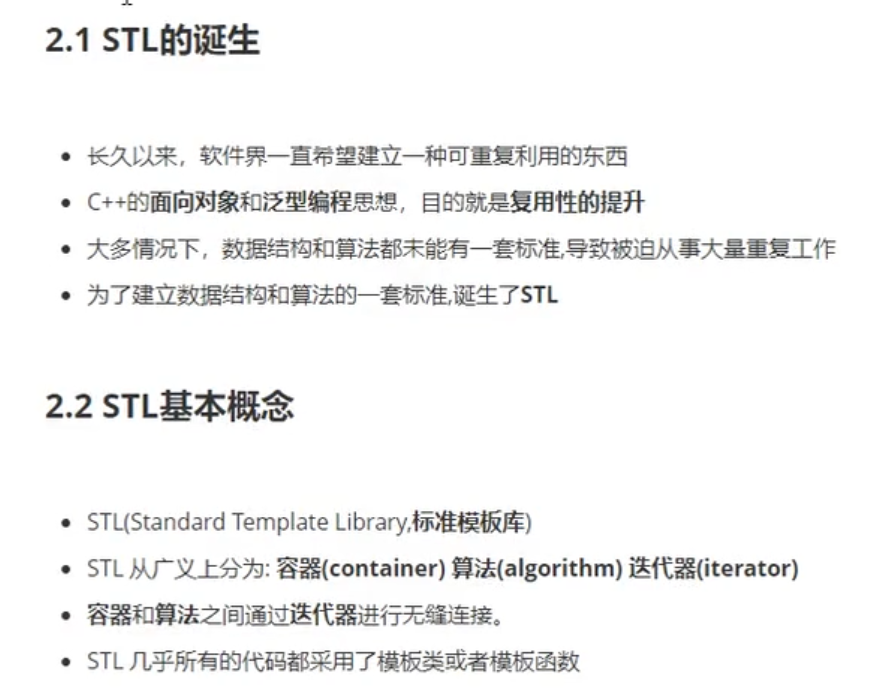
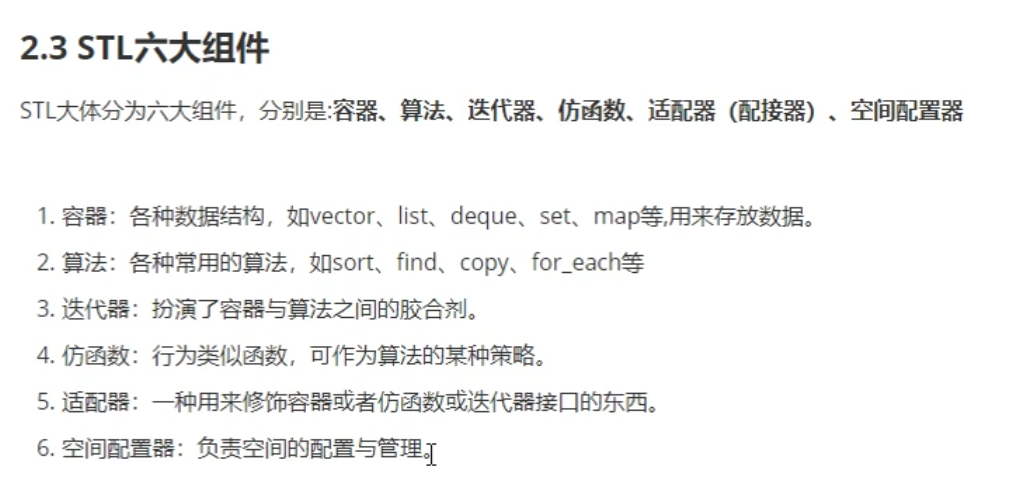
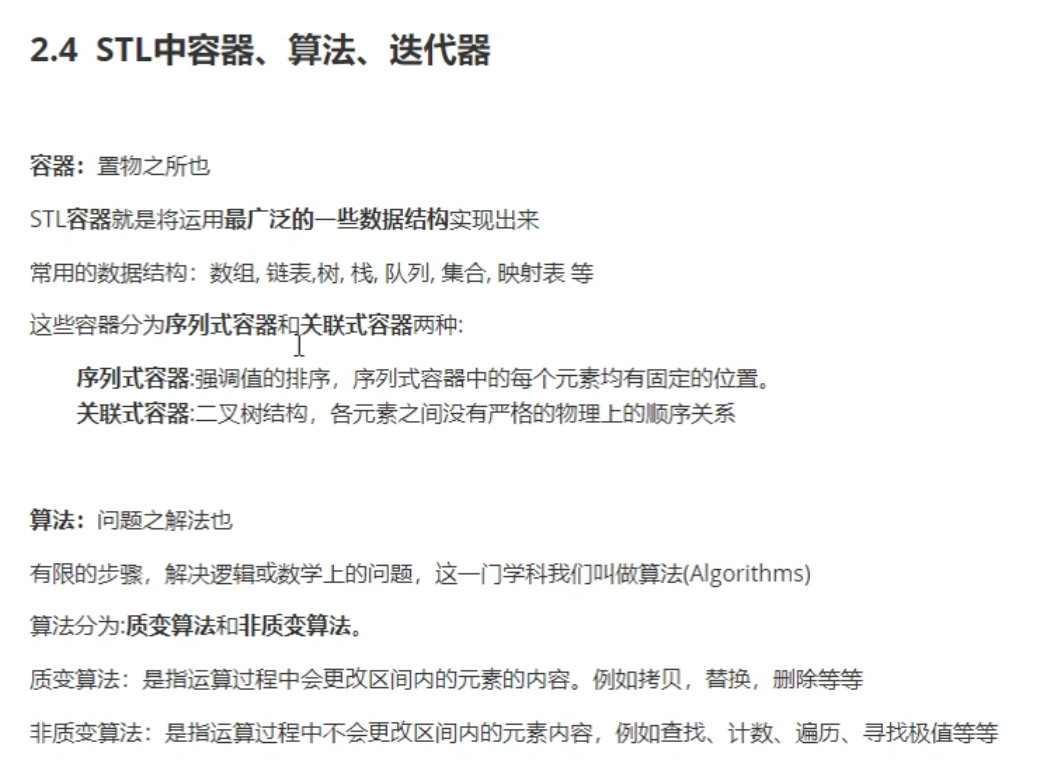
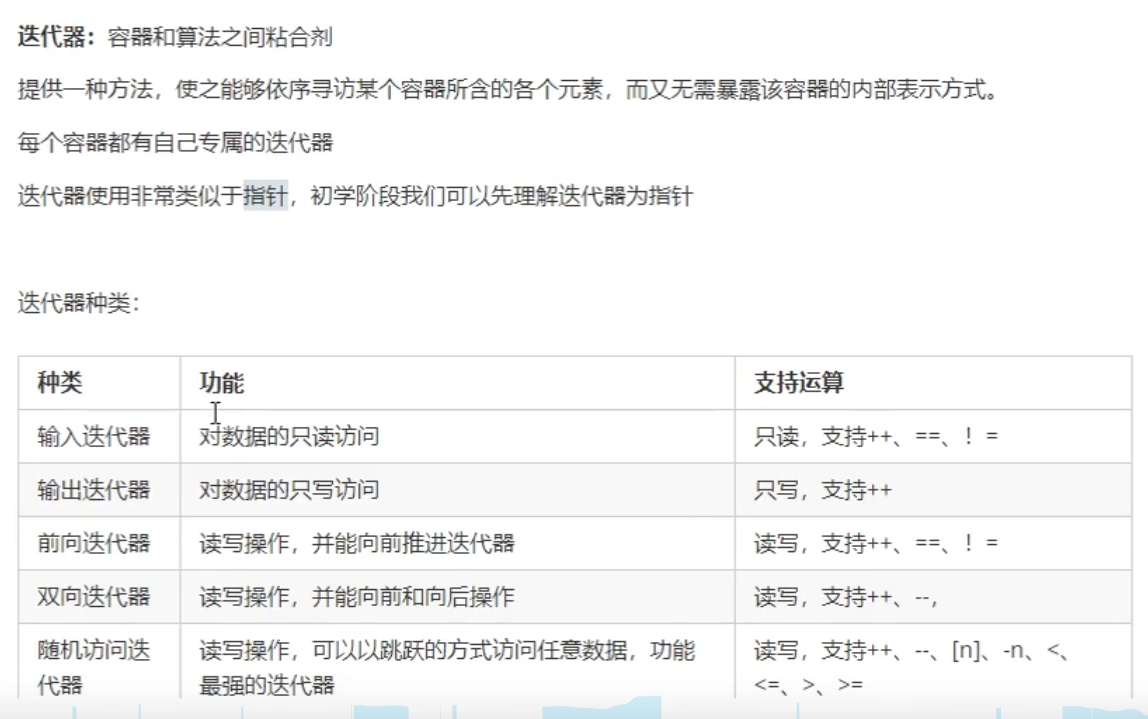
初识stl
- `三种遍历方法
#include <iostream>using namespace std;#include <vector>#include <algorithm>//标准算法头文件void myPrint(int val) {cout << val << endl;}//vector容器存放数据类型void test01() {//创建数组vector <int> v;//插入数据v.push_back(10);v.push_back(20);v.push_back(30);v.push_back(40);v.push_back(50);// //通过迭代器访问1// vector<int>::iterator itBegin = v.begin();// vector<int>::iterator itEnd = v.end();//// while (itBegin != itEnd) {// cout << *itBegin << endl;// itBegin++;// }////通过迭代器访问2//for (vector<int>::iterator it = v.begin(); it != v.end; it++) {// cout << *it << endl;//}//通过迭代器访问3for_each(v.begin(), v.end(), myPrint);}int main() {test01();system("pause");return 0;}
自定义数据类型
#include <iostream>#include <vector>#include <algorithm>#include <string>using namespace std;class Person {public:Person(string name, int age) {this->name = name;this->age = age;}string name;int age;};void test01() {Person p1("张三", 1);Person p2("张四", 2);Person p3("张五", 3);Person p4("张立", 4);vector<Person> person;person.push_back(p1);person.push_back(p2);person.push_back(p3);person.push_back(p4);for (vector<Person>::iterator it = person.begin(); it != person.end(); it++) {cout << "姓名:" << (*it).name << "年龄:" << (*it).age << endl;}}int main() {test01();system("pause");return 0;}
string容器
1.构造函数,使用了构造器
#include <iostream>using namespace std;#include <string>void test01() {const char *str = "helloworld";string s1(str);cout << s1 << endl;string str1 = str;cout << str1 << endl;string s2(s1);cout << s2 << endl;string s3(10, 'a');cout << s3 << endl;}int main() {test01();system("pause");return 0;}
2.赋值操作,使用的是方法

#include <iostream>using namespace std;#include <string>void test01() {//等于号const char* s = "hello world";string str1;str1 = s;cout << "str1= " << str1 << endl;string str2;str2 = 'c';cout << "str2= " << str2 << endl;string str3;str3 = str1;cout << "str3= " << str3 << endl;//方法string str4;str4.assign("hello C++");cout << "str4= " << str4 << endl;string str5;str5.assign("hello C++", 5);cout << "str5= " << str5 << endl;string str6;str6.assign(10, 'a');cout << "str6= " << str6 << endl;}int main() {test01();system("pause");return 0;}
3.字符串拼接

#include <iostream>using namespace std;#include <string>void test01() {string str1 = "我";str1 += "爱玩游戏";cout << "str1 = " << str1 << endl;str1 += 'c';cout << "str1 = " << str1 << endl;string str2 = "LOL";str1 += str2;cout << "str1 = " << str1 << endl;string str3 = "I";str3.append(" love");cout << "str3 = " << str3 << endl;str3.append("abcde", 4);cout << "str3 = " << str3 << endl;string str4 = "I like";string str5 = str4;str4.append(str3);cout << "str4 = " << str4 << endl;str5.append(str3, 0, 3);cout << "str5 = " << str5 << endl;}int main() {test01();system("pause");return 0;}
4.字符串的查找和替换

#include <iostream>using namespace std;#include <string>void test01() {int pos;string str1 = "abcdefde";(pos = str1.find("de")) == -1 ? cout << "没找到" << endl : cout << "找到了,pos= " << pos << endl;(pos = str1.rfind("de")) == -1 ? cout << "没找到" << endl : cout << "找到了,pos= " << pos << endl;}void test02() {string str1 = "abcdefde";cout << "str1" << str1 << endl;str1.replace(1, 3, "111");cout << "str1" << str1 << endl;}int main() {test01();test02();system("pause");return 0;}
5.字符串的比较
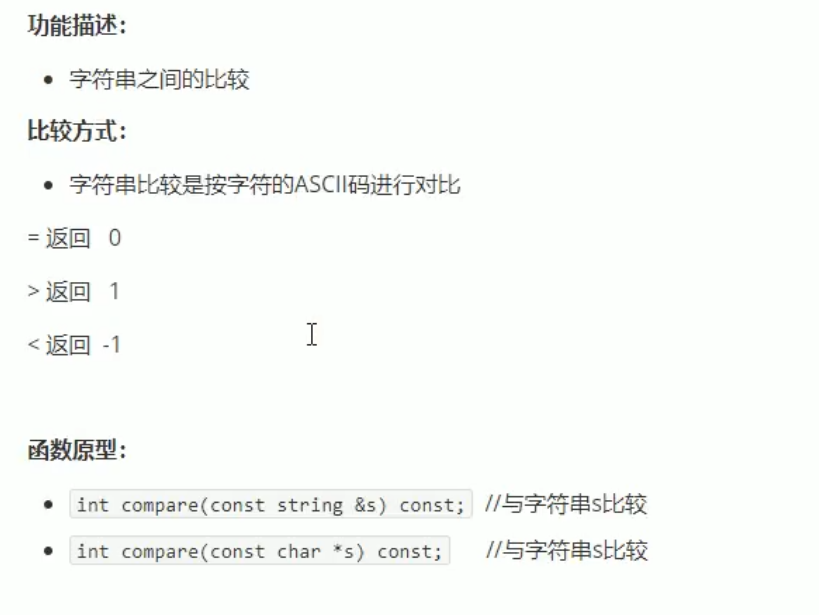
6.单个字符的存取

#include <iostream>using namespace std;#include <string>void test01() {int i;string str1 = "abcdefde";cout << "str1 " << str1 << endl;string str2 = "abcedasd";if (str1.compare(str2)) {cout << "相等" << endl;}else {cout << "不相等" << endl;}str1[1] = '1';cout << "str1 " << str1 << endl;cout << "str[2] " << str1[2] << endl;cout << "str[2] " << str1.at(2) << endl;}int main() {test01();system("pause");return 0;}
7.字符串的插入和删除
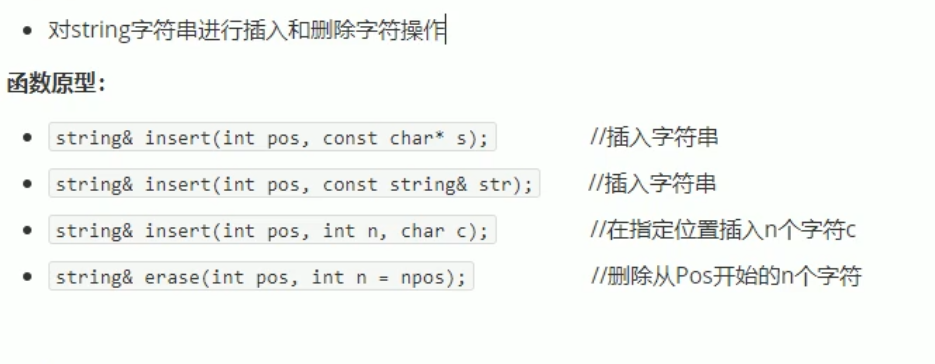
#include <iostream>using namespace std;#include <string>void test01() {int i;string str1 = "abcdefde";cout << "str1 " << str1 << endl;i = str1.size();string str2 = "abcedasd";str1.insert(str1.size(), str2);cout << "str1 " << str1 << endl;str1.erase(i,str2.size()+1);cout << "str1 " << str1 << endl;}int main() {test01();system("pause");return 0;}
8.子串获取

#include <iostream>using namespace std;#include <string>void test01() {int i;string str1 = "abcdefde";cout << "str1 " << str1 << endl;i = str1.size();string str2 = "1212312";string str3 = str1.substr(0, 3);cout << "str3 " << str3 << endl;str1.insert(i, str2);cout << "Substr " << str1.substr(i,str2.size()) << endl;}void test02() {int i,find;string str1 = "abcdefde@qq.com";cout << "str1 " << str1 << endl;i = str1.size();string str2 = "1212312";find = str1.find('@');cout << "find " << find << endl;cout << "Substr " << str1.substr(0,find) << endl;}int main() {test01();test02();system("pause");return 0;}
vector容器
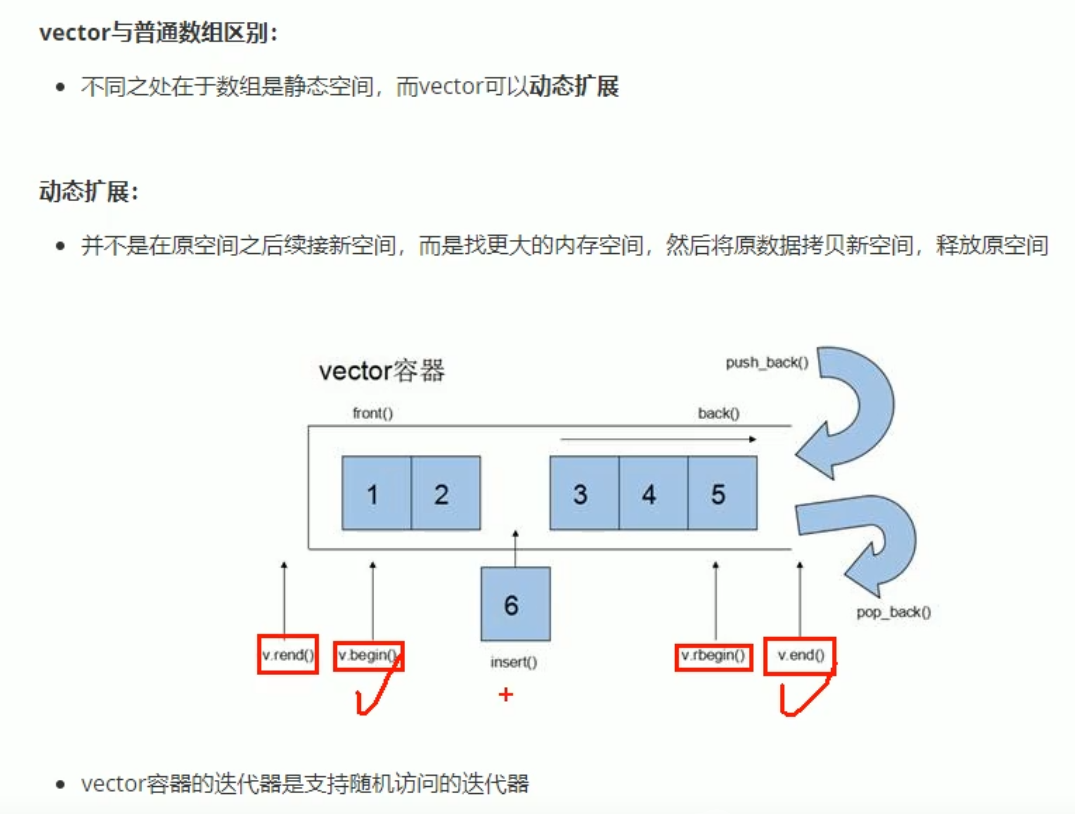
1.构造函数

#include <iostream>using namespace std;#include <vector>void VectorTest(vector<int> v) {for (vector<int>::iterator it = v.begin(); it != v.end(); it++) {cout << *it <<" ";}cout << endl;}void test01() {int i;vector<int> v1;for (i = 0; i < 10; i++) {v1.push_back(i);}VectorTest(v1);vector<int> v2(v1.begin(), v1.end());VectorTest(v2);vector<int> v3(10, 100);VectorTest(v3);vector<int> v4(v1);VectorTest(v4);}int main() {test01();system("pause");return 0;}
2.函数赋值

#include <iostream>using namespace std;#include <vector>void VectorTest(vector<int> v) {for (vector<int>::iterator it = v.begin(); it != v.end(); it++) {cout << *it << " ";}cout << endl;}void test01() {int i;vector<int> v1;for (i = 0; i < 10; i++) {v1.push_back(i);}VectorTest(v1);vector<int> v2;v2 = v1;VectorTest(v2);vector<int> v3;v3.assign(v1.begin(),v1.end());VectorTest(v3);vector<int> v4;v4.assign(10, 100);VectorTest(v4);}int main() {test01();system("pause");return 0;}
3.容量和大小
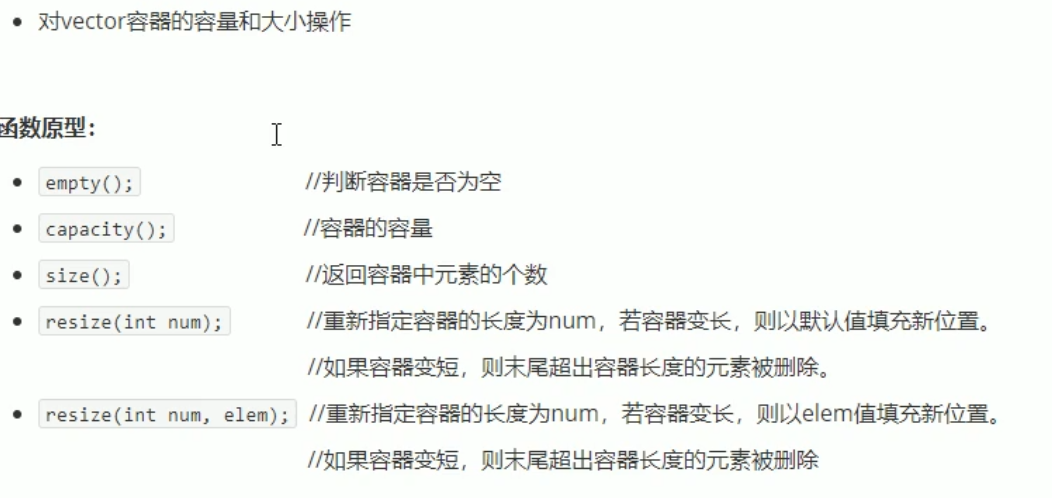
empty方法:如果容器不为空,返回0,否则返回1,为空
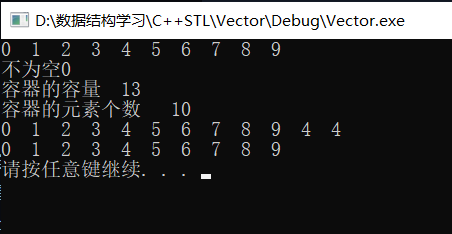
#include <iostream>using namespace std;#include <vector>void VectorTest(vector<int> v) {for (vector<int>::iterator it = v.begin(); it != v.end(); it++) {cout << *it << " ";}cout << endl;}void test01() {int i;vector<int> v1;for (i = 0; i < 10; i++) {v1.push_back(i);}VectorTest(v1);if (v1.empty()) {cout << "为空" << endl;}else {cout << "不为空" << v1.empty()<< endl;}cout << "容器的容量 " << v1.capacity() << endl;cout << "容器的元素个数 " << v1.size() << endl;v1.resize(v1.size() + 2, 4);VectorTest(v1);v1.resize(v1.size() - 2);VectorTest(v1);}int main() {test01();system("pause");return 0;}
4.容器中元素的插入和删除
v.begin()和 v.end()就是迭代器iterator
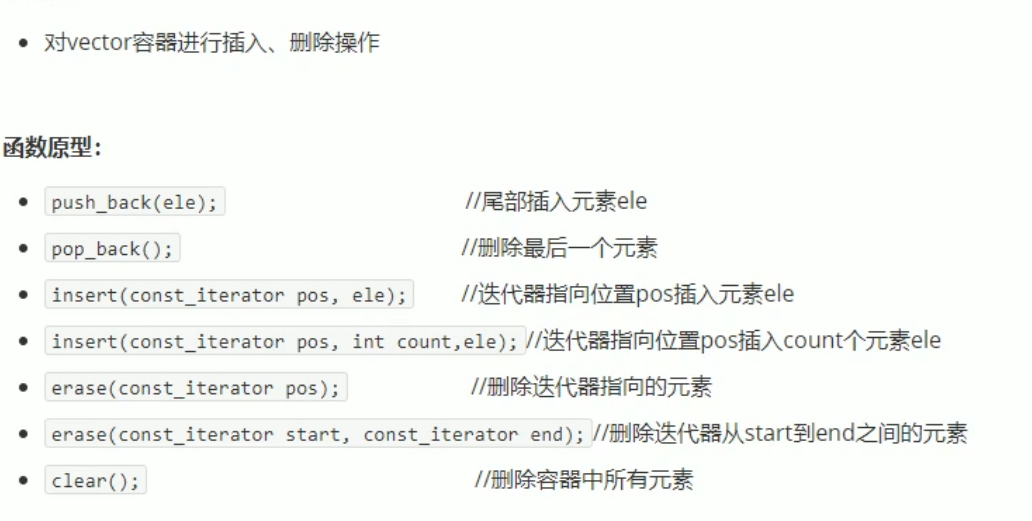

#include <iostream>using namespace std;#include <vector>void VectorTest(vector<int> v) {for (vector<int>::iterator it = v.begin(); it != v.end(); it++) {cout << *it << " ";}cout << endl;}void test01() {int i;vector<int> v1;for (i = 0; i < 10; i++) {v1.push_back(i);}VectorTest(v1);v1.pop_back();VectorTest(v1);v1.insert(v1.begin(), 100);v1.insert(v1.end(), 100);v1.insert(v1.begin() + 2, 2, 55);VectorTest(v1);v1.erase(v1.begin());v1.erase(v1.begin(), v1.begin() + 2);VectorTest(v1);v1.clear();if (v1.empty()) {cout << "为空" << endl;}else {cout << "不为空" << v1.empty() << endl;}}int main() {test01();system("pause");return 0;}
5.数据存储
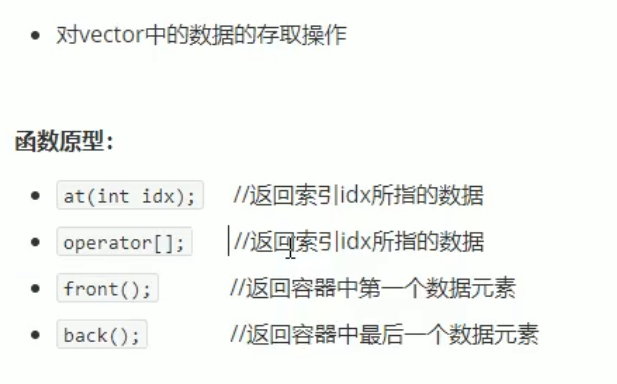
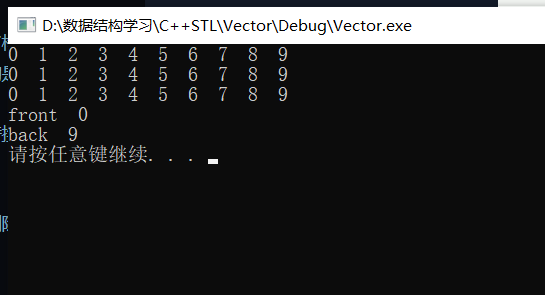
#include <iostream>using namespace std;#include <vector>void VectorTest(vector<int> v) {for (vector<int>::iterator it = v.begin(); it != v.end(); it++) {cout << *it << " ";}cout << endl;}void test01() {int i;vector<int> v1;for (i = 0; i < 10; i++) {v1.push_back(i);}VectorTest(v1);for (i = 0; i < v1.size(); i++) {cout << v1.at(i) << " ";}cout << endl;for (i = 0; i < v1.size(); i++) {cout << v1[i] << " ";}cout << endl;cout << "front " << v1.front() << endl;cout << "back " << v1.back() << endl;}int main() {test01();system("pause");return 0;}
6.容器交换
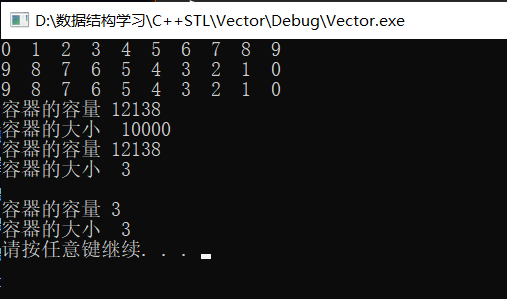
#include <iostream>using namespace std;#include <vector>void VectorTest(vector<int> v) {for (vector<int>::iterator it = v.begin(); it != v.end(); it++) {cout << *it << " ";}cout << endl;}void test01() {int i;vector<int> v1;for (i = 0; i < 10; i++) {v1.push_back(i);}VectorTest(v1);vector<int> v2;for (i = 9; i >=0; i--) {v2.push_back(i);}VectorTest(v2);v1.swap(v2);VectorTest(v1);}void test02() {int i;vector<int> v2;for (i = 0; i <10000; i++) {v2.push_back(i);}cout << "容器的容量 " << v2.capacity() << endl;cout << "容器的大小 " << v2.size() << endl;v2.resize(3);cout << "容器的容量 " << v2.capacity() << endl;cout << "容器的大小 " << v2.size() << endl;vector<int>(v2).swap(v2);cout << endl;cout << "容器的容量 " << v2.capacity() << endl;cout << "容器的大小 " << v2.size() << endl;}int main() {test01();test02();system("pause");return 0;}
7.预先设置容量
#include <iostream>using namespace std;#include <vector>void VectorTest(vector<int> v) {for (vector<int>::iterator it = v.begin(); it != v.end(); it++) {cout << *it << " ";}cout << endl;}void test01() {int i,num=0;vector<int> v1;v1.reserve(1000);int *p = NULL;for (i = 0; i < 1000; i++) {v1.push_back(i);if (p != &v1[0]) {p = &v1[0];num++;}}cout << "次数 " << num << endl;}int main() {test01();system("pause");return 0;}
deque容器

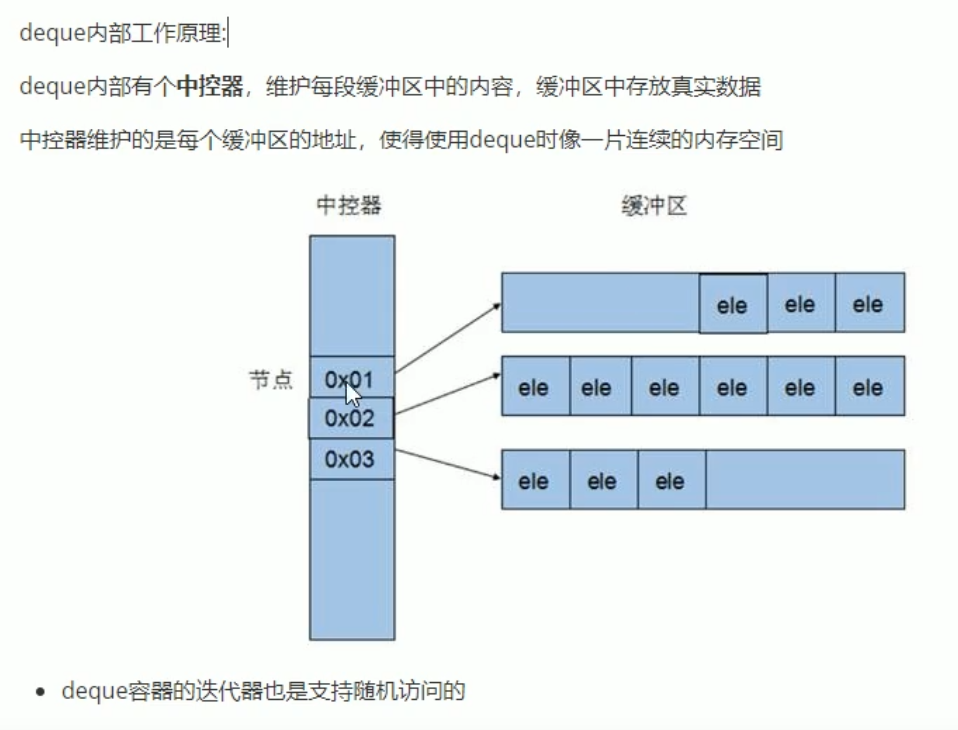
1.构造函数
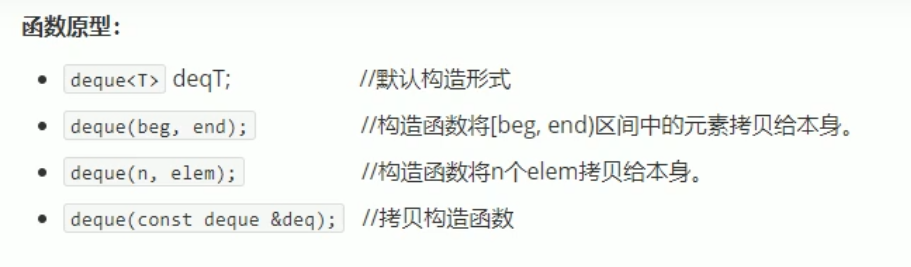
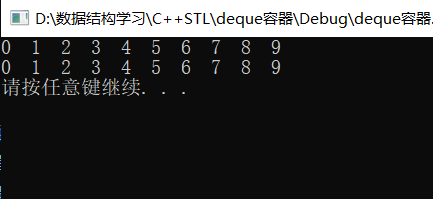
#include <iostream>using namespace std;#include <deque>void DequePrint(const deque<int> v) {for (deque<int>::const_iterator it = v.begin(); it != v.end(); it++) {cout << *it << " ";}cout << endl;}void test01() {int i;deque<int> v;for (i = 0; i < 10; i++) {v.push_back(i);}DequePrint(v);deque<int> v1(v);DequePrint(v1);}int main() {test01();system("pause");return 0;}
2.赋值操作

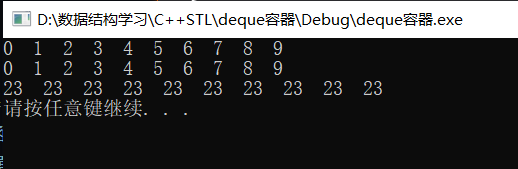
#include <iostream>using namespace std;#include <deque>void DequePrint(const deque<int> v) {for (deque<int>::const_iterator it = v.begin(); it != v.end(); it++) {cout << *it << " ";}cout << endl;}void test01() {int i;deque<int> v;for (i = 0; i < 10; i++) {v.push_back(i);}deque<int> v2;v2 = v;DequePrint(v2);deque<int> v3;v3.assign(v.begin(), v.end());DequePrint(v3);deque<int> v4;v4.assign(10, 23);DequePrint(v4);}int main() {test01();system("pause");return 0;}
3.大小操作
注意:deque容器没有容量大小:他可以无限扩充
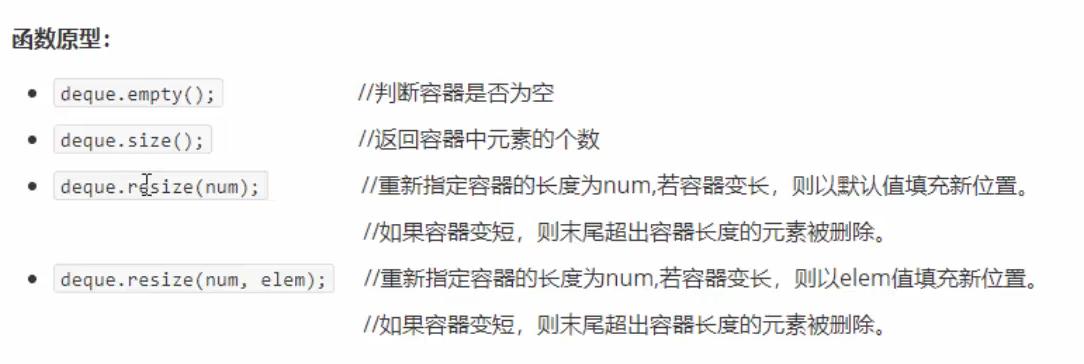
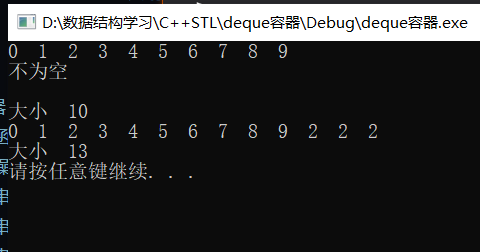
#include <iostream>using namespace std;#include <deque>void DequePrint(const deque<int> v) {for (deque<int>::const_iterator it = v.begin(); it != v.end(); it++) {cout << *it << " ";}cout << endl;}void test01() {int i;deque<int> v;for (i = 0; i < 10; i++) {v.push_back(i);}DequePrint(v);if (v.empty()) {cout << "为空" << endl;}cout << "不为空" << endl << endl;cout << "大小 " << v.size() << endl;v.resize(13, 2);DequePrint(v);cout << "大小 " << v.size() << endl;}int main() {test01();system("pause");return 0;}
4.插入和删除
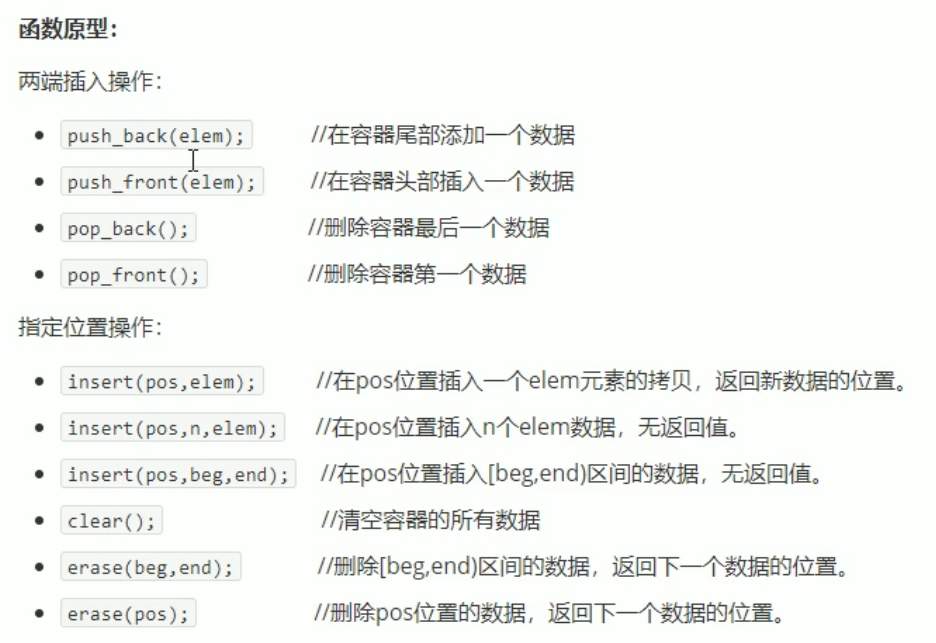

#include <iostream>using namespace std;#include <deque>void DequePrint(const deque<int> v) {for (deque<int>::const_iterator it = v.begin(); it != v.end(); it++) {cout << *it << " ";}cout << endl;}void test01() {int i;deque<int> v;for (i = 0; i < 10; i++) {v.push_back(i);}DequePrint(v);v.push_front(1231);DequePrint(v);v.pop_back();DequePrint(v);v.pop_front();DequePrint(v);v.insert(v.begin()+1, 222);v.insert(v.begin() + 3, 3, 333);DequePrint(v);v.erase(v.begin());DequePrint(v);v.clear();if (v.empty()) {cout << "为空" << endl;}}int main() {test01();system("pause");return 0;}
5.数据存取
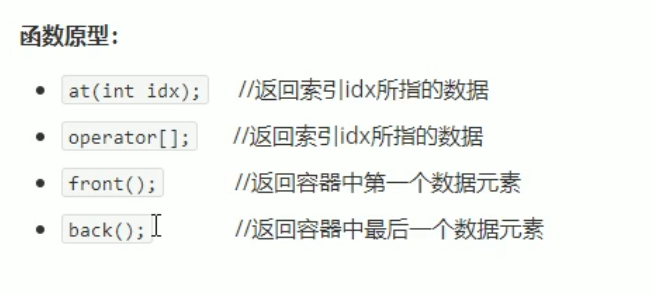
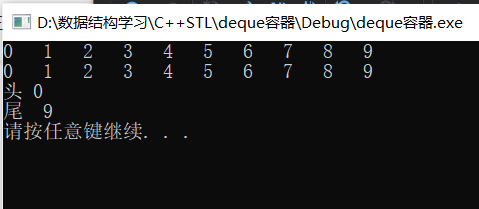
#include <iostream>
using namespace std;
#include <deque>

void DequePrint(const deque<int> v) {
    for (deque<int>::const_iterator it = v.begin(); it != v.end(); it++) {
        cout << *it << "  ";
    }
    cout << endl;
}


void test01() {
    int i;
    deque<int> v;
    for (i = 0; i < 10; i++) {
        v.push_back(i);
    }

    for (i = 0; i < 10; i++) {
        cout << v[i] << "   ";
    }
    cout << endl;

    for (i = 0; i < 10; i++) {
        cout << v.at(i) << "   ";
    }
    cout << endl;

    cout << "头 " << v.front() << endl;
    cout << "尾  " << v.back() << endl;

}

int main() {

    test01();
    system("pause");
    return 0;
}
6.排序
#include 是标准算法头文件

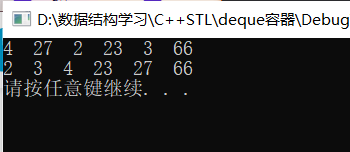
#include <iostream>
using namespace std;
#include <deque>
#include <algorithm>
void DequePrint(const deque<int> v) {
    for (deque<int>::const_iterator it = v.begin(); it != v.end(); it++) {
        cout << *it << "  ";
    }
    cout << endl;
}

void test01() {

    deque<int> d;
    d.push_back(23);
    d.push_back(3);
    d.push_back(66);
    d.push_front(2);
    d.push_front(27);
    d.push_front(4);
    DequePrint(d);

    sort(d.begin(),d.end());

    DequePrint(d);
}

int main() {

    test01();
    system("pause");
    return 0;
}
打分案例
#include <iostream>
#include <vector>
#include <deque>
#include <string>
#include <algorithm>
using namespace std;

struct Participant {
    string name;
    double score;
};

void SetP(Participant *p) {
    int i = 0;
    double score;
    string name;
    cin >> name >> score;
    p->name = name;
    p->score = score;
}


void Print(vector <Participant> VectorP) {
    Participant p;
    for (vector<Participant>::iterator it = VectorP.begin(); it != VectorP.end(); it++) {
        p = *it;
        cout << "姓名:  " << p.name << "  成绩:  " << p.score << endl;
    }
}
void Printd(deque<double> d) {
    for (deque<double>::iterator it = d.begin(); it != d.end(); it++) {
        cout << *it << "  " << endl;
    }
}
double sumd(deque<double> d) {
    double sum=0;
    for (deque<double>::iterator it = d.begin(); it != d.end(); it++) {
        sum += *it;
    }
    return sum;
}
int main() {
    int i;
    Participant p1;
    Participant p2;
    Participant p3;
    Participant p4;
    Participant p5;
    vector <Participant> VectorP;
    SetP(&p1);
    SetP(&p2);
    SetP(&p3);
    SetP(&p4);
    SetP(&p5);
    VectorP.push_back(p1);
    VectorP.push_back(p2);
    VectorP.push_back(p3);
    VectorP.push_back(p4);
    VectorP.push_back(p5);

    Print(VectorP);

    deque<double> scoreD;
    for (vector<Participant>::iterator it = VectorP.begin(); it != VectorP.end(); it++) {
        scoreD.push_back(it->score);
    }
    sort(scoreD.begin(), scoreD.end());
    Printd(scoreD);
    scoreD.pop_back();
    scoreD.pop_front();
    cout << "目前去掉最高和最低分数:  " << endl;
    Printd(scoreD);
    cout << "目前总分:" <<sumd(scoreD) << endl;


    system("pause");
    return 0;
}
Stack容器
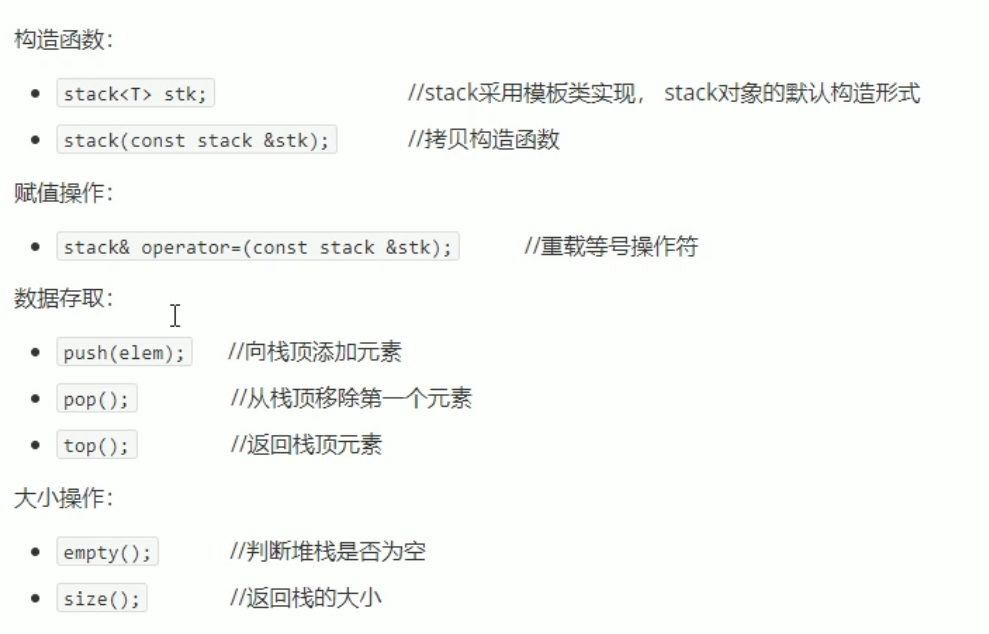
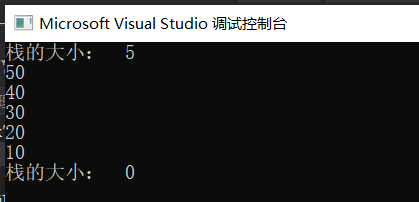
#include <iostream>
#include <stack>
#include <string>
using namespace std;

int main() {
    stack<int> s;
    s.push(10);
    s.push(20);
    s.push(30);
    s.push(40);
    s.push(50);
    cout << "栈的大小:  " << s.size() << endl;
    while (!s.empty()) {
        cout << s.top() << endl;
        s.pop();
    }

    cout << "栈的大小:  " << s.size() << endl;


}
queue容器


#include <iostream>
#include <queue>
#include <deque>
#include <string>
using namespace std;

struct Node {
    int score;
    string name;
}Node;

void Set(queue<struct Node> *Nodeq,int num) {
    int i = 0;
    for (i; i < num; i++) {
        struct Node pub;
        cout << "请输入姓名和分数" << endl;
        cin >> pub.name >> pub.score;
        (*Nodeq).push(pub);
    }
}
void Print(queue<struct Node> Nodeq) {
    while (!Nodeq.empty()) {
        cout << "姓名: " << Nodeq.front().name << "  分数: " << Nodeq.front().score << endl;
        Nodeq.pop();
    }
}
int main() {
    int i;
    queue<struct Node> Nodeq;
    cout << "请输入要添加的人数:  " << endl;
    cin >> i;
    Set(&Nodeq,i);
    Print(Nodeq);
    system("pause");
    return 0;
}
List容器

1.构造容器


#include <iostream>
#include <list>
using namespace std;


void Print(list<int> List) {
    for (list<int>::iterator it = List.begin(); it != List.end(); it++) {
        cout << *it << "  ";
    }
    cout << endl;
}
void test() {
    int i;
    list<int> List;
    for (i = 0; i < 6; i++) {
        List.push_back(10 * i);
    }
    Print(List);

    list<int> List1 = List;
    Print(List1);
}

int main() {
    test();
    system("pause");
    return 0;
}
2.赋值和交换


#include <iostream>
#include <list>
#include <algorithm>
using namespace std;


void Print(list<int> List) {
    for (list<int>::iterator it = List.begin(); it != List.end(); it++) {
        cout << *it << "  ";
    }
    cout << endl;
}
void test() {
    int i;
    list<int> List;
    for (i = 0; i < 6; i++) {
        List.push_back(10 * i);
    }
    cout << "List:  " << endl;
    Print(List);
    list<int> List2;
    List2.assign(10, 34);
    cout << "List2:  " << endl;
    Print(List2);
    cout << "接下来是交换:  " << endl;
    swap(List, List2);
    cout << "List:  " << endl;
    Print(List);
    cout << "List2:  " << endl;
    Print(List2);
}

int main() {
    test();
    system("pause");
    return 0;
}
3.大小操作

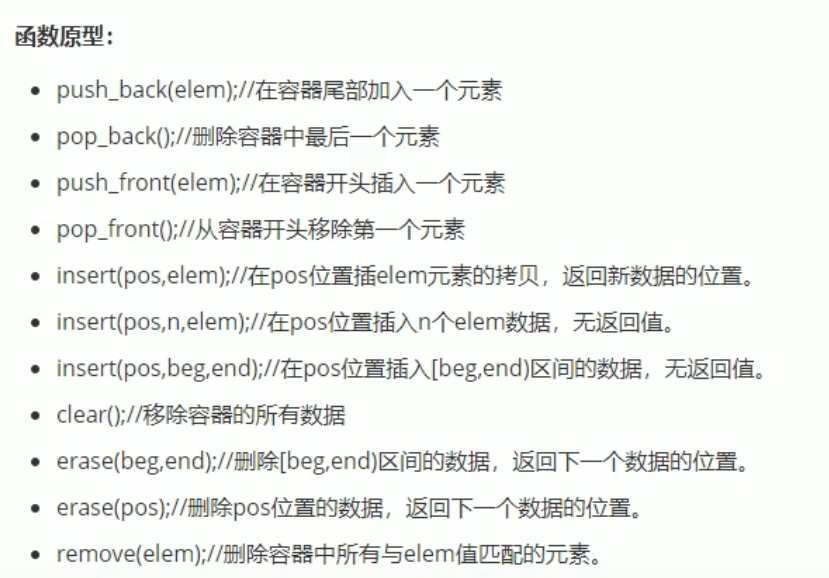
4.插入和删除
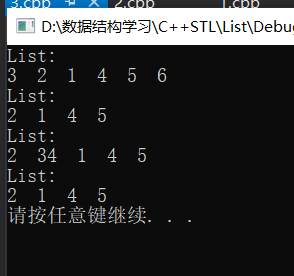
#include <iostream>
#include <list>
#include <algorithm>
using namespace std;


void Print(list<int> List) {
    for (list<int>::iterator it = List.begin(); it != List.end(); it++) {
        cout << *it << "  ";
    }
    cout << endl;
}
void test() {
    int i;
    list<int> List;
    List.push_front(1);
    List.push_front(2);
    List.push_front(3);
    List.push_back(4);
    List.push_back(5);
    List.push_back(6);
    cout << "List:  " << endl;
    Print(List);

    List.pop_back();
    List.pop_front();
    cout << "List:  " << endl;
    Print(List);
    List.insert(++List.begin(), 34);
    cout << "List:  " << endl;
    Print(List);

    List.remove(34);
    cout << "List:  " << endl;
    Print(List);
}

int main() {
    test();
    system("pause");
    return 0;
}
5.数据存储


6.翻转和排序

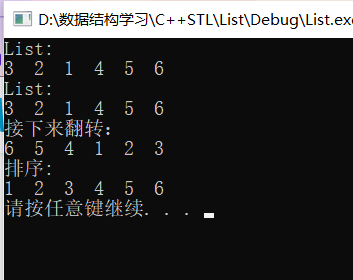
#include <iostream>
#include <list>
#include <algorithm>
using namespace std;


void Print(list<int> List) {
    for (list<int>::iterator it = List.begin(); it != List.end(); it++) {
        cout << *it << "  ";
    }
    cout << endl;
}
void test() {
    int i;
    list<int> List;
    List.push_front(1);
    List.push_front(2);
    List.push_front(3);
    List.push_back(4);
    List.push_back(5);
    List.push_back(6);
    cout << "List:  " << endl;
    Print(List);


    cout << "List:  " << endl;
    Print(List);

    cout << "接下来翻转: " << endl;
    List.reverse();
    Print(List);

    cout << "排序:  " << endl;
    List.sort();
    Print(List);
}

int main() {
    test();
    system("pause");
    return 0;
}
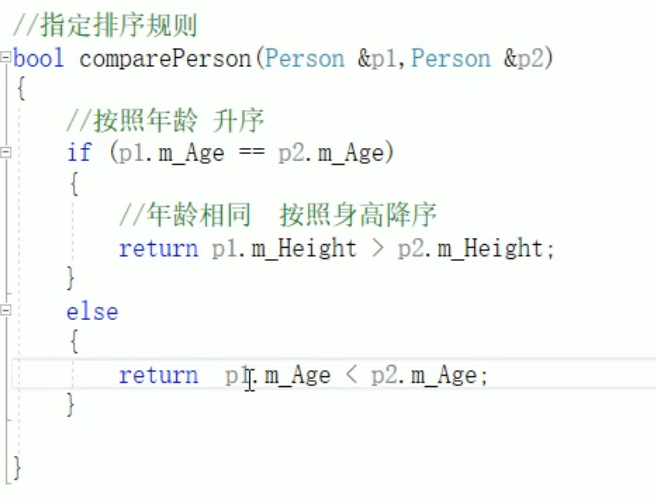
7.自定义条件排序

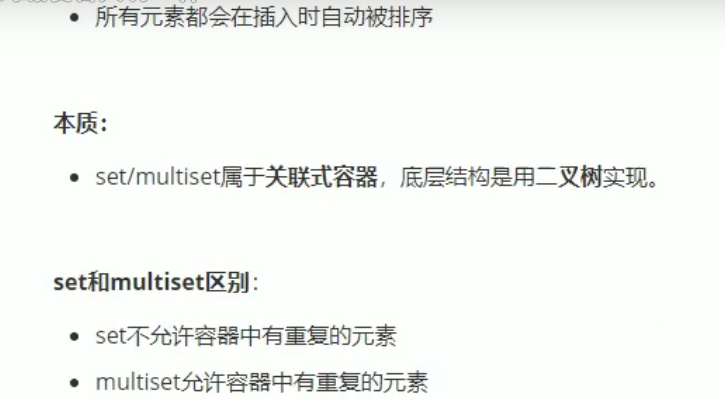
Set容器
1.构造和赋值

#include <iostream>
#include <set>
using namespace std;


void PrintSet(set<int> s1) {
    for (set<int>::iterator it = s1.begin(); it != s1.end(); it++) {
        cout << *it << "  ";
    }
    cout << endl;
}
void test() {
    set<int> s1;

    s1.insert(12);
    s1.insert(52);
    s1.insert(62);
    s1.insert(17);
    s1.insert(13);
    //不允许输入重复值
    PrintSet(s1);

    set<int> s2 = s1;
    PrintSet(s2);
}

int main() {
    test();
    system("pause");
    return 0;
}
2.大小和交换

#include <iostream>
#include <set>
#include <algorithm>
#include <string>
using namespace std;


void PrintSet(set<int> s1,string name) {
    cout << "打印" << name << ":  " << endl;
    for (set<int>::iterator it = s1.begin(); it != s1.end(); it++) {
        cout << *it << "  ";
    }
    cout << endl;
}
void test() {
    set<int> s1;

    s1.insert(12);
    s1.insert(52);
    s1.insert(62);
    s1.insert(17);
    s1.insert(13);
    PrintSet(s1,"s1");

    set<int>s2;
    s2.insert(10);
    s2.insert(50);
    s2.insert(70);
    s2.insert(40);

    PrintSet(s2, "s2");
    cout << "大小:  " << s1.size() << endl;
    cout << "交换操作:  "<<endl;

    swap(s1, s2);
    PrintSet(s1, "s1");
    PrintSet(s2, "s2");
}

int main() {
    test();
    system("pause");
    return 0;
}
3.插入和删除


#include <iostream>
#include <set>
#include <algorithm>
#include <string>
using namespace std;


void PrintSet(set<int> s1, string name) {
    cout << "打印" << name << ":  " << endl;
    for (set<int>::iterator it = s1.begin(); it != s1.end(); it++) {
        cout << *it << "  ";
    }
    cout << endl;
}
void test() {
    set<int> s1;

    s1.insert(12);
    s1.insert(52);
    s1.insert(62);
    s1.insert(17);
    s1.insert(13);
    PrintSet(s1, "s1");

    s1.erase(s1.begin());
    PrintSet(s1, "s1");

    s1.erase(62);
    PrintSet(s1, "s1");

    s1.clear();
    if (s1.empty()) {
        cout << "为空" << endl;
    }
}

int main() {
    test();
    system("pause");
    return 0;
}
4.查找和统计


#include <iostream>
#include <set>
#include <algorithm>
#include <string>
using namespace std;


void PrintSet(set<int> s1, string name) {
    cout << "打印" << name << ":  " << endl;
    for (set<int>::iterator it = s1.begin(); it != s1.end(); it++) {
        cout << *it << "  ";
    }
    cout << endl;
}

int Find(set<int> s, int n) {
    set<int>::iterator it = s.find(n);
    return it != s.end() ? 1 : 0;
}
void test() {
    int s;
    set<int> s1;

    s1.insert(12);
    s1.insert(52);
    s1.insert(62);
    s1.insert(17);
    s1.insert(13);
    PrintSet(s1, "s1");

    cout << "请输入要查找的数"<<endl;
    cin >> s;
    Find(s1, s) == 1 ? cout << "找到了" << endl : cout << "没找到" << endl;

    cout << "统计12个数: " << s1.count(12) << endl;
}

int main() {
    test();
    system("pause");
    return 0;
}
5.set和multiset的区别
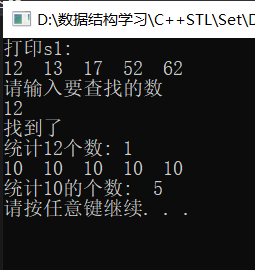
#include <iostream>
#include <set>
#include <algorithm>
#include <string>
using namespace std;


void PrintSet(set<int> s1, string name) {
    cout << "打印" << name << ":  " << endl;
    for (set<int>::iterator it = s1.begin(); it != s1.end(); it++) {
        cout << *it << "  ";
    }
    cout << endl;
}

int Find(set<int> s, int n) {
    set<int>::iterator it = s.find(n);
    return it != s.end() ? 1 : 0;
}
void test() {
    int s;
    set<int> s1;
    s1.insert(12);
    s1.insert(52);
    s1.insert(62);
    s1.insert(17);
    s1.insert(13);
    PrintSet(s1, "s1");
    cout << "请输入要查找的数" << endl;
    cin >> s;
    Find(s1, s) == 1 ? cout << "找到了" << endl : cout << "没找到" << endl;
    cout << "统计12个数: " << s1.count(12) << endl;


    multiset<int> s2;
    s2.insert(10);
    s2.insert(10);
    s2.insert(10);
    s2.insert(10);
    s2.insert(10);
    for (multiset<int>::iterator it = s2.begin(); it != s2.end(); it++) {
        cout << *it << "  ";
    }
    cout << endl;
    cout << "统计10的个数:  " << s2.count(10) << endl;
}

int main() {
    test();
    system("pause");
    return 0;
}
6.pair对组的创建
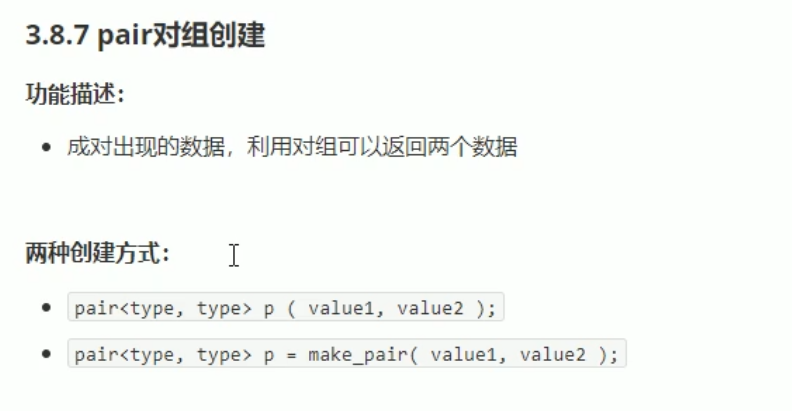
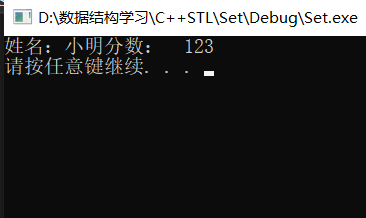
#include <iostream>
#include <set>
#include <algorithm>
#include <string>
using namespace std;


void test() {
    string name;
    int score;
    pair<string, int>p2 = make_pair("小明", 123);
    cout << "姓名:" << p2.first << "分数:  " << p2.second << endl;

}

int main() {
    test();
    system("pause");
    return 0;
}
7.unordered_set
c++ std中set与unordered_set区别和map与unordered_map区别类似:
set基于红黑树实现,红黑树具有自动排序的功能,因此map内部所有的数据,在任何时候,都是有序的。

unordered_set基于哈希表,数据插入和查找的时间复杂度很低,几乎是常数时间,而代价是消耗比较多的内存,无自动排序功能。底层实现上,使用一个下标范围比较大的数组来存储元素,形成很多的桶,利用hash函数对key进行映射到不同区域进行保存。
Map容器

1.构造和赋值
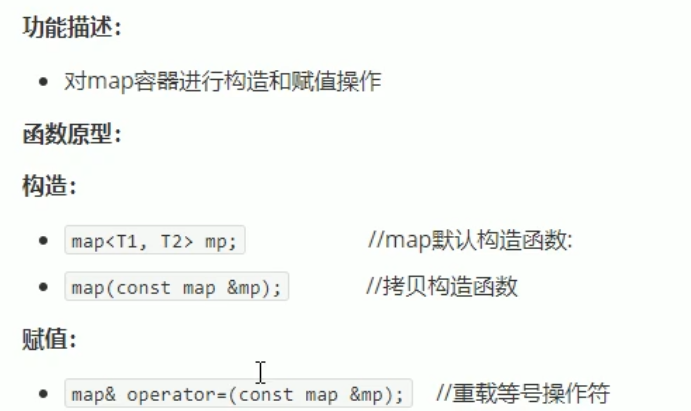

#include <iostream>
#include <map>
#include <string>
using namespace std;

void Print(map<int, string>m1) {
    for (map<int, string>::iterator it = m1.begin(); it != m1.end(); it++) {
        pair<int, string>m = *it;
        cout << "编号:  " << m.first << " " << "姓名:" << m.second << endl;
    }
}

void test() {
    map<int, string>m1;
    m1.insert(pair<int,string>(1,"张三"));
    m1.insert(pair<int, string>(2, "李四"));
    m1.insert(pair<int, string>(3, "王二麻子"));
    Print(m1);
}
int main() {

    test();
    system("pause");
    return 0;
}
2.大小和交换

#include <iostream>
#include <map>
#include <string>
#include <algorithm>
using namespace std;

void Print(map<int, string>m1) {
    for (map<int, string>::iterator it = m1.begin(); it != m1.end(); it++) {
        pair<int, string>m = *it;
        cout << "编号:  " << m.first << " " << "姓名:" << m.second << endl;
    }
}

void test() {
    map<int, string>m1;
    m1.insert(pair<int, string>(1, "张三"));
    m1.insert(pair<int, string>(2, "李四"));
    m1.insert(pair<int, string>(3, "王二麻子"));
    cout << "m1:  " << endl;
    Print(m1);

    map<int, string>m2;
    m2.insert(pair<int, string>(1, "张si"));
    m2.insert(pair<int, string>(2, "李we"));
    m2.insert(pair<int, string>(3, "王二der"));
    cout << "m2:  " << endl;
    Print(m2);

    m1.empty() ? cout<<"为空" <<endl :cout<< "不为空" << endl;

    swap(m1, m2);
    cout << "m1:  " << endl;
    Print(m1);
    cout << "m2:  " << endl;
    Print(m2);
}
int main() {

    test();
    system("pause");
    return 0;
}
3.插入和删除


#include <iostream>
#include <map>
#include <string>
#include <algorithm>
using namespace std;

void Print(map<int, string>m1) {
    for (map<int, string>::iterator it = m1.begin(); it != m1.end(); it++) {
        pair<int, string>m = *it;
        cout << "编号:  " << m.first << " " << "姓名:" << m.second << endl;
    }
}

void test() {
    map<int, string>m1;
    m1.insert(pair<int, string>(1, "张三"));
    m1.insert(make_pair(2, "李四"));
    m1.insert(map<int, string>::value_type(3, "王二麻子"));
    cout << "m1:  " << endl;
    Print(m1);

    m1.erase(1);
    cout << "m1:  " << endl;
    Print(m1);

    m1.erase(m1.begin());
    cout << "m1:  " << endl;
    Print(m1);
}
int main() {

    test();
    system("pause");
    return 0;
}
4.查找和统计

#include <iostream>
#include <map>
#include <string>
#include <algorithm>
using namespace std;

void Print(multimap<int, string>m1) {
    for (multimap<int, string>::iterator it = m1.begin(); it != m1.end(); it++) {
        pair<int, string>m = *it;
        cout << "编号:  " << m.first << " " << "姓名:" << m.second << endl;
    }
}

int Find(multimap<int, string>m1, int n) {
    return m1.find(n) != m1.end() ? 1 : 0;
}
void test() {
    int n,i;
    multimap<int, string>m1;
    m1.insert(pair<int, string>(1, "张三"));
    m1.insert(make_pair(2, "李der"));
    m1.insert(make_pair(2, "李四"));
    m1.insert(make_pair(2, "李sie"));
    m1.insert(map<int, string>::value_type(3, "王二麻子"));
    cout << "m1:  " << endl;
    Print(m1);

    cout << "请输入你要找到的编号: " << endl;
    cin >> n;
    Find(m1, n) == 1 ? cout << "找到了" << endl : cout << "没找到" << endl;

    cout << "请输入你要找到的编号: " << endl;
    cin >> n;
    multimap<int, string>::iterator it = m1.find(n);
    if (it != m1.end()) {
        for (i = 0; i < m1.count(n); i++) {
            cout << "编号: " << it->first << "姓名: " << it->second << endl;
            it++;
        }

    }


    cout << "统计个数:  " << endl;
    cin >> n;
    cout << n << "编号的个数:  " << m1.count(n)  <<  endl;


}
int main() {

    test();
    system("pause");
    return 0;
}
5.排序
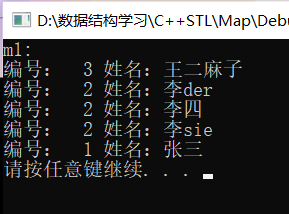
#include <iostream>
#include <map>
#include <string>
#include <algorithm>
using namespace std;

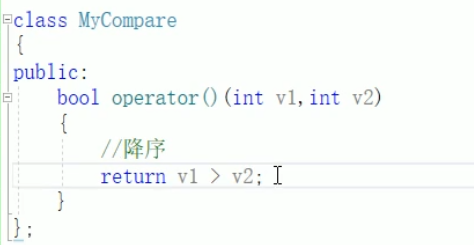
class My {
public:
    bool operator()(int v1, int v2) {
        return v1 > v2;
    }
};

void Print(multimap<int, string, My>m1) {
    for (multimap<int, string, My>::iterator it = m1.begin(); it != m1.end(); it++) {
        pair<int, string>m = *it;
        cout << "编号:  " << m.first << " " << "姓名:" << m.second << endl;
    }
}

void test() {
    int n, i;
    multimap<int, string, My>m1;
    m1.insert(pair<int, string>(1, "张三"));
    m1.insert(make_pair(2, "李der"));
    m1.insert(make_pair(2, "李四"));
    m1.insert(make_pair(2, "李sie"));
    m1.insert(map<int, string>::value_type(3, "王二麻子"));
    cout << "m1:  " << endl;
    Print(m1);


}
int main() {

    test();
    system("pause");
    return 0;
}
员工分组
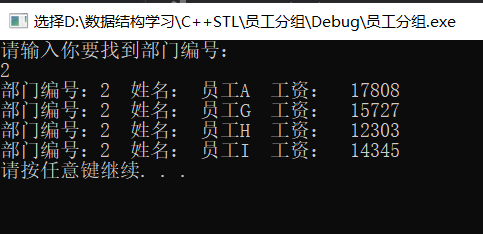
#include <iostream>
using namespace std;
#include <map>
#include <vector>
#include <string>
#include <ctime>
class Worker {
public:
    int money;
    string name;


};

void creatWorker(vector<Worker> *wor) {
    int i;
    string T = "ABCDEFGHIJ";
    for (i = 0; i < 10; i++) {
        Worker w;
        w.name = "员工";
        w.name += T[i];
        w.money = rand() % 10000 + 10000;
        wor->push_back(w);
    }
}

void SetMap(multimap<int, Worker> *WorMap, vector<Worker> wor) {
    for (vector<Worker>::iterator it = wor.begin(); it != wor.end(); it++) {
        int department = rand() % 3 + 1;
        WorMap->insert(make_pair(department, *it));
    }
}

void Find(multimap<int, Worker> WorMap,int n) {
    int count,i;
    multimap<int, Worker>::iterator it = WorMap.find(n);
    if (it != WorMap.end()) {
        count = WorMap.count(n);
        for (i = 0; i < count; i++) {
            cout << "部门编号:" << it->first << "  姓名: " << it->second.name << "  工资:  " << it->second.money << endl;
            it++;
        }
    }
}

int main() {
    int n;

    srand((unsigned int)time(NULL));
    vector<Worker> wor;
    creatWorker(&wor);

    multimap<int, Worker> WorMap;
    SetMap(&WorMap, wor);

    cout << "请输入你要找到部门编号:" << endl;
    cin >> n;
    Find(WorMap, n);
    system("pause");
    return 0;
}
函数对象

1.基本使用
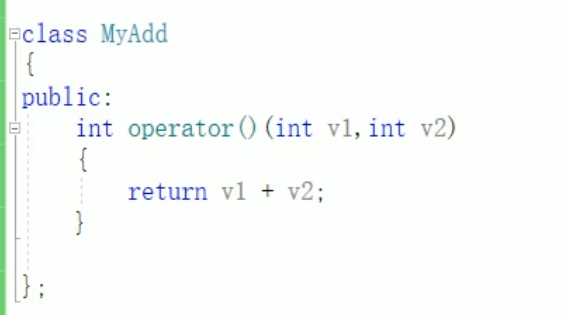
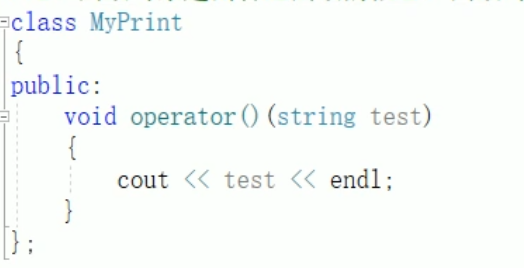
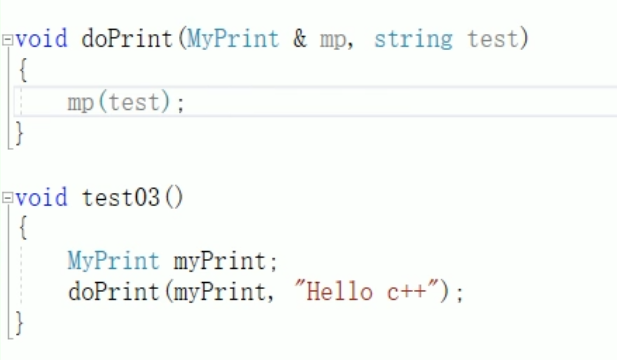
2.一元谓词

3.二元谓词

内建函数对象
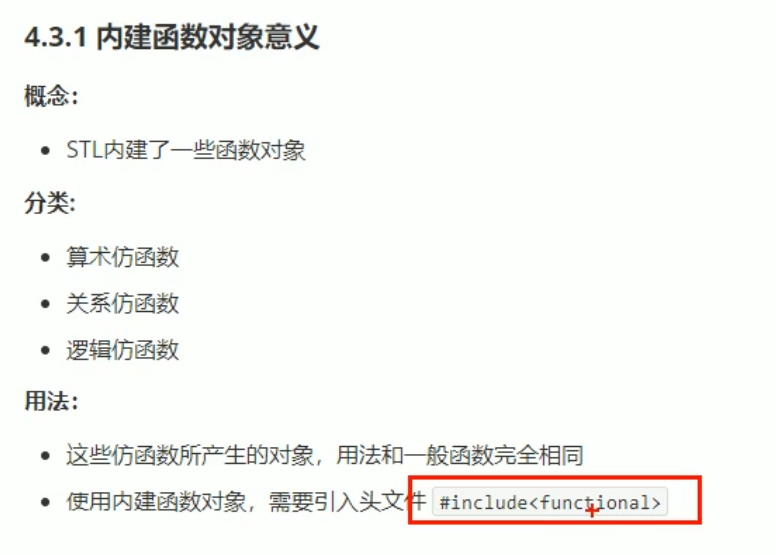
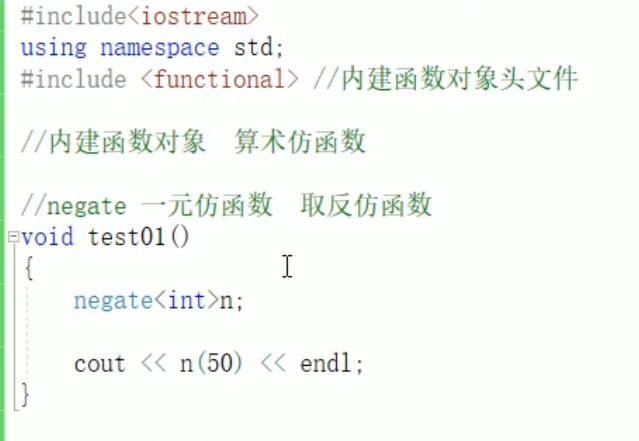
1.算数仿函数

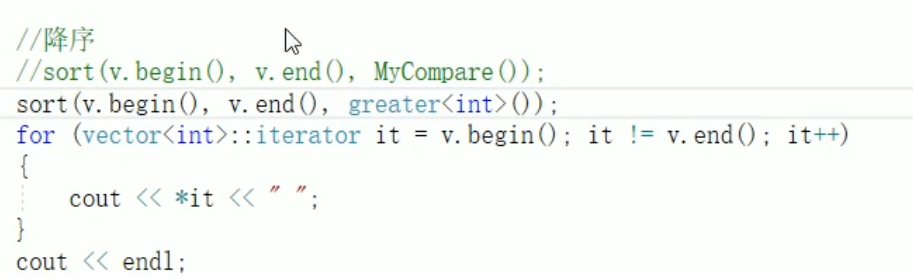
2.关系仿函数

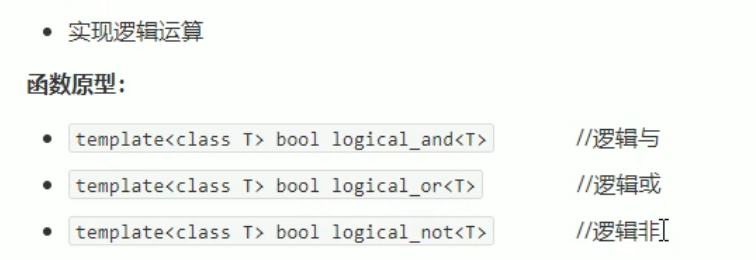
3.逻辑仿函数

常用遍历算法
1.for_each
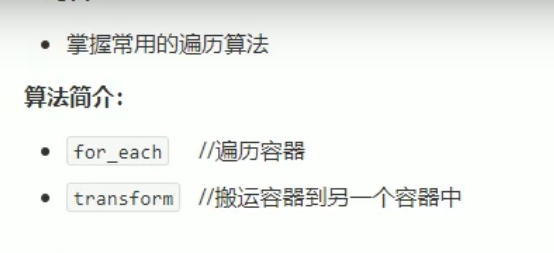

#include <iostream>
#include <algorithm>
using namespace std;
#include <vector>


class print01 {
public:
    void operator() (int val) {
        cout << val << "  ";
    }
};
int main() {
    int i;
    vector<int> v;
    for (i = 0; i < 10; i++) {
        v.push_back(i * 10);
    }

    for_each(v.begin(), v.end(),print01());

}
2.transform
需要提前开辟要存的对象空间

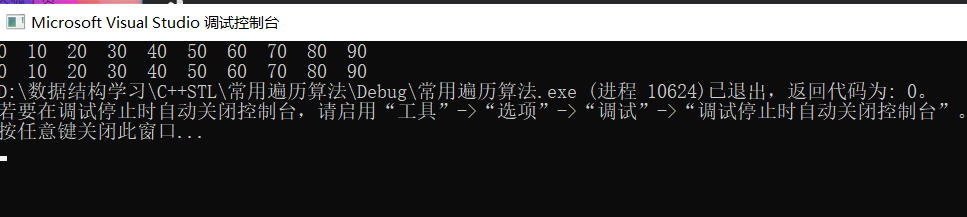
#include <iostream>
#include <algorithm>
using namespace std;
#include <vector>


class print01 {
public:
    void operator() (int val) {
        cout << val << "  ";
    }
};

class trans {
public:
    int operator() (int val) {
        return val;
    }
};
int main() {
    int i;
    vector<int> v;
    for (i = 0; i < 10; i++) {
        v.push_back(i * 10);
    }

    for_each(v.begin(), v.end(), print01());

    vector<int> v2;
    v2.resize(v.size());
    transform(v.begin(), v.end(), v2.begin(), trans());
    cout << endl;
    for_each(v2.begin(), v2.end(), print01());
}


常见查找算法
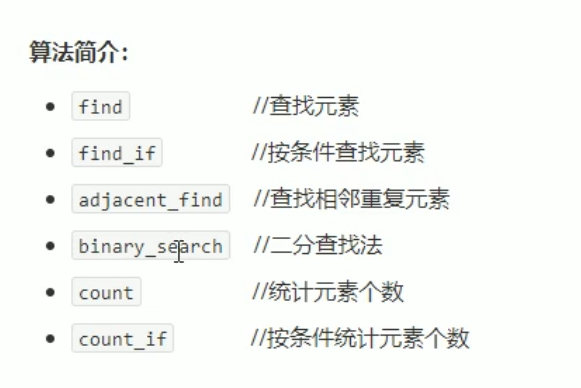
1.find
#include <iostream>
#include <algorithm>
using namespace std;
#include <vector>


int main() {
    int i;
    vector<int> v;
    for (i = 0; i < 10; i++) {
        v.push_back(i);
    }

    find(v.begin(), v.end(), 50) == v.end() ? cout << "没找到:" << endl : cout << "找到了: " << endl;


}
如果要是自定义的类型,就需要自己设置查找方式

2.find_if

自定义的数据类型

#include <iostream>
#include <algorithm>
using namespace std;
#include <vector>
#include <string>
class Person {
public:
    int age;
    string name;

    Person(int age, string name) {
        this->age = age;
        this->name = name;
    }

    bool operator ==(const Person per){
        if (this->name == per.name && this->age == per.age) {
            return true;
        }
        else {
            return false;
        }
    }
};

class Per {
public:
    bool operator()(Person per) {
        return per.age > 20;
    }
};

int main() {
    int i;
    vector<Person> per;
    Person p1(23, "张三");
    Person p2(26, "张sg");
    Person p3(24, "张df");
    Person p4(2, "张d");

    per.push_back(p1);
    per.push_back(p2);
    per.push_back(p3);
    per.push_back(p4);

    vector<Person>::iterator it = find_if(per.begin(), per.end(), Per());
    if (it != per.end()) {
        int count = count_if(per.begin(), per.end(), Per());
        for (i = 0; i < count; i++) {
            cout << "年龄: " << it->age << "  姓名:  " << it->name << endl;
            it++;
        }
    }

}
3.adjacent_find


#include <iostream>
#include <algorithm>
using namespace std;
#include <vector>


int main() {
    int i;
    vector<int> v;
    v.push_back(0);
    v.push_back(1);
    v.push_back(1);
    v.push_back(0);
    v.push_back(3);
    v.push_back(4);
    v.push_back(4);

    vector<int>::iterator it = adjacent_find(v.begin(), v.end());
    if (it != v.end()) {
        cout << "找到了" << *it << endl;
    }


}
4.binary_search (二分查找法)
必须是有序序列


#include <iostream>
#include <algorithm>
using namespace std;
#include <vector>


int main() {
    int i;
    vector<int> v;
    v.push_back(0);
    v.push_back(1);
    v.push_back(4);
    v.push_back(6);
    v.push_back(3);
    v.push_back(56);
    v.push_back(7);
    sort(v.begin(), v.end());
    bool sus = binary_search(v.begin(), v.end(),56);
    if (sus) {
        cout << "找到了" << endl;
    }


}
5.count


#include <iostream>
#include <algorithm>
using namespace std;
#include <vector>

int main() {
    int i;
    vector<int> v;
    v.push_back(0);
    v.push_back(1);
    v.push_back(4);
    v.push_back(6);
    v.push_back(6);
    v.push_back(6);
    v.push_back(6);
    v.push_back(6);
    v.push_back(3);
    v.push_back(56);
    v.push_back(7);
    int sus = count(v.begin(), v.end(),6);
    cout << "个数:" << sus << endl;

}
6.count_if


#include <iostream>
#include <algorithm>
using namespace std;
#include <vector>
#include <string>
class Person {
public:
    int age;
    string name;

    Person(int age, string name) {
        this->age = age;
        this->name = name;
    }

    bool operator ==(const Person per) {
        if (this->name == per.name && this->age == per.age) {
            return true;
        }
        else {
            return false;
        }
    }
};

class Per {
public:
    bool operator()(Person per) {
        return per.age == 2;
    }
};

int main() {
    int i;
    vector<Person> per;
    Person p1(23, "张三");
    Person p2(26, "张sg");
    Person p3(24, "张df");
    Person p4(2, "张d");
    Person p5(2, "网d");
    Person p6(2, "佛d");
    Person p7(2, "张d");

    per.push_back(p1);
    per.push_back(p2);
    per.push_back(p3);
    per.push_back(p4);
    per.push_back(p5);
    per.push_back(p6);
    per.push_back(p7);

    int sus = count_if(per.begin(), per.end(), Per());
    cout << "age为2的人数:  " << sus << endl;

}
常见排序算法
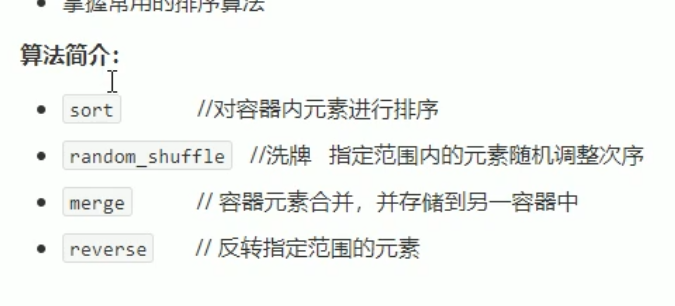

#include <iostream>
#include <algorithm>
using namespace std;
#include <vector>


void Print(vector<int> &v) {
    for (vector<int>::iterator it = v.begin(); it != v.end(); it++) {
        cout << *it << "  ";
    }
    cout << endl;
}

int main() {
    int i;
    vector<int> v;
    vector<int> v2;
    vector<int> v3;
    for (i = 0; i < 10; i++) {
        v2.push_back(i);
    }
    v.push_back(0);
    v.push_back(1);
    v.push_back(4);
    v.push_back(6);
    v.push_back(62);
    v.push_back(5);
    v.push_back(78);
    v.push_back(9);
    v.push_back(10);
    v.push_back(56);
    v.push_back(7);

    cout << "排序" << endl;
    sort(v.begin(), v.end());
    Print(v);

    cout << "随机排序" << endl;
    random_shuffle(v.begin(), v.end());
    Print(v);

    cout << "容器翻转" << endl;
    reverse(v.begin(), v.end());
    Print(v);

    cout << "容器合并" << endl;
    v3.resize(v.size() + v2.size());
    sort(v.begin(), v.end());
    sort(v2.begin(), v2.end());
    merge(v.begin(), v.end(), v2.begin(), v2.end(), v3.begin());
    Print(v3);


}
拷贝和替换


#include <iostream>
#include <algorithm>
using namespace std;
#include <vector>

class Mypac {
public:
    bool operator()(int val) {
        return val > 11;
    }
};

void Print(vector<int> &v) {
    for (vector<int>::iterator it = v.begin(); it != v.end(); it++) {
        cout << *it << "  ";
    }
    cout << endl;
}


int main() {
    int i;
    vector<int> v;
    vector<int> v2;
    vector<int> v3;
    for (i = 0; i < 10; i++) {
        v2.push_back(i);
    }
    v.push_back(0);
    v.push_back(1);
    v.push_back(4);
    v.push_back(6);
    v.push_back(62);
    v.push_back(5);
    v.push_back(78);
    v.push_back(9);
    v.push_back(10);
    v.push_back(56);
    v.push_back(7);

    cout << "排序并且打印v: " << endl;
    sort(v.begin(), v.end());
    Print(v);

    cout << "copy并且打印v2: " << endl;
    v2.resize(v.size());
    copy(v.begin(), v.end(), v2.begin());
    Print(v2);

    cout << "replace并且打印v: " << endl;
    for (i = 0; i < v.size(); i++) {
        replace(v.begin(), v.end(), v[i], i);
    }
    Print(v);

    cout << "swap并且打印v: " << endl;
    swap(v, v2);
    cout << "打印v: " << endl;
    Print(v);
    cout << "打印v2: " << endl;
    Print(v2);

    cout << "replace_if并且打印v: " << endl;
    replace_if(v.begin(), v.end(), Mypac(),300);
    Print(v);


}
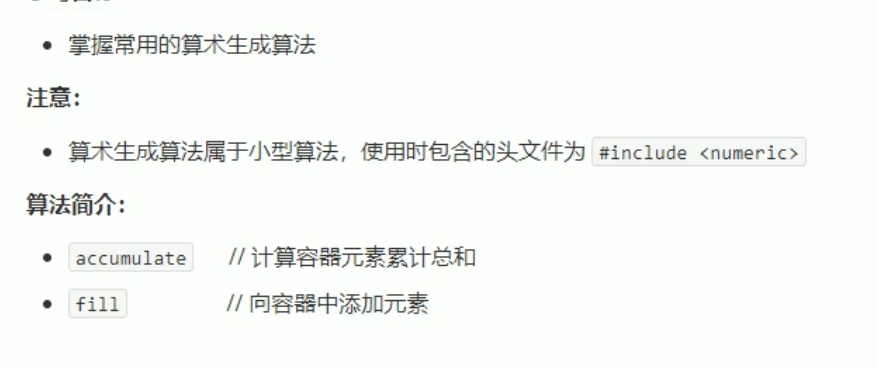
常见的算数生成算法
要包含numeric


#include <iostream>
#include <algorithm>
using namespace std;
#include <vector>
#include <numeric>

void Print(vector<int> &v) {
    for (vector<int>::iterator it = v.begin(); it != v.end(); it++) {
        cout << *it << "  ";
    }
    cout << endl;
}

int main() {
    int i;
    vector<int> v;
    vector<int> v2;
    vector<int> v3;
    for (i = 0; i < 10; i++) {
        v2.push_back(i);
    }
    v.push_back(0);
    v.push_back(1);
    v.push_back(4);
    v.push_back(6);
    v.push_back(62);
    v.push_back(5);
    v.push_back(78);
    v.push_back(9);
    v.push_back(10);
    v.push_back(56);
    v.push_back(7);

    cout << "计算容器的元素总和" << endl;
    int total = accumulate(v.begin(), v.end(),0);
    cout << "总和:  " << total << endl;

    cout << "fill算法" << endl;
    fill(v.begin(), v.end(), 0);
    Print(v);
}
常用的集合算法
注意:必须要提前对两个容器进行相同的排序操作


#include <iostream>
#include <algorithm>
using namespace std;
#include <vector>

void Print(vector<int> &v) {
    for (vector<int>::iterator it = v.begin(); it != v.end(); it++) {
        cout << *it << "  ";
    }
    cout << endl;
}

class Myprint {
public:
    void operator()(int val) {
        cout << val << "  ";
    }
};

int main() {
    int i;
    vector<int> v;
    vector<int> v2;
    vector<int> v3;
    for (i = 0; i < 10; i++) {
        v2.push_back(i);
        v.push_back(i + 3);
    }

    cout << "容器v :" << endl;
    Print(v);
    cout << "容器v2 :" << endl;
    Print(v2);
    cout << "两个容器的交集 :" << endl;
    v3.resize(min(v.size(),v2.size()));
    vector<int>::iterator it = set_intersection(v.begin(),v.end(),v2.begin(),v2.end(),v3.begin());
    for_each(v3.begin(),it, Myprint());

    cout << endl<< "两个容器的并集 :" << endl;
    v3.resize(v.size()+v2.size());
    vector<int>::iterator it1 = set_union(v.begin(), v.end(), v2.begin(), v2.end(), v3.begin());
    for_each(v3.begin(), it1, Myprint());


    cout << endl << "两个容器的差集 :" << endl;
    v3.resize(v.size() + v2.size());
    vector<int>::iterator it2 = set_difference(v.begin(), v.end(), v2.begin(), v2.end(), v3.begin());
    for_each(v3.begin(), it2, Myprint());
}
练习时的补充
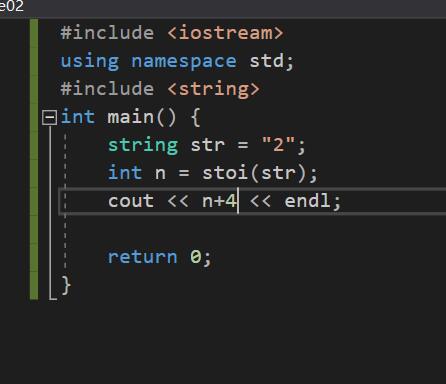
1.string转换成int
stoi(string)

若有收获,就点个赞吧
0 人点赞


