一、概念与简介
Redisson是架设在Redis基础上的一个Java驻内存数据网格,Redis官方推荐的Java分布式锁的解决方案
二、依赖与配置类
<dependency><groupId>org.redisson</groupId><artifactId>redisson</artifactId><version>3.15.6</version></dependency>
@Configuration
public class MyRedissonConfig {
    @Bean(destroyMethod="shutdown")
    RedissonClient redisson() throws IOException{
        Config config = new Config();
        // 存在密码的话,一定要设置密码
        config.useSingleServer()
            .setAddress("redis://127.0.0.1:6379")
            .setPassword("123456");
         //设置看门狗的时间,不配置的话默认30000
        config.setLockWatchdogTimeout(30000);
        return Redisson.create(config);
    }
}
三、实现与测试
实现WatchDog机制
@Autowired
RedissonClient redissonClient;

    @GetMapping("/redisson/test1")
    public String hello(){
        long threadId = Thread.currentThread().getId();
        long businessHours = 50000;
        log.info("线程{}进入代码中,{}",threadId, LocalDateTime.now());
        // 只要名字一样就是同一把锁
        RLock lock = redissonClient.getLock("lock");
        // 加锁,如果没锁上就一会只等待知道加锁成功
        lock.lock(); // 默认30秒过期时间,开启watchdog机制
        // lock.lock(5,TimeUnit.SECONDS); // 加了过期时间后,就不会开启watchdog机制
        log.info("线程{}获取到锁,开始执行业务,此刻时间{},总共工作时间{}",threadId, LocalDateTime.now(),businessHours/1000);
        try{
            Thread.sleep(businessHours);
            log.info("线程{}完成业务,{}",threadId, LocalDateTime.now());
        } catch (InterruptedException e) {
            e.printStackTrace();
        } finally {
            // 一定一定不能忘记在finally里面解锁!!!
            log.info("线程{}准备释放锁,{}",threadId, LocalDateTime.now());
            lock.unlock();
            log.info("线程{}释放锁成功,{}",threadId, LocalDateTime.now());
        }
        return "hello";
    }

    @GetMapping("/redisson/test2")
    public String hello2(){
        long threadId = Thread.currentThread().getId();
        long businessHours = 40000;
        log.info("线程{}进入代码中,{}",threadId, LocalDateTime.now());
        // 只要名字一样就是同一把锁
        RLock lock = redissonClient.getLock("lock");
        // 加锁,如果没锁上就一会只等待知道加锁成功
        // lock.lock(); // 默认30秒过期时间,开启watchdog机制
        lock.lock(10, TimeUnit.SECONDS); // 加了过期时间后,就不会开启watchdog机制
        log.info("线程{}获取到锁,开始执行业务,此刻时间{},总共工作时间{}",threadId, LocalDateTime.now(),businessHours/1000);
        try{
            Thread.sleep(businessHours);
            log.info("线程{}完成业务,{}",threadId, LocalDateTime.now());
        } catch (InterruptedException e) {
            e.printStackTrace();
        } finally {
            if (lock.isLocked() && lock.isHeldByCurrentThread()) {
            log.info("线程{}准备释放锁,{}",threadId, LocalDateTime.now());
            lock.unlock();
            log.info("线程{}释放锁成功,{}",threadId, LocalDateTime.now());
            }
        }
        return "hello";
    }

    @GetMapping("/redisson/testTryLock")
    public String testTryLock() throws InterruptedException {
        RLock watchDogLock = redissonClient.getLock("watchDogLock");
        //进行3s的尝试时间,如果失败则返回false, 还可以设置锁过期时间(第二个参数),如果设置会导致看门狗无效
        boolean judge = watchDogLock.tryLock(3,  TimeUnit.SECONDS);
        //输出是否能够获取到锁
        System.out.println(Thread.currentThread().getName() + "的锁获取情况:" + judge);
        //如果获取到锁
        if (judge){
            try {
                System.out.println(Thread.currentThread().getName() + " 已经成功获取到的分布式锁" + System.currentTimeMillis());
                //执行主要业务逻辑
                Thread.sleep(40000);
            } catch (InterruptedException e) {
                e.printStackTrace();
            }finally {
                //最后进行解锁操作,如果服务宕机,则到不了这一步,会等待看门狗监控锁结束锁清除
                System.out.println(Thread.currentThread().getName() + " 进行解锁操作" + System.currentTimeMillis());
                watchDogLock.unlock();
            }
            return "成功获取到分布式锁";
        }else {
            //如果没有获取到分布式锁,执行业务逻辑
            System.out.println(Thread.currentThread().getName() + " 没有成功获取到分布式锁,锁已经被占用" + System.currentTimeMillis());
            return "没有获取到分布式锁";
        }
    }
重要的话说三遍:一定不要忘记在finally代码块里unlock!!!
Redisson实现接口限流效果
RRateLimiter rateLimiter;
@PostConstruct
public void initRateLimiter(){
    RRateLimiter ra = redissonClient.getRateLimiter("rate-limiter");
    // 1分钟只允许6个请求
    // setRate 我们项目服务重启,就会强制重置之前的限流配置与状态,以当前为准
    ra.setRate(RateType.OVERALL, 6, 1, RateIntervalUnit.MINUTES);
    rateLimiter = ra;
}
---------
@GetMapping("/rate/limiter")
public String testRateLimiter() {
    boolean b = rateLimiter.tryAcquire(1);
    if (!b) {
        return "fail";
    }
    // 执行业务
   return "ok";
}
Zset类型中Sore中保存的是时间戳 Q:连续请求了两次,两分钟后再请求?请问可以请求多少次? A:如果两个请求时间间隔大于规定时间窗,那么,这个请求就会重置令牌桶数量
四、问题
使用lock.lock(10, TimeUnit.SECONDS)后
如果,业务时间大于过期时间,那么,只要锁过期,那个其它请求就可以进来执行业务!(超时同时操作请求>=2),最后unlock时会报错,因为锁已经过期了!
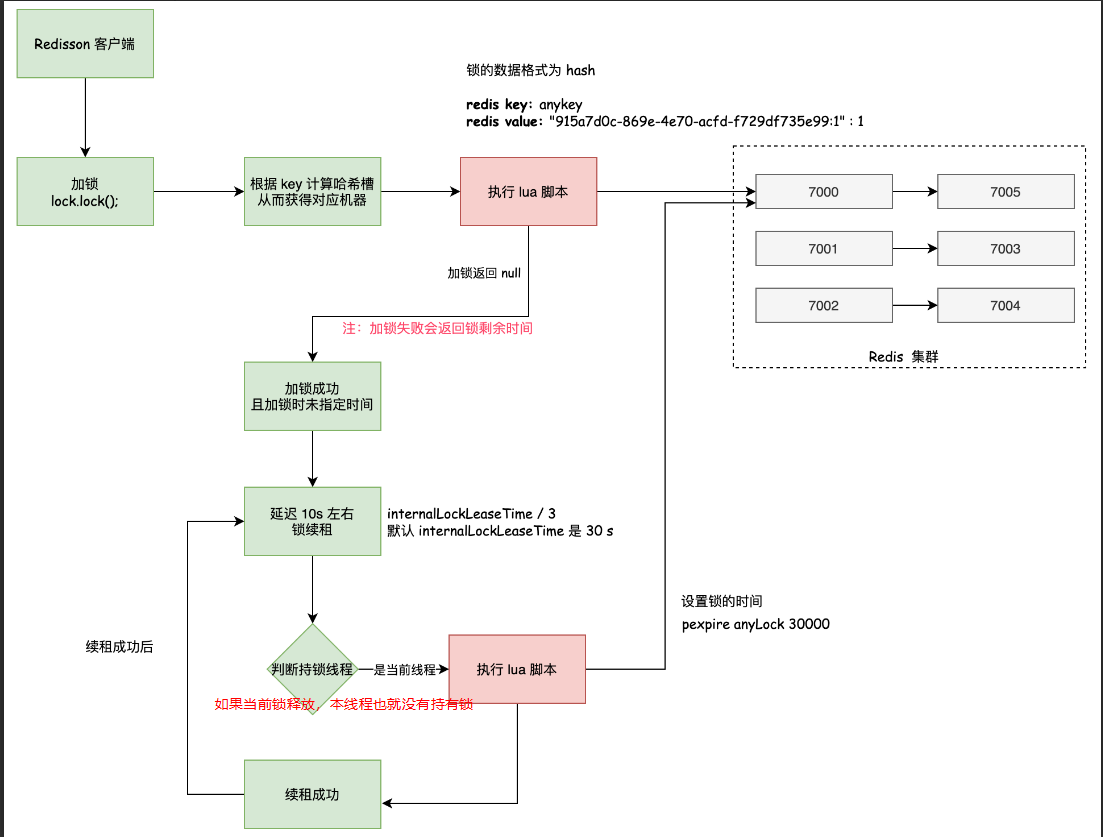
使用lock.lock()会执行watchdog机制
如果,业务时间大于过期时间,它也会帮你续上过期时间!但如果线程出现问题,最后没有执行unlock,这个锁也会被一直续时间,无法释放(除非redis或项目停止)!其它请求也无法获取到锁!
为什么说它是可重入性锁?
一个线程可以的多个流程可以同时拿到这个锁;只有这样才能进行时间的续期;
多久加一次过期时间?
每当过期时间减少了1/3 ,redis过期时间就会重新恢复到设置值(setLockWatchdogTimeout)
使用lock(),其它线程会怎样?
会一直阻塞在redissson的等待队列中,该线程资源也会一直被持有,直到获取到锁或停机
实现分布式锁为什么推荐lock()?
tryLock一般用于特定满足需求的场合,但不建议作为一般需求的分布式锁,一般分布式锁建议用void lock(long leaseTime, TimeUnit unit)。因为从性能上考虑,在高并发情况下后者效率是前者的好几倍
使用tryLock()有什么作用?
使用tryLock()其它线程没有获取到锁时,我们可以让它直接退出,而不必一直阻塞不释放线程资源!
watchdog执行流程
资料学习与引用:

若有收获,就点个赞吧
0 人点赞


