0,配置Docker镜像加速,设置国内源
在 /etc/docker/daemon.json 中写入如下内容(如果文件不存在请新建该文件)
vi /etc/docker/daemon.json{"registry-mirrors": ["https://ctji17l3.mirror.aliyuncs.com","https://hub-mirror.c.163.com/","https://reg-mirror.qiniu.com"]}sudo systemctl daemon-reloadsudo systemctl restart docker
1,帮助命令
① docker version
② docker info
③ docker —help
2,镜像命令
1,docker images
① 列出本机上的镜像

REPOSITORY:表示镜像的仓库源
TAG:镜像的标签
IMAGE ID:镜像ID
CREATED:镜像创建时间
SIZE:镜像大小
同一仓库源可以有多个 TAG,代表这个仓库源的不同个版本,我们使用 REPOSITORY:TAG 来定义不同的镜像。
如果你不指定一个镜像的版本标签,例如你只使用 ubuntu,docker 将默认使用 ubuntu:latest 镜像
② Option 说明
-a:列出本地所有的镜像(含中间映像层)
-q:只显示镜像ID
—digests:显示镜像的摘要信息
—no-trunc:显示完整的镜像信息
2,docker search
① 网站:https://hub.docker.com
② 命令:docker search [option] 镜像名字
option
—no-trnc:显示完整的镜像描述
-s:列出收藏数不小于指定量的镜像
—automated:只列出 automated build类型的镜像
3,docker pull 镜像名字
4,docker rmi 镜像名/ID
删除单个:docker rmi -f 镜像名/ID
删除多个:docker rmi -f 镜像名1:TAG 镜像名2:TGA
删除全部:docker rmi -f $(docker images -qa)
3,容器命令
1,有镜像才能创建容器
2,新建并启动容器
docker run [OPTIONS] image [commandd]
OPTIONS说明(常用):有些是一个减号,有些是两个减号
—name=”容器新名字”: 为容器指定一个名称;
-d: 后台运行容器,并返回容器ID,也即启动守护式容器;
-i:以交互模式运行容器,通常与 -t 同时使用;
-t:为容器重新分配一个伪输入终端,通常与 -i 同时使用;
-P: 随机端口映射;
-p: 指定端口映射,有以下四种格式
ip:hostPort:containerPort
ip::containerPort
hostPort:containerPort
containerPort
启动交互式容器
使用镜像centos:latest以交互模式启动一个容器,在容器内执行/bin/bash命令。
docker run -it centos /bin/bash 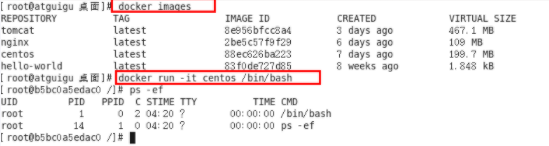
3,当前正在运行的容器
docker ps [OPTIONS]
OPTIONS说明(常用):
-a :列出当前所有正在运行的容器+历史上运行过的
-l :显示最近创建的容器。
-n:显示最近n个创建的容器。
-q :静默模式,后台运行,只显示容器编号。
—no-trunc:不截断输出。
4,退出容器
① exit 容器停止并退出
② ctrl+P+Q 容器不停止退出
5,容器常用命令
① 启动容器:docker start 容器ID/容器名
② 重启容器:docker restart 容器ID/容器名
③ 停止容器:docker stop 容器ID/容器名
④ 强制停止容器:docker kill 容器ID/容器名
⑥ 删除己停止的容器:docker rm 容器ID/容器名
⑦ 一次性删除多个容器
docker rm -f $(docker ps -a -a)
docker ps -a -q | xargs docker rm
6,小总结
1,启动守护式容器
docker rum -d 容器名
#使用镜像centos:latest以后台模式启动一个容器
docker run -d centos
问题:然后docker ps -a 进行查看, 会发现容器已经退出
很重要的要说明的一点: Docker容器后台运行,就必须有一个前台进程.
容器运行的命令如果不是那些一直挂起的命令(比如运行top,tail),就是会自动退出的。
这个是docker的机制问题,比如你的web容器,我们以nginx为例,正常情况下,我们配置启动服务只需要启动响应的service即可。例如
service nginx start
但是,这样做,nginx为后台进程模式运行,就导致docker前台没有运行的应用,
这样的容器后台启动后,会立即自杀因为他觉得他没事可做了.
所以,最佳的解决方案是,将你要运行的程序以前台进程的形式运行
2,查看容器日志
docker log -f -t —tail 容器ID
-t:加入时间
-f:跟随最新的日志打印
—tail:数字显示最后多少条
3,查看容器内的进程
4,查看容器内部细节
5,进入正在运行的容器并以命令行交互
① docker exec -it 容器ID /bin/bash
② docker attach 容器ID 重新进入
③ 区别:attach 是直接进容器启动命令的终端, 不会启新的进程;exec是在容器中打开新的终端,并且可以启动新的进程
6,从容器内拷贝文件到主机上
4,小总结
常用命令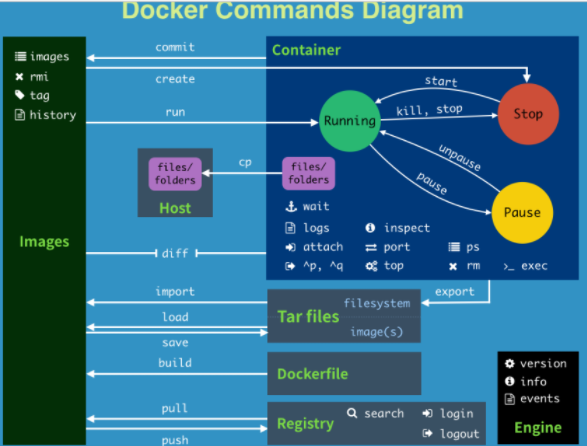
attach Attach to a running container # 当前 shell 下 attach 连接指定运行镜像
build Build an image from a Dockerfile # 通过 Dockerfile 定制镜像
commit Create a new image from a container changes # 提交当前容器为新的镜像
cp Copy files/folders from the containers filesystem to the host path #从容器中拷贝指定文件或者目录到宿主机中
create Create a new container # 创建一个新的容器,同 run,但不启动容器
diff Inspect changes on a container’s filesystem # 查看 docker 容器变化
events Get real time events from the server # 从 docker 服务获取容器实时事件
exec Run a command in an existing container # 在已存在的容器上运行命令
export Stream the contents of a container as a tar archive # 导出容器的内容流作为一个 tar 归档文件[对应 import ]
history Show the history of an image # 展示一个镜像形成历史
images List images # 列出系统当前镜像
import Create a new filesystem image from the contents of a tarball # 从tar包中的内容创建一个新的文件系统映像[对应export]
info Display system-wide information # 显示系统相关信息
inspect Return low-level information on a container # 查看容器详细信息
kill Kill a running container # kill 指定 docker 容器
load Load an image from a tar archive # 从一个 tar 包中加载一个镜像[对应 save]
login Register or Login to the docker registry server # 注册或者登陆一个 docker 源服务器
logout Log out from a Docker registry server # 从当前 Docker registry 退出
logs Fetch the logs of a container # 输出当前容器日志信息
port Lookup the public-facing port which is NAT-ed to PRIVATE_PORT # 查看映射端口对应的容器内部源端口
pause Pause all processes within a container # 暂停容器
ps List containers # 列出容器列表
pull Pull an image or a repository from the docker registry server # 从docker镜像源服务器拉取指定镜像或者库镜像
push Push an image or a repository to the docker registry server # 推送指定镜像或者库镜像至docker源服务器
restart Restart a running container # 重启运行的容器
rm Remove one or more containers # 移除一个或者多个容器
rmi Remove one or more images # 移除一个或多个镜像[无容器使用该镜像才可删除,否则需删除相关容器才可继续或 -f 强制删除]
run Run a command in a new container # 创建一个新的容器并运行一个命令
save Save an image to a tar archive # 保存一个镜像为一个 tar 包[对应 load]
search Search for an image on the Docker Hub # 在 docker hub 中搜索镜像
start Start a stopped containers # 启动容器
stop Stop a running containers # 停止容器
tag Tag an image into a repository # 给源中镜像打标签
top Lookup the running processes of a container # 查看容器中运行的进程信息
unpause Unpause a paused container # 取消暂停容器
version Show the docker version information # 查看 docker 版本号
wait Block until a container stops, then print its exit code # 截取容器停止时的退出状态值

若有收获,就点个赞吧
0 人点赞


