MethodHandle是Java7引入的一种机制,主要是为了JVM支持动态语言。
共有方法调用
首先,演示一下最基本的MethodHandle使用。
第一步:创建查找对象:Lookup
// 获取Look用于查找方法句柄MethodHandles.Lookup lookup = MethodHandles.lookup();
第二步:创建方法类型:MethodType
构造方法的返回值类型,参数类型
// 方法类型,描述返回值和参数,第一个参数为返回值类型,void则为void.class。//第二个参数开始为被调用方法的参数类型MethodType mt = MethodType.methodType(boolean.class, String.class, int.class);
第三步:查找方法句柄
Lookup的findVirtual查找成员方法
//查找方法句柄,参数1:调用类,参数2:方法名,参数3:方法类型MethodHandle handle = lookup.findVirtual(String.class, "startsWith", mt);
第四步:方法调用
通过MehodHandle的invoke方法执行,并返回结果
//方法调用,参数1:实例,参数2..n:方法参数Boolean value = (Boolean)handle.invoke("the i am in the room", "the", 0);
私有方法调用
public static void main(String..) {Lookup myLookup = MethodHandles.lookup();UserFactory foo = new UserFactory(); // testUser baz = new User();try {Method m = UserFactory.class.getDeclaredMethod("cnu", User.class);m.setAccessible(true);MethodHandle pmh = myLookup.unreflect(m);boolean b = (boolean)pmh.invoke(foo, baz);} catch (Exception e) {e.printStackTrace();} catch (Throwable e) {e.printStackTrace();}}
以上就是一个简单的调用示例。
核心代码解读
上面我们展示了一个最进本MethodHandle方式的方法调用,下面我们将对其中用到的主要类进行介绍。这些主要的类包含MethodType,MethodHandle,MethodHandles及Lookup。
MethodType
首先,我们来看看Methodtype,MethodType是用来封装方法输入输出类型的,包含方法的返回和方法的参数。MethodType构造方法为私有,只能通过MethodType提供的静态工具方法来获取实例
/*** Constructor that performs no copying or validation.* Should only be called from the factory method makeImpl*/private MethodType(Class<?> rtype, Class<?>[] ptypes) {this.rtype = rtype;this.ptypes = ptypes;}
MethodType中常用的工具方法有:
- 大于一个参数
public static MethodType methodType(Class<?> rtype, Class<?> ptype0, Class<?>... ptypes) {Class<?>[] ptypes1 = new Class<?>[1+ptypes.length];ptypes1[0] = ptype0;System.arraycopy(ptypes, 0, ptypes1, 1, ptypes.length);return makeImpl(rtype, ptypes1, true);}
- 无参数
public static MethodType methodType(Class<?> rtype) {return makeImpl(rtype, NO_PTYPES, true);}
工具方法都通过makeImple方法来封装MethodType实例,指北君带领大家来看看makeImple中做了哪些事情:
- 参数检查
- 返回值的类型不能为null,如果无返回使用void.class
- 参数类型不能为null,且不能为void.class
- 使用缓存表缓存MethodType实例,优化处理
- 如果非信任模式(trusted==false),则克隆参数数组
这里需要注意MethodType重写了hashCode方法,从逻辑看参数数组克隆不影响同类型的缓存机制。
static MethodType makeImpl(Class<?> rtype, Class<?>[] ptypes, boolean trusted) {if (ptypes.length == 0) {ptypes = NO_PTYPES; trusted = true;}MethodType primordialMT = new MethodType(rtype, ptypes);MethodType mt = internTable.get(primordialMT);if (mt != null)return mt;// promote the object to the Real Thing, and reprobeMethodType.checkRtype(rtype);if (trusted) {MethodType.checkPtypes(ptypes);mt = primordialMT;} else {// Make defensive copy then validateptypes = Arrays.copyOf(ptypes, ptypes.length);MethodType.checkPtypes(ptypes);mt = new MethodType(rtype, ptypes);}mt.form = MethodTypeForm.findForm(mt);return internTable.add(mt);}
除了静态工具方法外,MethodType还有几个实例方法,主要为差异性较小的MethodType提供快速获取实例的方法。包含:
- changeParameterType
- insertParameterTypes
- appendParameterTypes
- dropParameterTypes
MethodHandle
MethodHandle为抽象类,但是里面提供了大量的原生方法,提供底层访问,也是方法调用的核心逻辑。这部分涉及MethodHandle的机制实现,对于使用功能来说就不在此展开了。
@HotSpotIntrinsicCandidatepublic final native @PolymorphicSignature Object invokeExact(Object... args) throws Throwable;@HotSpotIntrinsicCandidatepublic final native @PolymorphicSignature Object invoke(Object... args) throws Throwable;

MethodHandles, Lookup
MethodHandles不是MethodHandle的实现,他提供工具用于帮助获取MethodHandle,我们主要使用到lookup(),publicLookup()
@CallerSensitive注解,可以使Reflection.getCallerClass()获取到调用lookup()方法的类
@CallerSensitive@ForceInline // to ensure Reflection.getCallerClass optimizationpublic static Lookup lookup() {return new Lookup(Reflection.getCallerClass());}public static Lookup publicLookup() {return Lookup.PUBLIC_LOOKUP;}
Lookup构造方法主要传入两个参数:
- lookupClass搜寻的类,
- allowedModes:许可模式。
最后,通过Lookup的findXXX获取到MethodHandle,详细说明见下表: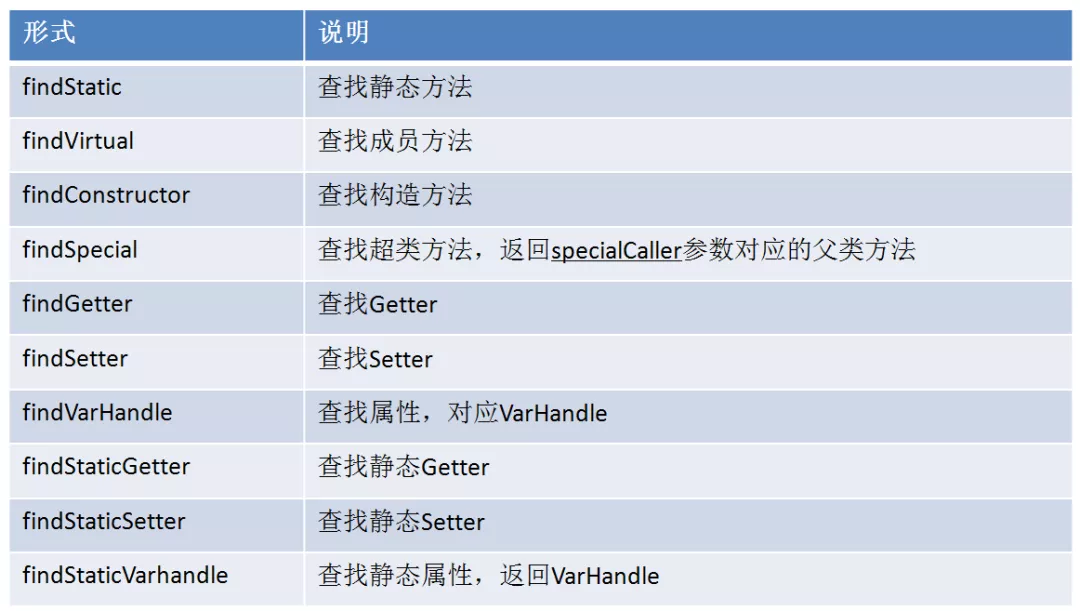
小结
关于MethodHandle的基本使用就基本讲完,这里附上一张类图便大家理解: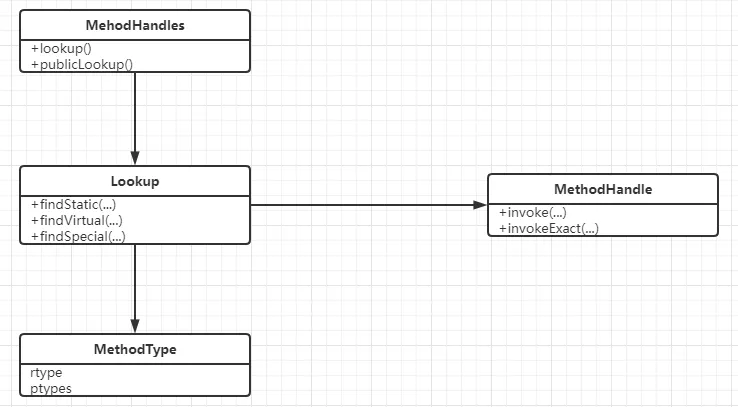

若有收获,就点个赞吧
0 人点赞


