什么是 webpack ?
本质上,webpack 是一个现代 JavaScript 应用程序的静态模块打包器(module bundler)。当 webpack 处理应用程序时,它会递归地构建一个依赖关系图(dependency graph),其中包含应用程序需要的每个模块,然后将所有这些模块打包成一个或多个 bundle。> webpack 就像一条生产线,要经过一系列处理流程后才能将源文件转换成输出结果。 这条生产线上的每个处理流程的职责都是单一的,多个流程之间有存在依赖关系,只有完成当前处理后才能交给下一个流程去处理。 插件就像是一个插入到生产线中的一个功能,在特定的时机对生产线上的资源做处理。
webpack 通过 Tapable 来组织这条复杂的生产线。 webpack 在运行过程中会广播事件,插件只需要监听它所关心的事件,就能加入到这条生产线中,去改变生产线的运作。 webpack 的事件流机制保证了插件的有序性,使得整个系统扩展性很好。 — 深入浅出 webpack 吴浩麟
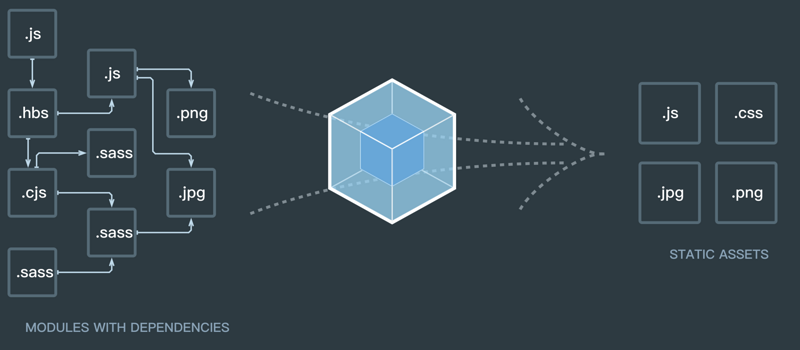
webpack 核心概念
Entry
入口起点(entry point)指示 webpack 应该使用哪个模块,来作为构建其内部依赖图的开始。
进入入口起点后,webpack 会找出有哪些模块和库是入口起点(直接和间接)依赖的。
每个依赖项随即被处理,最后输出到称之为 bundles 的文件中。
Output
output 属性告诉 webpack 在哪里输出它所创建的 bundles,以及如何命名这些文件,默认值为 ./dist。
基本上,整个应用程序结构,都会被编译到你指定的输出路径的文件夹中。
Module
模块,在 Webpack 里一切皆模块,一个模块对应着一个文件。Webpack 会从配置的 Entry 开始递归找出所有依赖的模块。
Chunk
代码块,一个 Chunk 由多个模块组合而成,用于代码合并与分割。
Loader
loader 让 webpack 能够去处理那些非 JavaScript 文件(webpack 自身只理解 JavaScript)。
loader 可以将所有类型的文件转换为 webpack 能够处理的有效模块,然后你就可以利用 webpack 的打包能力,对它们进行处理。
本质上,webpack loader 将所有类型的文件,转换为应用程序的依赖图(和最终的 bundle)可以直接引用的模块。
Plugin
loader 被用于转换某些类型的模块,而插件则可以用于执行范围更广的任务。
插件的范围包括,从打包优化和压缩,一直到重新定义环境中的变量。插件接口功能极其强大,可以用来处理各种各样的任务。
webpack 构建流程
Webpack 的运行流程是一个串行的过程,从启动到结束会依次执行以下流程 :
- 初始化参数:从配置文件和 Shell 语句中读取与合并参数,得出最终的参数。
- 开始编译:用上一步得到的参数初始化 Compiler 对象,加载所有配置的插件,执行对象的 run 方法开始执行编译。
- 确定入口:根据配置中的 entry 找出所有的入口文件。
- 编译模块:从入口文件出发,调用所有配置的 Loader 对模块进行翻译,再找出该模块依赖的模块,再递归本步骤直到所有入口依赖的文件都经过了本步骤的处理。
- 完成模块编译:在经过第 4 步使用 Loader 翻译完所有模块后,得到了每个模块被翻译后的最终内容以及它们之间的依赖关系。
- 输出资源:根据入口和模块之间的依赖关系,组装成一个个包含多个模块的 Chunk,再把每个 Chunk 转换成一个单独的文件加入到输出列表,这步是可以修改输出内容的最后机会。
- 输出完成:在确定好输出内容后,根据配置确定输出的路径和文件名,把文件内容写入到文件系统。
在以上过程中,Webpack 会在特定的时间点广播出特定的事件,插件在监听到感兴趣的事件后会执行特定的逻辑,并且插件可以调用 Webpack 提供的 API 改变 Webpack 的运行结果。
实践加深理解,撸一个简易 webpack
1. 定义 Compiler 类
class Compiler {constructor(options) {// webpack 配置const { entry, output } = options// 入口this.entry = entry// 出口this.output = output// 模块this.modules = []}// 构建启动run() {}// 重写 require函数,输出bundlegenerate() {}}
2. 解析入口文件,获取 AST
我们这里使用@babel/parser,这是 babel7 的工具,来帮助我们分析内部的语法,包括 es6,返回一个 AST 抽象语法树。
// webpack.config.jsconst path = require('path')module.exports = {entry: './src/index.js',output: {path: path.resolve(__dirname, './dist'),filename: 'main.js'}}//
const fs = require('fs')const parser = require('@babel/parser')const options = require('./webpack.config')const Parser = {getAst: path => {// 读取入口文件const content = fs.readFileSync(path, 'utf-8')// 将文件内容转为AST抽象语法树return parser.parse(content, {sourceType: 'module'})}}class Compiler {constructor(options) {// webpack 配置const { entry, output } = options// 入口this.entry = entry// 出口this.output = output// 模块this.modules = []}// 构建启动run() {const ast = Parser.getAst(this.entry)}// 重写 require函数,输出bundlegenerate() {}}new Compiler(options).run()
3. 找出所有依赖模块
Babel 提供了@babel/traverse(遍历)方法维护这 AST 树的整体状态,我们这里使用它来帮我们找出依赖模块。
const fs = require('fs')const path = require('path')const options = require('./webpack.config')const parser = require('@babel/parser')const traverse = require('@babel/traverse').defaultconst Parser = {getAst: path => {// 读取入口文件const content = fs.readFileSync(path, 'utf-8')// 将文件内容转为AST抽象语法树return parser.parse(content, {sourceType: 'module'})},getDependecies: (ast, filename) => {const dependecies = {}// 遍历所有的 import 模块,存入dependeciestraverse(ast, {// 类型为 ImportDeclaration 的 AST 节点 (即为import 语句)ImportDeclaration({ node }) {const dirname = path.dirname(filename)// 保存依赖模块路径,之后生成依赖关系图需要用到const filepath = './' + path.join(dirname, node.source.value)dependecies[node.source.value] = filepath}})return dependecies}}class Compiler {constructor(options) {// webpack 配置const { entry, output } = options// 入口this.entry = entry// 出口this.output = output// 模块this.modules = []}// 构建启动run() {const { getAst, getDependecies } = Parserconst ast = getAst(this.entry)const dependecies = getDependecies(ast, this.entry)}// 重写 require函数,输出bundlegenerate() {}}new Compiler(options).run()
4. AST 转换为 code
将 AST 语法树转换为浏览器可执行代码,我们这里使用@babel/core 和 @babel/preset-env。
const fs = require('fs')const path = require('path')const options = require('./webpack.config')const parser = require('@babel/parser')const traverse = require('@babel/traverse').defaultconst { transformFromAst } = require('@babel/core')const Parser = {getAst: path => {// 读取入口文件const content = fs.readFileSync(path, 'utf-8')// 将文件内容转为AST抽象语法树return parser.parse(content, {sourceType: 'module'})},getDependecies: (ast, filename) => {const dependecies = {}// 遍历所有的 import 模块,存入dependeciestraverse(ast, {// 类型为 ImportDeclaration 的 AST 节点 (即为import 语句)ImportDeclaration({ node }) {const dirname = path.dirname(filename)// 保存依赖模块路径,之后生成依赖关系图需要用到const filepath = './' + path.join(dirname, node.source.value)dependecies[node.source.value] = filepath}})return dependecies},getCode: ast => {// AST转换为codeconst { code } = transformFromAst(ast, null, {presets: ['@babel/preset-env']})return code}}class Compiler {constructor(options) {// webpack 配置const { entry, output } = options// 入口this.entry = entry// 出口this.output = output// 模块this.modules = []}// 构建启动run() {const { getAst, getDependecies, getCode } = Parserconst ast = getAst(this.entry)const dependecies = getDependecies(ast, this.entry)const code = getCode(ast)}// 重写 require函数,输出bundlegenerate() {}}new Compiler(options).run()
5. 递归解析所有依赖项,生成依赖关系图
const fs = require('fs')const path = require('path')const options = require('./webpack.config')const parser = require('@babel/parser')const traverse = require('@babel/traverse').defaultconst { transformFromAst } = require('@babel/core')const Parser = {getAst: path => {// 读取入口文件const content = fs.readFileSync(path, 'utf-8')// 将文件内容转为AST抽象语法树return parser.parse(content, {sourceType: 'module'})},getDependecies: (ast, filename) => {const dependecies = {}// 遍历所有的 import 模块,存入dependeciestraverse(ast, {// 类型为 ImportDeclaration 的 AST 节点 (即为import 语句)ImportDeclaration({ node }) {const dirname = path.dirname(filename)// 保存依赖模块路径,之后生成依赖关系图需要用到const filepath = './' + path.join(dirname, node.source.value)dependecies[node.source.value] = filepath}})return dependecies},getCode: ast => {// AST转换为codeconst { code } = transformFromAst(ast, null, {presets: ['@babel/preset-env']})return code}}class Compiler {constructor(options) {// webpack 配置const { entry, output } = options// 入口this.entry = entry// 出口this.output = output// 模块this.modules = []}// 构建启动run() {// 解析入口文件const info = this.build(this.entry)this.modules.push(info)this.modules.forEach(({ dependecies }) => {// 判断有依赖对象,递归解析所有依赖项if (dependecies) {for (const dependency in dependecies) {this.modules.push(this.build(dependecies[dependency]))}}})// 生成依赖关系图const dependencyGraph = this.modules.reduce((graph, item) => ({...graph,// 使用文件路径作为每个模块的唯一标识符,保存对应模块的依赖对象和文件内容[item.filename]: {dependecies: item.dependecies,code: item.code}}),{})}build(filename) {const { getAst, getDependecies, getCode } = Parserconst ast = getAst(filename)const dependecies = getDependecies(ast, filename)const code = getCode(ast)return {// 文件路径,可以作为每个模块的唯一标识符filename,// 依赖对象,保存着依赖模块路径dependecies,// 文件内容code}}// 重写 require函数,输出bundlegenerate() {}}new Compiler(options).run()
6. 重写 require 函数,输出 bundle
const fs = require('fs')const path = require('path')const options = require('./webpack.config')const parser = require('@babel/parser')const traverse = require('@babel/traverse').defaultconst { transformFromAst } = require('@babel/core')const Parser = {getAst: path => {// 读取入口文件const content = fs.readFileSync(path, 'utf-8')// 将文件内容转为AST抽象语法树return parser.parse(content, {sourceType: 'module'})},getDependecies: (ast, filename) => {const dependecies = {}// 遍历所有的 import 模块,存入dependeciestraverse(ast, {// 类型为 ImportDeclaration 的 AST 节点 (即为import 语句)ImportDeclaration({ node }) {const dirname = path.dirname(filename)// 保存依赖模块路径,之后生成依赖关系图需要用到const filepath = './' + path.join(dirname, node.source.value)dependecies[node.source.value] = filepath}})return dependecies},getCode: ast => {// AST转换为codeconst { code } = transformFromAst(ast, null, {presets: ['@babel/preset-env']})return code}}class Compiler {constructor(options) {// webpack 配置const { entry, output } = options// 入口this.entry = entry// 出口this.output = output// 模块this.modules = []}// 构建启动run() {// 解析入口文件const info = this.build(this.entry)this.modules.push(info)this.modules.forEach(({ dependecies }) => {// 判断有依赖对象,递归解析所有依赖项if (dependecies) {for (const dependency in dependecies) {this.modules.push(this.build(dependecies[dependency]))}}})// 生成依赖关系图const dependencyGraph = this.modules.reduce((graph, item) => ({...graph,// 使用文件路径作为每个模块的唯一标识符,保存对应模块的依赖对象和文件内容[item.filename]: {dependecies: item.dependecies,code: item.code}}),{})this.generate(dependencyGraph)}build(filename) {const { getAst, getDependecies, getCode } = Parserconst ast = getAst(filename)const dependecies = getDependecies(ast, filename)const code = getCode(ast)return {// 文件路径,可以作为每个模块的唯一标识符filename,// 依赖对象,保存着依赖模块路径dependecies,// 文件内容code}}// 重写 require函数 (浏览器不能识别commonjs语法),输出bundlegenerate(code) {// 输出文件路径const filePath = path.join(this.output.path, this.output.filename)// 懵逼了吗? 没事,下一节我们捋一捋const bundle = `(function(graph){function require(module){function localRequire(relativePath){return require(graph[module].dependecies[relativePath])}var exports = {};(function(require,exports,code){eval(code)})(localRequire,exports,graph[module].code);return exports;}require('${this.entry}')})(${JSON.stringify(code)})`// 把文件内容写入到文件系统fs.writeFileSync(filePath, bundle, 'utf-8')}}new Compiler(options).run()
7. 看完这节,彻底搞懂 bundle 实现
我们通过下面的例子来进行讲解,先死亡凝视 30 秒
;(function(graph) {function require(moduleId) {function localRequire(relativePath) {return require(graph[moduleId].dependecies[relativePath])}var exports = {};(function(require, exports, code) {eval(code)})(localRequire, exports, graph[moduleId].code)return exports}require('./src/index.js')})({'./src/index.js': {dependecies: { './hello.js': './src/hello.js' },code: '"use strict";\n\nvar _hello = require("./hello.js");\n\ndocument.write((0, _hello.say)("webpack"));'},'./src/hello.js': {dependecies: {},code:'"use strict";\n\nObject.defineProperty(exports, "__esModule", {\n value: true\n});\nexports.say = say;\n\nfunction say(name) {\n return "hello ".concat(name);\n}'}})
step 1 : 从入口文件开始执行
// 定义一个立即执行函数,传入生成的依赖关系图;(function(graph) {// 重写require函数function require(moduleId) {console.log(moduleId) // ./src/index.js}// 从入口文件开始执行require('./src/index.js')})({'./src/index.js': {dependecies: { './hello.js': './src/hello.js' },code: '"use strict";\n\nvar _hello = require("./hello.js");\n\ndocument.write((0, _hello.say)("webpack"));'},'./src/hello.js': {dependecies: {},code:'"use strict";\n\nObject.defineProperty(exports, "__esModule", {\n value: true\n});\nexports.say = say;\n\nfunction say(name) {\n return "hello ".concat(name);\n}'}})
step 2 : 使用 eval 执行代码
// 定义一个立即执行函数,传入生成的依赖关系图;(function(graph) {// 重写require函数function require(moduleId) {;(function(code) {console.log(code) // "use strict";\n\nvar _hello = require("./hello.js");\n\ndocument.write((0, _hello.say)("webpack"));eval(code) // Uncaught TypeError: Cannot read property 'code' of undefined})(graph[moduleId].code)}// 从入口文件开始执行require('./src/index.js')})({'./src/index.js': {dependecies: { './hello.js': './src/hello.js' },code: '"use strict";\n\nvar _hello = require("./hello.js");\n\ndocument.write((0, _hello.say)("webpack"));'},'./src/hello.js': {dependecies: {},code:'"use strict";\n\nObject.defineProperty(exports, "__esModule", {\n value: true\n});\nexports.say = say;\n\nfunction say(name) {\n return "hello ".concat(name);\n}'}})
可以看到,我们在执行”./src/index.js”文件代码的时候报错了,这是因为 index.js 里引用依赖 hello.js,而我们没有对依赖进行处理,接下来我们对依赖引用进行处理。
step 3 : 依赖对象寻址映射,获取 exports 对象
// 定义一个立即执行函数,传入生成的依赖关系图;(function(graph) {// 重写require函数function require(moduleId) {// 找到对应moduleId的依赖对象,调用require函数,eval执行,拿到exports对象function localRequire(relativePath) {return require(graph[moduleId].dependecies[relativePath]) // {__esModule: true, say: ƒ say(name)}}// 定义exports对象var exports = {};(function(require, exports, code) {// commonjs语法使用module.exports暴露实现,我们传入的exports对象会捕获依赖对象(hello.js)暴露的实现(exports.say = say)并写入eval(code)})(localRequire, exports, graph[moduleId].code)// 暴露exports对象,即暴露依赖对象对应的实现return exports}// 从入口文件开始执行require('./src/index.js')})({'./src/index.js': {dependecies: { './hello.js': './src/hello.js' },code: '"use strict";\n\nvar _hello = require("./hello.js");\n\ndocument.write((0, _hello.say)("webpack"));'},'./src/hello.js': {dependecies: {},code:'"use strict";\n\nObject.defineProperty(exports, "__esModule", {\n value: true\n});\nexports.say = say;\n\nfunction say(name) {\n return "hello ".concat(name);\n}'}})
这下应该明白了吧 ~ 可以直接复制上面代码到控制台输出哦~
完整代码地址戳我 👈
总结
Webpack 是一个庞大的 Node.js 应用,如果你阅读过它的源码,你会发现实现一个完整的 Webpack 需要编写非常多的代码。 但你无需了解所有的细节,只需了解其整体架构和部分细节即可。> 对 Webpack 的使用者来说,它是一个简单强大的工具; 对 Webpack 的开发者来说,它是一个扩展性的高系统。
Webpack 之所以能成功,在于它把复杂的实现隐藏了起来,给用户暴露出的只是一个简单的工具,让用户能快速达成目的。 同时整体架构设计合理,扩展性高,开发扩展难度不高,通过社区补足了大量缺失的功能,让 Webpack 几乎能胜任任何场景。。

若有收获,就点个赞吧
0 人点赞


