1 时间复杂度估算
1.1 原理
1.2 习题演示
public static void test1(int n) {// O(1)// 1if (n > 10) {System.out.println("n > 10");} else if (n > 5) { // 2System.out.println("n > 5");} else {System.out.println("n <= 5");}// 1 + 4 + 4 + 4for (int i = 0; i < 4; i++) {System.out.println("test");}}public static void test2(int n) {// O(n)// 1 + 3n(i<n/i++/System...)for (int i = 0; i < n; i++) {System.out.println("test");}}public static void test3(int n) {// 1 + 2n + n * (1 + 3n)// 1 + 2n + n + 3n^2// 3n^2 + 3n + 1// O(n^2)// O(n)for (int i = 0; i < n; i++) {for (int j = 0; j < n; j++) {System.out.println("test");}}}public static void test4(int n) {// 1 + 2n + n * (1 + 45)// 1 + 2n + 46n// 48n + 1// O(n)for (int i = 0; i < n; i++) {for (int j = 0; j < 15; j++) {System.out.println("test");}}}public static void test5(int n) {// 8 = 2^3// 16 = 2^4// 3 = log2(8)// 4 = log2(16)// 执行次数 = log2(n)// O(logn)while ((n = n / 2) > 0) {System.out.println("test");}}public static void test6(int n) {// log5(n)// O(logn)while ((n = n / 5) > 0) {System.out.println("test");}}public static void test7(int n) {// 1 + 2*log2(n) + log2(n) * (1 + 3n)// 1 + 3*log2(n) + 2 * nlog2(n)// O(nlogn)for (int i = 1; i < n; i = i * 2) {// 1 + 3nfor (int j = 0; j < n; j++) {System.out.println("test");}}}public static void test10(int n) {// O(n)int a = 10;int b = 20;int c = a + b;int[] array = new int[n];for (int i = 0; i < array.length; i++) {System.out.println(array[i] + c);}}
2 大O表示法
2.1 大O表示法特点
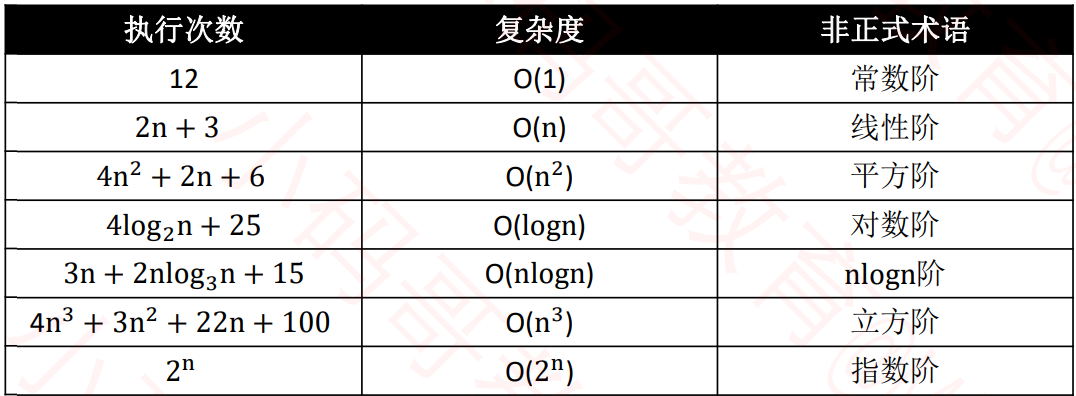
2.2 大O表示法示例
- 9 >> O(1)
- 2n + 3 >> O(n)
- n2 + 2n + 6 >> O(n2)
- 4n3 + 3n2 + 22n + 100 >> O(n3 )
-
2.3 大O表示法排序
O(1) < O(logn) < O(n) < O(nlogn) < O(n2) < O(n3) < O(2n) < O(n!) < O(nn)
3 针对斐波那契数列算法的时间复杂度分析
3.1 代码
3.2 方案一
代码
public static long basicFibonacci(int num) {if (num <= 1) {return num;}return basicFibonacci(num - 1) + basicFibonacci(num - 2);}
示例图
讲解
运行次数上:
T(0) = 1
- T(1) = 1
- T(N) = T(N-1) + T(N-2) + 1,1指代累加计算
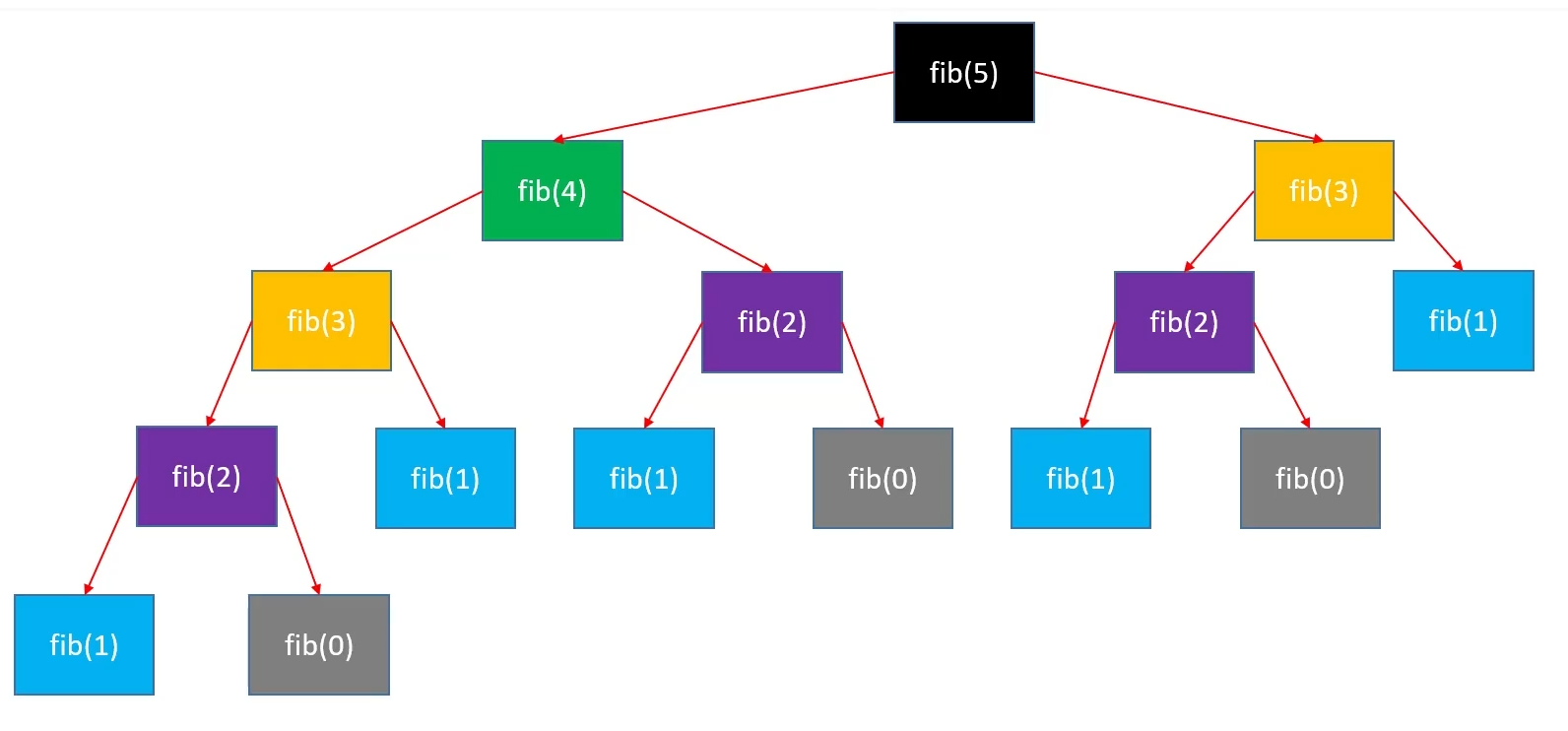
斐波那契数列通过归纳证明法可以证明,当 n >= 1 时 T(n) < (5/3)^n,同时当 n > 4 时 T(n) >= (3/2)^n。
所以该方法的时间复杂度可以表示为 O((5/3)^n),简化后为 O(2^n)。
参考资料
https://zhuanlan.zhihu.com/p/256344121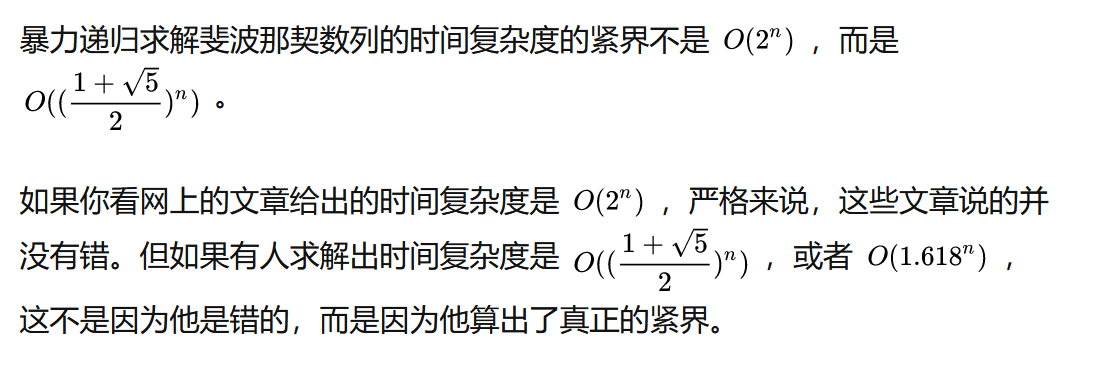
方案二
代码
public static long improvedFibonacci(int num) {if (num <= 1) {return num;}long first = 0;long second = 1;long sum = num;for (int i = 0; i < num - 1; i ++) {sum = first + second;first = second;second = sum;}return sum;}
讲解
因为记录了子元素的值和对应的和,所以时间复杂度只需要计算for循环。根据大O表示法忽略常数,最终结果是 O(N) 。

若有收获,就点个赞吧
0 人点赞


