代码
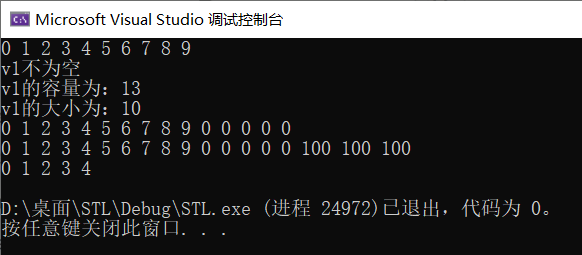
#include<iostream>#include<vector>using namespace std;//vector的容量和大小操作//函数原型/*① empty(); //判断容器是否为空② capacity(); //容器的容量③ size(); //返回容器中元素的个数④ resize(int num); //重新指定容器的长度为num,若容器变长,则默认值填充新位置;//如果容器变短,则末尾超出容器长度的元素被删除。⑤ resize(int num,elem); //重新指定容器的长度为num,若容器变长,则elem填充新位置;//如果容器变短,则末尾超出容器长度的元素被删除。*/void printVector(vector<int>& v) {for (vector<int>::iterator it = v.begin(); it != v.end(); it++) {cout << *it << " ";}cout << endl;}void test01(){vector<int>v1;for (int i = 0; i < 10; i++) {v1.push_back(i);}printVector(v1);//①②③if (v1.empty()) {cout << "v1为空" << endl;}else {cout << "v1不为空" << endl;cout << "v1的容量为:" << v1.capacity()<<endl;cout << "v1的大小为:" << v1.size() << endl;}//④重新指定大小//填充值只会填充扩增的元素位置v1.resize(15);printVector(v1);//如果重新指定的比原来长,默认用0填充新的位置。v1.resize(18, 100);printVector(v1);//利用重载版本,指定默认填充值。//减小容量v1.resize(5);printVector(v1);//如果重新指定的比原来短了,超出部分会删除掉。}int main() {test01();return 0;}
运行结果

若有收获,就点个赞吧
0 人点赞


