策略模式:指对象有某个行为,但是在不同的场景中,该行为有不同的实现算法。这么说或许有点抽象, 设想有这么一种场景。 我们写了一个博客网站,为了能够方便的更换外观, 我们指定了一个theme参数, 并且在渲染的函数中进行了一系列的if/else判断(或者swith), 这样出现了什么问题呢, 每次我们尝试增加一种主题, 都不可避免的要修改render函数。这样显然不利于维护, 策略模式是通过注入不同的算法,来实现自动切换, 避免了不必要的if/else和对应用策略类的修改。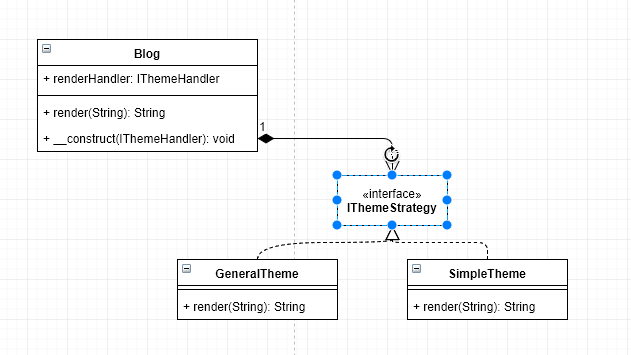
<?php/*** Created by PhpStorm.* User: raye* Date: 2018/3/20* Time: 9:40*//*** 定义一个规范, 所有的主题都应该实现render方法* Interface IThemeStrategy*/interface IThemeStrategy{public function render($view);}class GeneralTheme implements IThemeStrategy {public function render($view){echo 'apply general theme successful.' . PHP_EOL;}}class SimpleTheme implements IThemeStrategy{public function render($view){echo 'apply simple theme successful.' . PHP_EOL;}}/*** 通过使用构造函数注入不同的主题策略,当然也可以使用setter方式* Class Blog*/class Blog{private $renderHandler;/*** Blog constructor.* @param IThemeStrategy $renderHandler 约束类的行为*/public function __construct(IThemeStrategy $renderHandler){$this->renderHandler = $renderHandler;}public function render($content){$this->renderHandler->render($content);}}$blog = new Blog(new GeneralTheme());$blog->render('');$blog = new Blog(new SimpleTheme());$blog->render('');
策略模式的优点:
- 减少了if/else, 这是最直观的了
- 便于扩展, 增加新主题的时候, 不必修改blog的render方法,就可以完成扩展
- 便于维护, 和上一条的理由一致.

若有收获,就点个赞吧
0 人点赞


