Socket是一种双向管道文件
文件属性
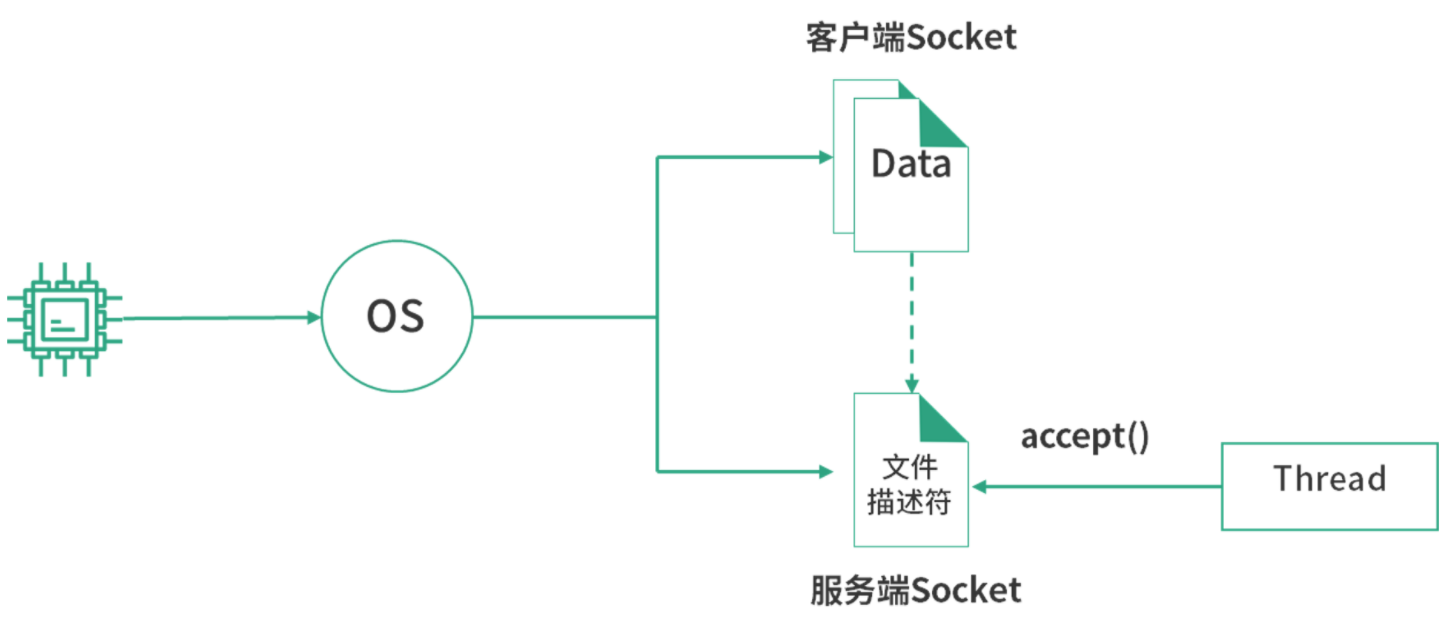
首先Socket是一个文件,就有读和写。当线程想要读取客户端传输来的数据时,就从客户端 Socket 文件中读取数据;当线程想要发送数据到客户端时,就向客户端 Socket 文件中写入数据。服务端为了区分不同应用,通常需要记录端口、客户端IP等
轮询扫描
多个Socket对象可以看作是一个集合(数组 / 链表),扫描的过程就是主动轮询遍历这个集合,观察Socket对象的变化,如果用一个线程去做也被称作 I/O多路复用技术。
响应式(观察者模式)
与主动轮询相对应的,被动监听Socket对象的改变,所有文件的读写都会经过操作系统,这一步叫事件注册。举例在Linux 的三种典型的 I/O 多路复用模型中 select、poll、epoll 模型中,采用 epoll,底层既是红黑二叉搜索树
附 epoll 实现的示例服务
#include <stdio.h>#include <stdlib.h>#include <string.h>#include <sys/types.h>#include <sys/socket.h>#include <netdb.h>#include <unistd.h>#include <fcntl.h>#include <sys/epoll.h>#include <errno.h>#define MAXEVENTS 64static intmake_socket_non_blocking (int sfd){int flags, s;flags = fcntl (sfd, F_GETFL, 0);if (flags == -1){perror ("fcntl");return -1;}flags |= O_NONBLOCK;s = fcntl (sfd, F_SETFL, flags);if (s == -1){perror ("fcntl");return -1;}return 0;}static intcreate_and_bind (char *port){struct addrinfo hints;struct addrinfo *result, *rp;int s, sfd;memset (&hints, 0, sizeof (struct addrinfo));hints.ai_family = AF_UNSPEC; /* Return IPv4 and IPv6 choices */hints.ai_socktype = SOCK_STREAM; /* We want a TCP socket */hints.ai_flags = AI_PASSIVE; /* All interfaces */s = getaddrinfo (NULL, port, &hints, &result);if (s != 0){fprintf (stderr, "getaddrinfo: %s\n", gai_strerror (s));return -1;}for (rp = result; rp != NULL; rp = rp->ai_next){sfd = socket (rp->ai_family, rp->ai_socktype, rp->ai_protocol);if (sfd == -1)continue;s = bind (sfd, rp->ai_addr, rp->ai_addrlen);if (s == 0){/* We managed to bind successfully! */break;}close (sfd);}if (rp == NULL){fprintf (stderr, "Could not bind\n");return -1;}freeaddrinfo (result);return sfd;}intmain (int argc, char *argv[]){int sfd, s;int efd;struct epoll_event event;struct epoll_event *events;if (argc != 2){fprintf (stderr, "Usage: %s [port]\n", argv[0]);exit (EXIT_FAILURE);}sfd = create_and_bind (argv[1]);if (sfd == -1)abort ();s = make_socket_non_blocking (sfd);if (s == -1)abort ();s = listen (sfd, SOMAXCONN);if (s == -1){perror ("listen");abort ();}efd = epoll_create1 (0);if (efd == -1){perror ("epoll_create");abort ();}event.data.fd = sfd;event.events = EPOLLIN | EPOLLET;s = epoll_ctl (efd, EPOLL_CTL_ADD, sfd, &event);if (s == -1){perror ("epoll_ctl");abort ();}/* Buffer where events are returned */events = calloc (MAXEVENTS, sizeof event);/* The event loop */while (1){int n, i;n = epoll_wait (efd, events, MAXEVENTS, -1);for (i = 0; i < n; i++){if ((events[i].events & EPOLLERR) ||(events[i].events & EPOLLHUP) ||(!(events[i].events & EPOLLIN))){/* An error has occured on this fd, or the socket is notready for reading (why were we notified then?) */fprintf (stderr, "epoll error\n");close (events[i].data.fd);continue;}else if (sfd == events[i].data.fd){/* We have a notification on the listening socket, whichmeans one or more incoming connections. */while (1){struct sockaddr in_addr;socklen_t in_len;int infd;char hbuf[NI_MAXHOST], sbuf[NI_MAXSERV];in_len = sizeof in_addr;infd = accept (sfd, &in_addr, &in_len);if (infd == -1){if ((errno == EAGAIN) ||(errno == EWOULDBLOCK)){/* We have processed all incomingconnections. */break;}else{perror ("accept");break;}}s = getnameinfo (&in_addr, in_len,hbuf, sizeof hbuf,sbuf, sizeof sbuf,NI_NUMERICHOST | NI_NUMERICSERV);if (s == 0){printf("Accepted connection on descriptor %d ""(host=%s, port=%s)\n", infd, hbuf, sbuf);}/* Make the incoming socket non-blocking and add it to thelist of fds to monitor. */s = make_socket_non_blocking (infd);if (s == -1)abort ();event.data.fd = infd;event.events = EPOLLIN | EPOLLET;s = epoll_ctl (efd, EPOLL_CTL_ADD, infd, &event);if (s == -1){perror ("epoll_ctl");abort ();}}continue;}else{/* We have data on the fd waiting to be read. Read anddisplay it. We must read whatever data is availablecompletely, as we are running in edge-triggered modeand won't get a notification again for the samedata. */int done = 0;while (1){ssize_t count;char buf[512];count = read (events[i].data.fd, buf, sizeof buf);if (count == -1){/* If errno == EAGAIN, that means we have read alldata. So go back to the main loop. */if (errno != EAGAIN){perror ("read");done = 1;}break;}else if (count == 0){/* End of file. The remote has closed theconnection. */done = 1;break;}/* Write the buffer to standard output */s = write (1, buf, count);if (s == -1){perror ("write");abort ();}}if (done){printf ("Closed connection on descriptor %d\n",events[i].data.fd);/* Closing the descriptor will make epoll remove itfrom the set of descriptors which are monitored. */close (events[i].data.fd);}}}}free (events);close (sfd);return EXIT_SUCCESS;}

若有收获,就点个赞吧
0 人点赞


