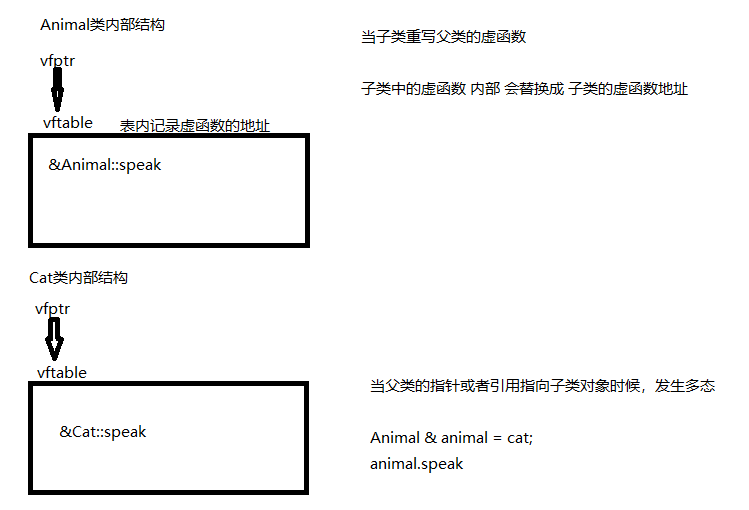
虚函数(表)指针: vfptr
v - virtual
f - function
ptr - pointer
虚函数表:vftable
v - virtual
f - funciton
table - table
Animal类的speak不是虚函数的时候 类的布局是这样的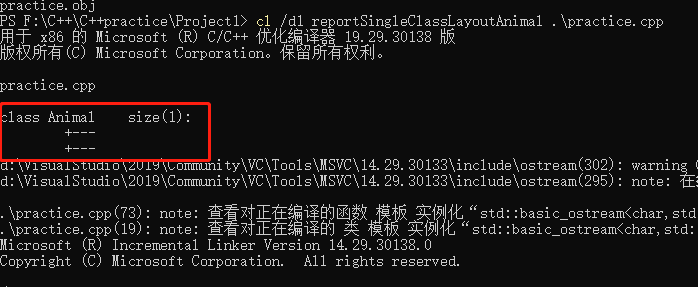
Animal类的speak是虚函数的时候 类的布局是这样的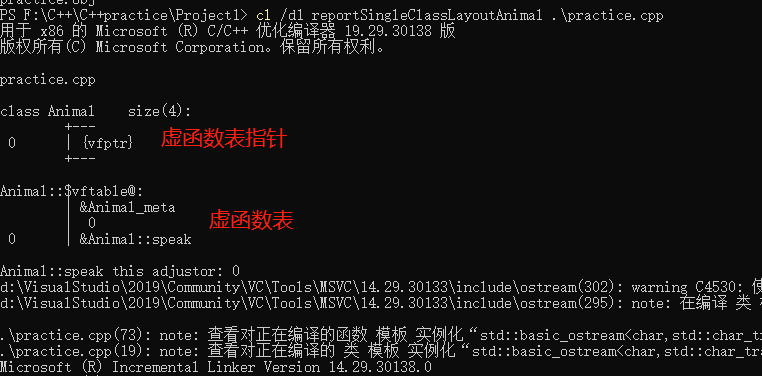
Cat类继承Animal的speak不是虚函数的时候 Cat类的布局是这样的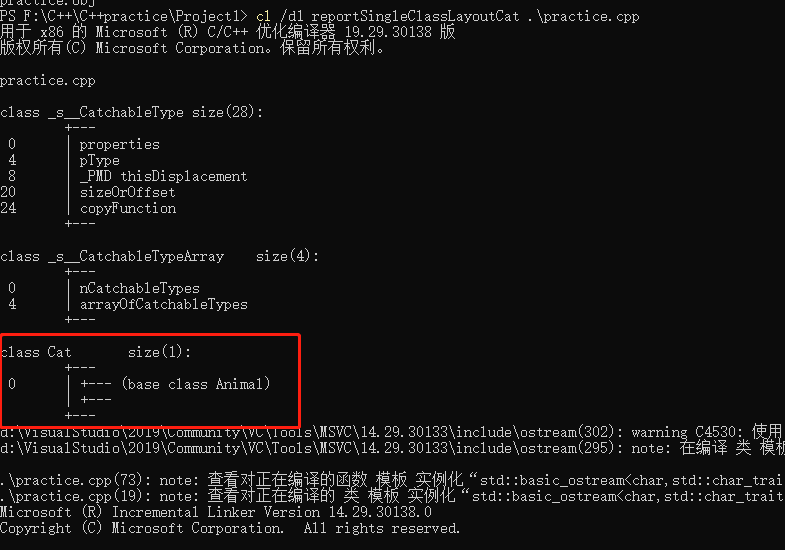
Cat类继承Animal的speak是虚函数的时候 Cat类的布局是这样的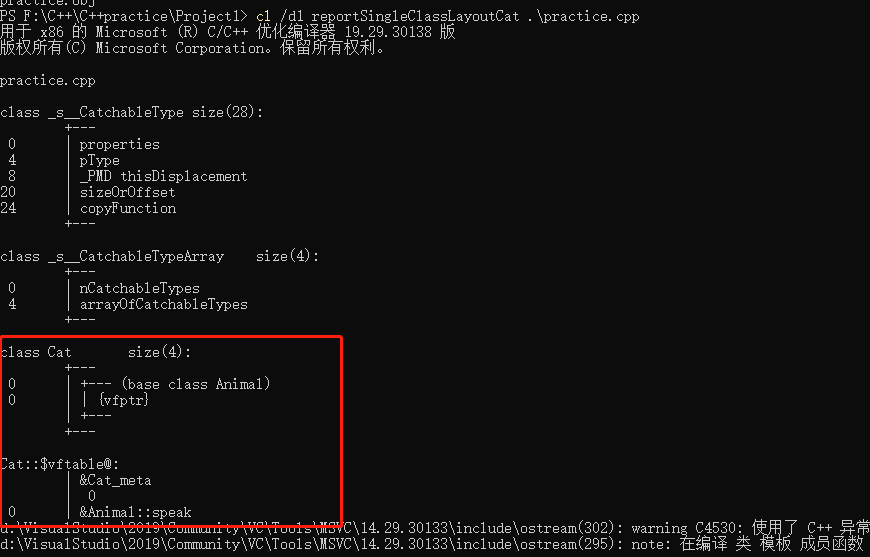
Cat类继承Animal的speak是虚函数的时候并且Cat类重写了虚函数时 Cat类的布局是这样的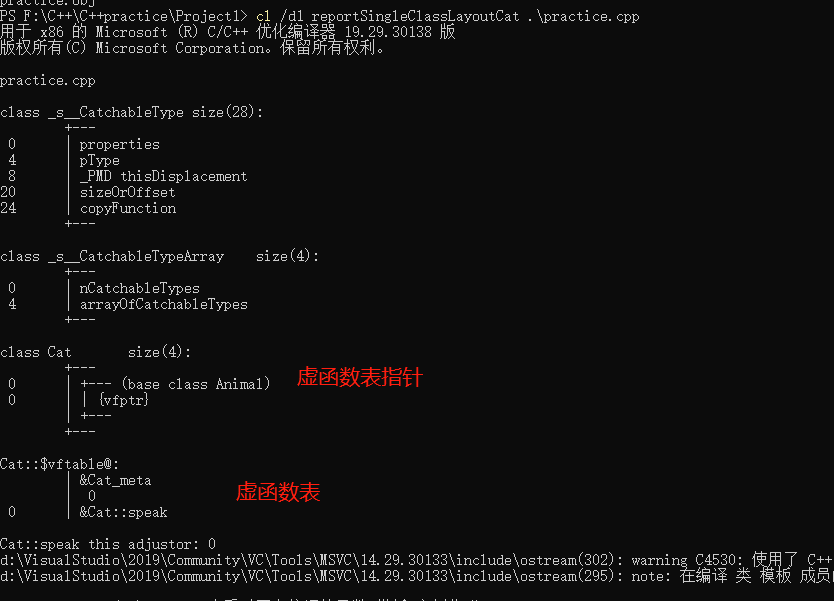
总结:
当父类中有虚函数时,父类内部会创建一个虚函数指针和一个虚函数表,指针指向虚函数表
当子类继承父类时,子类会继承父类的虚函数指针和虚函数表,子类的虚函数指针指向父类的虚函数表
当子类重写父类虚函数时,子类的虚函数指针会指向子类的虚函数表
//多态//动物类class Animal{public://虚函数//virtual void speak()//{// cout << "动物在说话" << endl;//}virtual void speak(){cout << "动物在说话" << endl;}};//猫类class Cat :public Animal{public:void speak(){cout << "小猫在说话" << endl;}};//狗类class Dog :public Animal{public:void speak(){cout << "小狗在说话" << endl;}};//执行说话的函数//地址早绑定 在编译阶段确定函数地址//如果想执行让猫说话,那么这个函数地址就不能提前绑定,需要在运行阶段进行绑定,地址晚绑定//动态多态满足条件// 1、有继承关系// 2、子类重写父类中的虚函数//动态多态使用// 父类的指针或者引用 指向子类对象//函数重写:函数返回值类型 函数名 参数列表完全相同void doSpeak(Animal& animal) //Animal & animal = cat;{animal.speak();}void test01(){Cat cat;doSpeak(cat);Dog dog;doSpeak(dog);}void test02(){cout << "sizeof Animal = " << sizeof(Animal) << endl;}int main(){//test01();test02();system("pause");return 0;}

若有收获,就点个赞吧
0 人点赞


