作用:针对目标方法进行增强,提供新的功能或者额外的功能。
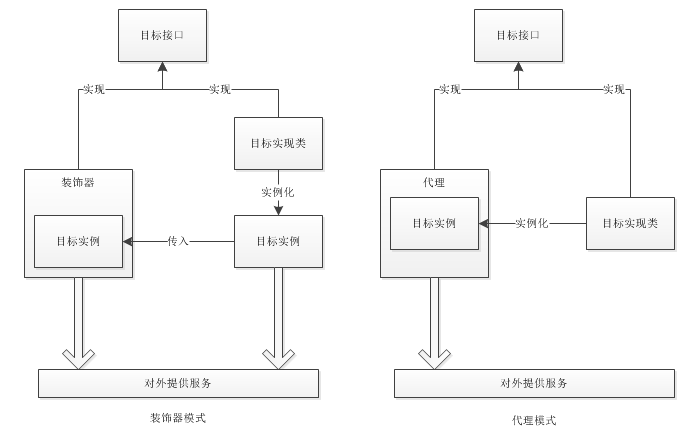
不同于适配器模式和桥接模式,装饰器模式涉及是单方,和代理模式相同,而且目标必须是抽象的,实际上代理模式和装饰器模式一样,只在目标的存在上有些差距。
分析:
1. 涉及的是单方的。
2. 目标是抽象的
特点:整个适配器模式中不存在双方调用,要解决的也不是双方调用的问题,而是解决单方提供对外服务的问题,这个单方在自行对外提供服务时,功能不足,或者我们需要额外添加一些新功能,这时就可以使用装饰者模式,单方进行增强。
解析:
1. 代理是全权代理,目标根本不对外,全部由代理类来完成
2. 装饰是增强,是辅助,目标仍可以自行对外提供服务,装饰器只做增强。
/*** 房子*/public interface House {void ourput();}
/*** 我的房子*/public class MyHouse implements House {@Overridepublic void ourput() {System.out.println("这是我的房子");}}
/*** 他的房子*/public class HeHouse implements House {@Overridepublic void ourput() {System.out.println("这是他的房子");}}
/*** 装饰器*/public class Decorator implements House {private House house;public Decorator(House house) {this.house = house;}@Overridepublic void ourput() {System.out.println("针对房子前段装饰");house.ourput();System.out.println("针对房子后段装饰");}}
public class Clienter {public static void main(String[] args) {House myHouse = new MyHouse();House decorator = new Decorator(myHouse);decorator.ourput();}}

若有收获,就点个赞吧
0 人点赞


