promise示例
new Promise(resolve => {console.log('promise1')resolve()}).then(() => {console.log('then11')new Promise(resolve => {console.log('promise2')resolve()}).then(() => {console.log('then21')}).then(() => {console.log('then22')})}).then(() => {console.log('then12')})
过程分析:
1、同步代码执行过程中,外层promise实例的exector执行,并且同步修改其状态结果,另外通知then方法存放的方法执行,但是此时then还没有执行到,里面没有存放方法,所以只是修改状态结果
2、exector函数执行完成后,将then里面的方法存起来。此时promise实例1的状态已经是成功的了,所以微任务1是当同步代码执行完成后立即执行,而微任务2要等到微任务1中的代码执行完成后才会达到可执行状态。
同步代码执行完成后,此时任务队列中已经存放了微任务1和微任务2两个,微任务1的状态时可执行的。
3、执行微任务1,其中内层promise的exector同步执行,并且实例状态成功,存放微任务3[存放的时候状态应是可执行的,所以比微任务2先达到可执行状态]和微任务4[需要等到微任务3执行成功后才会执行]
微任务1的同步代码执行完成后,任务队列中的2和3都已经到了可执行状态,但是3比2要早达到,先执行3
4、执行微任务3完成后,微任务4达到可执行状态
5、执行微任务2
6、执行微任务4
如果是使用return new Promise的话,那么微任务2需要等到微任务4执行完成才达到可执行条件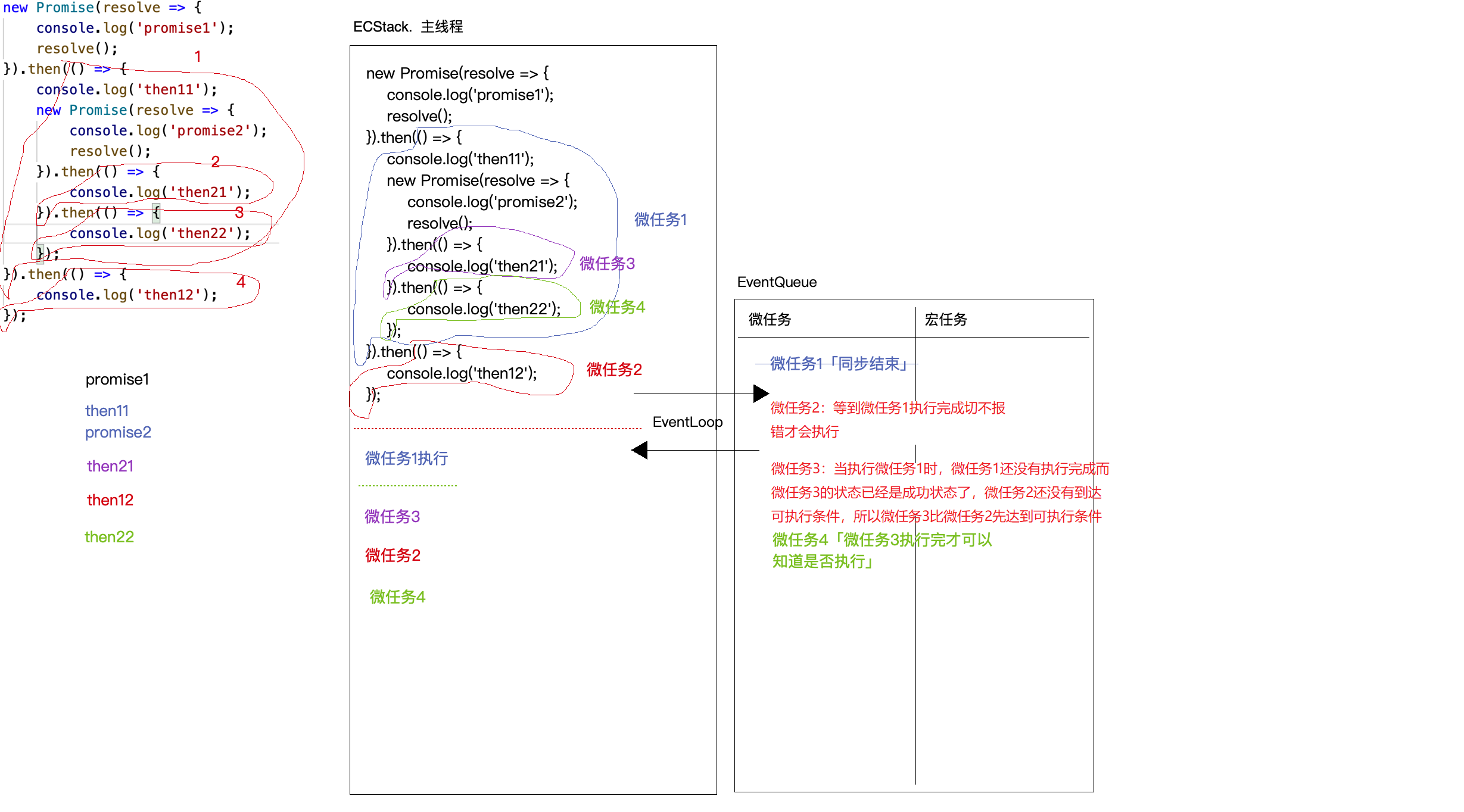
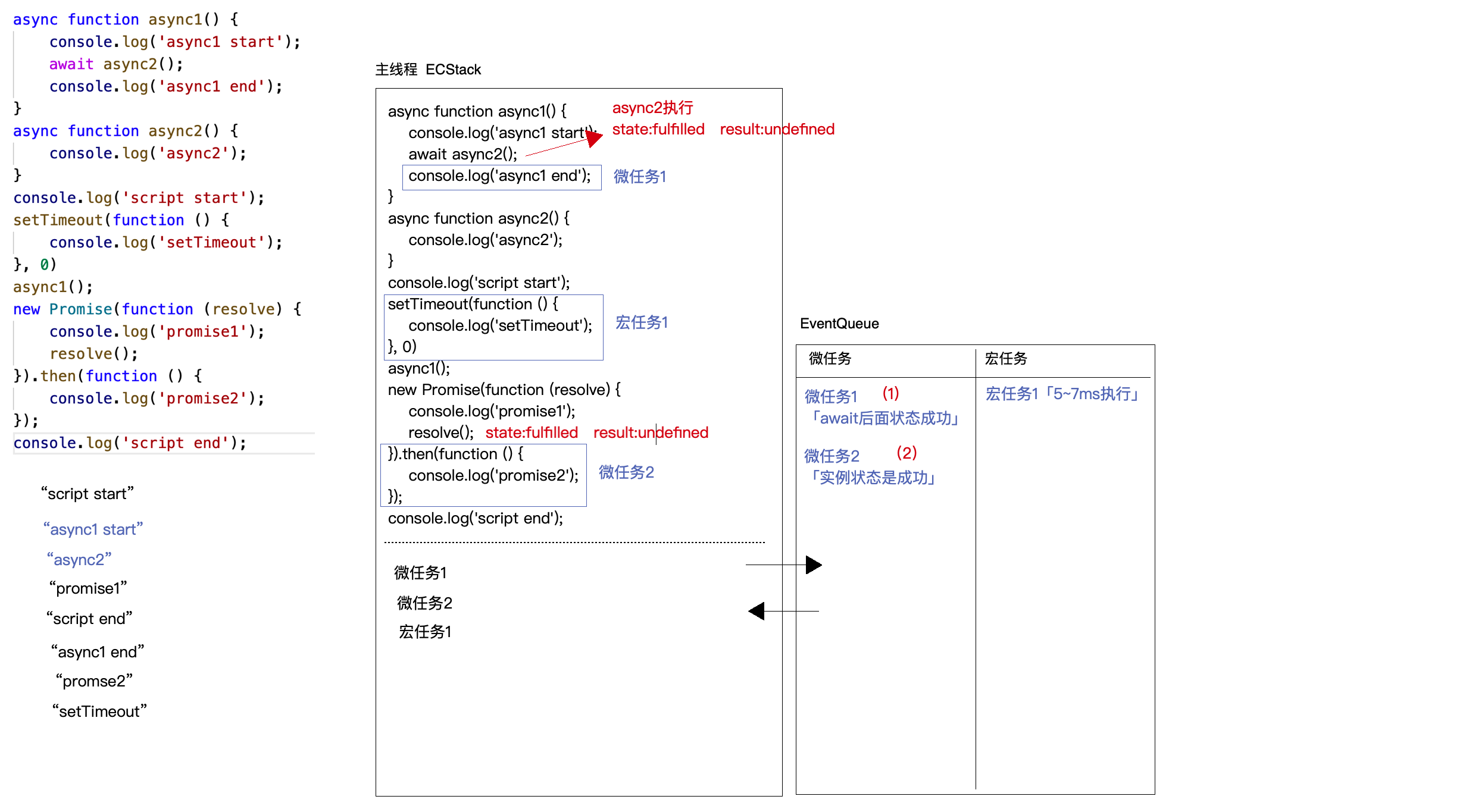
async function async1() {console.log('async1 start');await async2();console.log('async1 end');}async function async2() {console.log('async2');}console.log('script start');setTimeout(function () {console.log('setTimeout');}, 0)async1();new Promise(function (resolve) {console.log('promise1');resolve();}).then(function () {console.log('promise2');});console.log('script end');
let body = document.body;body.addEventListener('click', function () {Promise.resolve().then(() => {console.log(1);});console.log(2);});body.addEventListener('click', function () {Promise.resolve().then(() => {console.log(3);});console.log(4);});
宏任务1执行的console的时候微任务1已经达到了可执行的状态了,所以先执行微任务1再执行宏任务2
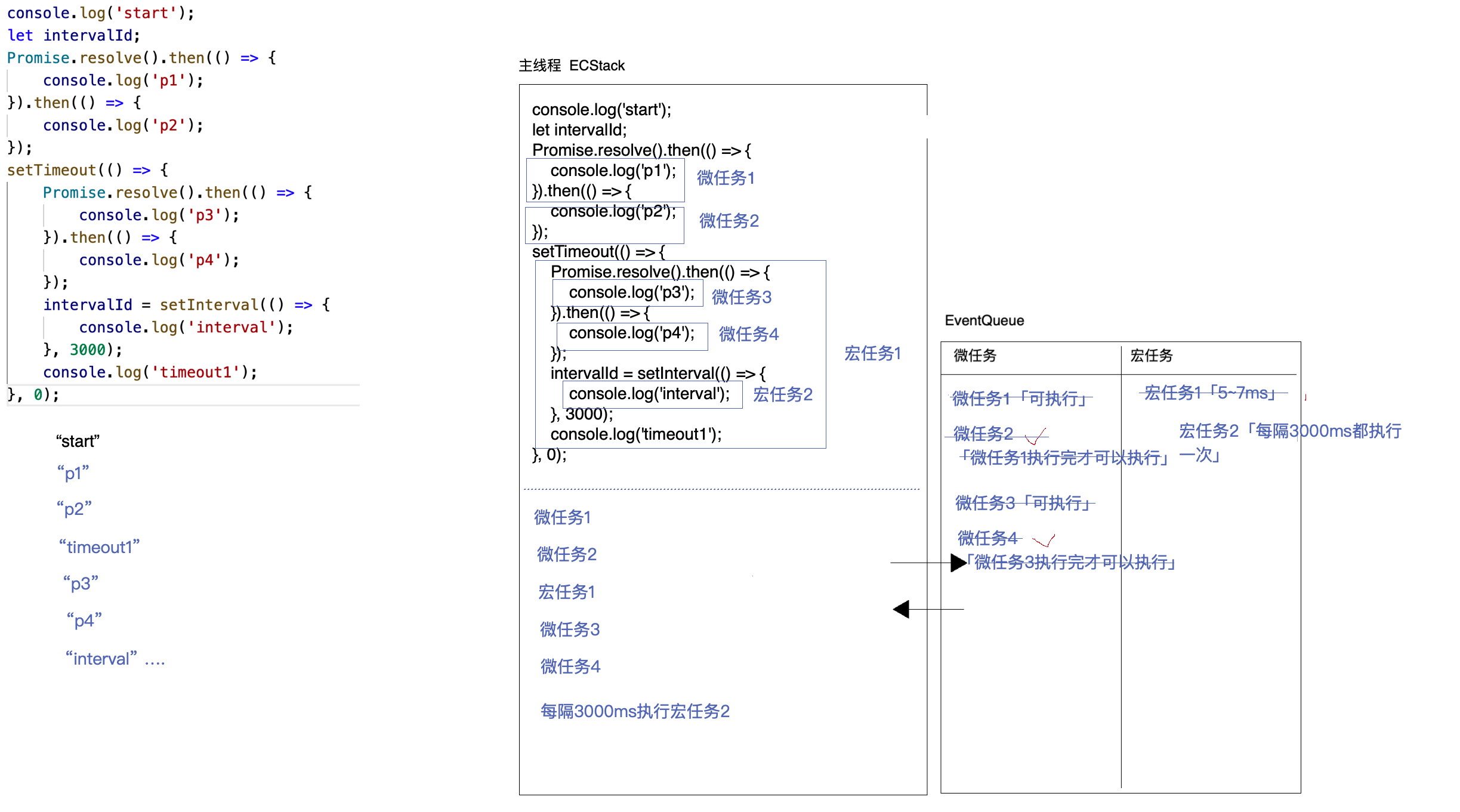
console.log('start');let intervalId;Promise.resolve().then(() => {console.log('p1');}).then(() => {console.log('p2');});setTimeout(() => {Promise.resolve().then(() => {console.log('p3');}).then(() => {console.log('p4');});intervalId = setInterval(() => {console.log('interval');}, 3000);console.log('timeout1');}, 0);
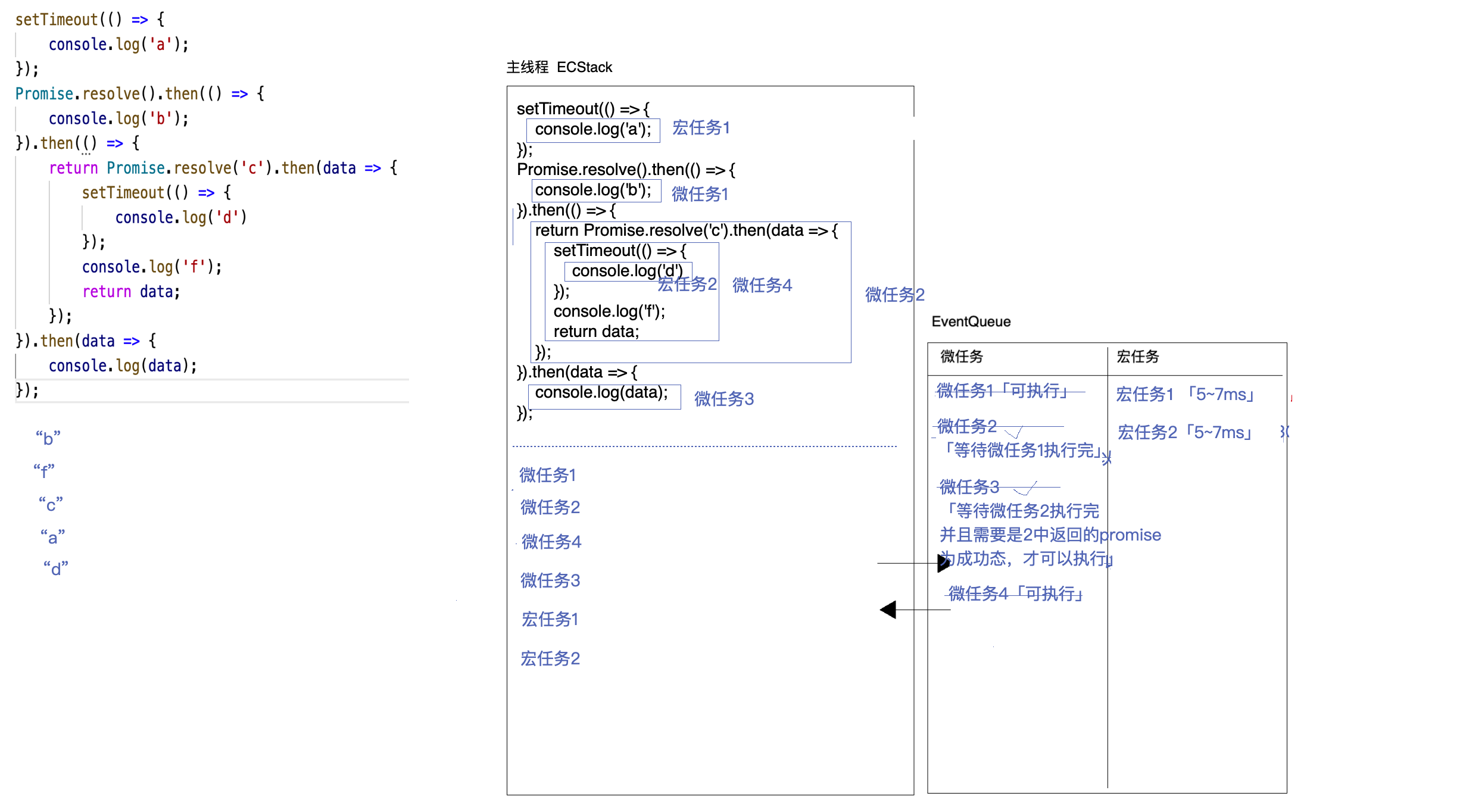
setTimeout(() => {console.log('a');});Promise.resolve().then(() => {console.log('b');}).then(() => {return Promise.resolve('c').then(data => {setTimeout(() => {console.log('d')});console.log('f');return data;});}).then(data => {console.log(data);});
function func1() {console.log('func1 start');return new Promise(resolve => {resolve('OK');});}function func2() {console.log('func2 start');return new Promise(resolve => {setTimeout(() => {resolve('OK');}, 10);});}console.log(1);setTimeout(async () => {console.log(2);await func1();console.log(3);}, 20);for (let i = 0; i < 90000000; i++) {}//循环大约要进行80MS左右console.log(4);func1().then(result => {console.log(5);});func2().then(result => {console.log(6);});setTimeout(() => {console.log(7);}, 0);console.log(8);
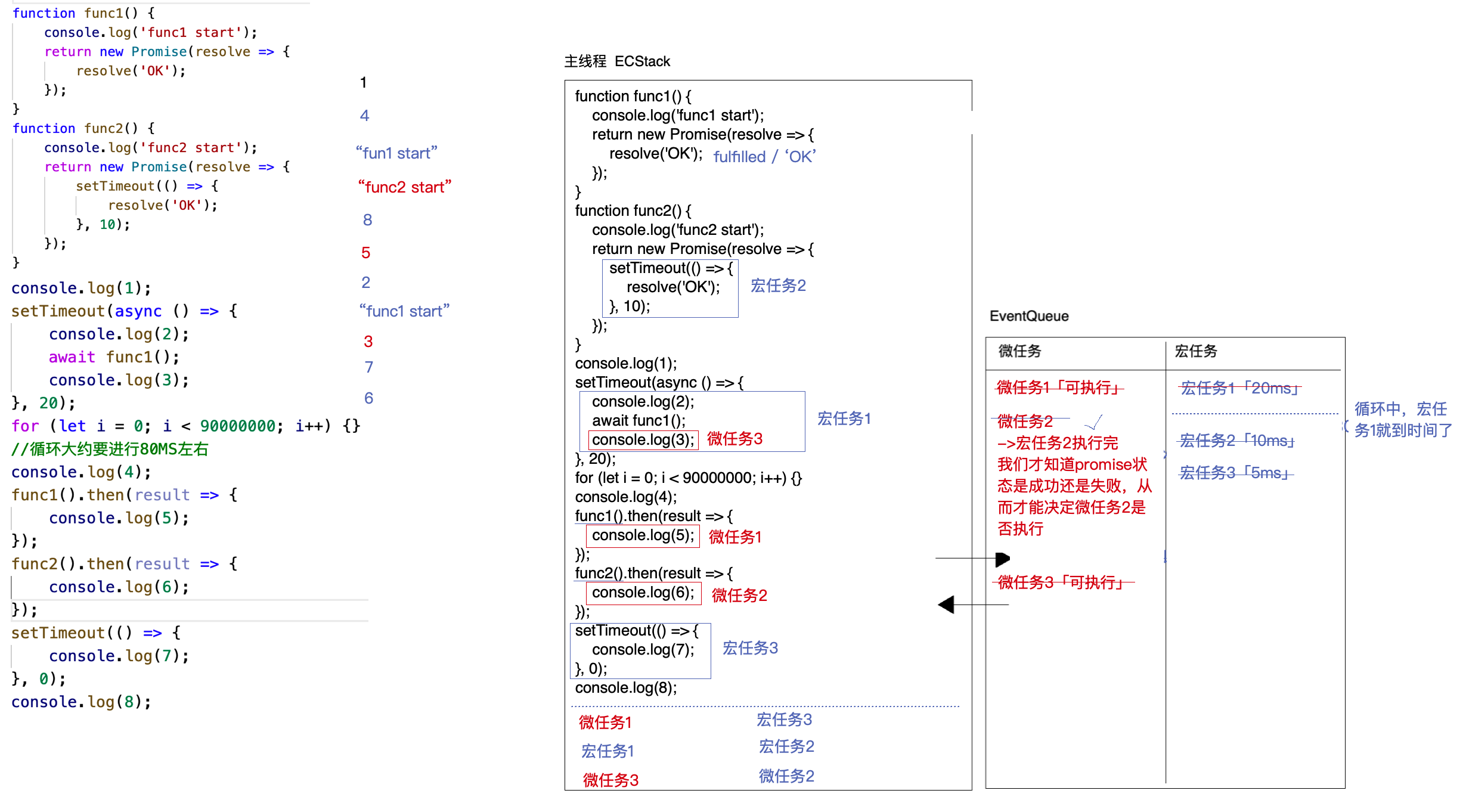
async/await的示例
var resolveAfter2Seconds = function resolveAfter2Seconds() {console.log("starting slow promise");return new Promise(resolve => {setTimeout(function () {resolve("slow");console.log("slow promise is done");}, 2000);});};var resolveAfter1Second = function resolveAfter1Second() {console.log("starting fast promise");return new Promise(resolve => {setTimeout(function () {resolve("fast");console.log("fast promise is done");}, 1000);});};// sequential:相继的 /[sɪˈkwenʃl]/var sequential = async function sequential() {console.log('==SEQUENTIAL START==');const slow = await resolveAfter2Seconds();console.log(slow);const fast = await resolveAfter1Second();console.log(fast);};// concurrent:同时发生的 /[kənˈkʌrənt]/var concurrent = async function concurrent() {console.log('==CONCURRENT START with await==');const slow = resolveAfter2Seconds();const fast = resolveAfter1Second();console.log(await slow);console.log(await fast);};var concurrentPromise = function concurrentPromise() {console.log('==CONCURRENT START with Promise.all==');return Promise.all([resolveAfter2Seconds(), resolveAfter1Second()]).then((messages) => {console.log(messages[0]);console.log(messages[1]);});};// parallel:平行的 /[ˈpærəlel]/var parallel = async function parallel() {console.log('==PARALLEL with await Promise.all==');await Promise.all([(async () => {let result = await resolveAfter2Seconds();console.log(result);})(),(async () => {let result = await resolveAfter1Second();console.log(result);})(),]);};var parallelPromise = function parallelPromise() {console.log('==PARALLEL with Promise.then==');resolveAfter2Seconds().then((message) => console.log(message));resolveAfter1Second().then((message) => console.log(message));};
// 相继sequential()
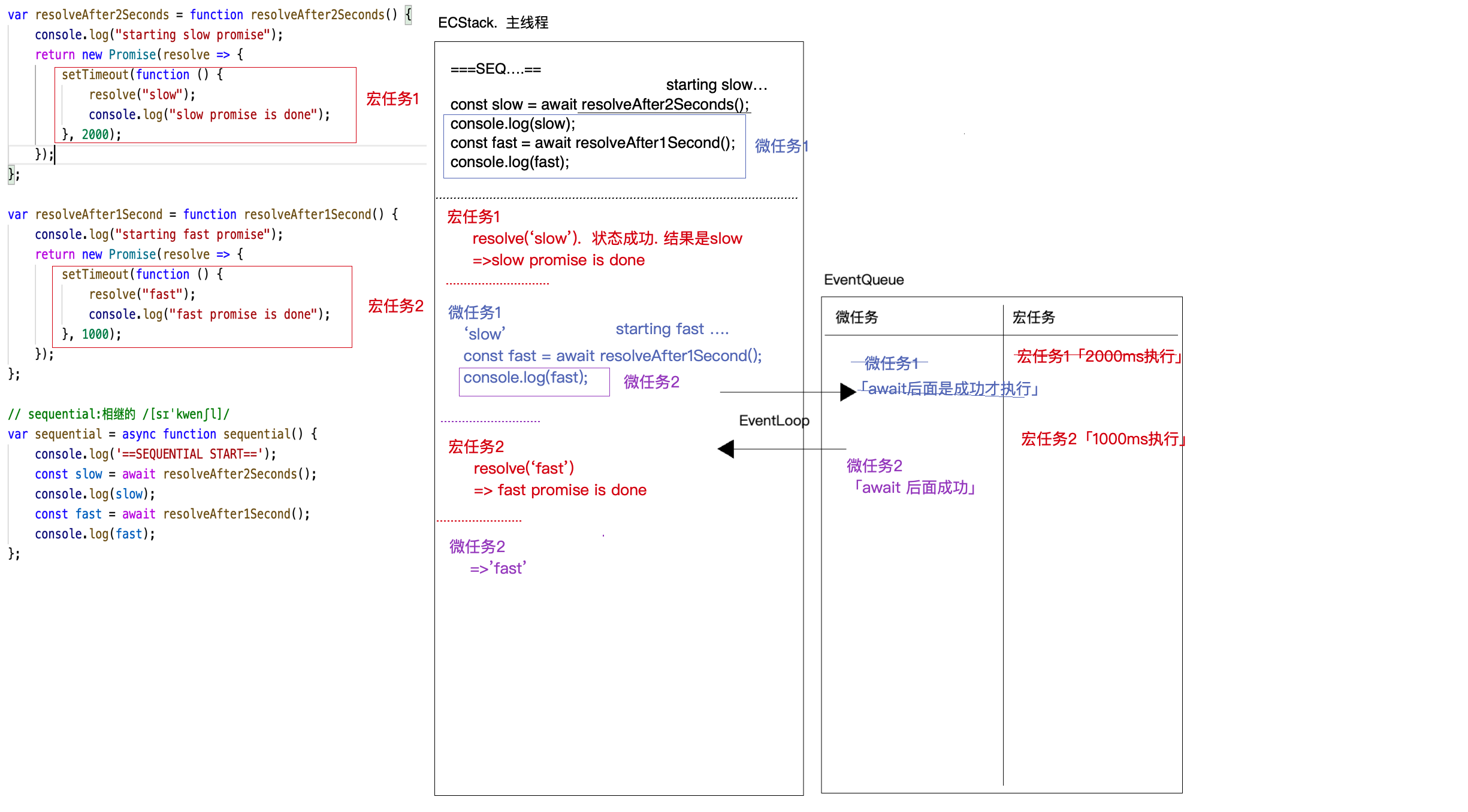
// 同时发生的concurrent()

concurrentPromise()
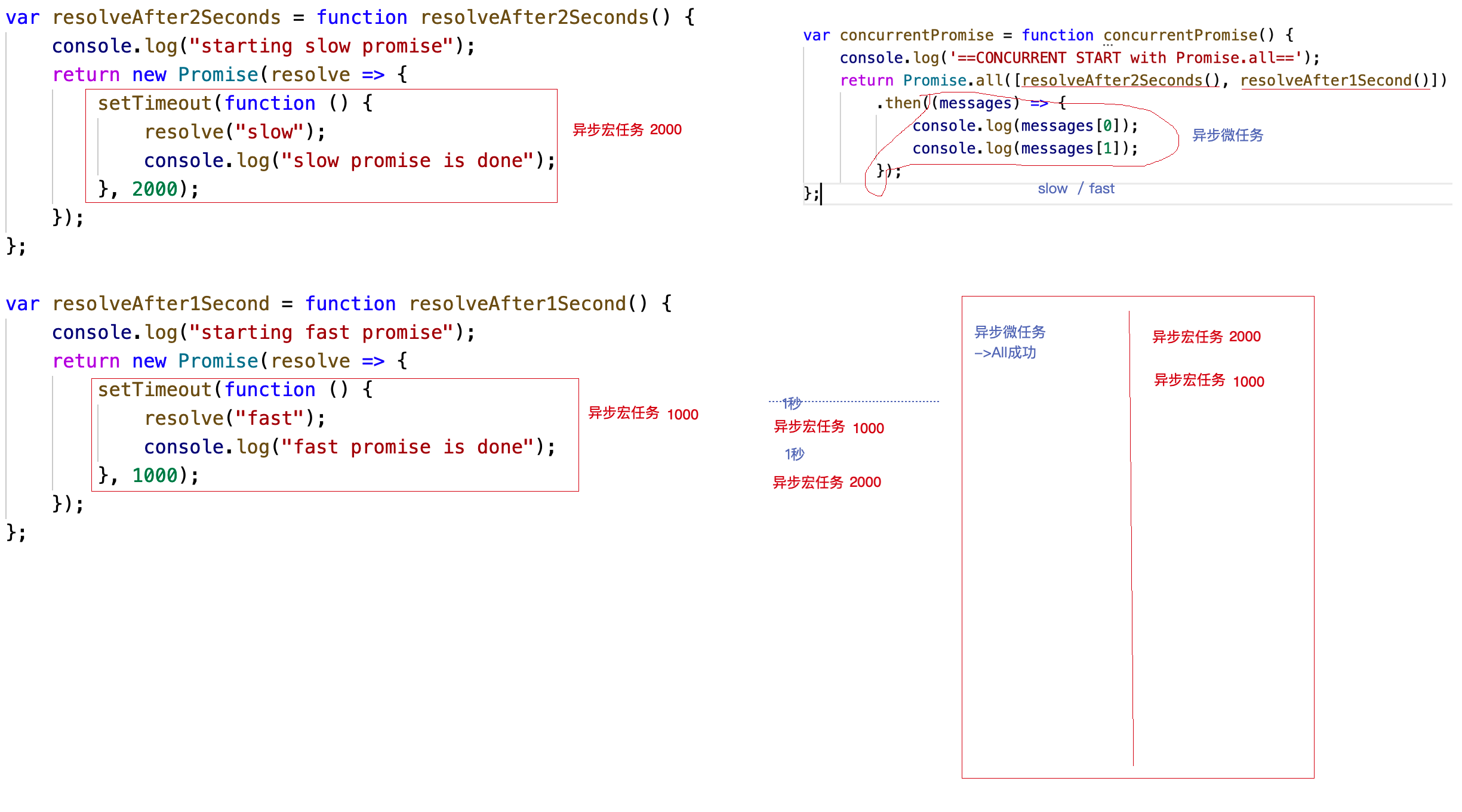
// 平行的parallel()


若有收获,就点个赞吧
0 人点赞


