原型链
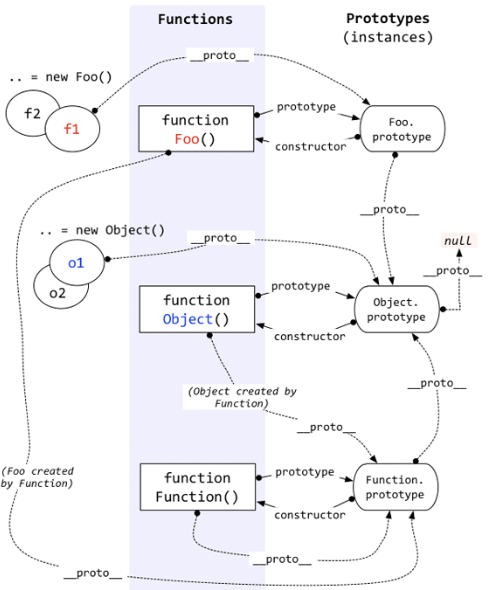
JavaScript 原型链
基本上所有函数都含有
prototype原型属性,除了Function.prototype.bind()方法生成的函数
const foo = Function.prototype.bind()typeof foo // -> "function"foo.prototype === undefined // -> true
new 过程
- 新建空对象
{}
var obj = {}
- 设置对象
constructor属性为构造函数,根据引擎环境设置原型属性
obj.__proto__ = Fn.prototype
- 使用新对象调用函数构造器,上下文
this被指向该对象
Fn.call(obj)
- 返回新对象(引用地址)。
注意:若构造函数最终返回值类型为基本数据类型(number、string、boolean、null、undefined),则 new 之后返回刚刚创建的实例对象;若构造函数返回值类型为引用类型,则返回这个引用值
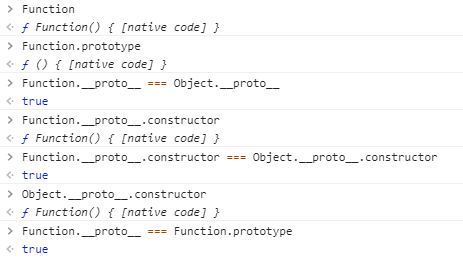
Function.proto === Function.prototype
如图:

解析:
Object.prototype由引擎创建,不是由Object()函数创建。所有实例都是对象,但是对象不一定都是实例。Function.prototype也由引擎创建。首先引擎创建了Object.prototype,然后创建了Function.prototype,并且通过__proto__将两者联系了起来不是所有函数都是
new Function()产生的。有了 Function.prototype 以后才有了 function Function() ,然后其他的构造函数都是 function Function() 生成的。
实现继承
ES5 写法:
function Super() {}Super.prototype.getNumber = function() {return 1}function Sub() {}Sub.prototype = Object.create(Super.prototype, {constructor: {value: Sub,enumerable: false,writable: true,configurable: true}})const s = new Sub()s.getNumber() // -> 1
ES6 写法:
class SubDate extends Date {logTime () {console.log(`Time: ${this.getTime()}`)}}const myDate = new SubDate()myDate.getTime() // -> xxxxxxxxxxxxxmyDate.logTime() // -> Time: xxxxxxxxxxxxx
[参考资料]

若有收获,就点个赞吧
0 人点赞


