- 堆是一种特殊的完全二叉树。
- 所有的节点都大于等于(最大堆)或小于等于(最小堆)它的子节点。
最大堆:
最小堆:
JS中的堆:
- JS中通常用数组表示堆。
- 左侧子节点的位置是
2*index + 1 - 右侧子节点的位置是
2*index + 2 - 父节点位置是
(index-1)/2
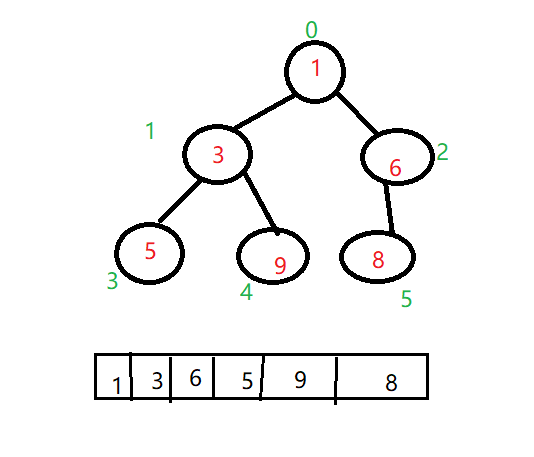
堆的应用
- 堆能高效、快速地找出最大值和最小值。
- 时间复杂度O(1)。
- 找出第K个最大(小)元素。
第k个最大元素
- 构建一个最小堆,并将元素依次插入堆中。
- 当堆的容量超过k时,就删除堆顶。
- 插入结束后,堆顶就是第k个最大元素。
实现最小堆类
实现步骤:
- 在类里,声明一个数组,用来装元素。
- 主要方法:插入、删除堆顶、获取堆顶、获取堆大小。
插入
- 把值插入堆的底部,即数组的尾部。
- 然后上移:将这个值和他的父节点进行交换,直到父节点小于等于这个插入的值。
- 大小为k的堆中插入元素的时间复杂度为O(log k)
删除堆顶
- 用数组尾部元素替换堆顶(直接删除堆顶会破坏堆结构)
- 然后下移:将新堆顶和它的子节点进行交换,直到子节点大于等于这个新堆顶。
- 大小为k的堆中删除堆顶的时间复杂度为O(log k)
获取堆顶和堆的大小
- 获取堆顶:返回数组的头部
- 获取堆的大小:返回数组的长度
构建一个最小堆的类:
class MinHeap {constructor() {this.heap = [];}swap(i1, i2) {const tmp = this.heap[i1];this.heap[i1] = this.heap[i2];this.heap[i2] = tmp;}getParentIndex(i) {return (i-1) >> 1;}getLeftIndex(i) {return i * 2 + 1;}getRightIndex(i) {return i * 2 + 2;}//上移操作shiftUp(index) {if( index == 0) { return ;}const parentIndex = this.getParentIndex(index);if(this.heap[parentIndex] > this.heap[index]) {this.swap(parentIndex, index);this.shiftUp(parentIndex);}}//下移操作shiftDown(index) {const leftIndex = this.getLeftIndex(index);const rightIndex = this.getRightIndex(index);if(this.heap[leftIndex] < this.heap[index]){this.swap(leftIndex, index);this.shiftDown(leftIndex);}if(this.heap[rightIndex] < this.heap[index]){this.swap(rightIndex, index);this.shiftDown(rightIndex);}}insert (value) {this.heap.push(value);this.shiftUp(this.heap.length - 1);}pop() {this.heap[0] = this.heap.pop();this.shiftDown(0)}peek() {return this.heap[0];}size() {return this.heap.length;}}const h = new MinHeap();h.insert(3)h.insert(2)h.insert(1)h.pop()
215. 数组中的第K个最大元素
解题思路:
- 看到“第k个最大元素”。
- 考虑使用最小堆。
解题步骤:
- 构建一个最小堆,并依次把数组的值插入堆中。
- 当堆的容量超过k,就删除堆顶。
插入结束后,堆顶就是第k个最大元素。
var findKthLargest = function(nums, k) {
  const h = new MinHeap();
  nums.forEach(n => {
      h.insert(n);
      if(h.size() > k) {
          h.pop();
      }
  })

  return h.peek();
};
347 前 K 个高频元素
var topKFrequent = function(nums, k) {
  const map = new Map();
  nums.forEach(n=>{
      map.set(n, map.has(n) ? map.get(n)+1 : 1)
  })
  const list = Array.from(map).sort((a,b)=> b[1]-a[1]);

  return list.slice(0, k).map(n => n[0])
};
堆解法: ```javascript class MinHeap { constructor() {
this.heap = [];} swap(i1, i2) {
  const tmp = this.heap[i1];
  this.heap[i1] = this.heap[i2];
  this.heap[i2] = tmp;
} getParentIndex(i) {
return (i-1) >> 1;} getLeftIndex(i) {
return i * 2 + 1;} getRightIndex(i) {
return i * 2 + 2;} //上移操作 shiftUp(index) {
  if( index == 0) { return ;}
  const parentIndex = this.getParentIndex(index);
  if(this.heap[parentIndex] && this.heap[parentIndex].value > this.heap[index].value) {
      this.swap(parentIndex, index);
      this.shiftUp(parentIndex);
  }
} //下移操作 shiftDown(index) {
  const leftIndex = this.getLeftIndex(index);
  const rightIndex = this.getRightIndex(index);
  if(this.heap[leftIndex] && this.heap[leftIndex].value < this.heap[index].value){
      this.swap(leftIndex, index);
      this.shiftDown(leftIndex);
  }
  if(this.heap[rightIndex] && this.heap[rightIndex].value <  this.heap[index].value){
      this.swap(rightIndex, index);
      this.shiftDown(rightIndex);
  }
} insert (value) {
  this.heap.push(value);
  this.shiftUp(this.heap.length - 1);
}
pop() {
   this.heap[0] = this.heap.pop();
   this.shiftDown(0)
}
peek() {
return this.heap[0];}
size() {
return this.heap.length;}
}
/**
- @param {number[]} nums
- @param {number} k
@return {number[]} */ var topKFrequent = function(nums, k) { const map = new Map(); nums.forEach(n=>{
map.set(n, map.has(n) ? map.get(n)+1 : 1)}) const h = new MinHeap(); map.forEach((value, key)=>{
 h.insert({value, key});
 if(h.size() > k) {
     h.pop();
 }
});
return h.heap.map(a => a.key) }; ```
23 合并K个升序链表
输入:lists = [[1,4,5],[1,3,4],[2,6]]
输出:[1,1,2,3,4,4,5,6]
解释:链表数组如下:
[
1->4->5,
1->3->4,
2->6
]
将它们合并到一个有序链表中得到。
1->1->2->3->4->4->5->6
解题思路:
- 新链表的下一个节点一定是k个链表头中的最小节点。
- 考虑选择使用最小堆
解题步骤:
- 构建一个最小堆,并一次把链表头插入堆中。
- 弹出堆顶接到输出链表,并将堆顶所在链表的新链表头插入堆中。
- 等堆元素全部弹出,合并工作就完成了。
var mergeKLists = function(lists) {
    const res = new ListNode(0);
    let p = res;
    const h = new MinHeap();
    lists.forEach(l => {
       if(l) h.insert(l);
    });
    while(h.size() > 0) {
        const n = h.pop();
        p.next = n;
        p = p.next;
        if(n.next) h.insert(n.next);
    }
    return res.next;
};

若有收获,就点个赞吧
0 人点赞


