JavaScript 高级
第一天
JS的组成
Ecmascript
描述了该语言的语法和基本对象
DOM
描述了处理网页内容的方法和接口
BOM
描述了与浏览器进行交互的方法和接口
创建对象的三个方法
字面量的方式
let per1 = {name: '卡卡西',age: 20,sex: '男',eat: function () {console.log("吃臭豆腐")},readBook: function () {console.log("琴儿天堂")}}
调用系统的构造函数
let per2 = new Object()per2.name = "大蛇丸"per2.age = 30......
自定义构造函数
function Person (name, age, sex) {this.name = namethis.age = agethis.sex = sexthis.play = function () {console.log("天天打游戏")}// 因为new 这个关键字 进行了函数的构造调用var per = new Person('周田', 18, '女')/*1、开辟空间存储对象2、把this设置为当前“通过new创建对象后返回的对象”3、设置属性和方法的值4、把this对象返回**/}
工厂模式
function createObjectFn (name, age) {let obj = new Object()obj.name = nameobj.age = ageobj.sayHi = function () {console.log('你好')}return obj}let per1 = createObjectFn('赵思', 22)
构造函数和实列对象之间的关系
function Person (name, age, sex) {this.name = namethis.age = agethis.sex = sexthis.play = function () {console.log("天天打游戏")}}let per1 = new Person('小苏', 38, '女')consoloe.log(per.constructor === Person) //trueconsoloe.log(per.__proto__.constructor === Person) // truePerson.protype.constructor === Person // true
- 实例对象时通过构造函数来创建的
- 实例对象的构造器指向其构造函数

通过原型对一个构造函数创建出来的对象进行数据共享
function Person(name, age) {this.name = namethis.age = age}Person.prototype.eat = function () {console.log('在构造函数原型上的方法,其创建出来的对象共享')}let p1 = new Person('hjj', 20)let p2 = new Pserson('jjj', 30)console.log(p1.eat === p2.eat) // true
构造函数中的this指向问题
function Person(name, age) {this.name = namethis.age = age}Pserson.prototype.init = function () {// 此this是实列对象// 打印出来的this没有prototype 只有_proto_ 不是构造函数console.log(this)}let p1 = new Pserson('dwd', 20)p1.init()
原型对象中的方法是可以相互调用的
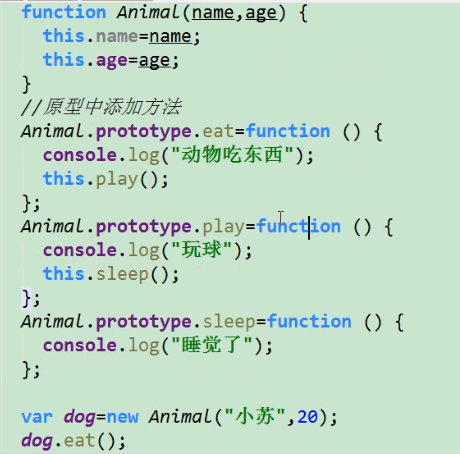
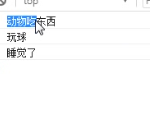
原型链中的属性查找规则

<script>function Person(age, sex) {this,age=age;this sex=sex:this eat= function () {conso1e.1og("构造函数中的吃")}};person. prototype. sex="女";var per=new Person(20, "51");console.log (per sex); //1console.dir(per); // 打印出来的性别是男 说明 先从实列对象中查找属性</script>
稍微总结
构造函数可以实例化一个对象
构造函数中有一个属性prototype这是构造函数的原型对象
prototype对象中有一个属性是constructor构造器,这个构造器指向的就是自己所在的原型对象所在的构造函数
构造函数实列化出来的实列对象的属性__proto__(非标准属性,浏览器使用)指向的是该构造函数的原型对象
第二天
函数也是对象
function Person (age) {this.age = age}// 函数也可以通过.的方式 可以说明其也是对象Person.prototype.sayHi = function () {}
第三天
实例对象和原型对象之间的关系是通过proto原型来联系起来的,这个关系,就是原型链
原型的指向是否可以改变
通过改变原型链来实现继承
改变原型对象的时候直接初始化了属性 ,继承过来的属性都是一样的
可以通过后续obj.name = xxx 来改变属性
function Person(name, age, sex) {this.name = namethis.sex = sexthis.age = age}Person.prototype.eat = function () {console.log('人可以吃东西')}Person.protype.sleep = function () {console.log('睡觉')}Person.prototype.play = function () {console.log('玩玩')}// 学生构造函数function Student(score) {this.score = score}// 改变学生原型的指向/*缺陷在于:1.改变原型指向的同时实现继承,直接初始化了属性,继承过来的属性值都是一样的*/Student.prototype = new Person('小名', 10, '男')Student.prototype.study = function () {console.log('学习很累')}let student = new Student(100)console.log(student.name) // 小明
借用构造函数实现继承
只继承了属性,没有继承方法
function Person(name, age, sex) {this.name = namethis.sex = sexthis.age = age}Person.prototype.eat = function () {console.log('人可以吃东西')}// 学生构造函数function Student(name, age, sex, score) {// 借用构造函数 只继承了属性 没有继承方法Person.call(this, name, age, sex)this.score = score}let student = new Student('小明',10,100)console.log(student) // 小明
组合继承(原型继承 + 借用构造函数继承)
function Person(name, age, sex) {this.name = namethis.sex = sexthis.age = age}Person.prototype.eat = function () {console.log('人可以吃东西')}// 学生构造函数function Student(name, age, sex, score) {// 借用构造函数 只继承了属性 没有继承方法Person.call(this, name, age, sex)this.score = score}// 改变原型指向 来继承方法Student.prototype = new Person()// 学生的方法Student.protype.sleep = function () {console.log('睡觉')}let stu = new Student('小明', 10, '男', 100)console.log(stu.name)console.log(stu.score)stu.eat()stu.sleep()
拷贝继承
把一个对象的属性或方法直接复制到另一个对象中
拷贝继承1
var obj1 = {name: 'zhaosi',age: 20,sleep: function () {console.log("水蕨了")}}var obj2 = {}for(var key in obj1) {obj2[key] = obj1[key]}
拷贝继承2
var obj1 = {name: 'zhaosi',age: 20,sleep: function () {console.log("水蕨了")}}var obj2 = obj1

函数的角色(函数的声明和函数的表达式)
函数的声明
function f1() {console.log('我是函数声明')}f1()
函数表达式
var f2 = function f1() {console.log('我是函数表达式')}f2()
区别
- 函数声明
```javascript if (true) { function f1() {
} } else { function f1() {console.log('我是函数声明 true')
} }console.log('我是函数声明 false')
/* 在谷歌中:我是函数声明 true 在ie8中:我是函数声明 false
因为:函数的声明会把函数声明提前的,会之前后面的
*/ f1()
- 函数表达式```javascriptvar ffif (true) {ff = function f1() {console.log('我是函数声明 true')}} else {ff = function f1() {console.log('我是函数声明 false')}}/*在谷歌中:我是函数声明 true在ie8中:我是函数声明 true*/ff()
函数中的this指向
普通函数中的this是谁
function f1() {console.log(this)}// 顶级对象windowf1()
定时器方法中的this是谁
setInterval(() => {// 顶级对象console.log(this)}, 1000)
构造函数中的this
function Person () {console.log(this)}// 因为new Person 会返回一个当前对象 所以 指向的是构造函数中的this实列对象var per = new Person()console.log(per)// Person {}// Person {}// 构造函数中的this就是实例对象
原型对象中的this指向
function Person () {console.log(this) // 实列对象this.sayHi = function () {console.log(this) // 实例对象}}Person.prototype.eat = function () {console.log(this) // 实列对象}var per = new Person()console.log(per)per.sayHi()per.eat()
函数也是对象,对象不一定是函数
函数:会有prototype
因为函数的
__proto__的constructor指向的是Function()所以,所有的函数都是Function的构造函数创建出来的实列对象
对象:会有
__proto__
function Person1 () {}console.dir(Person)/*ƒ Person()arguments: nullcaller: nulllength: 0name: "Person"prototype: {constructor: ƒ} // 存在 是函数__proto__: ƒ () // 存在 是对象apply: ƒ apply()arguments: (...)bind: ƒ bind()call: ƒ call()caller: (...)constructor: ƒ Function()*/
console.dir(Math)// 有__proto__ 没有prototype

若有收获,就点个赞吧
0 人点赞


