C++中存在隐式构造现象,某些情况下会调用单参数的构造函数。
#include <iostream>class Cat {int m_age;public:Cat(){std::cout << "Cat()" << std::endl;};Cat(int age = 0):m_age(age){std::cout << "Cat(int age = 0):m_age(age)" << std::endl;};Cat(const Cat &cat):m_age(cat.m_age){std::cout << "Cat(const Cat &cat):m_age(cat.m_age)" << std::endl;}};
外界创建Cat对象
Cat cat1 = 10; //此时会调用单参数的构造函数,等价与 Cat cat1 = Cat(10);
这就是隐式构造。
还有一个比较好的例子
void test(Cat cat1){ //相当于Cat cat1 = 10;}Cat test1(){return 10; //会隐式构造}int main(int argc, const char * argv[]) {test(10); //调用test1(); //调用return 0;}
这种隐式的调用单参的构造函数很没有可读性。所有C++给我们提供了一个explicit关键字来禁止这种行为。
class Cat {int m_age;public:Cat(){std::cout << "Cat()" << std::endl;};explicit Cat(int age = 0):m_age(age){std::cout << "Cat(int age = 0):m_age(age)" << std::endl;};Cat(const Cat &cat):m_age(cat.m_age){std::cout << "Cat(const Cat &cat):m_age(cat.m_age)" << std::endl;}};
禁止后下面的代码会直接报错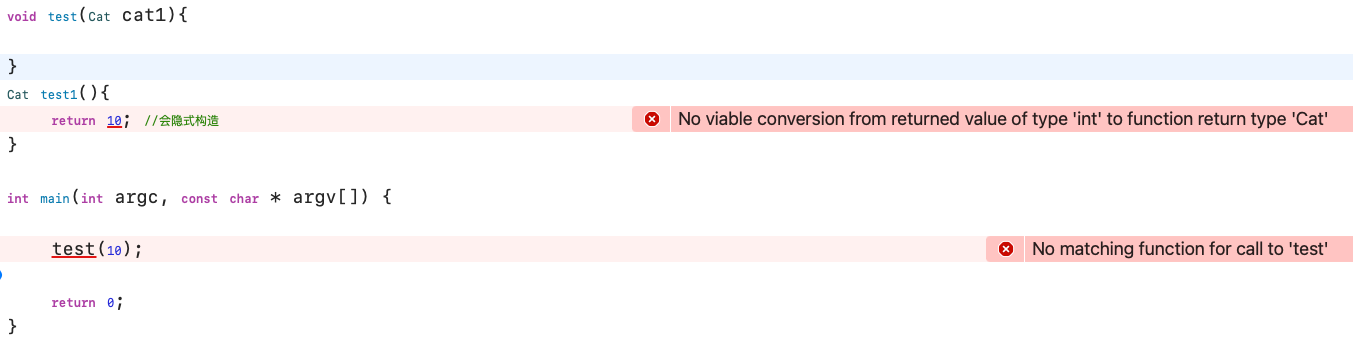

若有收获,就点个赞吧
0 人点赞


