一、排列问题
47. 全排列 II
给定一个可包含重复数字的序列 nums ,按任意顺序 返回所有不重复的全排列。 示例一: 输入:nums = [1,1,2] 输出: [[1,1,2], [1,2,1], [2,1,1]] 示例二: 输入:nums = [1,2,3] 输出:[[1,2,3],[1,3,2],[2,1,3],[2,3,1],[3,1,2],[3,2,1]]
1. 解题思路:
本题在LeetCode的46题中增加了数组中元素可重复这一条件,但要求:返回的结果又不能有重复元素。
首先看看46题的回溯树和回溯代码: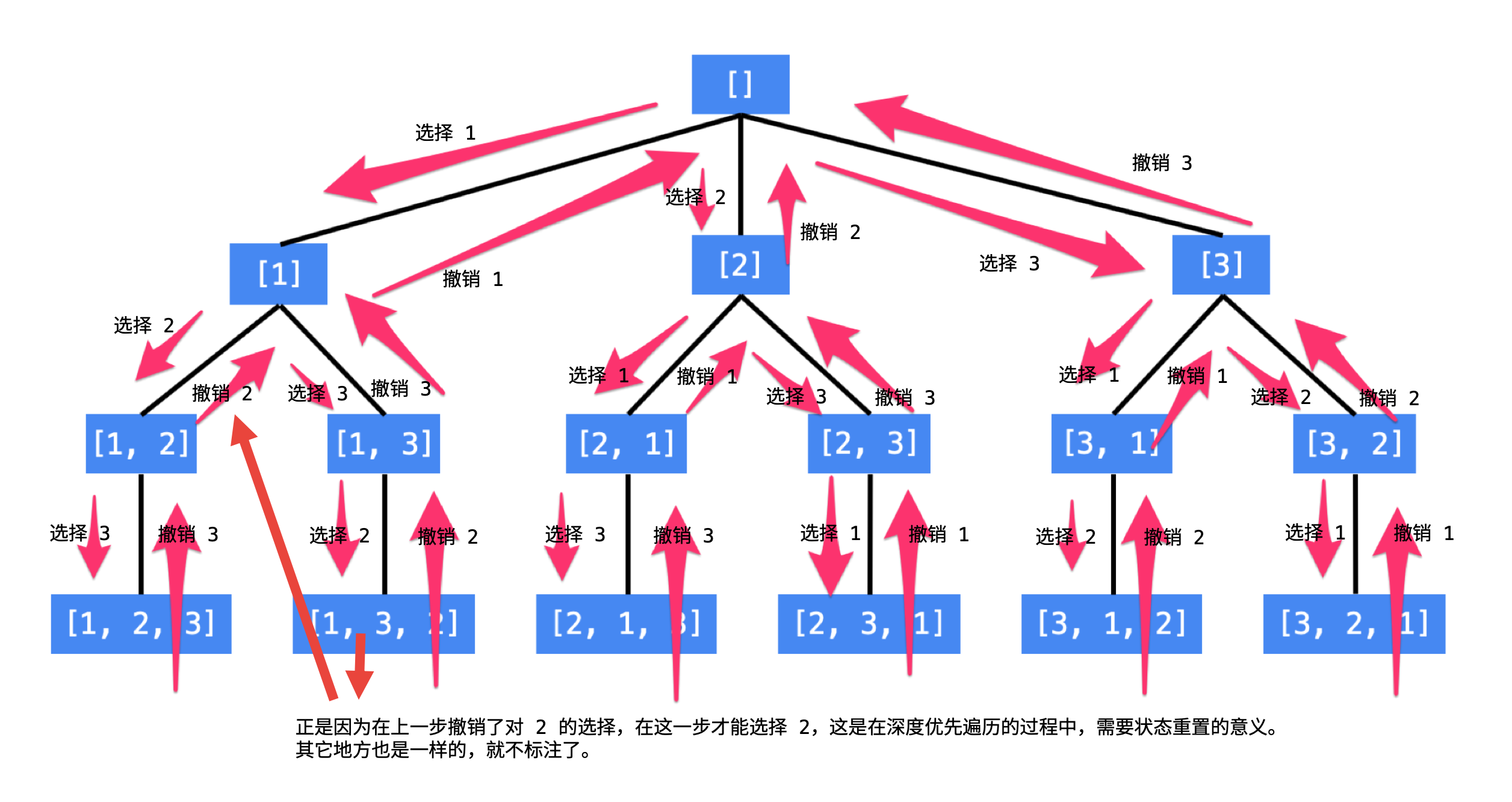
// 路径记录在path中,// 结束条件:nums数组中的元素全都在list中,即两者的size一样public void dfs(int[] nums, LinkedList<Integer> path) {// 递归结束条件if(nums.length == path.size()){res.add(new LinkedList<>(path));return;}// 单次递归操作for(int i = 0; i < nums.length; i++){// 如果nums[i]已经在path中有了,就不能加了,因为全排列元素不能重复if(path.contains(nums[i])){continue;}// if没执行就执行这句path.add(nums[i]);// 添加操作结束,进入下一层继续判断dfs(nums, path);// 当下一层完后,会返回到当前层,那么 path 就可能改变了,得回溯,回到当前层刚开始的模样path.removeLast();}}
我们就可以 在搜索之前就对候选数组排序,一旦发现某个分支搜索下去可能搜索到重复的元素就停止搜索,这样结果集中不会包含重复列表。
假设数组为{1,1,2},画出的回溯树如下图所示: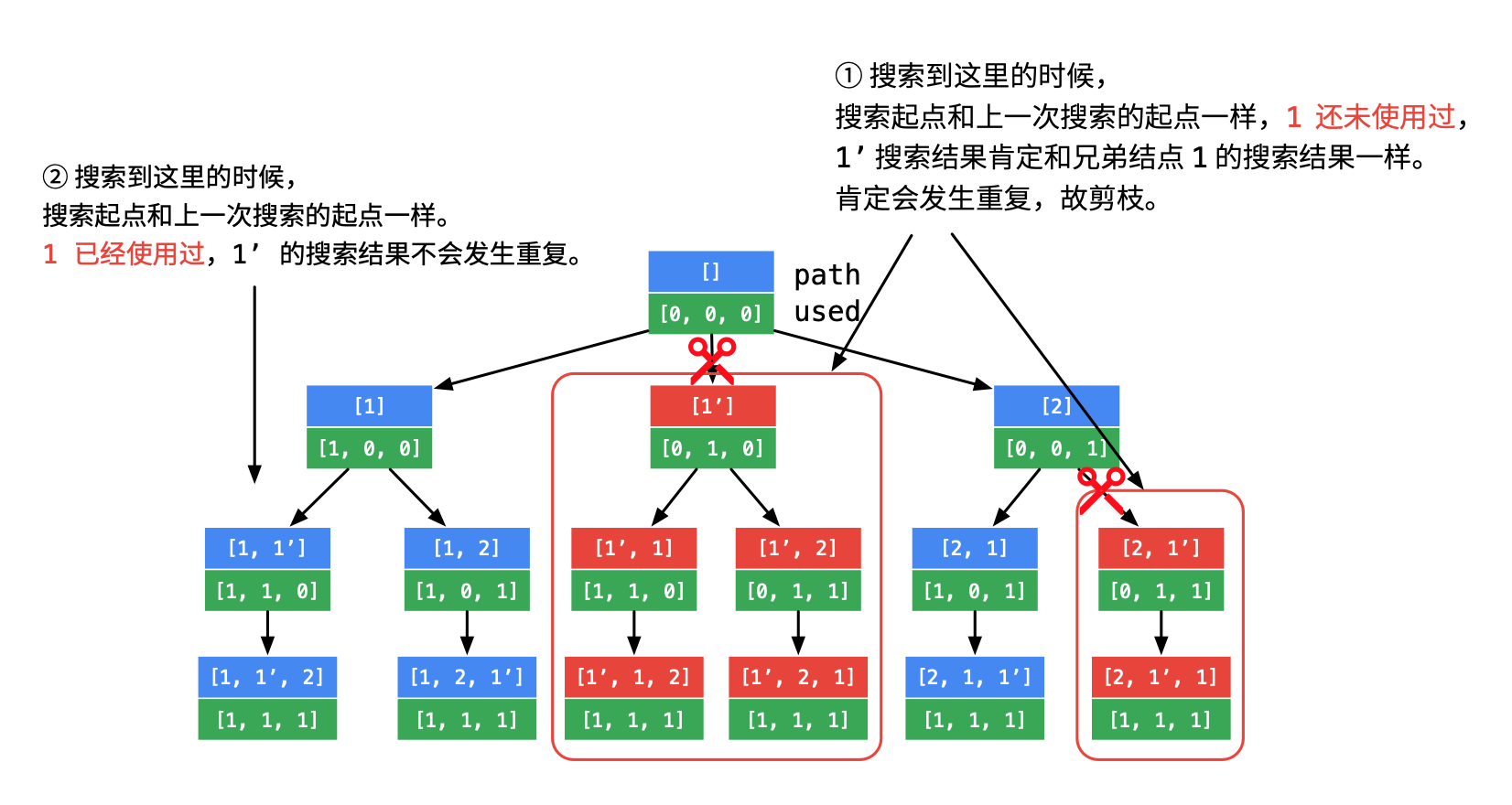
完整代码:
public void dfs(int[] nums, boolean[] used) {// 递归出口if(path.size() == nums.length) {res.add(new ArrayList(path));return;}//for(int i = 0; i < nums.length; i++) {// 数字不能重复,使用了就跳过该数字if(used[i] == true){continue;}// i > 0 是为了保证 nums[i - 1] 有意义//写 used[i - 1]==false 是因为 nums[i - 1] 在深度优先遍历的过程中刚刚被撤销选择if(i > 0 && nums[i] == nums[i - 1] && used[i - 1] == false){continue;}// 选择path.add(nums[i]);used[i] = true;// 下一层递归dfs(nums, used);// 回溯path.removeLast();used[i] = false;}}
二、组合问题
三、子集问题
78. 子集
给定一组不含重复元素的整数数组 nums,返回该数组所有可能的子集(幂集)
输入:nums = [1,2,3] 输出:[[],[1],[2],[1,2],[3],[1,3],[2,3],[1,2,3]]
画出递归树: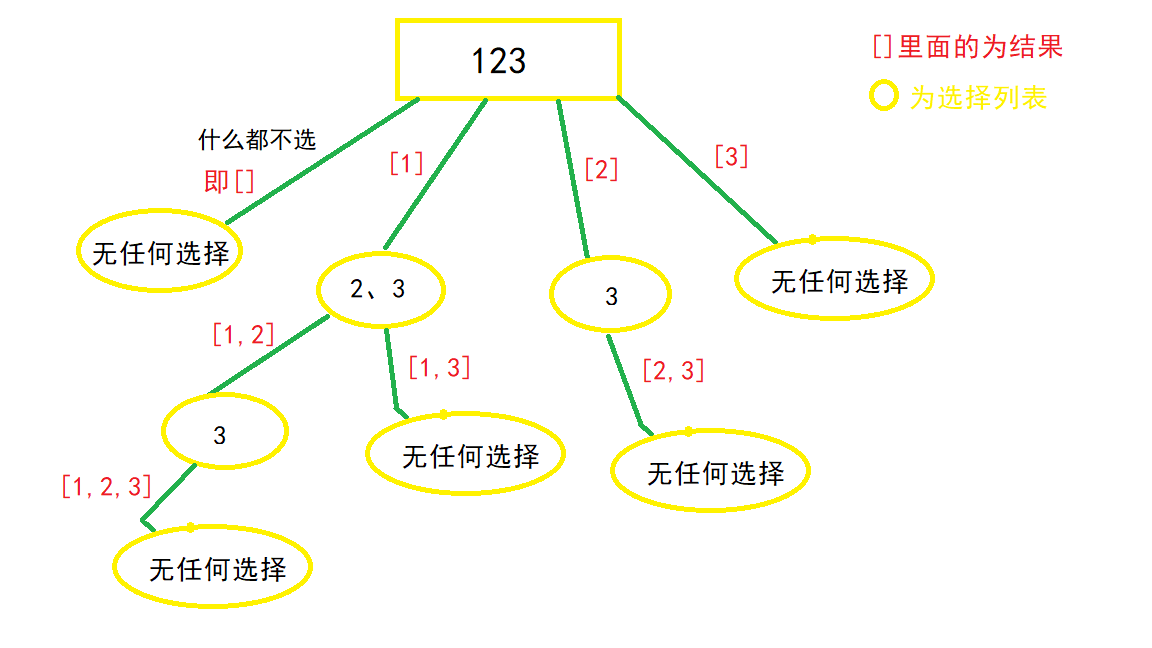
- 使用一个参数start,来标识当前的选择列表的起始位置。也就是标识每一层的状态。
- 此题非常特殊,所有路径都应该加入结果集,所以不存在结束条件。或者说当 start 参数越过数组边界的时候,程序就自己跳过下一层递归了,因此不需要手写结束条件,直接加入结果集。
从递归树中看到,路径没有重复的,也没有不符合条件的,所以不需要剪枝。
class Solution {List<List<Integer>> res = new ArrayList<>();public List<List<Integer>> subsets(int[] nums) {if(nums == null || nums.length == 0) return res;List<Integer> path = new ArrayList<>();backtrack(nums, 0, path);return res;}public void backtrack(int[] nums, int start, List<Integer> path){res.add(new ArrayList<>(path));for(int i = start; i < nums.length; i++) {path.add(nums[i]);backtrack(nums, i + 1, path);path.remove(path.size() - 1);}}}

若有收获,就点个赞吧
0 人点赞


