插入排序
https://www.cnblogs.com/coding-996/p/12275710.html
选择排序
https://www.runoob.com/w3cnote/selection-sort.html
冒泡排序
https://www.yuque.com/huangxianxian/bhbbox/vrp0bn
合并排序
http://atlanta168.top:8081/algorithm_2021/ppt/merge_sort.pdf
建立最大堆
https://blog.csdn.net/qq_42199781/article/details/97134570
基数排序
https://www.yuque.com/huangxianxian/bhbbox/mm1859
union、find 操作及路径压缩
https://www.cnblogs.com/xiaochaofang/p/14737425.html
寻找主元素
https://www.cnblogs.com/xiaochaofang/p/14691136.html
背包问题
https://www.bilibili.com/video/BV1Cf4y1R7Zz
最长公共子序列
https://www.yuque.com/huangxianxian/bhbbox/bgmdm2
狄斯奎诺算法
http://atlanta168.top:8081/algorithm_2021/ppt/Dijkstra.pdf
普利姆算法
https://www.yuque.com/huangxianxian/bhbbox/qd9kyy
多段图
快速排序
http://atlanta168.top:8081/algorithm_2021/ppt/quick_sort.pdf
线性选择
找出第k大的数
选择最后一个数(或一个合理的数),将所有元素划分为三个数组,数组P的元素比这个数大,数组Q的元素等于这个数,数组R的数大于这个数。递归这个步骤,就能找到第k大的数。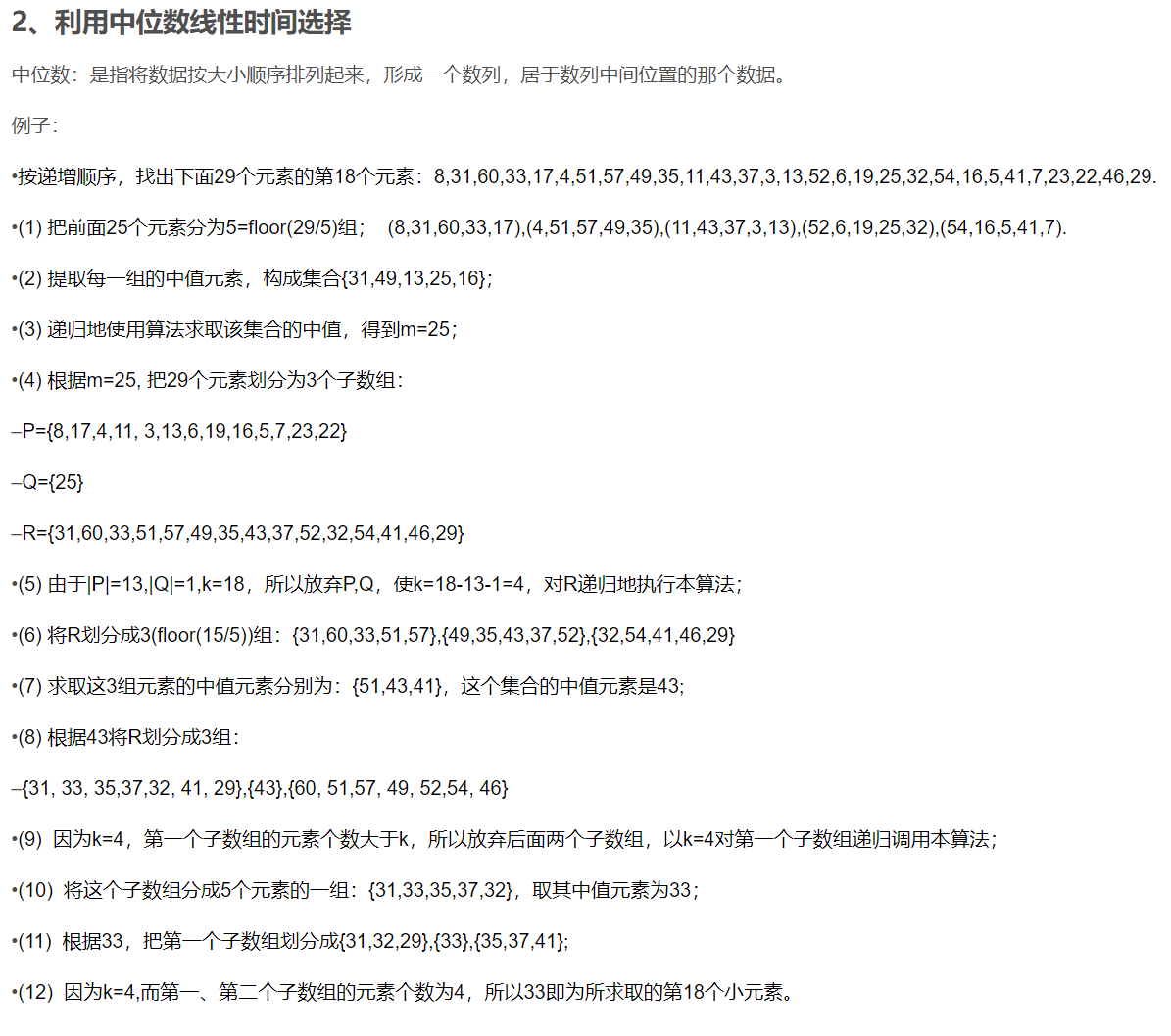

若有收获,就点个赞吧
0 人点赞


