如何评价一个算法的好坏?
一般从以下维度来评估算法的好坏:
- 正确性、可读性、健壮性(对不合理输入的反应能力和处理能力)
- 时间复杂度(time complexity):估算程序指令的执行次数(执行时间)
空间复杂度(space complexity):估算所需要占用的存储空间
复杂度:一个关于输入数据量n的函数
时间复杂度 — 昂贵
- 与代码的结构设计有紧密联系
- 一个顺序结构的代码,时间复杂度是 O(1),即任务与算例个数n 无关
空间复杂度 — 廉价
一般用大O表示法来描述复杂度,它表示的是数据规模n对应的复杂度
- 忽略常数、系数、低阶
- 9 >> O(1)
- 2n+3 >> O(n)
- n^2 +2n+3 >> O(n^2)
- 4n^3 +7n^2 +3n+2 >> O(n^2)
- 注意:大O标识法仅仅是一种粗略的分析模型,是一种估算,能帮助我们短时间内了解一个算法的执行效率
- 对数阶的细节
- 对数阶一般省略底数
- logn = log9 + logn
- 所以 logn、logn 统称为 log n
常见复杂度
| 执行次数 | 复杂度 | 非正式语 |
|---|---|---|
| 12 | O(1) | 常数阶 |
| 2n+3 | O(n) | 线性阶 |
| 4n^2 +2n+3 | O(n^2) | 平方阶 |
| 4logn+25 | O(log n) | 对数阶 |
| 3n+2nlogn+15 | O(nlogn) | nlogn阶 |
| 4n^3 +7n^2 +3n+2 | O(n^3) | 立方阶 |
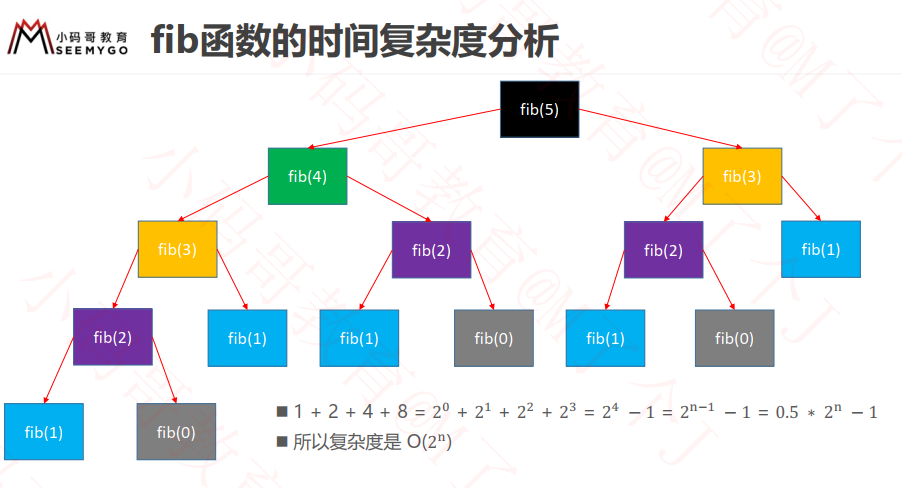
| 2^n | O(2^n) | 指数阶 |
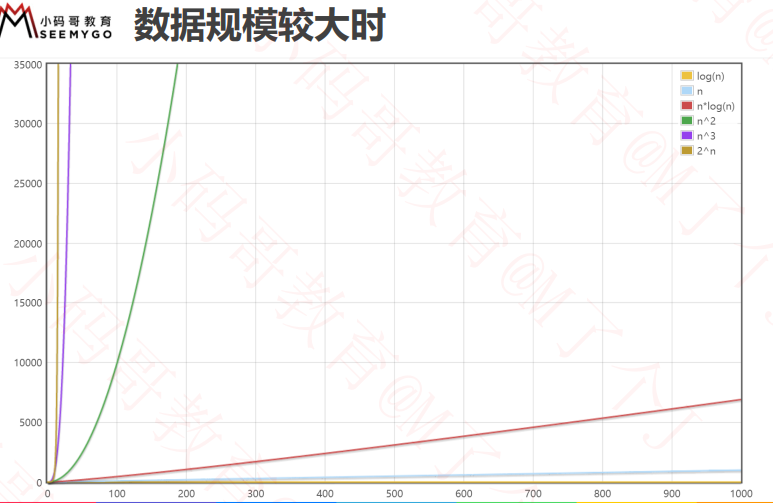
O(1) < O(log n) < O(n) < O(nlogn) < O(n^2) < O(n^3) < O(2^n) < O(n!) < O(n^n)
**
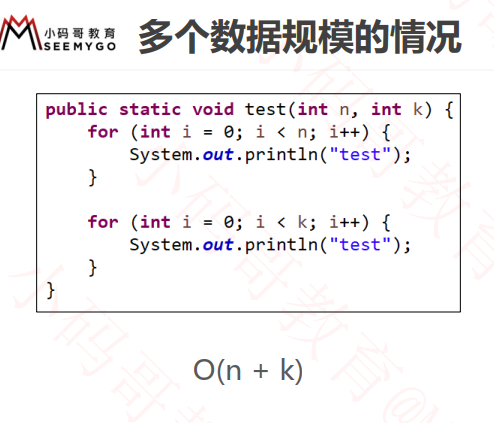
public static void test1(int n) {//1if (n > 10) {System.out.println("n > 10");} else if (n > 5) { // 2System.out.println("n > 5");} else {System.out.println("n <= 5");}// 1 + 4+4+4for (int i = 0; i < 4; i++) {System.out.println("test");}//14 >> O(1)}public static void test2(int n) {// 1+ n +n + n=1+3n >> O(n)for (int i = 0; i < n; i++) {System.out.println("test");}}public static void test3(int n) {// 1+ n +n + n * (1+3n)// 1+2n + n +3n^2// 1+ 3n+ 3n^2 >> O(n^2)for (int i = 0; i < n; i++) {//1+3nfor (int j = 0; j < n; j++) {System.out.println("test");}}}public static void test4(int n) {// 1 + n + n + n * (1+15+15+15)// 1+2n +46n// 1+48n >> O(n)for (int i = 0; i < n; i++) {for (int j = 0; j < 15; j++) {System.out.println("test");}}}//O(log n)public static void test5(int n) {// n = 8 >> 8/2=4 >> 4/2=2 >>2/2= 1 >> 0// 2^3 = 8//a ^ x = n >> x =log a N >> 3 = log 2 8 >> O(log 2 n) >> O(log n)while ((n = n / 2) > 0) {System.out.println("test");}}public static void test6(int n) {// O(log 5 n) >> O(log n)while ((n = n / 5) > 0) {System.out.println("test");}}public static void test7(int n) {// i+=i <==> i=i+i <==> i = i * 2// n=8 i=1 <8 , i = 1*2// n=8 i=2 <8 , i = 2*2// n=8 i=4 <8 , i = 4*2// >> log 2 8// 1 + log n + log n + (log n * (1 + 3n))// 1+ log n + logn + logn +3nlogn// >> O(nlogn)for (int i = 1; i < n; i += i) {// 1 + 3nfor (int j = 0; j < n; j++) {System.out.println("test");}}}//O(n)public static void test10(int n) {int a = 10;int b = 20;int c = a + b;int[] array = new int[n];for (int i = 0; i < array.length; i++) {System.out.println(array[i] + c);}}


若有收获,就点个赞吧
0 人点赞


