基本了解
- 好处: 减少重复代码
- 子类 <—> 派生类
- 父类 <—> 基类
#include <iostream>using namespace std;class Base {public:void run() {cout << "奔跑" << endl;}void eat() {cout << "吃" << endl;}};class Me :public Base {public:void hhdx() {cout << "哈哈大笑" << endl;}};int main() {Me me;me.eat();me.hhdx();me.run();}
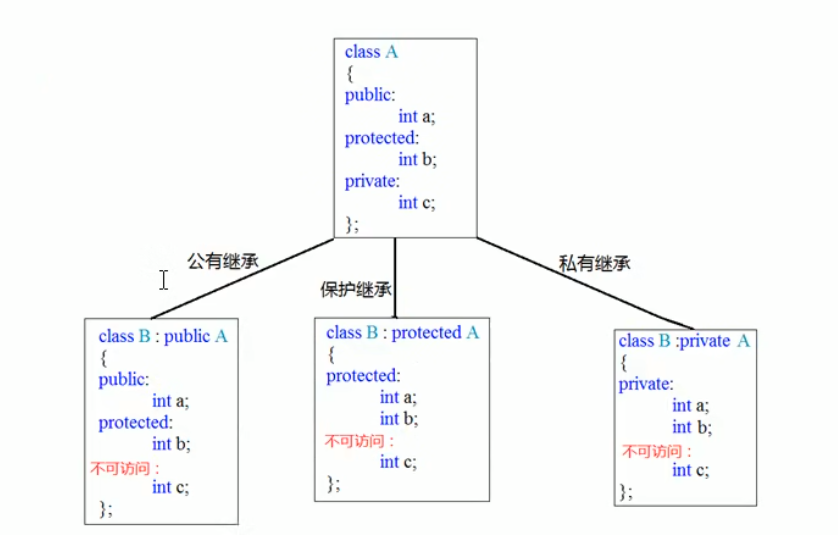
继承方式
调用父类成员
class Fther{public:int money = 100;void run(){cout << "基类的方法:run"};}class Son:public Fther{public:int money = 200;void run(){cout << "派生类的方法:run"}}int main(){Son s;//参数s.money; //本类的参数s.Fther:money; //父类的参数s.run(); //调用本类的方法s.Fther::run(); //调用父类的方法}
多继承
class Fther1{public:int money1 = 100;}class Fther2{public:int money2 = 100;}class Son:public Fther1,public Fther2{public:int money3 = 200;}int main(){Son s;s.money1;s.money2;s.money3;}
虚继承
- Base中的成员在Son中创建 , 然后Son继承的两个虚基类 的成员指向Son中成员的地址 ```cpp class Base{ public: int mag; };
//虚继承 class Fther1:virtual public Base{}; class Fther2:virtual public Base{};
class Son:public Fther1,public Fther2{}
int main(){ Son s;
s.age;
} ```

若有收获,就点个赞吧
0 人点赞


