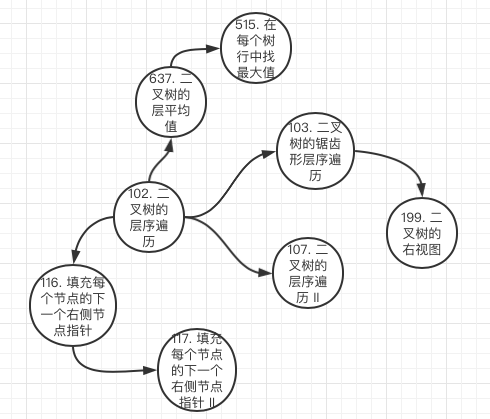
102. 二叉树的层序遍历
class Solution {public List<List<Integer>> levelOrder(TreeNode root) {List<List<Integer>> res = new ArrayList<>();Queue<TreeNode> q = new LinkedList<>();if(root != null) q.offer(root);while(!q.isEmpty()){List<Integer> path = new ArrayList<>();int qsize = q.size();while(qsize != 0){TreeNode node = q.poll();path.add(node.val);if(node.left != null) q.offer(node.left);if(node.right != null) q.offer(node.right);qsize--;}res.add(path);}return res;}}
107. 二叉树的层序遍历 II
- 使用 LinkedList
res.addFirst(path);
class Solution {public List<List<Integer>> levelOrderBottom(TreeNode root) {LinkedList<List<Integer>> res = new LinkedList<>();Queue<TreeNode> q = new LinkedList<>();if(root != null) q.offer(root);while(!q.isEmpty()){List<Integer> path = new ArrayList<>();int qsize = q.size();while(qsize != 0){TreeNode node = q.poll();path.add(node.val);if(node.left != null) q.offer(node.left);if(node.right != null) q.offer(node.right);qsize--;}res.addFirst(path);}return res;}}
103. 二叉树的锯齿形层序遍历
在层序遍历的基础上,偶数层Collections.reverse(path)即可
class Solution {
  public List<List<Integer>> zigzagLevelOrder(TreeNode root) {
      List<List<Integer>> res = new ArrayList<>();
      Queue<TreeNode> q = new LinkedList<>();
      if(root != null) q.offer(root);
      int level = 1;
      while(!q.isEmpty()){
          List<Integer> path = new ArrayList<>();
          int qsize = q.size();
          while(qsize != 0){
              TreeNode node = q.poll();
              path.add(node.val);
              if(node.left != null) q.offer(node.left);
              if(node.right != null) q.offer(node.right);
              qsize--;
          }
         if(level % 2 == 0) Collections.reverse(path);
          res.add(path);
          level++;
      }
      return res;
  }
}
199. 二叉树的右视图
class Solution {
  public List<Integer> rightSideView(TreeNode root) {
      List<Integer> res = new ArrayList<>();
      Queue<TreeNode> q = new LinkedList<>();
      if(root != null) q.offer(root);
      while(!q.isEmpty()){
          int qsize = q.size();
          while(qsize != 0){
              TreeNode node = q.poll();
              if(qsize == 1) res.add(node.val);
              if(node.left != null) q.offer(node.left);
              if(node.right != null) q.offer(node.right);
              qsize--;
          }
      }
      return res;
  }
}
637. 二叉树的层平均值
class Solution {
  public List<Double> averageOfLevels(TreeNode root) {
      List<Double> res = new ArrayList<>();
      Queue<TreeNode> q = new LinkedList<>();
      if(root != null) q.offer(root);
      while(!q.isEmpty()){
          double sum = 0;
          int qsize = q.size(), num = qsize;
          while(qsize > 0){
              TreeNode node = q.poll();
              sum += node.val;
              if(node.left != null) q.offer(node.left);
              if(node.right != null) q.offer(node.right);
              qsize--;
          }
          res.add(sum / num);
      }
      return res;
  }
}
515. 在每个树行中找最大值
class Solution {
  public List<Integer> largestValues(TreeNode root) {
      List<Integer> res = new ArrayList<>();
      Queue<TreeNode> q = new LinkedList<>();
      if(root != null) q.offer(root);
      while(!q.isEmpty()){
          int max = Integer.MIN_VALUE;
          int qsize = q.size(), num = qsize;
          while(qsize > 0){
              TreeNode node = q.poll();
              max = Math.max(max, node.val);
              if(node.left != null) q.offer(node.left);
              if(node.right != null) q.offer(node.right);
              qsize--;
          }
          res.add(max);
      }
      return res;
  }
}
116. 填充每个节点的下一个右侧节点指针
这题可以用BFS来做,和上面的题目,一个做法,空间O(n),题目要求O1空间
BFSclass Solution { public Node connect(Node root) { Queue<Node> q = new LinkedList<>(); if(root != null) q.offer(root); while(!q.isEmpty()){ int qsize = q.size(); while(qsize > 0){ Node node = q.poll(); if(qsize == 1) node.next = null; else node.next = q.peek(); if(node.left != null) q.offer(node.left); if(node.right != null) q.offer(node.right); qsize--; } } return root; } }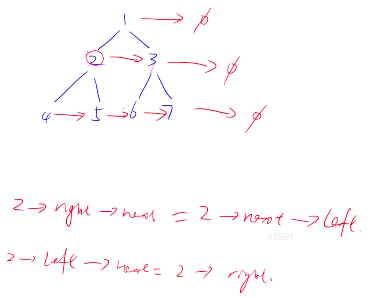
class Solution {
  public Node connect(Node root) {
      if(root == null) return root;
      Node leftroot = root;
      //完美二叉树,有left证明就有下一层,要把下一层的指针的next都更新一下
      //1的left为2,证明有下一层,把下一层的next都更新
      while(leftroot.left != null){
          //p为每层最左侧的点【1,2,4.。。。
          for(Node p = leftroot; p != null; p = p.next){
              //p为2,将4的next指向5
              p.left.next = p.right;
              if(p.next != null){
                  //p为2,将5的next指向3的left就是6,首先判断3在不在
                  p.right.next = p.next.left;
              }
          }
          //更新到下一层,1结束到2,2结束到4
          leftroot = leftroot.left;
      }
      return root;
  }
}
117. 填充每个节点的下一个右侧节点指针 II
这题就不是完美二叉树了
- 上一题用队列BFS也可以通过这一题

若有收获,就点个赞吧
0 人点赞


