二叉树概念
- 树中每个节点最多只能有两个子节点
- 在JavaScript中通常用Object来模拟二叉树
const binaryTree = {val: 1,left: {val: 2,left: null,right: null},right: {val: 3,left: null,right: null}}
先序遍历(中左右)
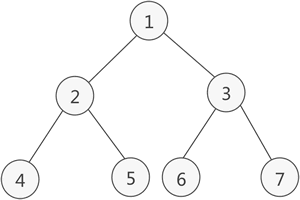
- 访问根节点
- 对根节点的左子树进行先序遍历
- 对根节点的右子树进行先序遍历
const binaryTree = {
    val: 1,
    left: {
        val: 2,
        left: {
            val: 4,
            left: null,
            right: null
        },
        right: {
            val: 5,
            left: null,
            right: null
        }
    },
    right: {
        val: 3,
        left: {
            val: 6,
            left: null,
            right: null
        },
        right: {
            val: 7,
            left: null,
            right: null
        }
    }
}

const preoder = root => {
    /** 若根节点为空 */
    if (!root) return
    console.log(root.val)
    preoder(root.left)
    preoder(root.right)
}
preoder(binaryTree)
输出结果为
1
2
4
5
3
6
7
中序遍历(左中右)
- 对根节点的左子树进行中序遍历
- 访问根节点
- 对根节点的右子树进行中序遍历
const inorder = root => {
    /** 若根节点为空 */
    if (!root) return
    inorder(root.left)
    console.log(root.val);
    inorder(root.right)
}

inorder(binaryTree)
输出结果为
4
2
5
1
6
3
7
后序遍历(左右中)
- 对根节点的左子树进行后序遍历
- 对根节点的右子树进行后续遍历
- 访问根节点 ```javascript const postorder = root => { /* 若根节点为空 / if (!root) return postorder(root.left) postorder(root.right) console.log(root.val); }
postorder(binaryTree)
```
输出结果为
4
5
2
6
7
3
1

若有收获,就点个赞吧
0 人点赞


