- 206.反转链表">206.反转链表
- 92.反转链表 II">92.反转链表 II
- 21.合并两个有序链表">21.合并两个有序链表
- 203. 移除链表元素">203. 移除链表元素
- 2. 两数相加">2. 两数相加
- 160. 相交链表">160. 相交链表
- 86. 分隔链表">86. 分隔链表
- 234. 回文链表">234. 回文链表
- 138. 复制带随机指针的链表">138. 复制带随机指针的链表
- 25. K 个一组翻转链表">25. K 个一组翻转链表
- 24. 两两交换链表中的节点">24. 两两交换链表中的节点
- 237. 删除链表中的节点">237. 删除链表中的节点
- 141. 环形链表">141. 环形链表
- 21. 合并两个有序链表">21. 合并两个有序链表
- 23. 合并K个升序链表">23. 合并K个升序链表
- 146. LRU 缓存机制">146. LRU 缓存机制
206.反转链表
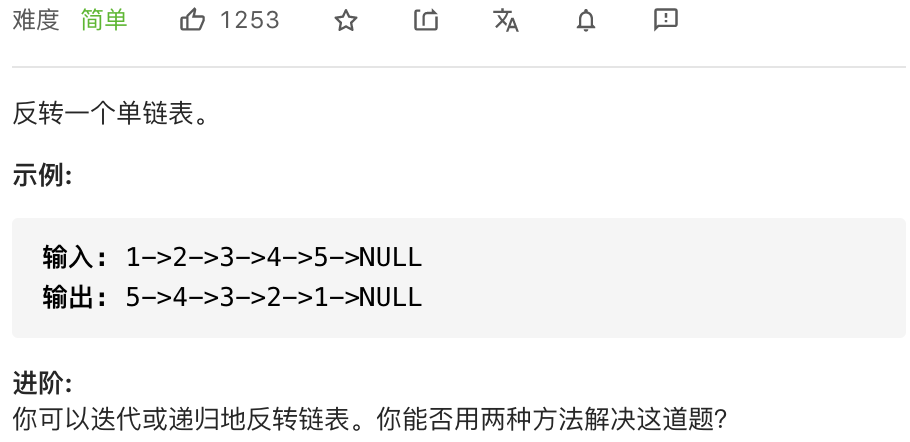
方法1:使用迭代法,前后两个指针开始遍历
class Solution {public ListNode reverseList(ListNode head) {if (head == null) return head;ListNode newHead = null;ListNode cur = head;while (cur != null){ListNode next = cur.next;cur.next = newHead;newHead = cur;cur = next;}return behind;}}
方法2:递归法,将链表分为两部分,第一部分是一个结点,第二部分就是剩下的链表,对第二部分使用递归方法,最后注意递归的终止条件即可。
class Solution {public ListNode reverseList(ListNode head) {if (head == null || head.next == null) return head;ListNode tail = head.next;ListNode node = reverseList(head.next);tail.next = head;head.next = null;return node;}}
方法3:头插法
//头插法public ListNode reverseList(ListNode head) {ListNode dummyNode = new ListNode(-1);while (head != null) {ListNode next = head.next;head.next = dummyNode.next;dummyNode.next = head;head = next;}return dummyNode.next;}
92.反转链表 II
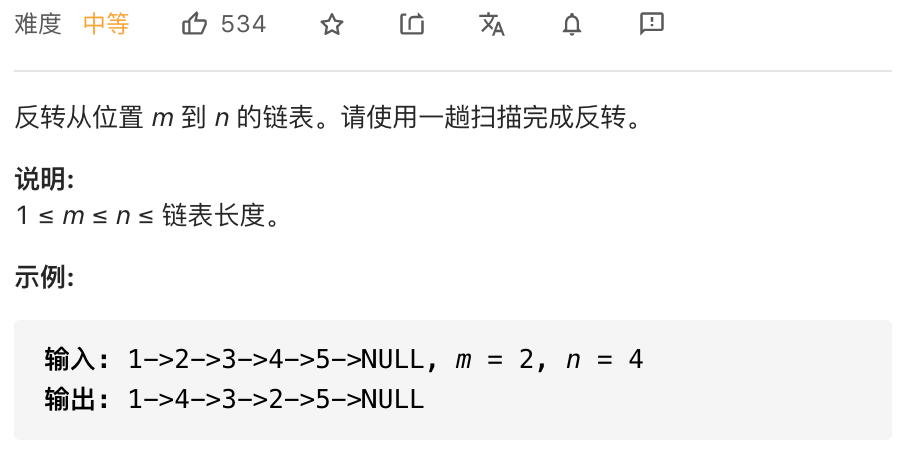
这道题跟206.反转链表题差不多,只不过在反转前首先要找到反转的起点
- 然后反转一部分链表
- 最后把头和尾连接起来就行。
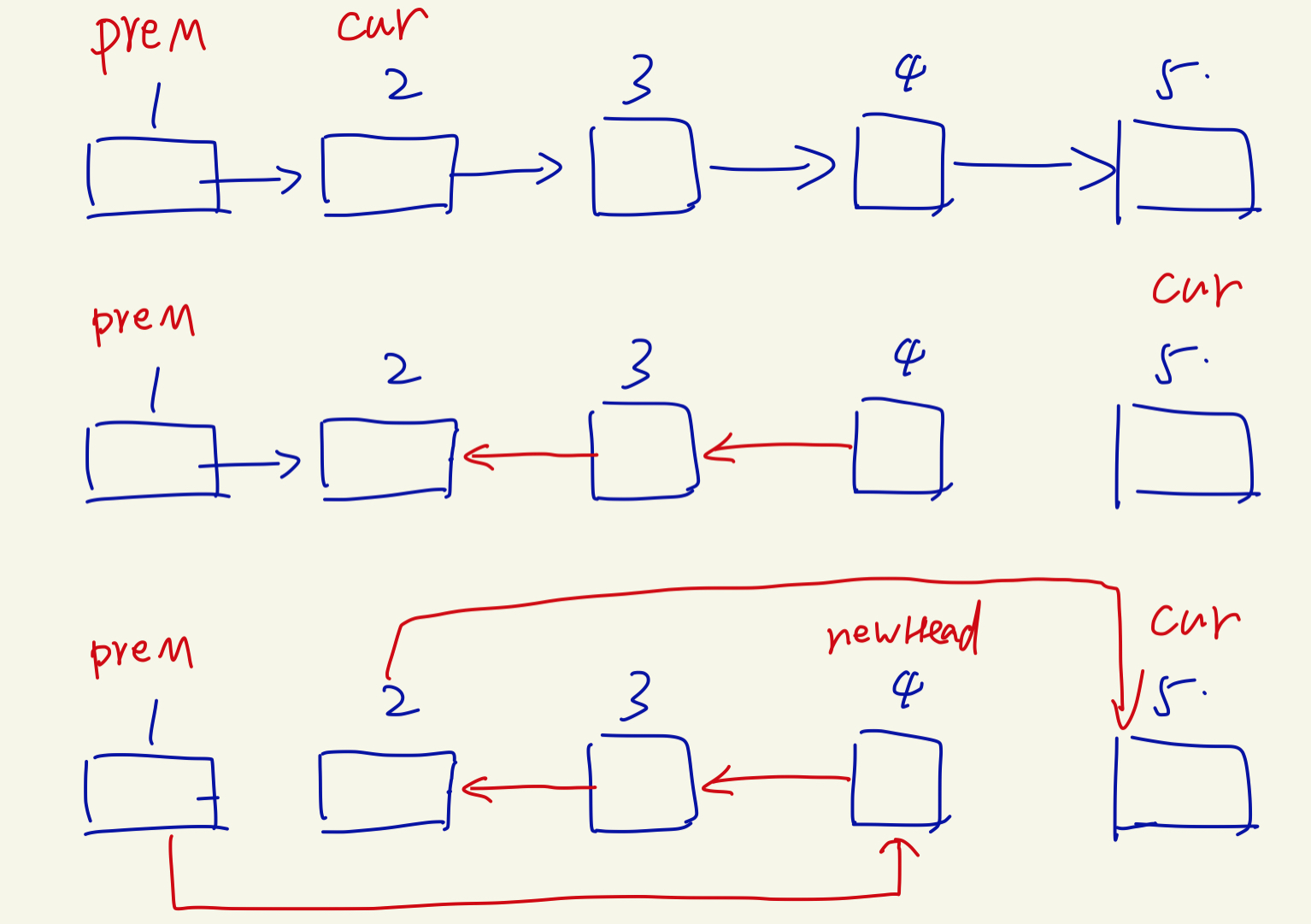
//Date:2020-10-05 15:25:36//执行耗时:0 ms,击败了100.00% 的Java用户public ListNode reverseBetween(ListNode head, int m, int n) {ListNode dummy = new ListNode(-1);dummy.next = head;ListNode preM = dummy;for (int i = 0; i < m - 1; i++) {preM = preM.next;}//反转起点ListNode cur = preM.next;ListNode newHead = null;for (int i = m; i <= n; i++) {ListNode next = cur.next;cur.next = newHead;newHead = cur;cur = next;}//尾指针拼接preM.next.next = cur;//头拼接preM.next = newHead;return dummy.next;}
21.合并两个有序链表
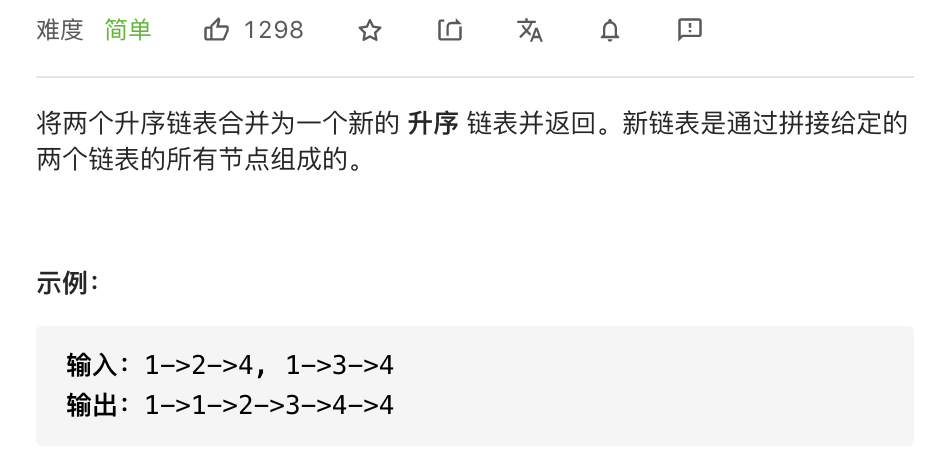
203. 移除链表元素

这道题确实简单,两个指针依次遍历即可。主要关注
虚拟头结点的运用
class Solution {
  public ListNode removeElements(ListNode head, int val) {
      ListNode dummy = new ListNode(-1);
      dummy.next = head;
      ListNode behind = dummy, cur = head;
      while (cur != null) {
          if (cur.val == val){
              behind.next = cur.next;
              cur.next = null;
              cur = behind.next;
          } else {
              behind = cur;
              cur = cur.next;
          }
      }
      return dummy.next;
  }
}
2. 两数相加
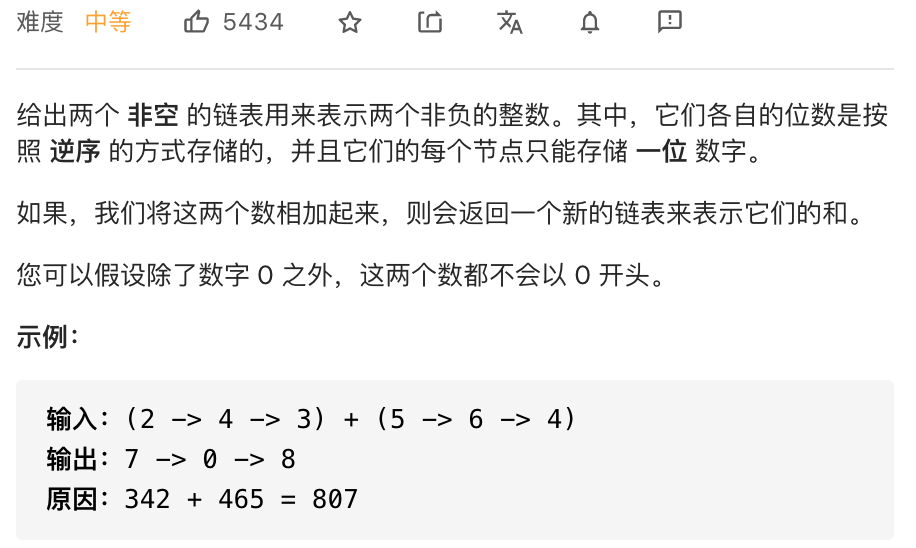
思路:一条链表一个指针,依次计算指针的和,每次计算生成一个新结点,注意一下进位,当两个指针都为null时说明相加过程结束,但是还要注意最后一次可能有进位。class Solution { public ListNode addTwoNumbers(ListNode l1, ListNode l2) { ListNode res = new ListNode(-1); ListNode cur = res, i = l1, j = l2; int append = 0; while (i != null || j != null) { int v1 = i != null ? i.val : 0; int v2 = j != null ? j.val : 0; int val = (v1 + v2 + append) % 10; append = (v1 + v2 + append) / 10; cur.next = new ListNode(val); cur = cur.next; i = i != null ? i.next : null; j = j != null ? j.next : null; } if (append != 0) { cur.next = new ListNode(append); } return res.next; } }160. 相交链表
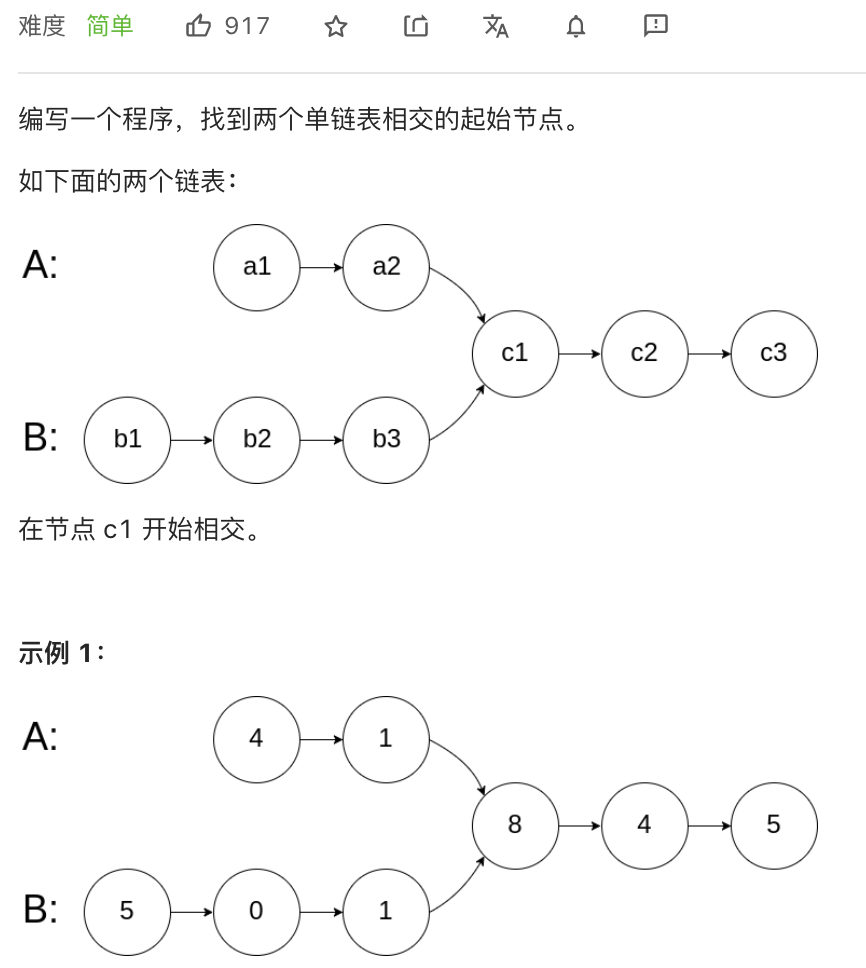
在两个链表的头结点分别设定一个移动指针,要想让它们在交汇处相遇,只能让它们走过的路程一样,所以在走完自己的路后,再走一下对方走过的路,后台灵光一现,写下来代码。哈哈public class Solution { public ListNode getIntersectionNode(ListNode headA, ListNode headB) { ListNode l1 = headA, l2 = headB; while (l1 != l2) { l1 = l1 != null ? l1.next : headB; l2 = l2 != null ? l2.next : headA; } return l1; } }86. 分隔链表
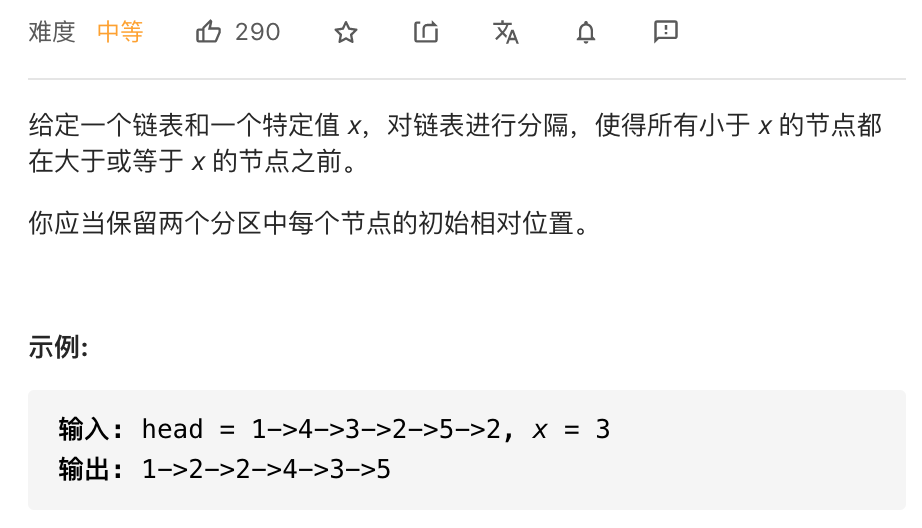
思路:新建两个dummy节点,还有两个指向尾结点的指针,再来个遍历指针遍历输入链表,如果小于x就挂到dummy1下,否则挂到dummy2下。。。感觉这题没有中等难度吧。。class Solution { public ListNode partition(ListNode head, int x) { ListNode dummy1 = new ListNode(-1), dummy2 = new ListNode(-2); ListNode cur = head, l1 = dummy1, l2 = dummy2; while (cur != null) { if (cur.val < x) { l1.next = cur; l1 = l1.next; } else { l2.next = cur; l2 = l2.next; } cur = cur.next; } l1.next = dummy2.next; l2.next = null; return dummy1.next; } }234. 回文链表
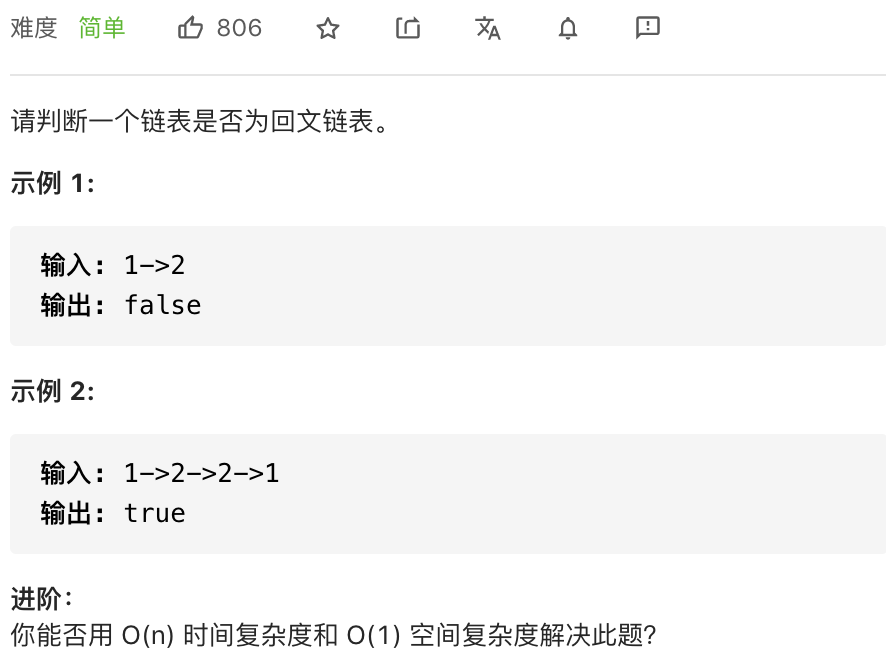
这道题虽说是简单题,但是感觉不是那么简单,主要有一个空间复杂度的要求。
如果没有空间复杂度要求可以新建一个反转链表,然后两个链表依次对比就ok了。
在空间复杂度的条件下的方案可以如下:快慢指针找到中间节点(中间节点:下半链表的前一个节点),这个代码眼睛闭起来也要默写出来😂。
- 反转后面一段链表(这个也是必须会的)
两个链表依次比较
class Solution {
  public boolean isPalindrome(ListNode head) {
      if (head == null || head.next == null) return true;
      ListNode l1 = head;
      ListNode mid = findMidNode(head);
      ListNode l2 = reverse(mid.next);

      while (l2 != null) {
          if (l1.val != l2.val) return false;
          l1 = l1.next;
          l2 = l2.next;
      }
      return true;
  }
  // 1->2->3  return 2
  // 1->2->3->4 return 2
  private ListNode findMidNode(ListNode head) {
      ListNode slow = head, fast = head;
      while (fast.next != null && fast.next.next != null) {
          fast = fast.next.next;
          slow = slow.next;
      }
      return slow;
  }
  private ListNode reverse(ListNode node) {
      ListNode pre = null;
      while (node != null) {
          ListNode next = node.next;
          node.next = pre;
          pre = node;
          node = next;
      }
      return pre;
  }
}
138. 复制带随机指针的链表
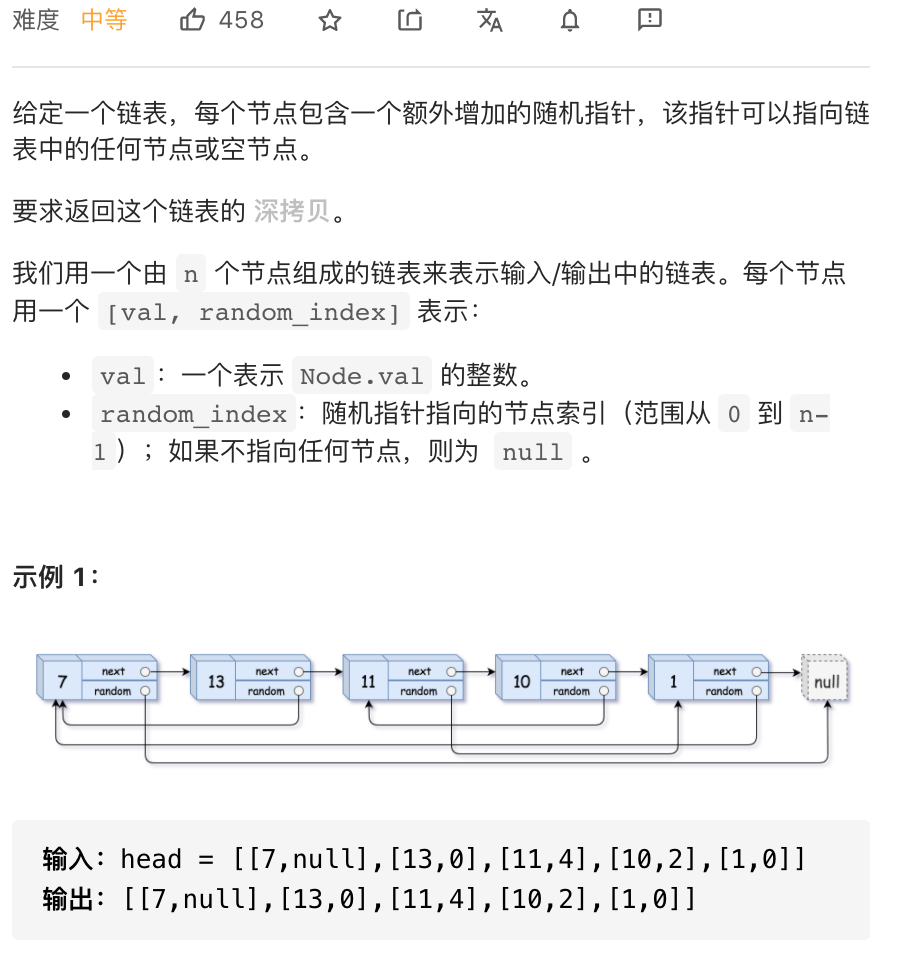
这道题的主要难点是在如何复制random指针,在对原链表进行遍历-复制时,random指针指向的节点很随意,在复制的链表中无法定位到,所以要想个办法在任意时候根据原结点都能找到其复制节点,自然想到用map,其实map的本质也就是一个指针的功能,即k指向v。public Node copyRandomList(Node head) { if (head == null) return null; Node cur = head; Map<Node, Node> map = new HashMap<>(); while (cur != null) { map.put(cur, new Node(cur.val)); cur = cur.next; } cur = head; while (cur != null) { map.get(cur).next = map.get(cur.next); map.get(cur).random = map.get(cur.random); cur = cur.next; } return map.get(head); }如果要求空间复杂度是O(1)呢?有点难了,但是上面说了本质上,map本质就是多了一个指针而已。
class Solution {
  public Node copyRandomList(Node head) {
      if (head == null) return null;
      //3 step:拷贝、调整指针、解绑
      Node  cur = head;
      while (cur != null) {
          Node newNode = new Node(cur.val);
          newNode.next = cur.next;
          cur.next = newNode;
          cur = newNode.next;
      }

      cur = head;
      while (cur != null) {
          Node random = cur.random;
          if (random == null){
              cur.next.random = null;
          } else {
              cur.next.random = random.next;
          }
          cur = cur.next.next;
      }
      cur = head;
      Node newHead = head.next;
      while (cur != null && cur.next != null) {
          Node next = cur.next;
          cur.next = next.next;
          cur = next;
      }
      return newHead;
  }
}
25. K 个一组翻转链表
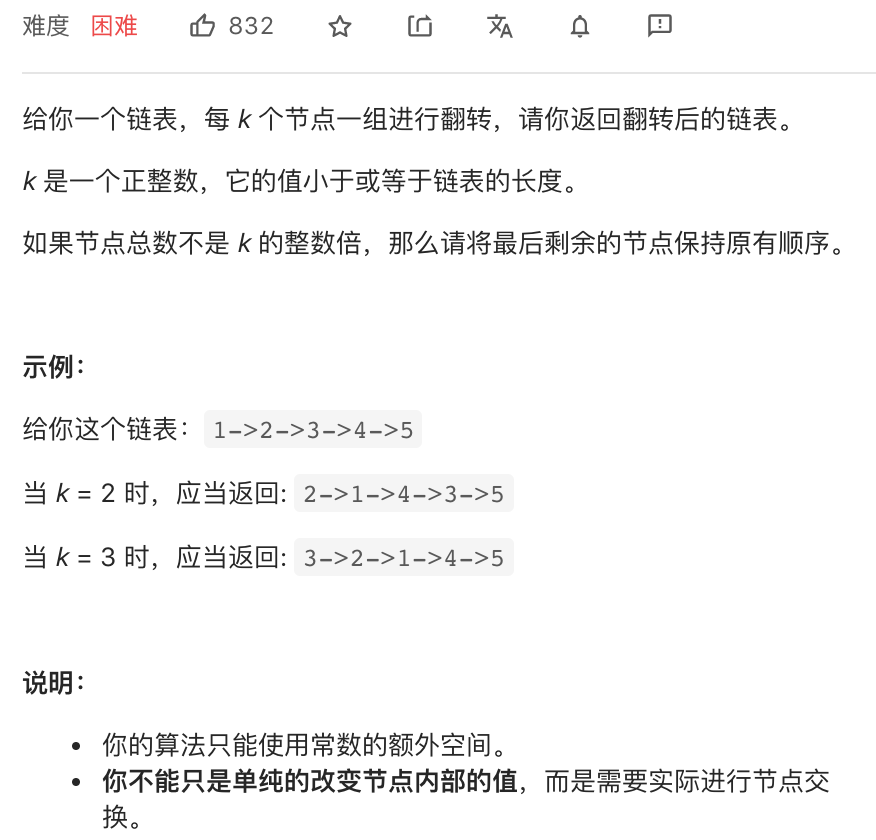
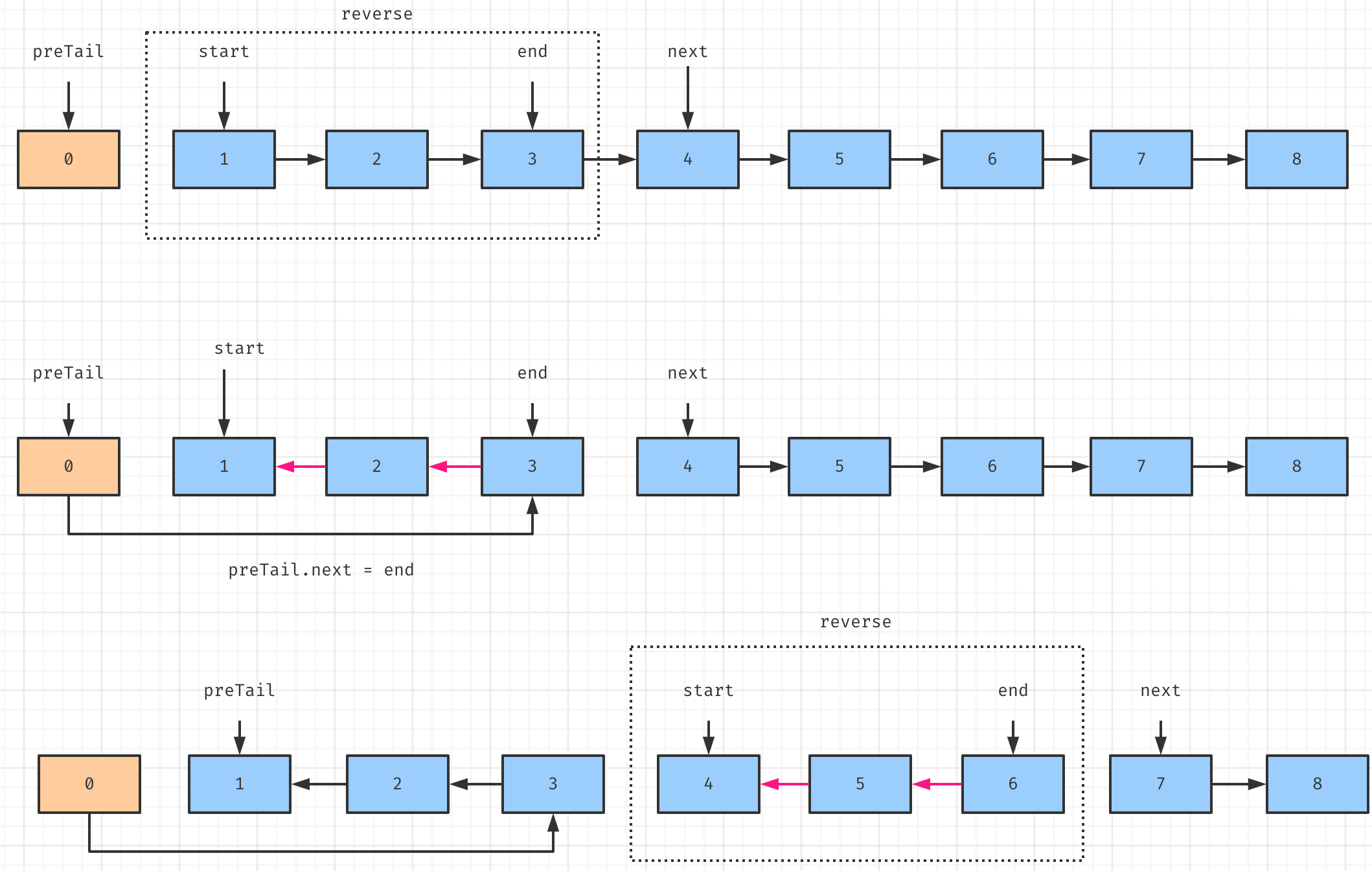
这道题其实思路并不难,主要是要考虑细节,指针如何分配,最后一段的节点个数小于k时如何处理。观察下图:
设定一个dummy节点作为上一端的尾结点,需要反转链表的起始节点start,尾结点end,下一段的起始节点next。大概分为3步确定起始end节点,如果不为null时反转,否则可以结束了。
- 反转start和end之间的链表
调整preTail指针,start指针状态。
class Solution {
  public ListNode reverseKGroup(ListNode head, int k) {
      if (head == null || k == 1) return head;
      ListNode dummy = new ListNode(-1);
      ListNode preTail = dummy, start = head;
      while (start != null) {
          ListNode end = start, next = null;
          for (int i = 0; i < k - 1 && end != null; i++) {
              end = end.next;
          }
          if (end == null) {
              //最后一段结点数没有k个,不需要反转了,结束。
              preTail.next = start;
              return dummy.next;
          }
          next = end.next;//准备下一段的指针
          end.next = null;//为了反转设置null
          reverse(start);
          preTail.next = end;//上一段的尾结点和当前头结点连接
          preTail = start;//调整尾结点
          start = next;//下一段迭代
      }
      return dummy.next;

  }
  private void reverse(ListNode start) {
      ListNode pre = null, cur = start;
      while (cur != null) {
          ListNode next = cur.next;
          cur.next = pre;
          pre = cur;
          cur = next;
      }
  }
}
其实每反转一段链表后,可以把当前链表的尾结点和下一段链表先连接起来,这样保证一次循环后链表是完整的,返回时就可以直接返回了。
class Solution {
  public ListNode reverseKGroup(ListNode head, int k) {
      if (head == null || k == 1) return head;
      ListNode dummy = new ListNode(-1);
      dummy.next = head;// +
      ListNode preTail = dummy, start = head;
      while (start != null) {
          ListNode end = start, next = null;
          for (int i = 0; i < k - 1 && end != null; i++) {
              end = end.next;
          }
          if (end == null) break ;

          next = end.next;
          end.next = null;
          reverse(start);
          start.next = next;//增加的这一行,这样12行就可以直接返回了。
          preTail.next = end;
          preTail = start;
          start = next;
      }
      return dummy.next;

  }
  private void reverse(ListNode start) {
      ListNode pre = null, cur = start;
      while (cur != null) {
          ListNode next = cur.next;
          cur.next = pre;
          pre = cur;
          cur = next;
      }
  }
}
24. 两两交换链表中的节点
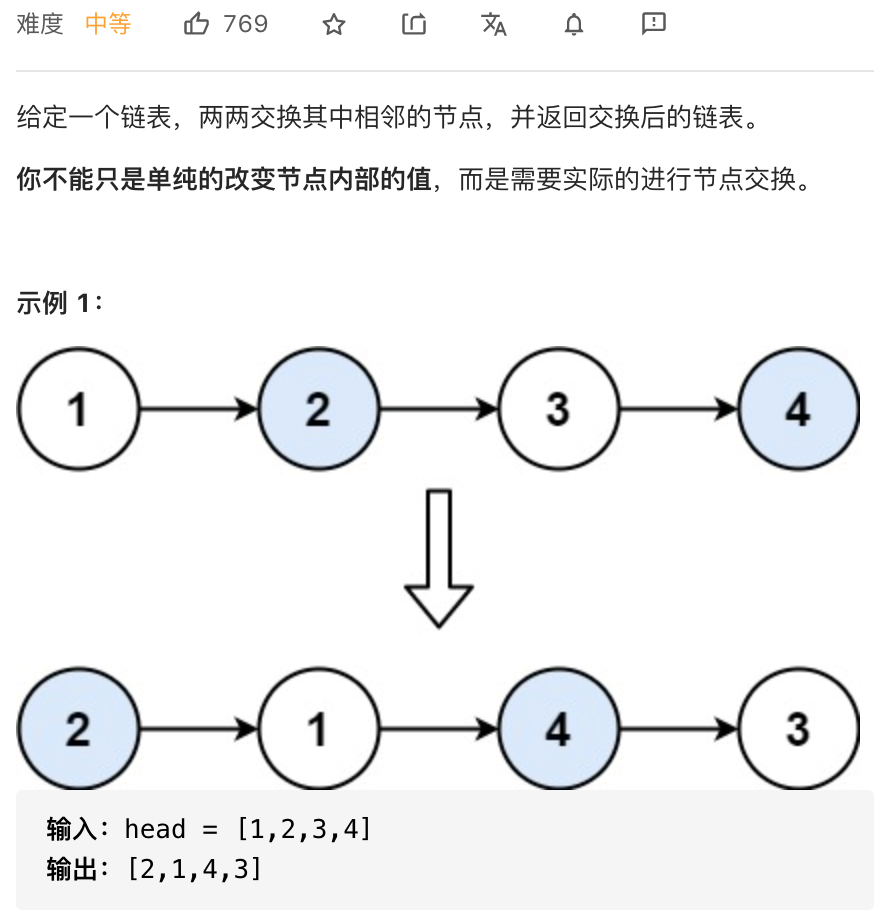
如果理解25题的思想,这道题就是切菜了,看图就行咯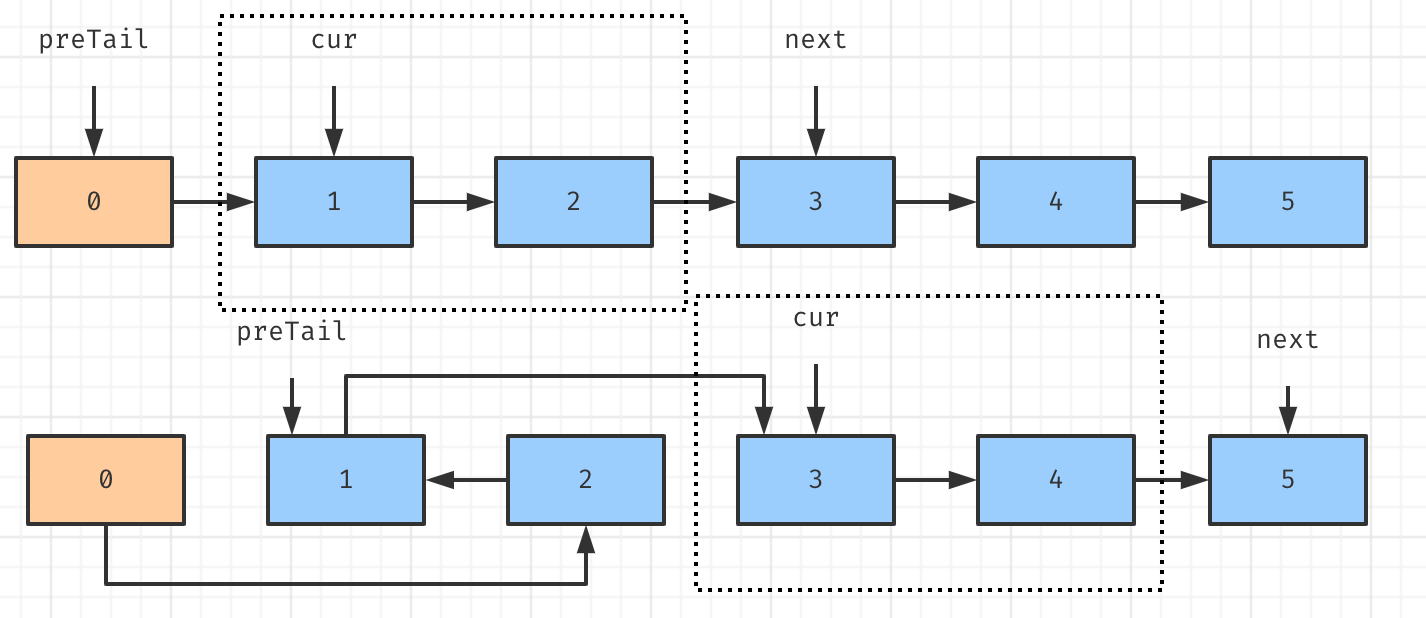
class Solution {
  public ListNode swapPairs(ListNode head) {
      if (head == null || head.next == null) return head;
      ListNode dummy = new ListNode(-1);
      ListNode preTail = dummy, cur = head;
      preTail.next = head;
      while (cur != null && cur.next != null) {
          preTail.next = cur.next;
          ListNode next = cur.next.next;
          cur.next.next = cur;
          cur.next = next;//这个指针补上,最后一端如果是单个节点皆可以直接返回了
          preTail = cur;
          cur = next;
      }
      return dummy.next;
  }
}
237. 删除链表中的节点
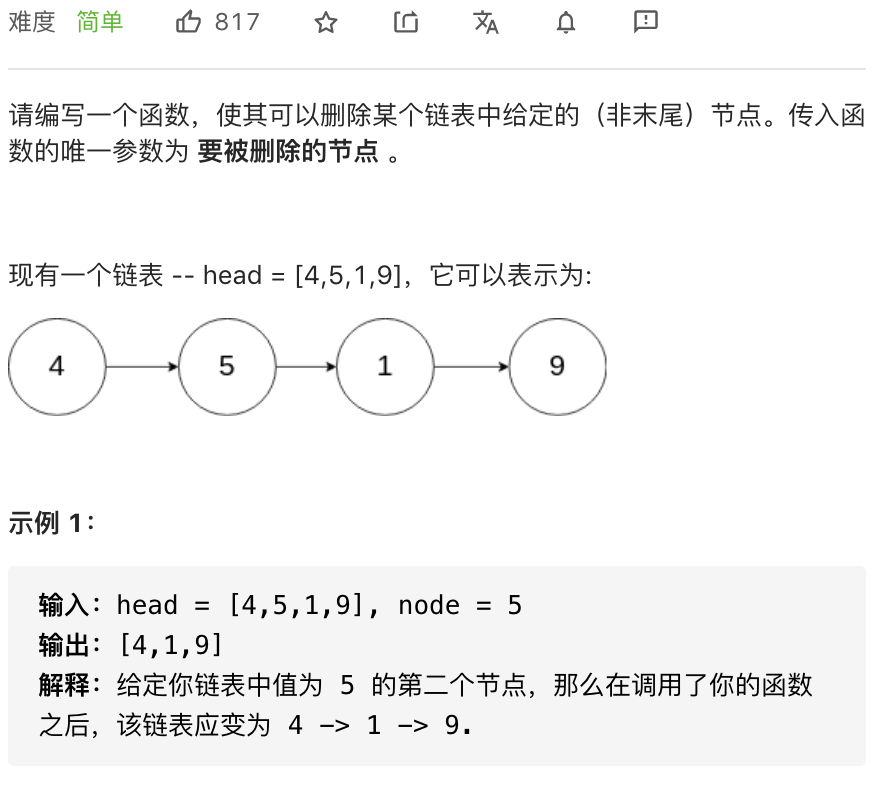
这道题的输入没有head节点,只给了待删除的node节点,所以常规删除节点的思维没法搞定,感觉是有点脑筋急转弯:将待删除节点的下一个节点的值覆盖删除节点的值,将下一个节点删掉。呵呵class Solution { public void deleteNode(ListNode node) { if (node == null || node.next == null) return; node.val =node.next.val; node.next = node.next.next; } }141. 环形链表
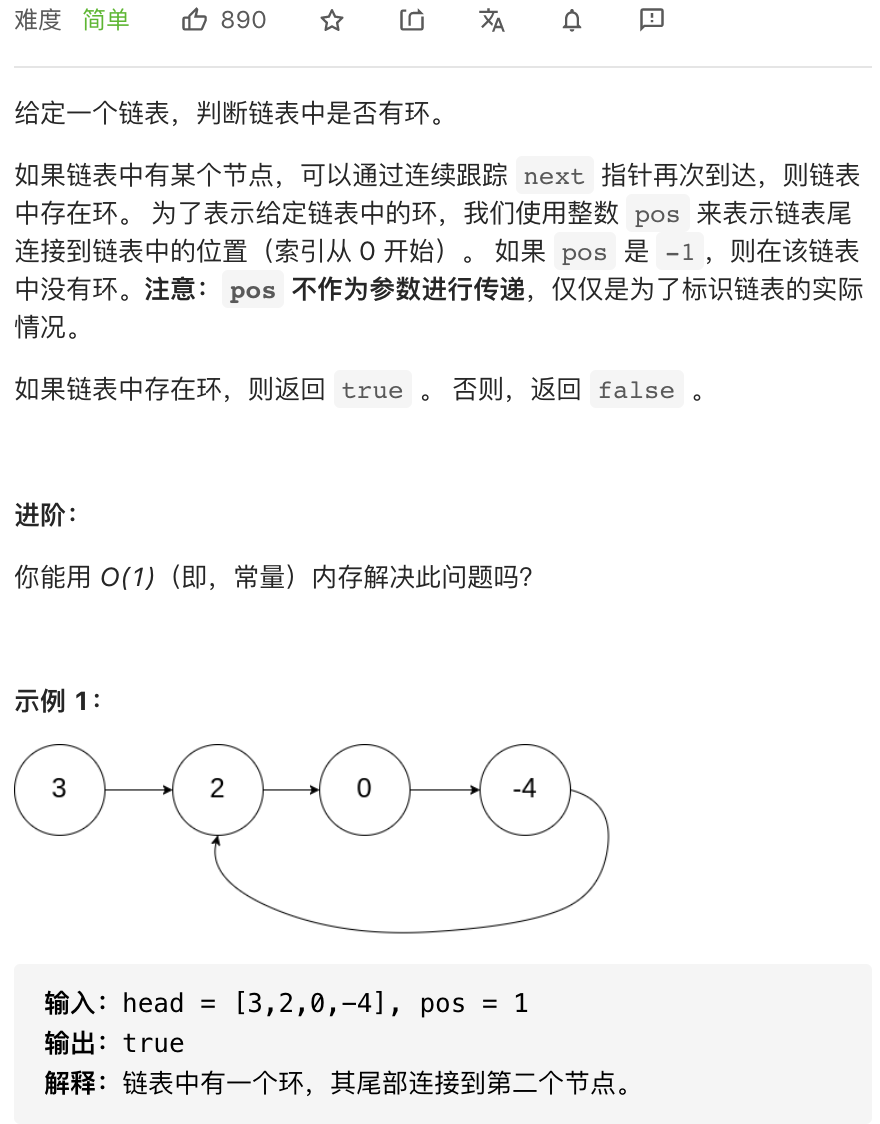
思路:如果对空间没有要求的话,可以使用一个Hash表,记录走过的路径,后面每遍历一个结点,就查询其next指针是否在Hash表里。
如果是用O(1)空间复杂度的话,就要使用快慢指针了,快指针每次跳两个,慢指针每次跳一个,所以如果有环结点的话,快指针和慢指针的差距每次都会缩短1个结点,后面总会相遇。
public class Solution {
  public boolean hasCycle(ListNode head) {
      if (head == null || head.next == null) return false;
      ListNode slow = head, fast = head;
      while (fast != null && fast.next != null) {
          slow = slow.next;
          fast = fast.next.next;
          if (slow == fast) return true;
      }
      return false;
  }
}
21. 合并两个有序链表
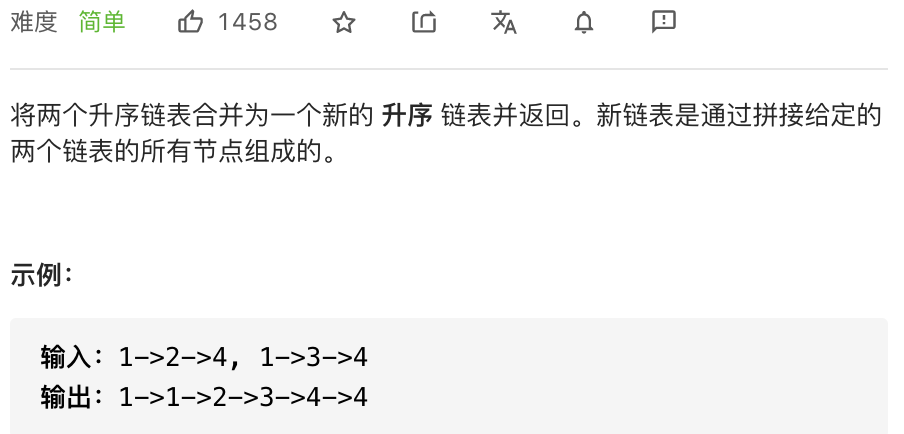
类似于归并排序,主要是终止条件的选择,选择l1 != null && l2 != null要比l1 != null || l2 !=null代码看起来简单一点。class Solution { public ListNode mergeTwoLists(ListNode l1, ListNode l2) { ListNode dummy = new ListNode(-1), tail = dummy; while (l1 != null && l2 != null) { if (l1.val < l2.val) { tail.next = l1; l1 = l1.next; } else { tail.next = l2; l2 = l2.next; } tail = tail.next; } tail.next = l1 == null ? l2 : l1; return dummy.next; } }也可以使用递归法去解决
class Solution {
  public ListNode mergeTwoLists(ListNode l1, ListNode l2) {
      if (l1 == null) {
          return l2;
      } else if (l2 == null) {
          return l1;
      }else if (l1.val < l2.val) {
          l1.next = mergeTwoLists(l1.next, l2);
          return l1;
      }else {
          l2.next = mergeTwoLists(l1, l2.next);
          return l2;
      }
  }
}
23. 合并K个升序链表
原始思路
初始思路:每次比较数组中所有的链表头中元素,选择一个最小的挂到新的节点上,然后将该位置的链表头更新为下一个,直到数组中所有的元素都是null,这个思路比较清晰,但是时间复杂度是O(n * n)
class Solution {
  public ListNode mergeKLists(ListNode[] lists) {
      ListNode dummy = new ListNode(-1), tail = dummy;
      while (!isEmpty(lists)){
          int minIndex = findMinListNode(lists);
          tail.next = lists[minIndex];
          tail = tail.next;
          lists[minIndex] = lists[minIndex].next;
      }
      return dummy.next;
  }
  private boolean isEmpty(ListNode[] lists) {
      for (int i = 0; i < lists.length; i++) {
          if (lists[i] != null) return false;
      }
      return true;
  }
  private int findMinListNode(ListNode[] lists) {
      int minIndex = 0, minValue = Integer.MAX_VALUE;
      for (int i = 0; i < lists.length; i++) {
          if (lists[i] != null && lists[i].val <= minValue) {
              minValue = lists[i].val;
              minIndex = i;
          }
      }
      return minIndex;
  }
}
分治法
其实可以采用归并排序的思想,转化成两个有序链表的排序。
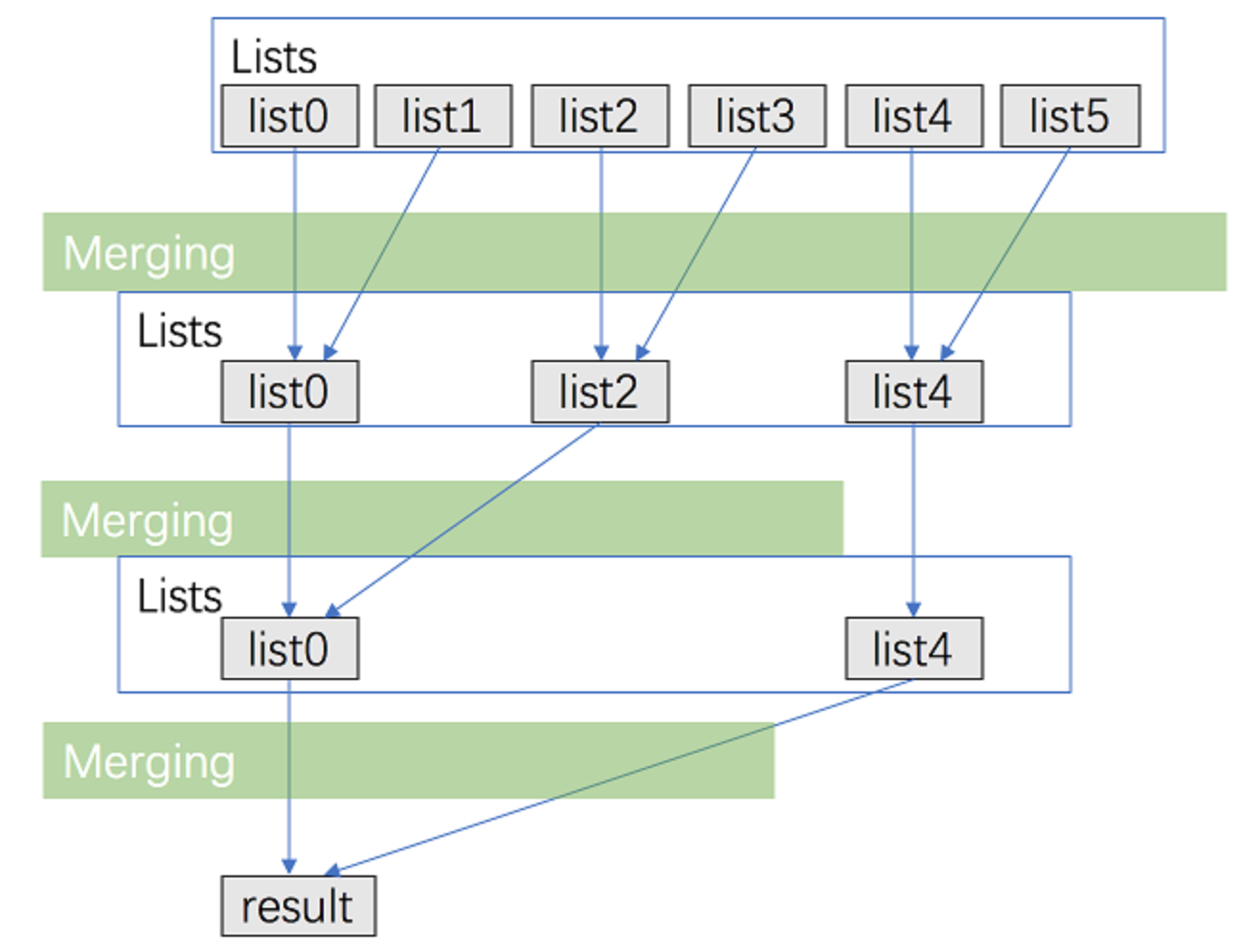
class Solution {
  public ListNode mergeKLists(ListNode[] lists) {
      if (lists == null || lists.length == 0) return null;
      return merge(lists, 0, lists.length - 1);
  }
  private ListNode merge(ListNode[] lists, int left, int right) {
      if (left == right) return lists[left];
      int mid = left + (right - left) / 2;
      ListNode l1 = merge(lists, left, mid);
      ListNode l2 = merge(lists, mid + 1, right);
      return mergeTwoList(l1, l2);
  }
  private ListNode mergeTwoList(ListNode l1, ListNode l2) {
      ListNode dummy = new ListNode(-1), tail = dummy;
      while (l1 != null && l2 != null) {
          if (l1.val < l2.val) {
              tail.next = l1;
              l1 = l1.next;
          } else {
              tail.next = l2;
              l2 = l2.next;
          }
          tail = tail.next;
      }
      tail.next = l1 == null ? l2 : l1;
      return dummy.next;
  }
}
146. LRU 缓存机制
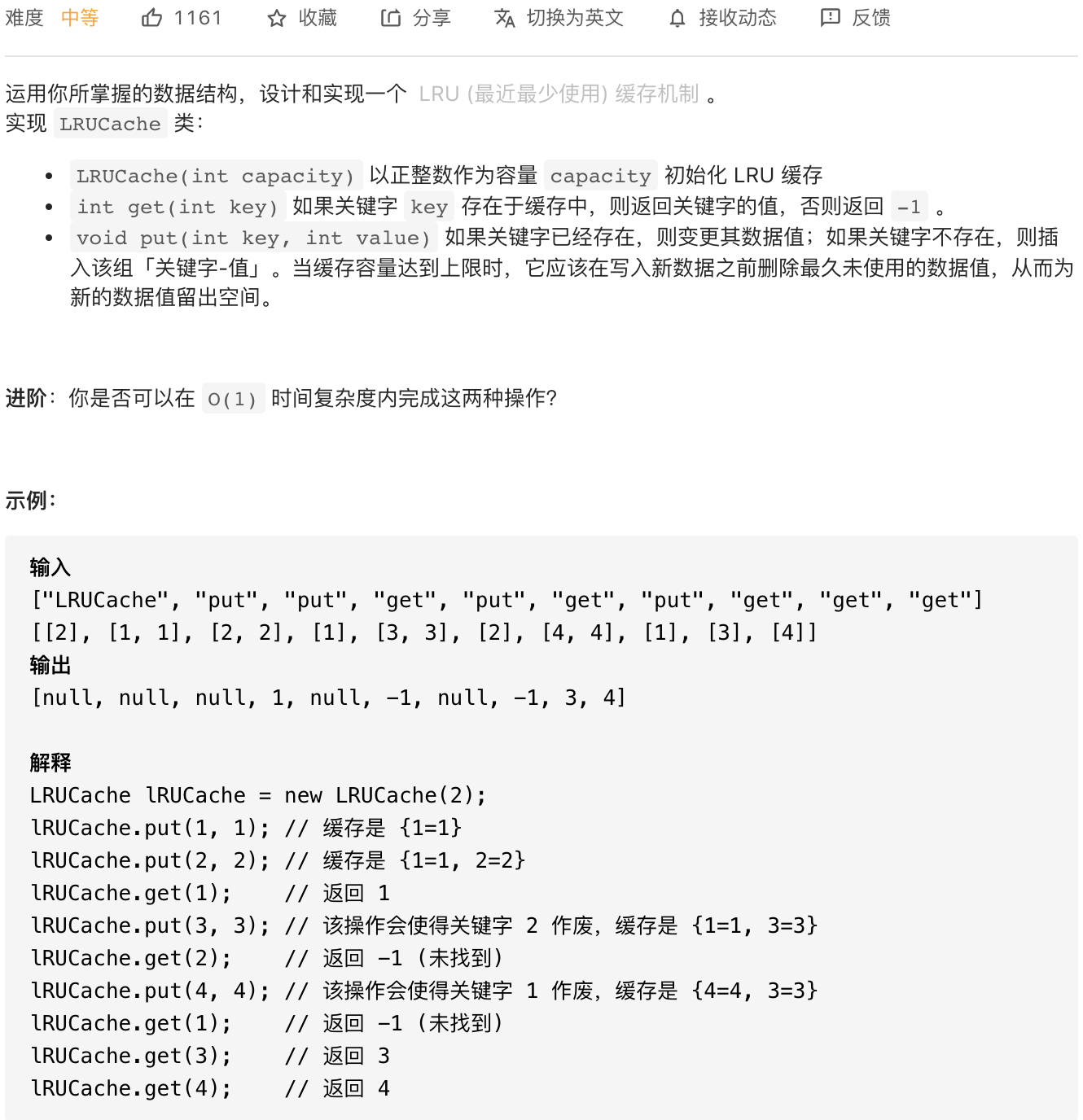 ```java
class LRUCache {
HashMap
```java
class LRUCache {
HashMapthis.capacity = capacity; map = new HashMap(); head = new Node(-1, -1); tail = new Node(-1, -1); head.next = tail; tail.pre = head;}
public int get(int key) {
  Node node = map.get(key);
  if (node == null) return -1;
  put(key, node.value);//这边正好利用put方法将元素放到表头
  return node.value;
}
public void put(int key, int value) {
  Node node = new Node(key, value);
  addFirst(node);
  if (map.containsKey(key)) {
      Node old = map.get(key);
      remove(old);
  }
  map.put(key, node);
  if (map.size() > capacity) {
      Node toRemove = tail.pre;
      remove(toRemove);
      map.remove(toRemove.key);
  }
} private void addFirst(Node node) {
  node.next = head.next;
  head.next.pre = node;

  head.next = node;
  node.pre = head;
} private void remove(Node node) {
  node.pre.next = node.next;
  node.next.pre = node.pre;

  node.next = null;
  node.pre = null;
} class Node {
  Node (int key, int value) {
      this.key = key;
      this.value = value;
  }
  int key;
  int value;
  Node pre;
  Node next;
} }
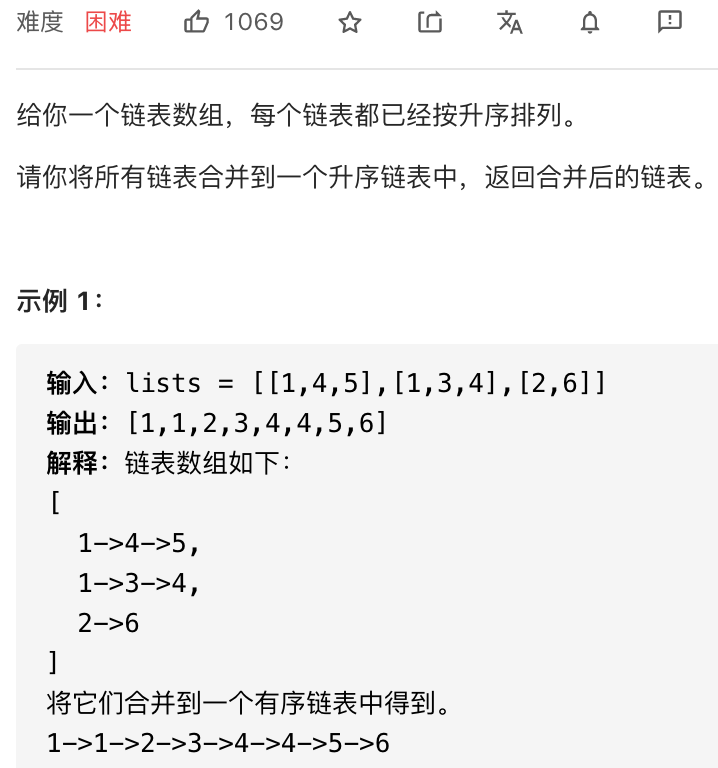
/**
- Your LRUCache object will be instantiated and called as such:
- LRUCache obj = new LRUCache(capacity);
- int param_1 = obj.get(key);
obj.put(key,value); */
<a name="Szyby"></a> # [19. 删除链表的倒数第 N 个结点](https://leetcode-cn.com/problems/remove-nth-node-from-end-of-list/) 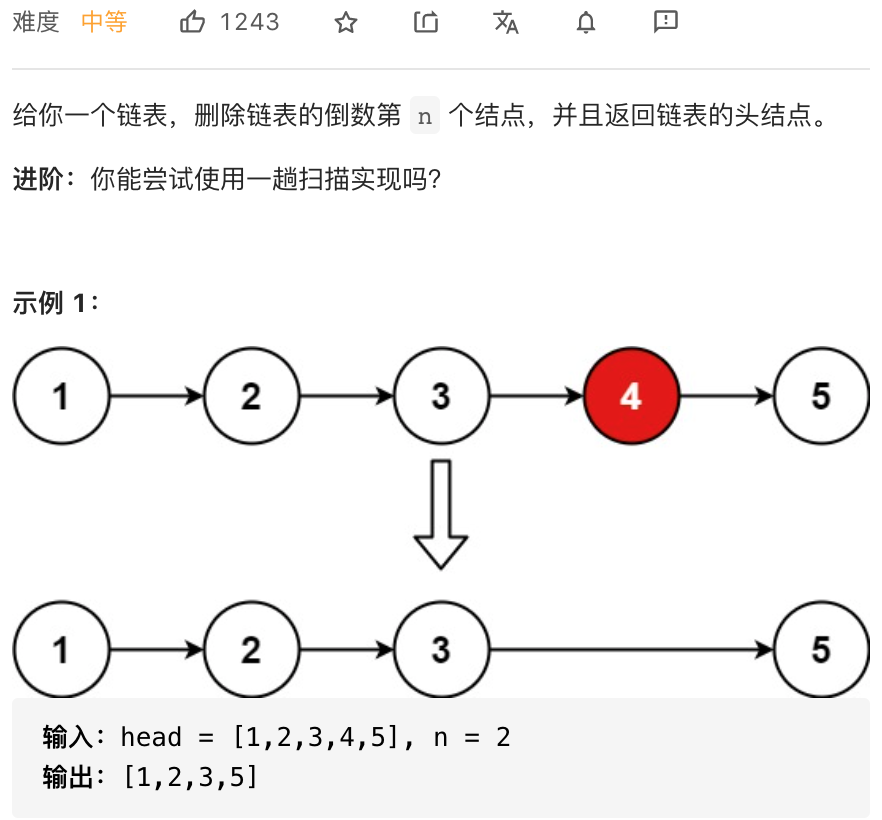 ```java class Solution { public ListNode removeNthFromEnd(ListNode head, int n) { ListNode dummy = new ListNode(-1); dummy.next = head; ListNode p1 = dummy, p2 = dummy; for (int i = 0; i < n && p1 != null; i++) { p1 = p1.next; } if (p1 == null) return dummy.next; while (p1.next != null) { p1 = p1.next; p2 = p2.next; } p2.next = p2.next.next; return dummy.next; } }

若有收获,就点个赞吧
0 人点赞


