非递归方式
这题说的是让在二叉搜索树中插入一个节点,最简单的一种方式就是插入到叶子节点。 二叉搜索树的特点是左子树的值都小于当前节点,右子树的值都大于当前节点,并且左 右子树都具有这个特性。所以我们需要用插入的值val和根节点比较,
如果val大于根节点,说明值为val的节点应该插入到root节点的右子树上
如果val小于根节点,说明值为val的节点应该插入到root节点的左子树上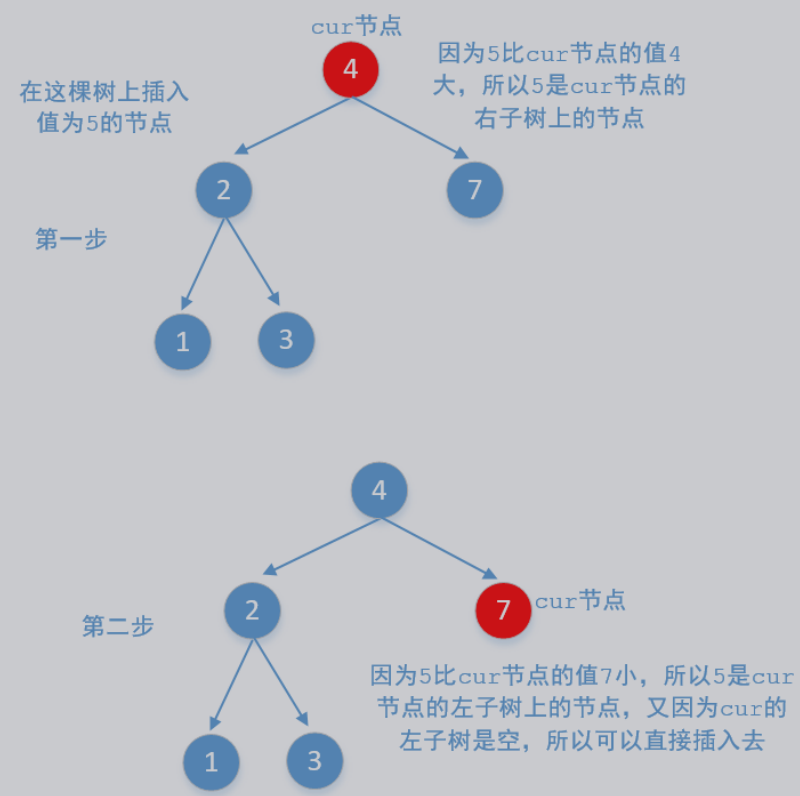
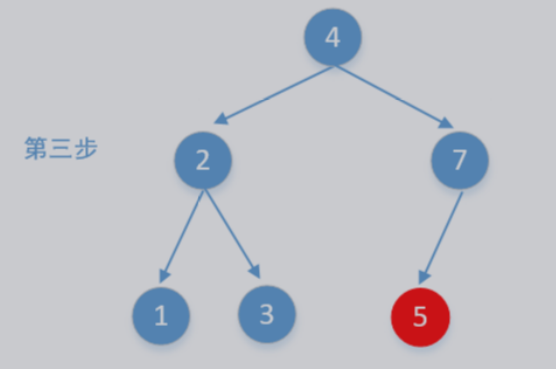
public TreeNode insertIntoBST(TreeNode root, int val) {// 如果是空树,直接构造根节点if (root == null) return new TreeNode(val);TreeNode cur = root;while (true) {// 如果当前节点cur的值大于val,说明val值应该插入到// 当前节点cur的左子树,否则就插入到当前节点cur的右子树if (cur.val > val) {if (cur.left != null) {cur = cur.left;} else {// 如果左子节点为空,就直接插入去,然后再返回root节点cur.left = new TreeNode(val);return root;}} else {// 同上if (cur.right != null) {cur = cur.right;} else {cur.right = new TreeNode(val);return root;}}}}
递归方式解决
递归的方式原理还和上面一样,一直往下找,直到找到叶子节点为止,代码如下
public TreeNode insertIntoBST(TreeNode root, int val) {// 边界条件判断,只剩下一个节点直接添加if (root == null) return new TreeNode(val);// 如果root节点的值大于val,说明值为val的节点应该在root节点的左子树上if (root.val > val) root.left = insertIntoBST(root.left, val);if (root.val < val) root.right = insertIntoBST(root.right, val);return root;}

若有收获,就点个赞吧
0 人点赞


