反转二叉树


/*** Definition for a binary tree node.* function TreeNode(val, left, right) {* this.val = (val===undefined ? 0 : val)* this.left = (left===undefined ? null : left)* this.right = (right===undefined ? null : right)* }*//*** @param {TreeNode} root* @return {TreeNode}*/var invertTree = function(root) {if (!root) return root;let tmp = root.leftroot.left = root.rightroot.right = tmpinvertTree(root.left)invertTree(root.right)return root};
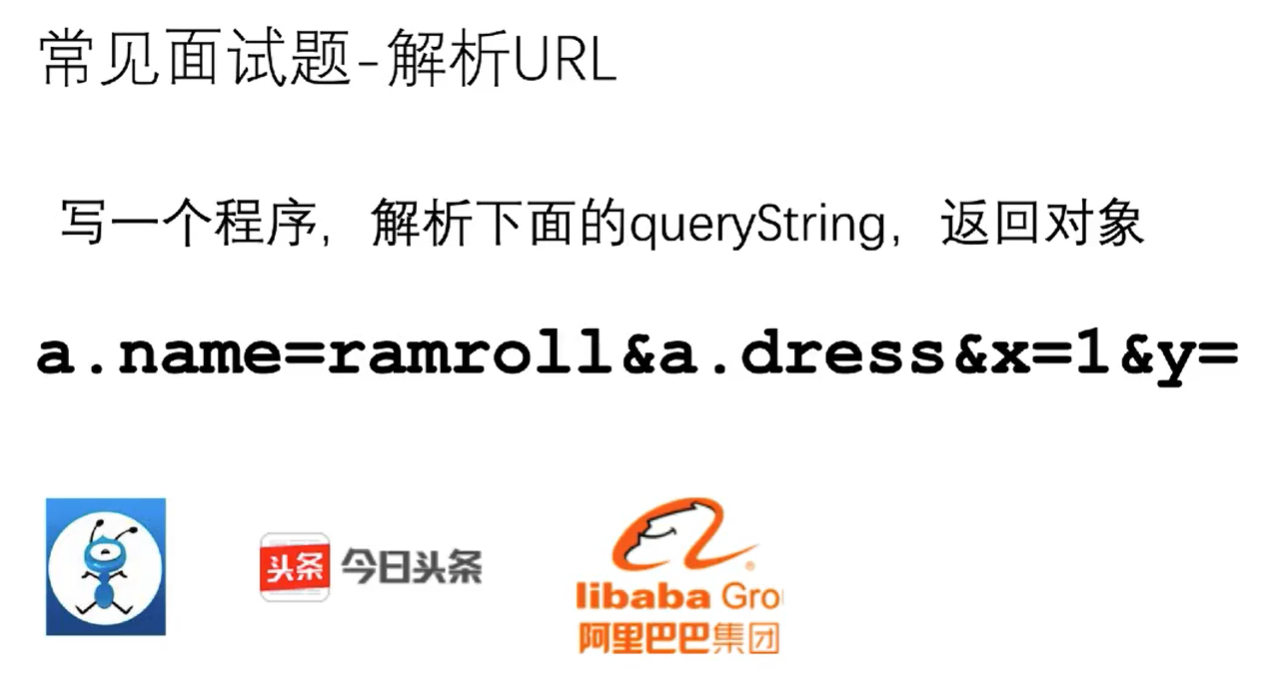
解析url
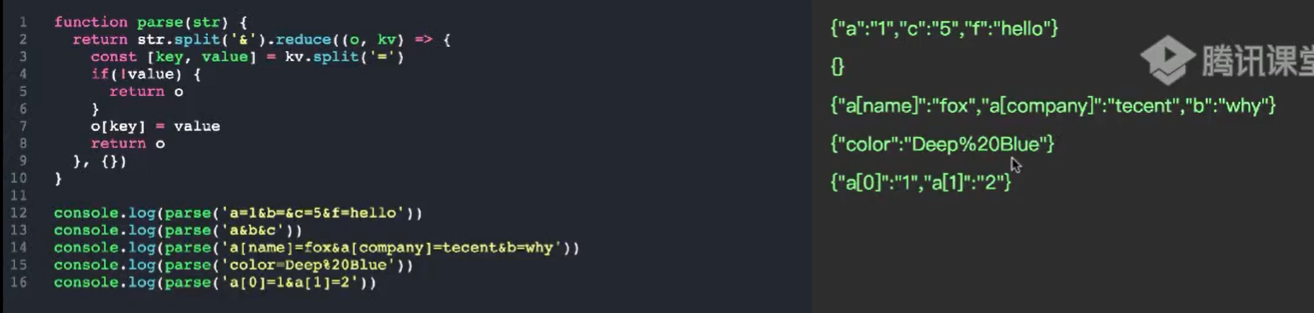
上述12-16行发现问题:需要完善代码
1.有些没有值
2.a&b&c 连 = 号都没有
3.url 有可能有[]以西是想解析成对象
4.可能有需要解码的时候
5.可能有数组
function parse (str) {return str.split('&').reduce((o, kv) => {const [key, value] = kv.split('=')if (!value) {return o}console.log( key.split(/[\[\]]/g).filter(x => x));// o[key] = valuedeep_set(o, key.split(/[\[\]]/g).filter(x => x), value)return o}, {})}function deep_set (o, path, value) {let i = 0for (; i < path.length - 1; i++) {if (!o[path[i]]) {if (path[i + 1].match(/^\d+$/)) {o[path[i]] = []} else {o[path[i]] = {}}}o = o[path[i]]}o[path[i]] = decodeURIComponent(value)}console.log(parse('p=4&spm_id_from=pageDriver'));console.log(parse('a&b&c'));console.log(parse('a[name]=fox&a[b]=c&c=d'));console.log(parse('color=Deep%20Blue'));console.log(parse('a[0]=1&a[1]=2'));
includes
includes()方法返回的是布尔值,也就是true和false,这样上面的例子就可以简化一下了。
if(str.includes(‘测试’)){
console.log(true); // 包含
}else{
console.log(false) //不包含
}
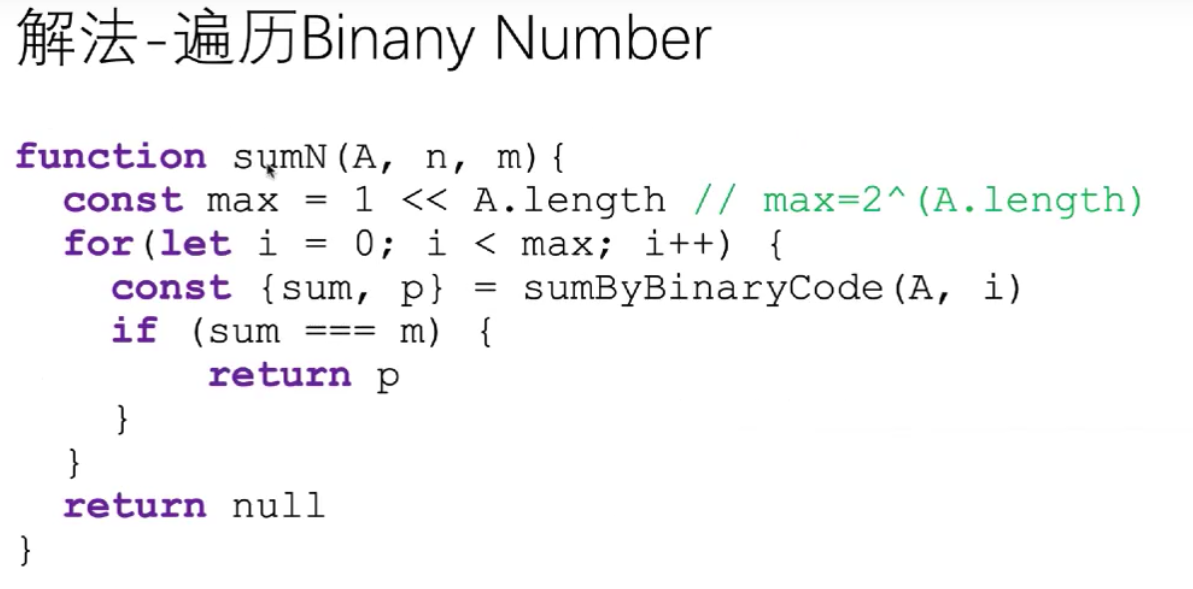
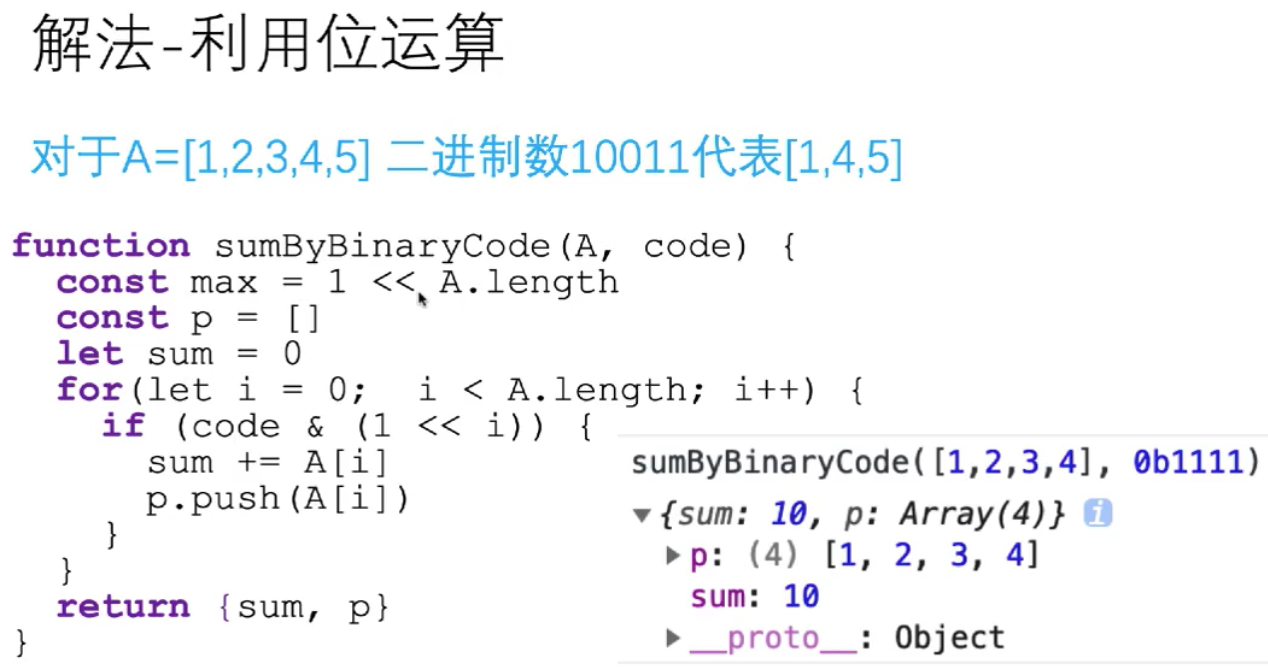
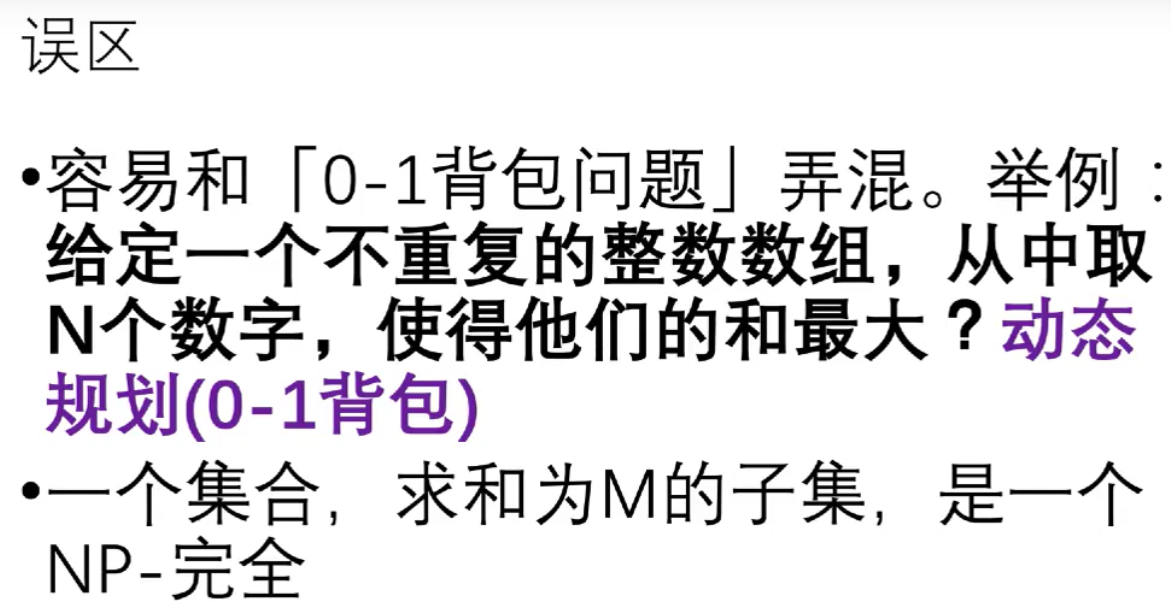
N个数字和为M的问题


/**** A 原数组* n 取几个数* m 要求的和* i 当前的层级数,也就是决策的数量* decisions 已经取出的数组*/// 第一层级有一个看选不选,第二个层级就是2个,以指数倍数递增的function sum (A, n, m, i = 0, decisions = []) {console.log(A, n, m, i, decisions);// 经过前面的递归以后,和 等于0了,意思是刚好取好了,就直接输入数组if (m === 0) {return decisions}// 如果要当前层级数,已经和原来数组一致了,而且没有输出,就意思是没找到// 或者要取得个数没有了 ,已经无法再取值了,也没找到// 或者要取得数已经小于 0 了,也没找到, 这里是一个优化点// 剪枝,可以减少不必要的求解,虽然不影响结果,但是影响性能if (i === A.length || n === 0 || m < 0) {return null}// 转化成决策树,传入原数组,放入当前得数,这样要取得数,就少了一个,要求的结果也就少了一个,然后层数加1// 然后结果集做一个合并,如果有值,就在递归调用,如果返回了null ,就调用到了后面// 传入原数据,然后把层级 +1 ,输出结果集return sum(A, n - 1, m - A[i], i + 1, decisions.concat(A[i])) || sum(A, n, m, i + 1, decisions)}// console.log(sum([1, 9, 3, 7], 2, 10));// 一种优化 因为上述 ,有一个concat 是一个O(n)的操作// 谷歌指导书说,如果一直数据量不大的话,不要做微优化,除非是高性能场景,这样就需要优化到极致function sumN (A, n, m) {// 最终结果let r = null// 决策const decisions = []function inner (i = 0, n, m) {// 如果已经有解,就终止递归if (r) {return}// 如果已经找到就输出r// 把当前的数组拷贝一份给r,然后输出,因为后面还在复用,可能回改变值if (m === 0) {r = decisions.slice()return}if (i === A.length || n === 0) {return}decisions.push(A[i])inner(i + 1, n - 1, m - A[i])decisions.pop(A[i])inner(i + 1, n, m)}inner(0, n, m)return r}console.log(sumN([1, 9, 3, 7], 2, 10));
误区
树的轮廓
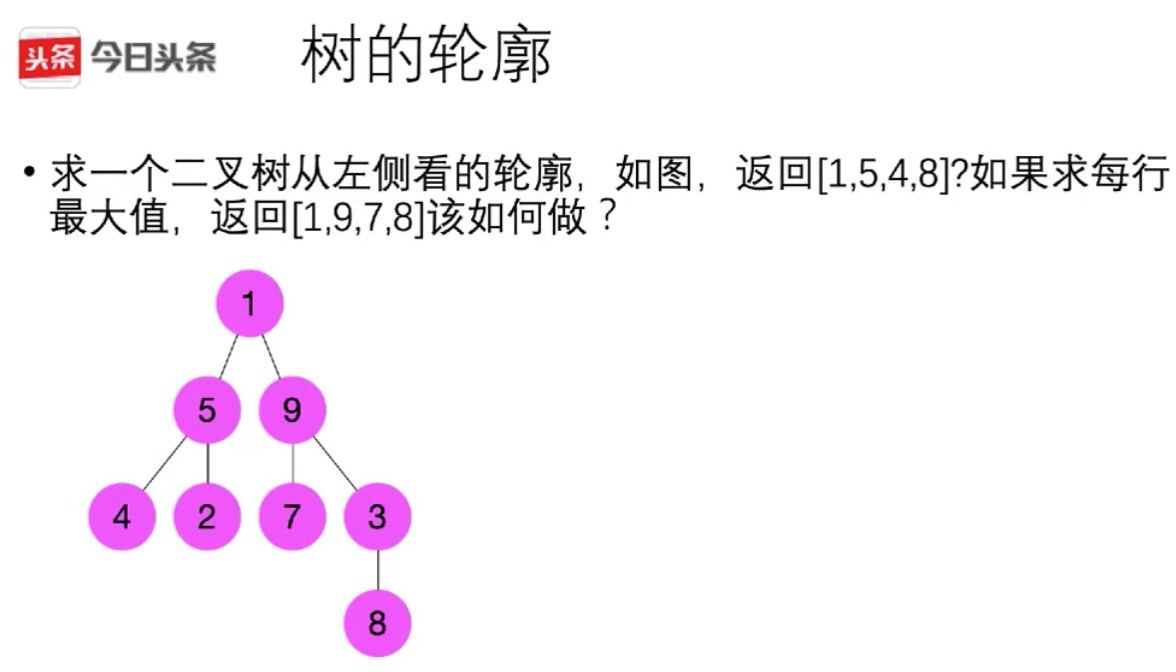
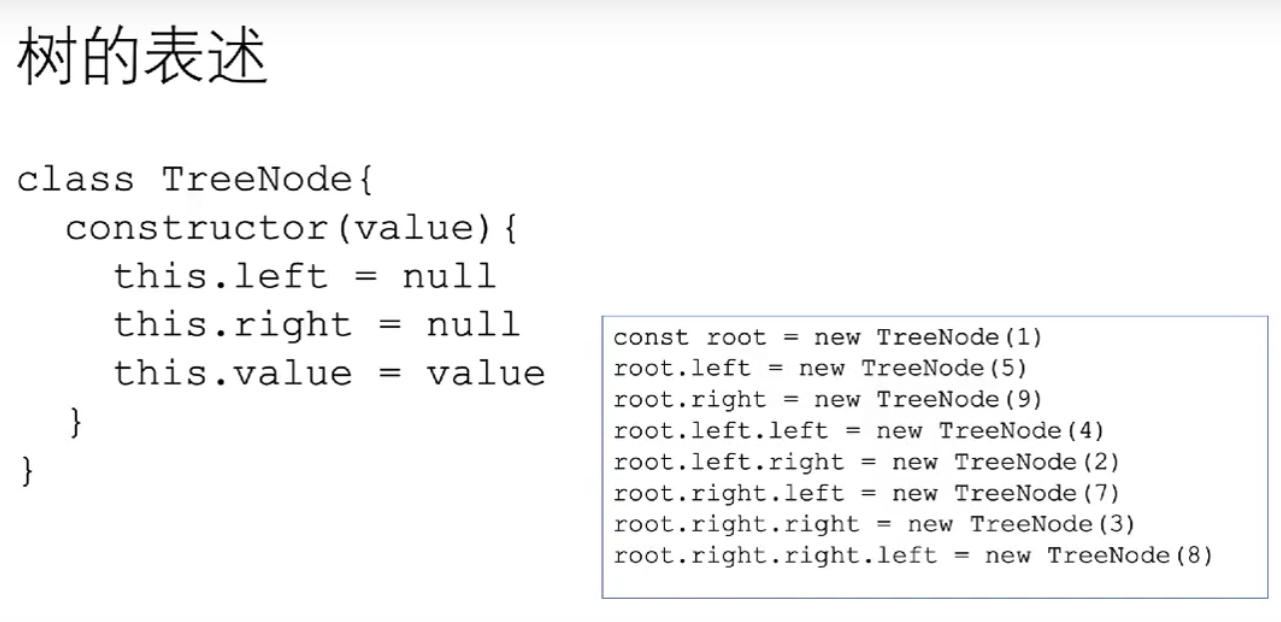
// 最左侧的数字
// 递归 + 决策树
/**
 *
 * @param {*} node 树的结构
 * @param {*} d 当前层数
 * @param {*} outline 表示
 */
function leftoutLineTree (node, d = 0, outline = []) {
  if (!node) {
    return
  }
  // 如果当前这一层没有值,就赋值,也就是运用了树的遍历顺序,如果有值就不操作了
  if (!outline[d]) {
    outline[d] = node.value
  }
  leftoutLineTree(node.left, d + 1, outline)
  leftoutLineTree(node.right, d + 1, outline)
  return outline
}

// 每一行的最大值
/**
 *
 * @param {*} node 树的结构
 * @param {*} d 当前层数
 * @param {*} outline 表示
 */
function maxOfLine (node, d = 0, outline = []) {
  if (!node) {
    return
  }
  // 如果当前这一层没有值,就赋值,也就是运用了树的遍历顺序,如果有值就不操作了
  outline[d] = Math.max(outline[d] || -1, node.value)
  maxOfLine(node.left, d + 1, outline)
  maxOfLine(node.right, d + 1, outline)
  return outline
}
火车车厢重排问题

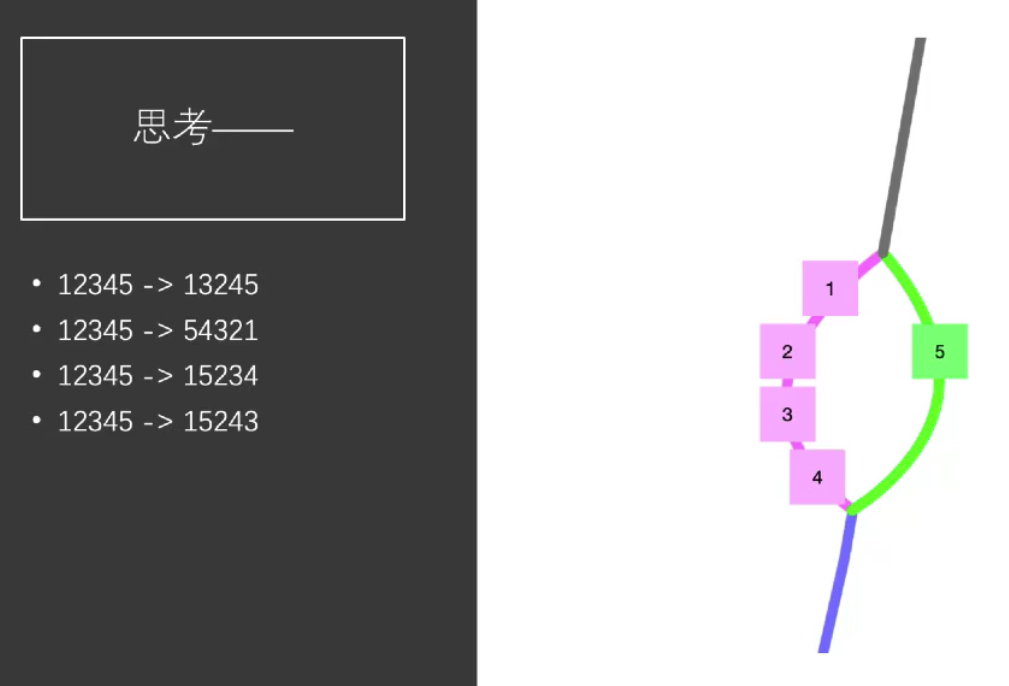
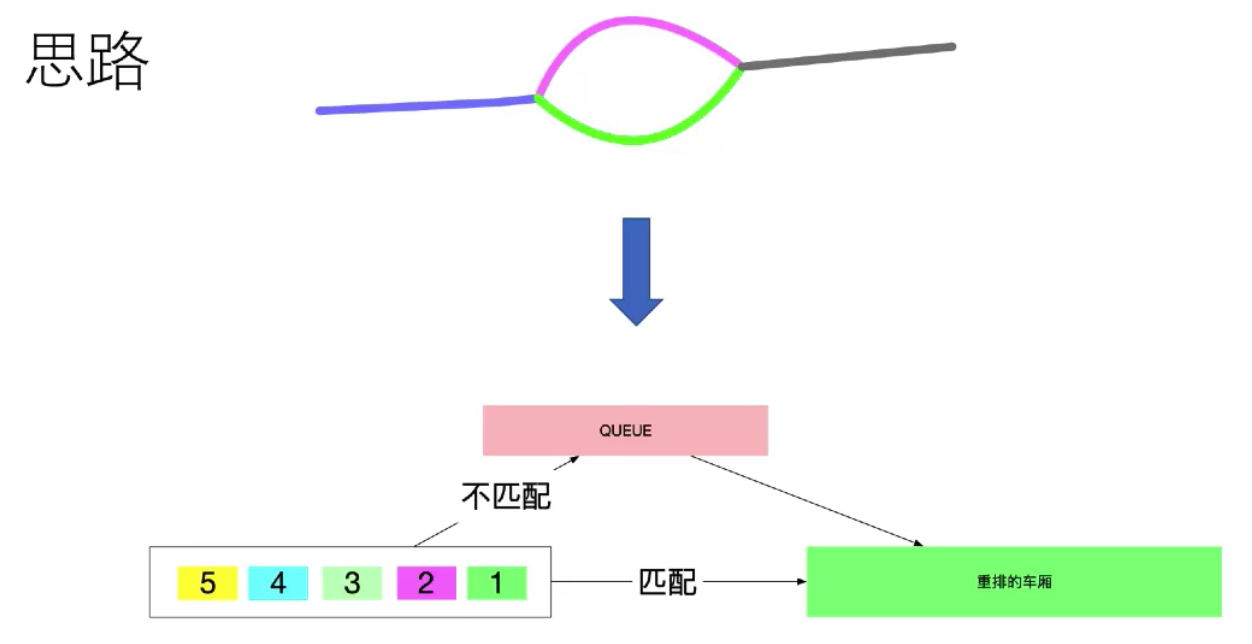
function isTrans (o, t) {
  // 不匹配的队列
  const q = []
  // 遍历要排成的新数组
  for (let x of t) {
    // 队列中的最后一个是不是跟 重排车厢中的 一个相同 ,如果是就放到重排车厢
    if (q[q.length - 1] === x) {
      // 取出最后一个,意思是可以放到重排车厢,也就是匹配上了
      q.pop()
    }
    let y = null
    // 每次都从原始队列中取出第一个,如果 相同就跳过,不相同就进入
    while (o.length > 0 && (y = o.shift()) !== x) {
      q.unshift(y)
    }
    // 循环不变式: o中下一个要么和x匹配,要么o为空
  }
  // 如果最后不匹配的车厢还有值,就说明无法匹配
  return q.length === 0
}

console.log(isTrans([1, 2, 3, 4, 5], [1, 3, 2, 4, 5]));
console.log(isTrans([1, 2, 3, 4, 5], [5, 4, 3, 2, 1]));
因为上面用的是数组模仿队列,shift 和 unshift 都是O(n)的操作,所以要用真队列来提高效率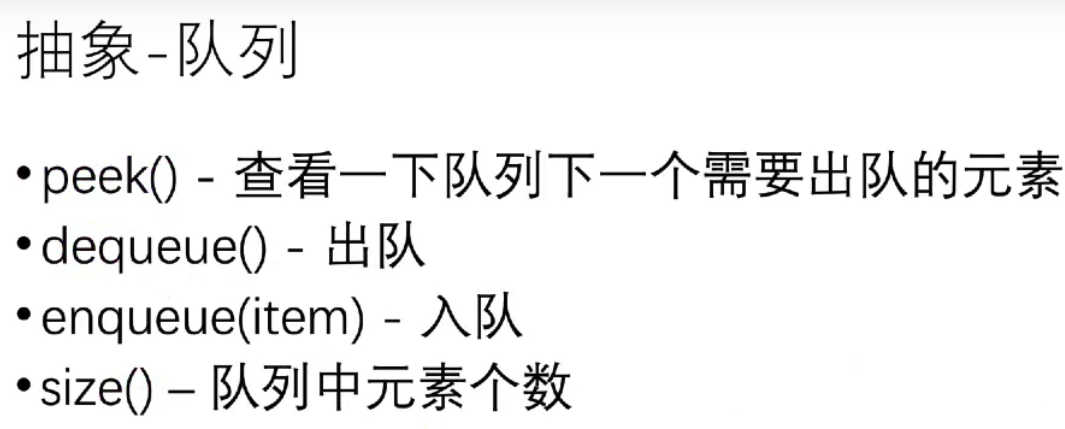

网格路径

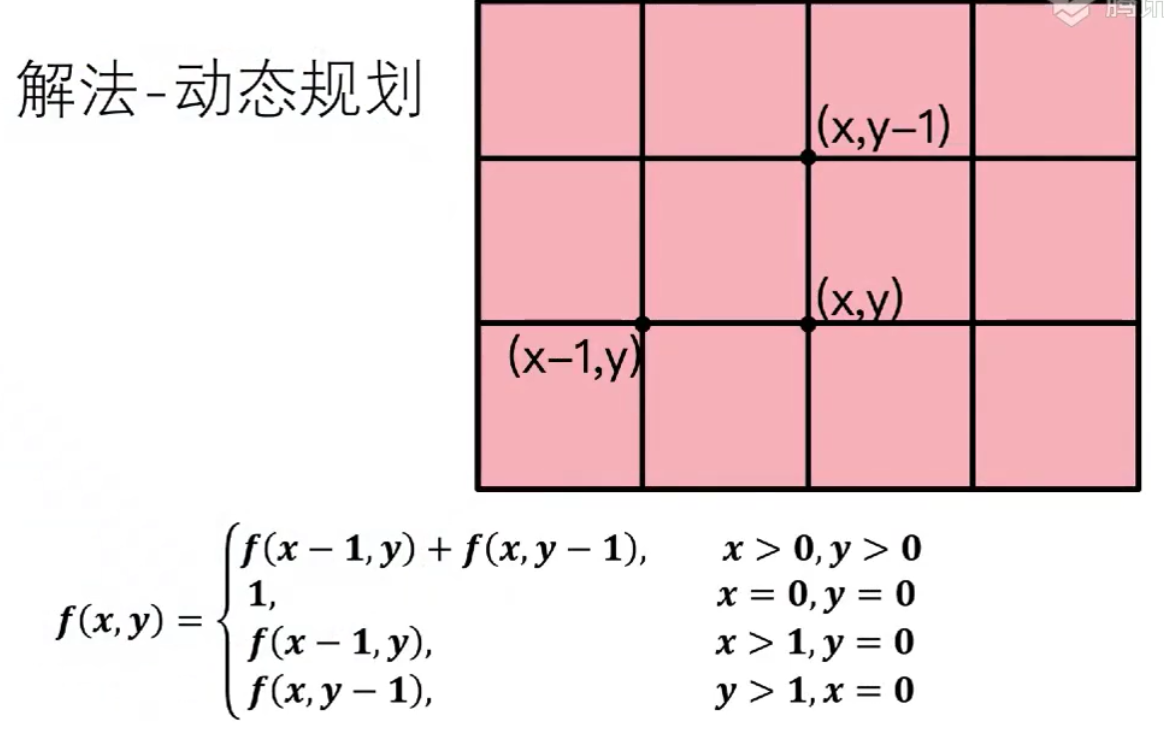
// 网格问题
function f (x, y) {
  if (x > 0 && y > 0) {
    return f(x - 1, y) + f(x, y - 1)
  }
  else if (x > 0) {
    return f(x - 1, y)
  }
  else if (y > 0) {
    return f(x, y - 1)
  }
  else {
    return 1
  }
}
// console.log(f(4, 3));

// 网格问题优化
// 数组中的横纵坐标是反着来的,y正好代表一行
function fy (x, y, dp = []) {
  // dp 是一个缓存数据,就不用每次都计算新值了
  if (!dp[y]) {
    dp[y] = []
  }
  if (dp[y][x] !== undefined) {
    return dp[y][x]
  }

  if (x > 0 && y > 0) {
    dp[y][x] = fy(x - 1, y, dp) + fy(x, y - 1, dp)
  }
  else if (x > 0) {
    dp[y][x] = f(x - 1, y, dp)
  }
  else if (y > 0) {
    dp[y][x] = f(x, y - 1, dp)
  }
  else {
    dp[y][x] = 1
  }
  return dp[y][x]
}
// console.log(fy(4, 3));
// 网格问题动态规划
function fd (w, h) {
  const dp = []
  for (let y = 0; y <= h; y++) {
    dp[y] = []
    for (let x = 0; x <= w; x++) {
      if (x === 0 && y === 0) {
        dp[y][x] = 1
      }
      else if (x === 0) {
        dp[y][x] = dp[y - 1][x]
      }
      else if (y === 0) {
        dp[y][x] = dp[y][x - 1]
      }
      else {
        dp[y][x] = dp[y][x - 1] + dp[y - 1][x]
      }
    }
  }
  return dp[h][w]
}
console.log(fd(4, 3));
两个栈实现一个队列
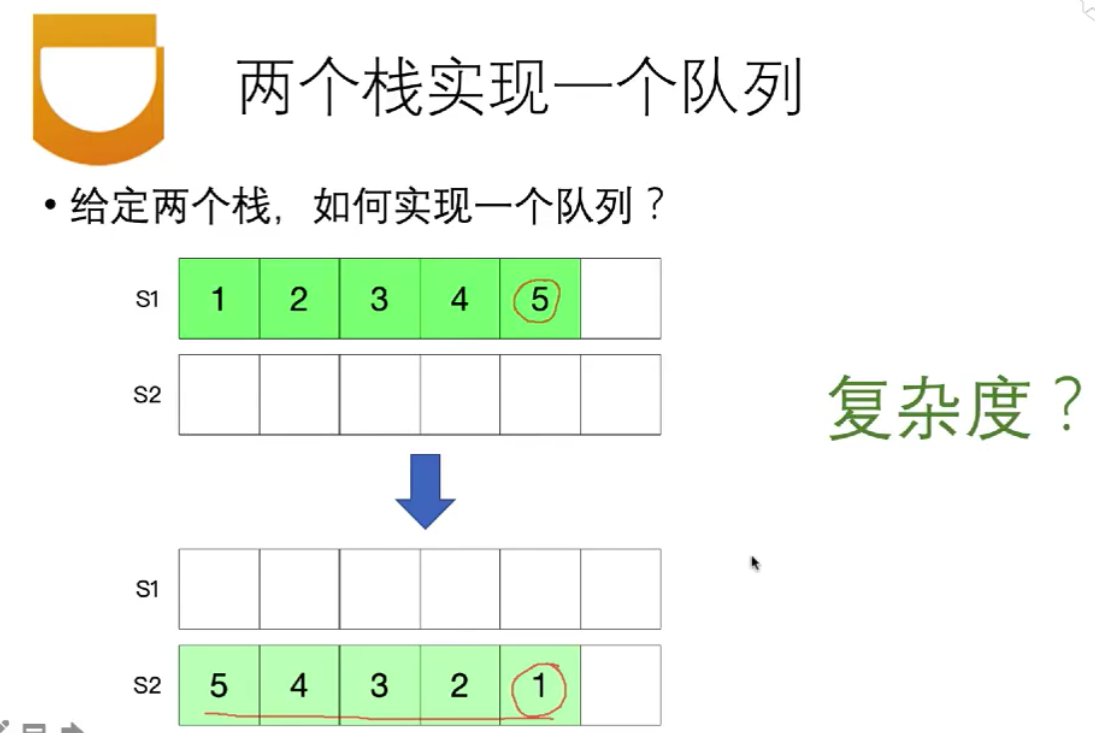
class Queue {
  constructor() {
    this.s1 = []
    this.s2 = []
  }
  // 入队
  enqueue (item) {
    this.s1.push(item)
  }
  // 出队
  // 看一下这里的复杂度,我们看13行好像每一次取值似乎都要遍历,像O(n)的操作
  // 但是其实如果现在没有新加入值得话,也就是第一次取值需要全部遍历一边,所以
  // 大体还是 O(1)得操作
  dequeue () {
    while (this.s1.length > 0) {
      this.s2.push(this.s1.pop())
    }
    if (this.s2.length > 0) {
      return this.s2.pop()
    }
  }
}
const queue = new Queue()
queue.enqueue(1)
queue.enqueue(2)
console.log(queue.dequeue());
console.log(queue.dequeue());

若有收获,就点个赞吧
0 人点赞


