反转整个链表
反转链表函数 reverse 定义:输入一个结点 head,将 以 head 为起点 的链表反转,并返回反转之后的头结点
假设需要反转链表:
递归算法基础框架:
public ListNode reverse(ListNode head) {ListNode last = reverse(head.next);return last;}
代码 reverse(head.next);的效果是什么呢?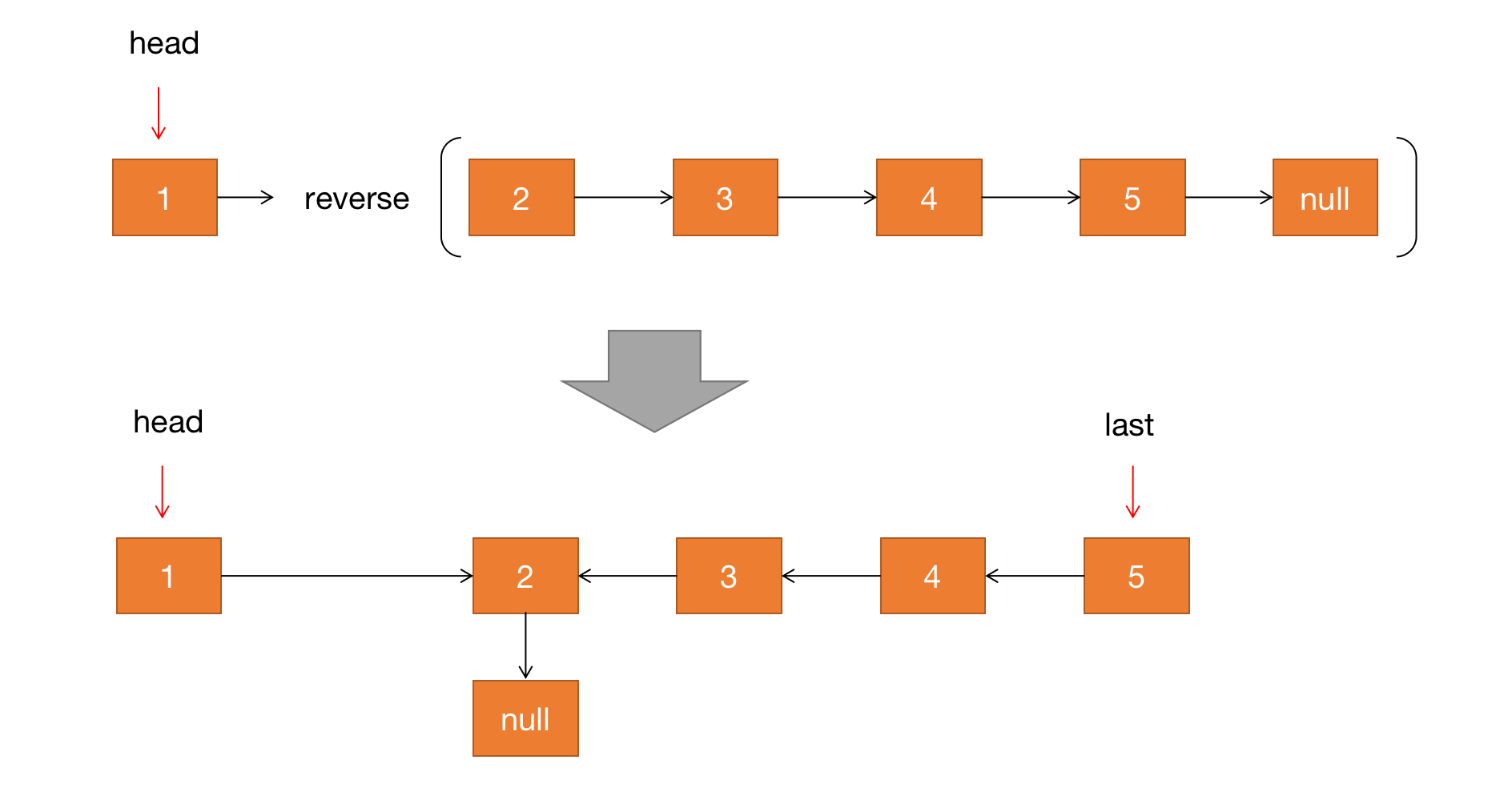
但是我们最终期望的结果是: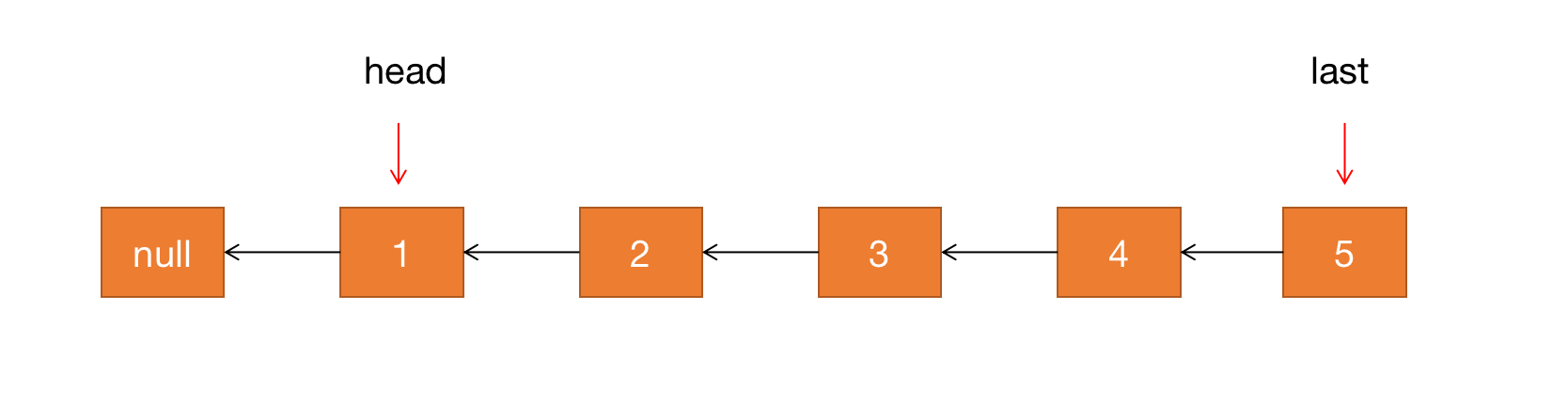
怎么才能变成最终期望的结果呢?
第一步:让 head 节点的下一个节点的 next 指针从指向 null 变成指向 head 节点
第二步:让 head 节点的 next 指针指向 null 
递归算法框架:
public ListNode reverse(ListNode head) {ListNode last = reverse(head.next);// 让 head 节点的下一个节点的 next 指针从指向 null 变成指向 head 节点head.next.next = head;// 让 head 节点的 next 指针指向 nullhead.next = null;return last;}
那递归结束条件是什么呢?
如果 head 是空节点,那么肯定递归就结束了。
特别需要注意的是,如果链表只有一个节点,那么也无需进行反转,递归也可以结束
完整地递归算法:
public ListNode reverse(ListNode head) {if (head == null || head.next == null) {return head;}ListNode last = reverse(head.next);// 让 head 节点的下一个节点的 next 指针从指向 null 变成指向 head 节点head.next.next = head;// 让 head 节点的 next 指针指向 nullhead.next = null;return last;}
反转链表前 N 个节点
那么如果只是想反转链表前 N 个节点呢: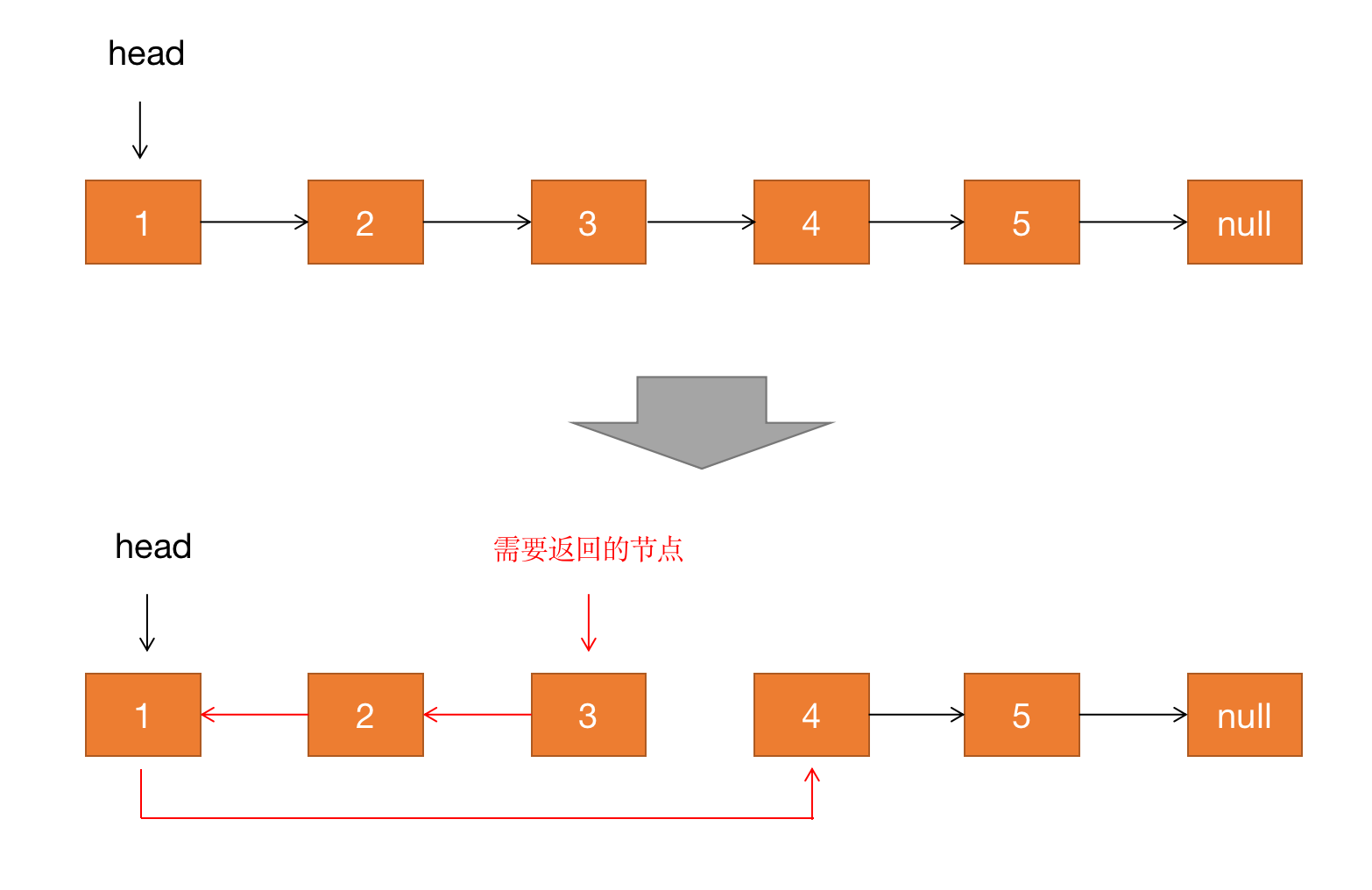
// head 的后驱节点ListNode successor = null;// 以 head 为起点,需要反转前 n 个节点public ListNode reverseN(ListNode head, int n ) {if (n == 1) {// 记录第 n + 1 个节点successor = head.next;return head;}// 以 head.next 为起点,需要反转前 n - 1 个节点ListNode last = reverseN(head.next, n - 1);// 让 head 节点的下一个节点的 next 指针从指向 null 变成指向 head 节点head.next.next = head;// 让 head 节点的 next 指针指向 successorhead.next = successor;return last;}
反转链表的一部分
那么如果只是想反转链表部分节点呢: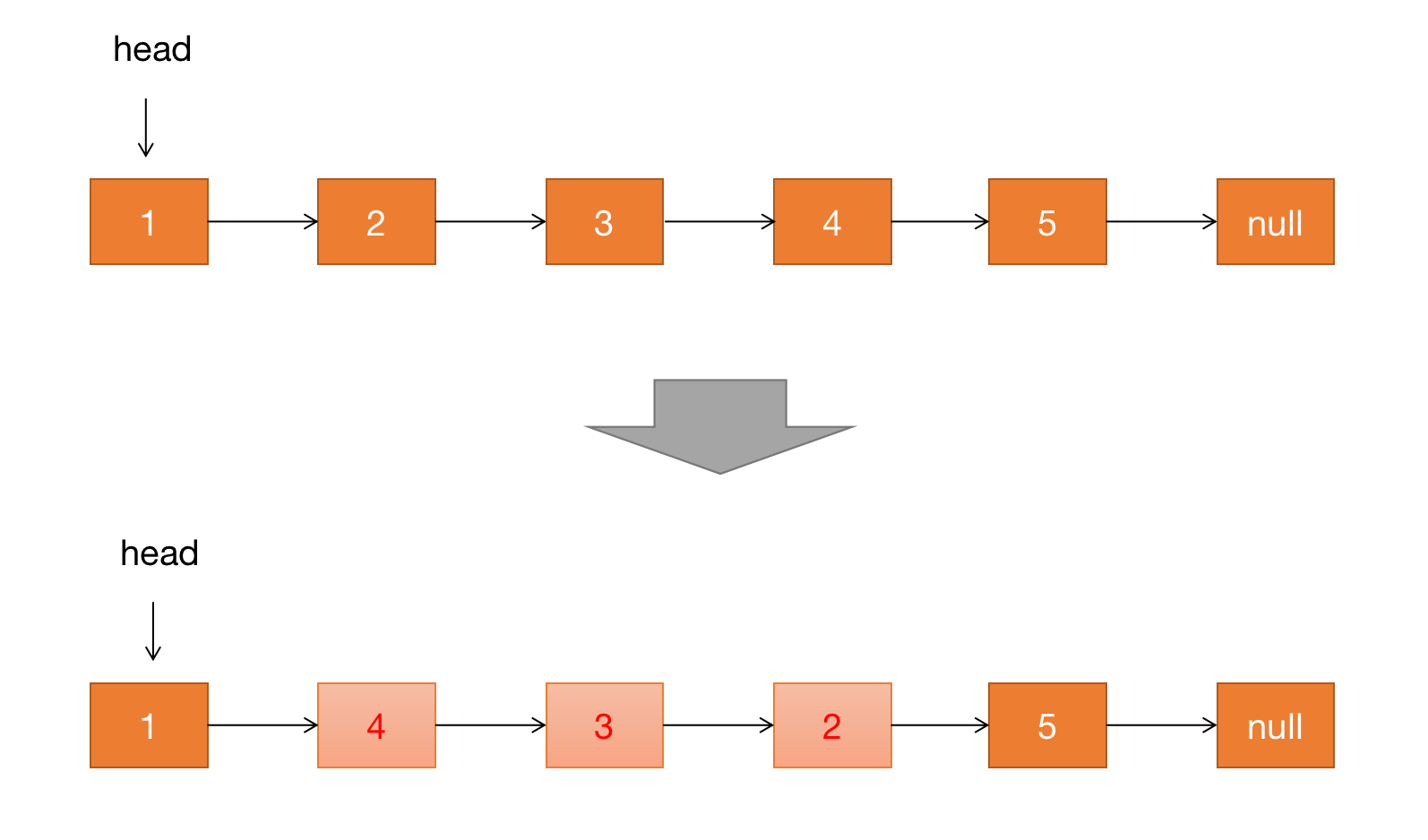
ListNode successor = null;public ListNode reverseBetween(ListNode head, int m, int n) {if (m == 1) {// 相当于反转前 n 个节点return reverseN(head, n);}// 前进到反转的起点head.next = reverseBetween(head.next, m - 1, n - 1);return head;}// 以 head 为起点,需要反转前 n 个节点public ListNode reverseN(ListNode head, int n ) {if (n == 1) {// 记录第 n + 1 个节点successor = head.next;return head;}// 以 head.next 为起点,需要反转前 n - 1 个节点ListNode last = reverseN(head.next, n - 1);// 让 head 节点的下一个节点的 next 指针从指向 null 变成指向 head 节点head.next.next = head;// 让 head 节点的 next 指针指向 successorhead.next = successor;return last;}

若有收获,就点个赞吧
0 人点赞


