SELECT from WORLD Tutorial - SQLZOOhttps://sqlzoo.net/wiki/SELECT_from_WORLD_Tutorial# 选择所有数据 数据多要加条件限制select * from 表# 字段别名 as 可有可无 ,选择多列 用逗号隔开select name as 国家名, continent 大洲, population 人口 from world# 数据去重 distinct ;# 如果select distinct后有多个字段名时,是对重复的行数据进行去重# 注意distinct在select中使用时,只能加在select后而不是字段名前select distinct continent from worldselect count(distinct continent) from worldcount(distinct 字段) 去重计数
总结
基础语法select 字段名 from 表名称别名语法select 字段名 as 别名 from 表名称注意:as可以省略查询多列select 字段名1, 字段名2, 字段名3 from 表名称查询所有列select * from 表名称数据去重select distinct 字段名 from 表名称select中的计算字段select 字段名,计算字段 from 表名称注意:计算字段中的算式所涉及的 字段名必须是表格中包含的,或者算式本身可以独立运算标准语法select 字段名from 表格名where 条件代码运算符查询语法select 字段名from 表名称where 字段名 运算符 值模糊查询语法select 字段名from 表名称where 字段名 like '通配符+字符'使用多条件查询select 字段名from 表名称where 条件代码1 and|or 条件代码2GROUP BY,顾名思义:根据...分组,在SQL中常根据指定字段分组(指定字段内容相同是为一组),然后针对组进行相关操作WHERE和HAVING的区别在于:where 子句的作用是对查询结果进行分组前,将不符合where条件的行去掉,即在分组之前过滤数据,where条件中不能包含聚组函数,使用where条件过滤出特定的行。having 子句的作用是筛选满足条件的组,即在分组之后过滤数据,条件中经常包含聚组函数,使用having 条件过滤出特定的组,也可以使用多个分组标准进行分组。Invalid use of group function即“集函数的无效用法”错句示例:SELECT sname AS '优秀学生姓名',AVG(score) as '平均成绩' FROM `grade_info` WHERE AVG(score)>90 GROUP BY sno;正确写法:SELECT sname AS '优秀学生姓名',AVG(score) as '平均成绩' FROM `grade_info` GROUP BY sno HAVING AVG(score) > 90 ;select 字段名1from 表格名[where 条件代码][group by 字段名1][having 条件代码]order by 字段名 asc|desc
运算符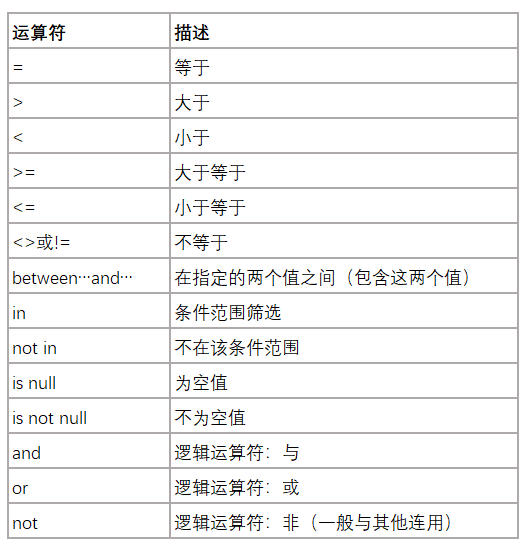
通配符

若有收获,就点个赞吧
0 人点赞


