- What is augmented analytics?
- An example of augmented analytics in action
- What are the benefits of augmented analytics?
- Key capabilities of augmented analytics
- Key challenges of augmented analytics
- Augmented analytics best practices
- Learn more about augmented analytics
- Article
- Qlik Sense Insight Advisor
- Video
- Qlik Sense® Product Tour
- Data Sheet
- Qlik Sense Data Sheet
- Blog
- Elevate the role of humans with AI
- Webinar
- Demystifying AI and ML
- Analyst Report
- Gartner Magic Quadrant for BI and Analytics
- eBook
- How to Get Real Value from AI in Analytics
- Vendor Evaluation Guide
- How to Choose a Modern Analytics Platform
- Frequently Asked Questions
- Take augmented analytics to the next level with Qlik.
Explore this in-depth guide to AI analytics strategies,examples, and technologies to learn how artificial intelligence in data analytics can help your organization.
What is augmented analytics?
Augmented analytics uses artificial intelligence (AI) and machine learning to enhance analytics across all phases of the data lifecycle — from the way data is prepared, to how analysis is performed and insights are delivered. A combination of data science and artificial intelligence, augmented analytics makes data analytics accessible for more people to get value from data, allowing them to ask questions and automatically generate insights in an easy, conversational manner.
Move Beyond the Hype in AI Analytics
Use this checklist when you’re evaluating data analytics platforms to make sure you get the most possible value from AI.
An example of augmented analytics in action
Let’s say a sales leader wants to gather insights around the cost of sales and the performance of her team. Augmented analytics capabilities found in business intelligence software can help her more efficiently gain the insights she needs.
Analyze Regional Performance
See how natural language search makes it easy for a sales leader to compare sales and margin by country.
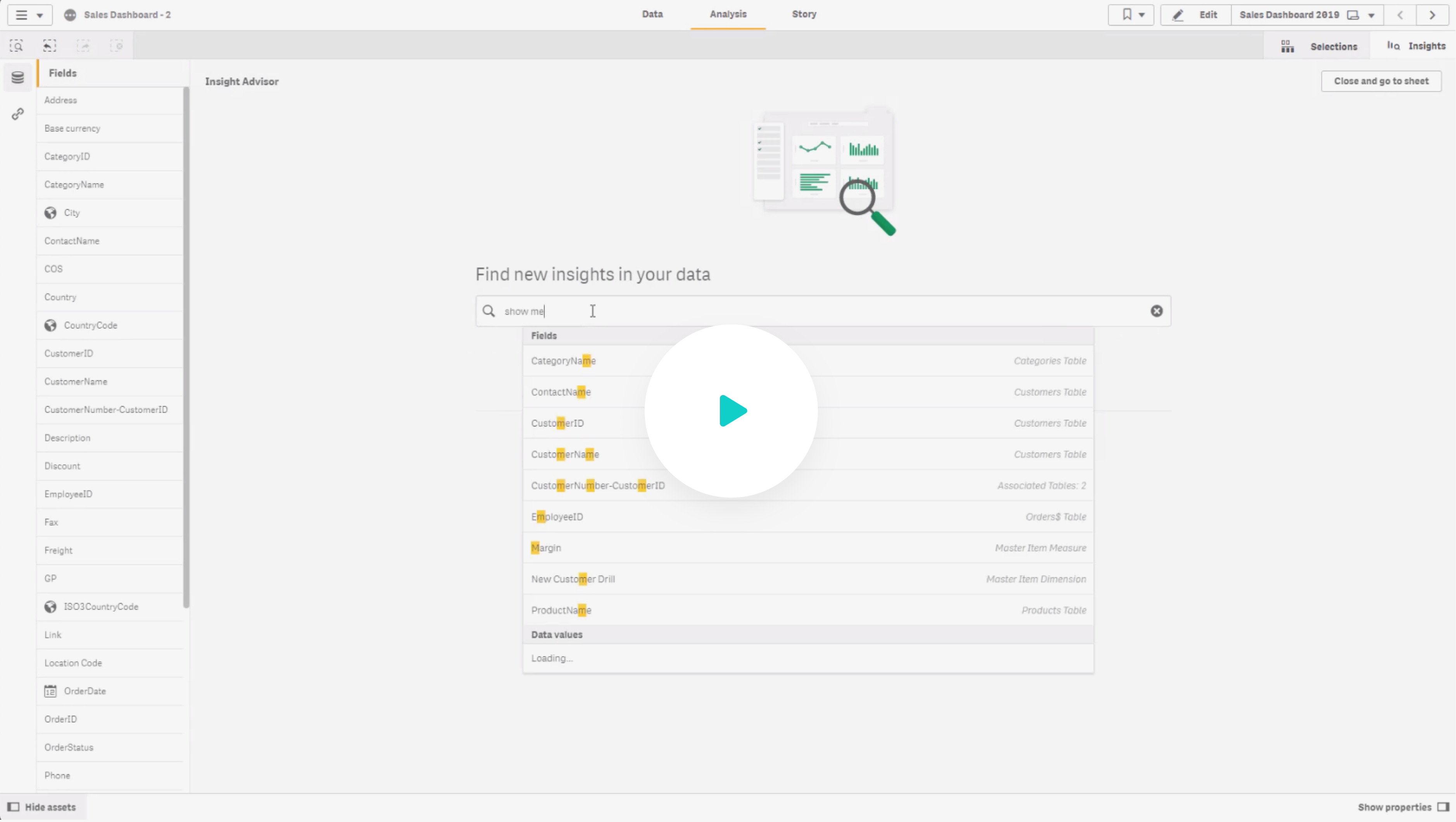
Compare Sales Rep Performance
See how a sales leader uses search-based analytics to easily evaluate performance for individual sales reps.
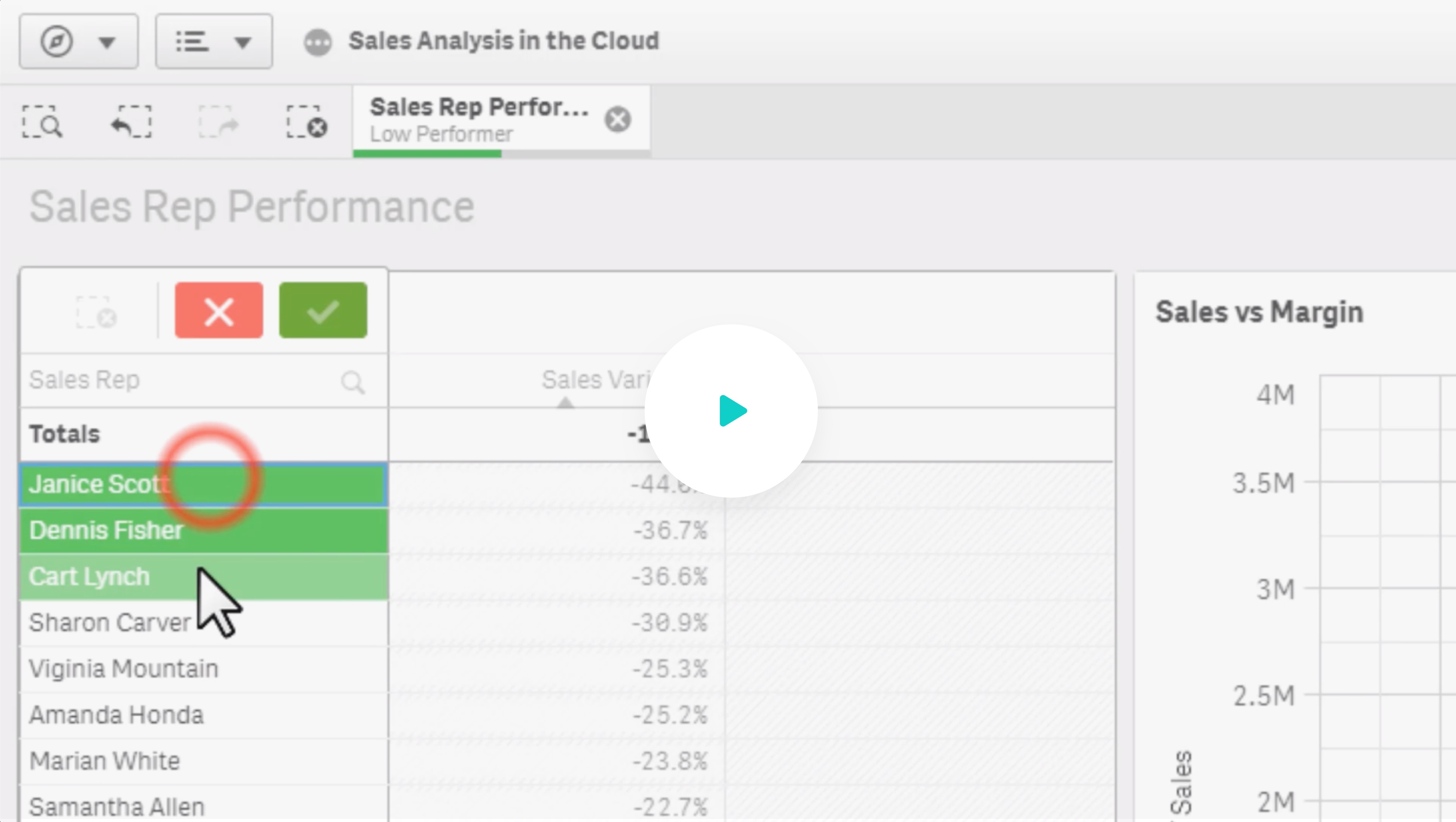
In both cases, the business person uses natural language processing to type a question into their BI and analytics platform. Data science and artificial intelligence immediately go to work, considering both structured and unstructured data, as well the search terms, to display the most relevant results, including visual representations. The user then has the opportunity to explore angles of that data they’ve never considered before to help make the best business decisions.
What are the benefits of augmented analytics?
The most effective augmented analytics combines the best aspects of machine intelligence and human curiosity to help users get faster insights, consider data from unique angles, increase productivity and help users of all skill levels make better decisions based on AI analytics. So if you’re evaluating data science vs data analytics, keep augmented analytics in mind.
- Delivers value faster: When data science and artificial intelligence come together, the result is faster data preparation, speedy visualization, accelerated insights and higher productivity. On the data prep side, algorithms replace manual processes, and automatically recommend associations between different data sources, as well as suggestions for cleaning up data. When it comes to data discovery, a quick drag-and- drop auto-generates bar charts, maps, KPI objects and other visualizations based on the data you choose.
- Uncovers hidden possibilities: With prior BI tools, users would have needed an idea, or a hypothesis around the kinds of insights they wanted to uncover. But with AI analytics, the algorithms do the work, providing contextual suggestions that uncover insights users never thought they needed. By surfacing relationships, correlations and outliers, data science and artificial intelligence help users build confidence as they’re guided through the process of making their own discoveries.
- Increases trust: Every time a user interacts with data, they provide clues to machine learning algorithms about their role, skill set, business context and intent. Over time, algorithms provide more relevant and accurate suggestions and interactions based on these clues, increasing user trust in data. And, because people play a role in the analytical process, rather than simply accepting insights that come from a black box, that trust grows even stronger, facilitating buy-in and wider adoption of analytics in the organization.
- Increases data literacy: As businesses continue to collect massive amounts of data, it’s important that everyone, regardless of analytics skills, has the opportunity to gain value from that data. AI analytics can promote data literacy by automatically surfacing insights, making recommendations, and empowering all users to confidently take action on their data. Because users can easily search for insights using natural language, and visualize insights with very little effort, creating a data literate workforce becomes far more accessible.
Key capabilities of augmented analytics
From automation and data discovery to contextual insight suggestions and conversational analytics, augmented analytics enhance business intelligence processes in many valuable ways:
- Task automation: AI can help you get to insights faster by automating routine tasks related to data preparation, analysis and visualization. For instance, when a user wants to gain insights, machine learning helps to clean and prepare data, find patterns and relationships, auto-generate code, suggest insights and create visualizations.
- Context-aware insight suggestions: When analytics takes into account user intent and behaviors, the insights generated are context-aware and highly relevant. Based on the questions users ask, the machine points them toward new ways of looking at data, and hidden insights they might have never seen otherwise.
- Conversational analytics: Conversational analytics provides a quick, easy way for users of any skill level to uncover insights simply by asking questions and getting answers in natural language. As a user types or speaks, related data fields are displayed which suggest and validate what the user wants to uncover. Each time a question is asked, algorithms present relevant charts, graphs and information to help users gain insights faster.
Amplify human intelligence with AI
Learn how augmented analytics can help you enhance human intellect and transform the way you use analytics.
Key challenges of augmented analytics
Here are some of the biggest barriers organizations face in adopting augmented analytics.
- Accuracy and trust: Ensure the insights your tools generate are accurate and trustworthy. This means using comprehensive data that is free of errors and updating models as your data changes.
- Relevancy: Users don’t have time to filter out irrelevant information. Test out your data to ensure that searches yield relevant results. If not, users will stop using the tools because they won’t provide value.
- Training data quality: If you don’t have the right data to train your analytical models, your insights won’t be worth much. Maintain and update models to keep insights quality high.
- Performance and scalability: Depending on your platform and capabilities, augmented analytics could take a lot of computing power. Also, keep in mind that the volume of data significantly affects response time.
- Data bias: Bias is typically caused by incomplete data sets and lack of context. Be sure you have context built in so algorithms can analyze all of your data and provide more objective results.
The New BI - How Algorithms Are Transforming Business Intelligence and Analytics
Find out how AI is driving innovation and increased value, ushering in the third generation of BI technologies.
Augmented analytics best practices
Set your AI analytics initiatives up for success with these best practices.
- Start small and align KPIs: Your data doesn’t have to be perfect to get started with data science and artificial intelligence. Instead, choose a use case that is aligned with your KPIs and has high business value. Once you see success, celebrate it and move on to larger projects.
- Collaborate to build trust: One of the biggest sources of mistrust in AI is lack of transparency. Avoid the black box by inviting workers from across the organization to be a part of your analytics initiatives so they can build trust through insights.
- Encourage a data-driven culture: As more people in your organization begin to use analytics, you should make sure they have the strategies and training they need to get the most from your company’s valuable data assets.
Learn more about augmented analytics

Qlik Sense Insight Advisor

Qlik Sense® Product Tour

Qlik Sense Data Sheet

Elevate the role of humans with AI

Demystifying AI and ML

Gartner Magic Quadrant for BI and Analytics

How to Get Real Value from AI in Analytics

How to Choose a Modern Analytics Platform
Frequently Asked Questions
What is augmented analytics?
Augmented analytics uses AI and machine learning to enhance human curiosity, making it easier for business users to prepare, analyze and visualize their data. Users gain insights faster by exploring their data using conversational language, while algorithms provide contextual suggestions for relevant insights.
How can businesses benefit from augmented analytics?
Because AI analytics automatically suggests insights based on natural language, users can get what they need faster, speeding up time to value. And, when it’s easy to search and visualize insights, more people can access analytics, increasing data literacy across the organization.
How does augmented analytics work?
AI automates repetitive tasks like preparing data, recognizing patterns, generating code and creating visualizations. Augmented analytics also automatically provides suggestions for insights that users may not have considered by analyzing user behaviors and intent. And with the help of conversational analytics, users can quickly gain insights by getting answers to their data questions in natural language.
What are best practices in augmented analytics?
Rather than waiting for your data to be perfect, you can get started with artificial intelligence in data analytics now. Choose small, high-value projects that support your business KPIs, and celebrate wins to demonstrate value. Collaborate with co-workers across business functions to promote transparency and build trust through insights. And give workers the tools and training they need to be successful with artificial intelligence data analytics.
Take augmented analytics to the next level with Qlik.
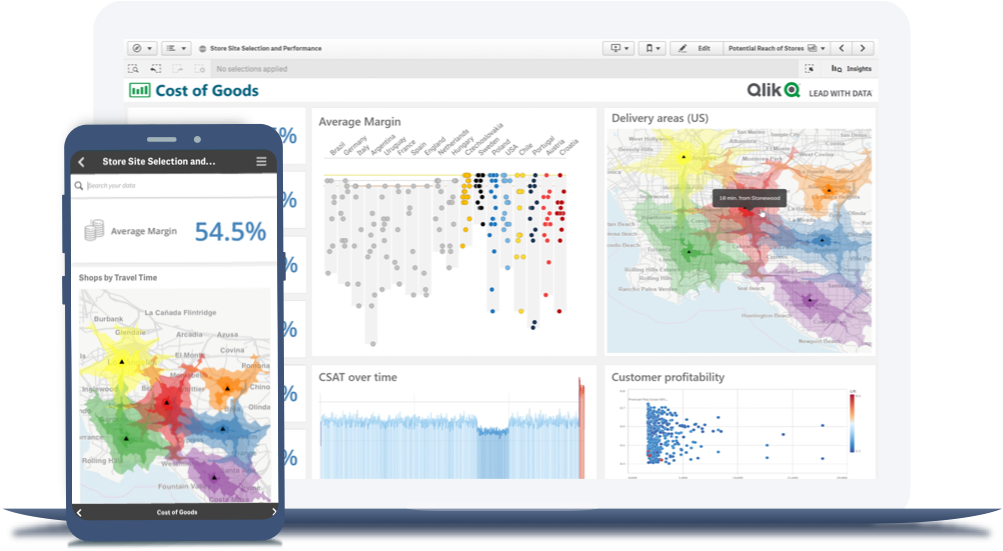
A best-in-class, self-service business intelligence architecture is just one way Qlik Sense® sets the benchmark for next-generation data analytics technologies. Our one-of-a-kind associative analytics engine and sophisticated AI empowers people at all skill levels to freely explore data, make bigger discoveries and uncover bolder insights that can’t be obtained using other analytics tools. With Qlik, you can support nearly any use case and massively scale users and data, empowering everyone in your organization to make better decisions every day.
Privacy Preference Center
When you visit any website, it may store or retrieve information on your browser, mostly in the form of cookies. This information might be about you, your preferences or your device and is mostly used to make the site work as you expect it to. The information does not usually directly identify you, but it can give you a more personalized web experience. Because we respect your right to privacy, you can choose not to allow some types of cookies. Click on the different category headings to find out more and change our default settings. However, blocking some types of cookies may impact your experience of the site and the services we are able to offer. More information
Manage Consent Preferences
These cookies may be set through our site by our advertising partners. They may be used by those companies to build a profile of your interests and show you relevant adverts on other sites. They do not store directly personal information, but are based on uniquely identifying your browser and internet device. If you do not allow these cookies, you will experience less targeted advertising.
These cookies are necessary for the website to function and cannot be switched off in our systems. They are usually only set in response to actions made by you which amount to a request for services, such as setting your privacy preferences, logging in or filling in forms. You can set your browser to block or alert you about these cookies, but some parts of the site will not then work. These cookies do not store any personally identifiable information.
These cookies enable the website to provide enhanced functionality and personalisation. They may be set by us or by third party providers whose services we have added to our pages. If you do not allow these cookies then some or all of these services may not function properly.
These cookies allow us to count visits and traffic sources so we can measure and improve the performance of our site. They help us to know which pages are the most and least popular and see how visitors move around the site. All information these cookies collect is aggregated and therefore anonymous. If you do not allow these cookies we will not know when you have visited our site, and will not be able to monitor its performance.
Back Button Performance Cookies
Vendor Search
Search Icon
Consent Leg.Interest
checkbox label label
checkbox label label
checkbox label label
host description
View Cookies

若有收获,就点个赞吧
0 人点赞


