成员变量和函数的存储
c++实现了封装,数据和处理数据的操作(函数)是分开存储的。
- c++中的
非静态数据成员直接内含在类对象中,就像cstruct一样。 - 成员函数(member function)虽然内含在class声明之内,却不出现在对象中。
- 每一个非内联成员函数(non-inline member function)只会诞生一份函数实例。 ```cpp class MyClass01{ public: int mA; };
class MyClass02{ public: int mA; static int sB; };
class MyClass03{ public: void printMyClass(){ cout << “hello world!” << endl; } public: int mA; static int sB; };
class MyClass04{ public: void printMyClass(){ cout << “hello world!” << endl; } static void ShowMyClass(){ cout << “hello world!” << endl; } public: int mA; static int sB; };
int main(){
MyClass01 mclass01;MyClass02 mclass02;MyClass03 mclass03;MyClass04 mclass04;cout << "MyClass01:" << sizeof(mclass01) << endl; //4//静态数据成员并不保存在类对象中cout << "MyClass02:" << sizeof(mclass02) << endl; //4//非静态成员函数不保存在类对象中cout << "MyClass03:" << sizeof(mclass03) << endl; //4//静态成员函数也不保存在类对象中cout << "MyClass04:" << sizeof(mclass04) << endl; //4return EXIT_SUCCESS;
}
<a name="Xk6LB"></a>## this指针<a name="tKSkW"></a>### this指针原理c++的数据和操作也是分开存储,并且每一个非内联成员函数(non-inline member function)只会诞生一份函数实例,也就是说多个同类型的对象会共用一块代码<br />那么问题是:这一块代码是如何区分那个对象调用自己的呢?<br />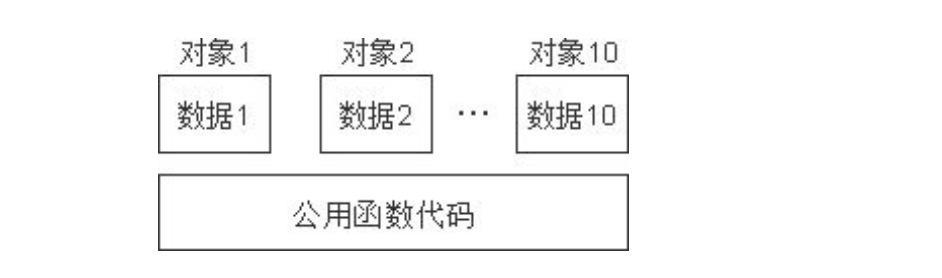<br />c++通过提供特殊的对象指针,`this指针`,解决上述问题。`this指针`指向被调用的成员函数所属的`对象`。<br />c++规定,`this指针`是`隐含`在`对象成员函数内`的一种`指针`。当一个对象被创建后,它的每一个成员函数都含有一个系统自动生成的隐含`指针this`,用以保存这个对象的地址,也就是说虽然我们没有写上`this指针`,编译器在编译的时候也是会加上的。因此`this`也称为`指向本对象的指针`,this指针并不是对象的一部分,不会影响`sizeof(对象)`的结果。<br />`this指针`是C++实现封装的一种机制,它将对象和该对象调用的成员函数连接在一起,在外部看来,每一个对象都拥有自己的函数成员。一般情况下,并不写`this`,而是让系统进行默认设置。> this指针永远指向当前对象成员函数通过`this指针`即可知道操作的是那个对象的数据。`this指针`是一种隐含指针,它隐含于每个类的非静态成员函数中。`this指针`无需定义,直接使用即可。> 静态成员函数内部没有this指针,静态成员函数不能操作非静态成员变量。**c++编译器对普通成员函数的内部处理**<br />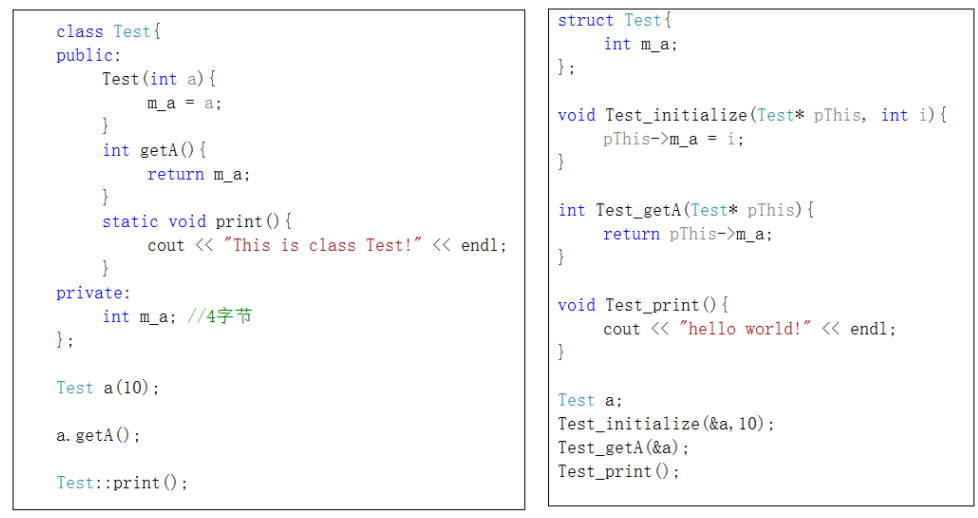<a name="EVG5g"></a>### this指针的使用- 当形参和成员变量同名时,可用`this指针`来区分- 在类的非静态成员函数中返回对象本身,可使用`return *this````cppclass Person{public://1. 当形参名和成员变量名一样时,this指针可用来区分Person(string name,int age){//name = name;//age = age; //输出错误this->name = name;this->age = age;}//2. 返回对象本身的引用//重载赋值操作符//其实也是两个参数,其中隐藏了一个this指针Person PersonPlusPerson(Person& person){string newname = this->name + person.name;int newage = this->age + person.age;Person newperson(newname, newage);return newperson;}void ShowPerson(){cout << "Name:" << name << " Age:" << age << endl;}public:string name;int age;};//3. 成员函数和全局函数(Perosn对象相加)Person PersonPlusPerson(Person& p1,Person& p2){string newname = p1.name + p2.name;int newage = p1.age + p2.age;Person newperson(newname,newage);return newperson;}int main(){Person person("John",100);person.ShowPerson();cout << "---------" << endl;Person person1("John",20);Person person2("001", 10);//1.全局函数实现两个对象相加Person person3 = PersonPlusPerson(person1, person2);person1.ShowPerson();person2.ShowPerson();person3.ShowPerson();//2. 成员函数实现两个对象相加Person person4 = person1.PersonPlusPerson(person2);person4.ShowPerson();system("pause");return EXIT_SUCCESS;}
类的const
const修饰成员函数
- 用const修饰的成员函数时,const修饰
this指针指向的内存区域,成员函数体内不可以修改本类中的任何普通成员变量。 - 当成员
变量类型符前用mutable修饰时例外。 ```cpp //const修饰成员函数 class Person{ public: Person(){
} //在函数括号后面加上const,修饰成员变量不可修改,除了mutable变量 void sonmeOperate() const{this->mAge = 0;this->mID = 0;
} void ShowPerson(){//this->mAge = 200; //mAge不可修改this->mID = 10;
} private: int mAge; mutable int mID; };cout << "ID:" << mID << " mAge:" << mAge << endl;
int main(){
Person person;person.sonmeOperate();person.ShowPerson();system("pause");return EXIT_SUCCESS;
}
<a name="mWYe8"></a>### const修饰对象(常对象)- 常对象只能调用`const的成员函数`- 常对象可访问 const 或非 const 数据成员,不能修改,除非成员用`mutable修饰````cppclass Person{public:Person(){this->mAge = 0;this->mID = 0;}void ChangePerson() const{mAge = 100;mID = 100;}void ShowPerson(){this->mAge = 1000;cout << "ID:" << this->mID << " Age:" << this->mAge << endl;}public:int mAge;mutable int mID;};void test(){const Person person;//1. 可访问数据成员cout << "Age:" << person.mAge << endl;//person.mAge = 300; //不可修改person.mID = 1001; //但是可以修改mutable修饰的成员变量//2. 只能访问const修饰的函数//person.ShowPerson();person.ChangePerson();}

若有收获,就点个赞吧
0 人点赞


